


What paper and cardboard take from your skin
Paper consists of cellulose fibres. Cellulose naturally attracts water, and paper is regarded as a porous, hygroscopic material: it takes up water vapour from the air (Phillips et al. 2026). When dry paper lies against the skin, it stands to reason that it takes up moisture there as well. To our knowledge, nobody has measured this.
For skin oil there is a measurement. In a study on friction between finger and paper, a finger was moved across 21 printing papers. After 15 back-and-forth strokes, lipid from the finger could be detected on the paper surface (Skedung et al. 2010). A single sheet takes little. If you sort hundreds of sheets or fold boxes all day, you give off this small amount again and again. What that means for the horny layer has not been studied. What is known is that its lipids hold water in the skin; the structure is explained on the page The skin barrier explained simply.
Cardboard and corrugated board are rougher than writing paper and have hard edges. Folding, gripping and tearing them open rubs the skin. Many people notice it first on the fingertips and around the nails; that is everyday experience, not a study.
Dry air, friction, washing: what is documented
The surrounding conditions are better studied. In one experiment, the water content of the horny layer on the forearm and cheek dropped measurably after just three to six hours in dry air (Egawa et al. 2002). An occupational medicine article describes what happens then: in very dry air, the article names a relative humidity of 10% or less, the horny layer becomes rigid and brittle. Dry, warm and moving air removes water from it. A roughened horny layer is more susceptible to mechanical stress, and small particles can abrade it further (Rycroft 1985).
Something similar applies to cold. According to a review, low humidity and low temperatures weaken the skin's barrier function and make it more sensitive to mechanical stress (Engebretsen et al. 2016). That fits what people in shipping and delivery report: in winter, with cold loading ramps and heated halls, it gets worse.
The third element is washing. Dusty hands get washed more often, and every wash removes lipids from the skin. More on this under Cracked hands from frequent washing.
Where it occurs and what helps
| Situation | What dries the skin | What helps |
|---|---|---|
| Office and archive | a lot of paper, heated air, dust from files | after washing your hands, a small amount of cream on the backs of the hands; the larger amount in the evening |
| Library and bookshop | shelving and unshelving books, opening boxes, dusty volumes | rinse dust off instead of rubbing it off; apply cream during the break so that nothing gets onto the pages |
| Shipping, warehouse and delivery | a great many boxes a day, edges, packing tape, cold or dry air in the hall | thin work gloves with coated fingers; cream during breaks and after the shift |
| Moving house | two days of folding and carrying boxes, dust, frequent washing | work gloves; a rich layer of cream in the evening |
| Classroom | chalk dust, wiping the board, stacks of paper | chalk holder, wipe the board with a damp cloth, rinse your hands and apply cream |
The table summarises common practice. Gloves take the friction off the skin; if they get damp inside, change the pair.
Blackboard chalk is not climbing chalk
Depending on the type, blackboard chalk consists of calcium carbonate or of calcium sulphate, that is, gypsum. In a laboratory analysis of school chalks, the white ones consisted mainly of calcium carbonate, the coloured ones of calcium sulphate (Corazza et al. 2012). Climbing chalk, by contrast, is magnesium carbonate; what it does to the skin is explained under Climbing chalk: what it does to your skin.
What both have in common is that they are fine, dry mineral powders. They take up sweat and oil from the skin surface and rub against the skin as particles. For blackboard chalk this is a plausible explanation, not a measurement. This is how less dust stays on your fingers:
- Use a chalk holder, then you do not touch the chalk directly.
- Choose low-dust chalk.
- Wipe the board with a damp cloth rather than a dry one.
- Rinse chalk dust off with water; do not rub it off dry or wipe it on your clothes.
- Apply cream after drying your hands, especially on thumb, index and middle finger.
Applying cream without marking the paper
Oil on your fingers leaves marks on paper. Three things keep them small:
- Timing: during a break, before a meeting or after work, not right before sorting.
- Place: backs of the hands, knuckles and nail edges first, the palms only with what is left. The technique is described on the page Hand care at the office without a greasy keyboard.
- Amount: little during the day, rich in the evening, for instance as an overnight hand mask.
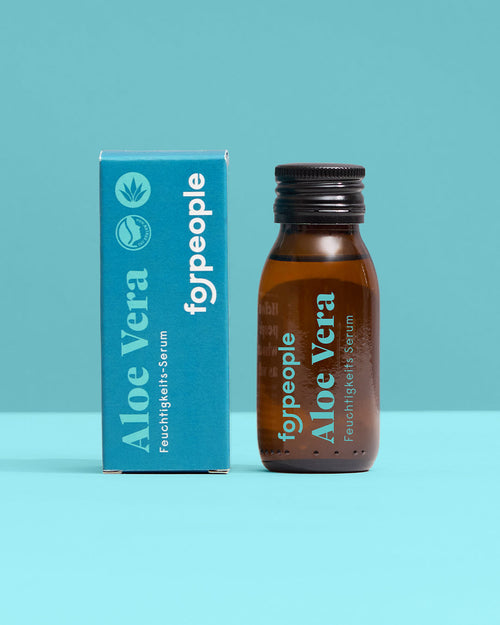
If you want something without oil during the day, use a water-based serum. According to the ingredient list, the Aloe Vera Serum 99.6% contains neither oil nor wax. Without oil on top, the feeling lasts less long; how the two complement each other is explained under Combining aloe vera serum with oil or solid cream.
When to seek medical advice?
Have a doctor look at your hands if cracks bleed or weep, if redness, small blisters or scaling persist for several weeks despite care, or if your skin always reacts after contact with a particular paper, adhesive or chalk. Then there may be more behind it than dryness, for example hand eczema or a contact allergy. For blackboard chalk, individual cases have been described in which traces of metal in the chalk were the trigger (Corazza et al. 2012). At work, the company doctor can help. Cosmetics do not belong on broken skin.
Frequently asked questions
Does paper really draw moisture out of the skin?
It stands to reason, but it has not been measured directly. What is documented is that paper takes up water vapour and that skin oil passes onto the paper when you stroke across it. Dry air, friction and frequent washing probably account for the larger share.
Why do my fingertips crack in the Christmas season of all times?
Because everything comes together then: many more boxes, cold, dry air and more frequent washing. Dry skin is more susceptible to mechanical stress. What helps the fingertips is explained under Cracked fingertips in winter.
Does hand cream leave grease marks on paper and books?
If your palms and fingertips are still shiny, yes. So apply cream during a break, mainly on the backs of the hands, and give it a few minutes.
Is blackboard chalk the same as climbing chalk?
No. Blackboard chalk consists of calcium carbonate or calcium sulphate, climbing chalk of magnesium carbonate. Both are dry and dusty.
Should I moisten my finger to grip pages or bags?
It helps for a moment, because slightly moist skin grips better than very dry skin. In the long run, well cared-for skin is the better solution. More on this: Dry fingers: why pages and bags slip out of your grip.
Can the solid hand cream stay in a desk drawer or in the warehouse?
Yes. It is water-free and only needs a place that does not get hot, so not on the radiator or in the sun. In cold halls it becomes harder; a trouser pocket helps then. More under Storing solid cosmetics.
At forpeople
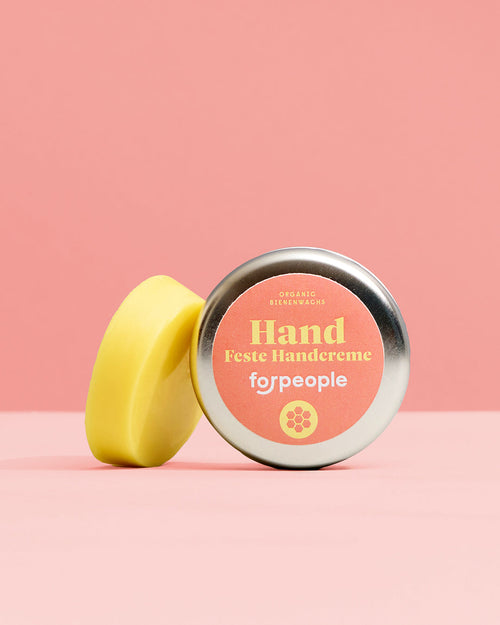
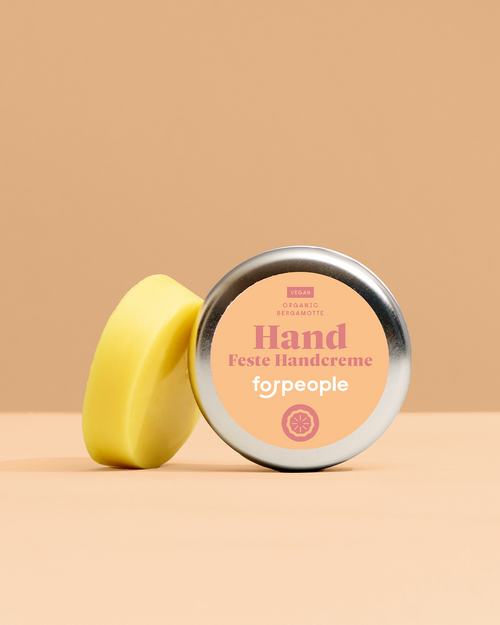
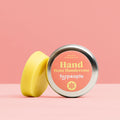
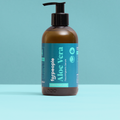
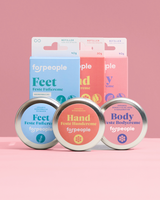
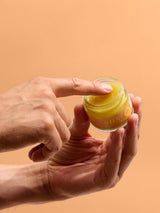
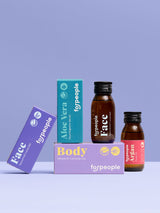
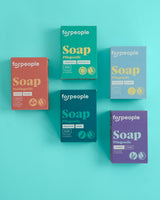
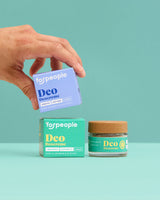
Our solid hand creams are care for breaks and the time after work, not skin protection products and no substitute for work gloves. According to the ingredient list, the Solid Hand Cream - Beeswax (30 g, €9.90) consists of beeswax, olive and sunflower oil, St. John's wort and aloe extract, with no water and no added fragrance. The vegan Solid Vegan Hand Cream - Bergamot (30 g, €9.90) contains candelilla wax, jojoba oil, olive oil, shea butter and hemp oil as well as lemon and bergamot oil; it is scented. For daytime there is the Aloe Vera Serum 99.6% (50 ml, €9.90) in a glass bottle with a cork dispenser. According to the ingredient list it consists of aloe vera juice, citric acid, potassium sorbate and sodium benzoate, so it contains water and is preserved. If you notice a skin reaction, stop using the product.
More on this: Cement and mortar: why do they dry out your hands? · Cracked fingertips in winter · Hand care at the office
From the blog: Switching to solid skincare: what is different in the first weeks
Sources
- Phillips SG, Eckhert PM, Fairbrother DH (2026): Effect of Hydrophobic Surface Modification on the Water Vapor Sorption Properties of Cellulose Paper. Langmuir 42(23): 16384–16395. https://doi.org/10.1021/acs.langmuir.6c00903
- Skedung L, Danerlöv K, Olofsson U, Aikala M, Niemi K, Kettle J, Rutland MW (2010): Finger Friction Measurements on Coated and Uncoated Printing Papers. Tribology Letters 37(2): 389–399. https://doi.org/10.1007/s11249-009-9538-z
- Egawa M, Oguri M, Kuwahara T, Takahashi M (2002): Effect of exposure of human skin to a dry environment. Skin Res Technol 8(4): 212–218. https://doi.org/10.1034/j.1600-0846.2002.00351.x
- Rycroft RJ (1985): Low humidity and microtrauma. Am J Ind Med 8(4–5): 371–373. https://doi.org/10.1002/ajim.4700080417
- Engebretsen KA, Johansen JD, Kezic S, Linneberg A, Thyssen JP (2016): The effect of environmental humidity and temperature on skin barrier function and dermatitis. J Eur Acad Dermatol Venereol 30(2): 223–249. https://doi.org/10.1111/jdv.13301
- Corazza M, Zauli S, Pagnoni A, Virgili A (2012): Allergic contact dermatitis caused by metals in blackboard chalk: a case report. Acta Derm Venereol 92(4): 436–437. https://doi.org/10.2340/00015555-1296