


How to recognise water-free cosmetics
The ingredients (INCI) are listed on the packaging in order of quantity. For most creams and lotions, “Aqua” comes first – water is then the largest component. Water-free products, by contrast, start with an oil, a plant butter or a wax, for example “Cera Alba” (beeswax), “Butyrospermum Parkii Butter” (shea butter) or “Helianthus Annuus Seed Oil” (sunflower oil).
- Not every solid product is water-free. Solid soaps, for example, are saponified with water or plant juice.
- Not every water-free product is solid. Pure plant oils and face oils contain no water either.
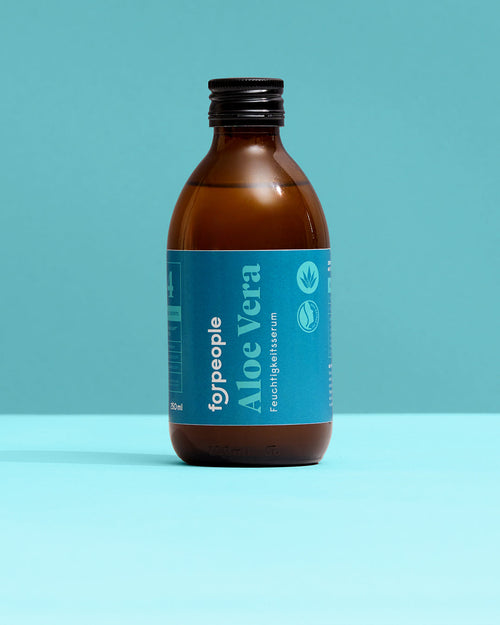
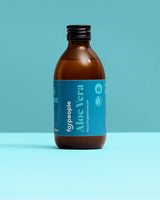
- Plant juices count towards the water content. An aloe vera serum consists mainly of the plant’s water and is therefore not water-free.
Water-free, low-water, anhydrous: what the terms mean
In cosmetics, “water-free”, “anhydrous” and “waterless” mean the same thing: the formula contains no water as an ingredient, neither as “Aqua” nor in a plant juice or floral water. None of these terms is defined by law. “Low-water” is vague, and “no added water” only rules out pure water. For comparison: according to one review, typical skin care products contain between 50 and 85% water (Richaud et al. 2024).
| Term | What it usually means | What to look for |
|---|---|---|
| water-free | no water and no water-containing raw materials in the formula | INCI starts with an oil, butter or wax; no Aqua, no juice, no “… Water” |
| anhydrous | technical term from Greek, literally “without water”; in cosmetic development it means water-free | same as water-free |
| waterless | common marketing term for water-free products | sometimes also used for powders or concentrates that you mix with water yourself |
| low-water | water is present, but less than in a typical cream | no fixed limit; Aqua usually appears further down the INCI |
| no added water | no pure water added | plant juices, hydrosols or aloe juice may still be included |
| solid | describes the form, not the water content | solid soaps are made with water or juice |
Plant juices and hydrosols count as water. According to one review, aloe leaf gel is about 99.5% water (Hamman 2008), and a hydrosol is an aqueous solution from steam distillation. In the formula, both behave like water. The product needs protection against microbes and, as soon as oil is added, an emulsifier. Claims about cosmetics must be truthful and backed by evidence in the EU (Regulation (EU) No 655/2013). As we understand it, a product with aloe juice or rose water is therefore not water-free, even if “Aqua” does not appear on the list. What “aloe instead of water” means in a formula is explained on the page Aloe vera instead of water.

What leaving out water changes
| Water-free care | Cream with water (emulsion) | |
|---|---|---|
| First ingredient | Plant oil, plant butter or wax | usually water (“Aqua”) |
| Emulsifier | not needed | needed so that water and oil combine |
| Preservation | usually not needed, because germs need water to grow | needed |
| On the skin | leaves a film that keeps moisture in the skin | absorbs quickly, the water content evaporates |
| Texture | solid or oily, softens with the warmth of your skin | creamy to liquid |
| Amount | a small amount is enough, because no water dilutes it | depends on the product |
Few ingredients: what a short list gives you
A short ingredient list means fewer substances your skin could react to, and a list that is easier to take in. It is not a promise that you will tolerate the product. Water-free formulas can be shorter because they have no water phase. An emulsifier and a preservative are then generally not needed. This follows from how the product is built and is not a verdict on quality.
| What the list shows | What it does not show |
|---|---|
| Which substances were used intentionally, in descending order of weight | The amount. Percentages are missing, and below 1% the order is free (Regulation (EC) No 1223/2009, Art. 19). |
| Each raw material as one entry | How many individual substances are in one entry. An essential oil or a plant extract is itself a mixture whose composition can vary (SCCS 2012). |
| Whether fragrance, water, a preservative or an emulsifier is included | Whether you tolerate the product. Only use will show that. |
| How many substances there are | How safe the product is. Every cosmetic product in the EU has to be safe and undergo a safety assessment, whether it has 5 or 40 ingredients (Regulation (EC) No 1223/2009, Art. 3 and 10). |
“Natural” does not mean “suits every skin”. In 2012 the EU’s Scientific Committee on Consumer Safety classed a total of 82 fragrance substances as established triggers of allergy on skin contact in humans, 54 single chemicals and 28 natural extracts (SCCS 2012). Short does not mean water-free either, and water-free does not mean short. The Aloe Vera Serum 99.6% has four entries, but it is based on aloe leaf juice and therefore contains two preservatives. Among our solid creams, the Solid Hand Cream - Beeswax has the shortest list with five entries; with its essential oils, the Solid Foot Cream – Rosemary & Sage comes to twelve. What to look for with fragrance is covered in Without fragrance and essential oils; how to try a new product on a small area, in Using solid cream correctly.
When water-free care is a good fit – and when less so
It is a good fit if
- you wash your hands often and are looking for care that leaves a film,
- your heels, elbows or fingertips are rough and dry,
- cold and wind are putting strain on your skin,
- you are on the go: solid creams don’t leak.
It is less of a fit if
- you want to moisturise large areas quickly and are looking for an instantly dry skin feel,
- your skin is prone to blemishes and finds rich care heavy,
- your skin mainly needs moisture – in that case, combining a water-based serum with water-free care on top is worthwhile.
Solid cream or tube?
Whether a cream feels greasy depends less on whether it is solid or comes from a tube than on its formula and the amount you use. A cream from a tube absorbs quickly, and part of its water evaporates. With a solid cream, the oils absorb and the wax remains as a thin film. Used in the right amount, that is two to three strokes for both hands, it leaves no greasy film. The table further up compares the formulas; this one is about everyday use.
| Solid cream (water-free) | Cream from a tube (emulsion) | |
|---|---|---|
| Taking it out | rub the surface, which gives small amounts | a strip or a dollop, often more than needed |
| What remains after applying | almost the entire amount applied | the oil part; the water evaporates |
| After washing your hands | film can be felt for longer | is washed off more quickly |
| Large areas | takes longer | spread quickly, instantly dry skin feel |
| On the go | doesn’t leak; whether it counts as a liquid in hand luggage is up to security staff (more) | liquid |
If solid care feels greasy, it is usually down to one of three things. It was too much at once, for example the amount you are used to from a tube. Or it is a salve or balm, which are made to leave a clearly noticeable film, while solid hand creams are lighter. Or your hands are cold; then the cream softens more slowly and should be warmed for a few seconds between your palms. Read more: Greasy or well cared for? and Salve, balm, butter, solid cream.
Switching to solid care: what is different at first
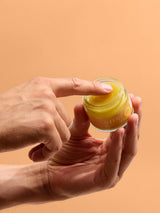
If you use a solid, water-free cream for the first time, you notice three differences from a tube. It is firmer, you need less, and a thin film stays on the skin. What changes most is the amount. If you take as much as you are used to from a tube, you will have a shiny film on your skin afterwards.
| What you notice | Why that is | What helps |
|---|---|---|
| The cream is firmer than expected. | Waxes are solid at room temperature. The warmth of your skin only softens the top layer. | Hold the tin in your hand for a moment or rub your palm over the surface a few times. In winter this takes a little longer. |
| You need less. | No water dilutes the contents. | Start with two to three strokes over the palm for both hands, and with about a pea-sized amount for both feet. |
| A film stays on the skin. | The oils move into the uppermost layers of the stratum corneum, the wax stays on top as a thin layer. | Massage in for one to two minutes. A light, waxy film without shine is intended. |
After a few applications you will know the amount that suits your skin. The individual steps are shown in Using solid cream correctly. In the reviews of our solid creams, customers write time and again that the solid form feels unfamiliar at first; some find the cream firmer than expected, a few find it too firm. Solid care is not right for everyone either, for example if you do not like a noticeable film on your skin, or if you have to type right after applying it and do not have one to two minutes to massage it in. If the solid form still does not suit you after a few weeks, a cream from a tube is the better choice for you.
Combining moisture and a protective film
Water-free creams and salves keep moisture in the skin, but add hardly any themselves. So the order is: moisture first, then the film.
- Apply to skin that is still slightly damp after showering or washing – or apply an aloe vera serum first and let it absorb for one to two minutes.
- Then spread the solid cream, the salve or a care oil on top.
Serum and solid cream cannot be mixed: water and wax do not combine without an emulsifier. That is why you apply them one after the other. More on this in our guide Aloe vera serum: what it is good for.
A routine with three products
A short skincare routine has three jobs: cleanse, apply a water-based product, and put a film of oil, butter or wax on top. A lotion from a tube brings water and fat in one step. If the jobs are kept apart, you can make one step stronger or lighter depending on the day, the part of the body and the season.
| Step | Example | Entries in the INCI | Contains water |
|---|---|---|---|
| Cleanse | Aloe Vera Soap – Lavender | 23 | yes |
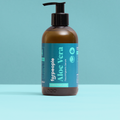
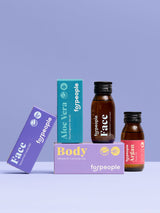
| Water-based product | Aloe Vera Serum 99.6% | 4 | yes, as aloe juice |
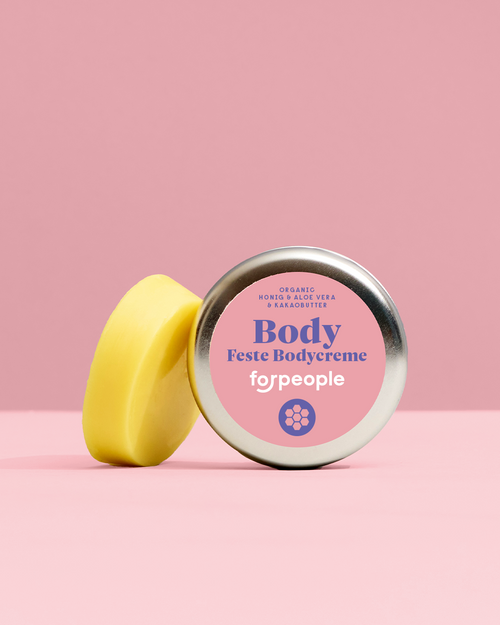
| Film, body | Solid Body Butter - Beeswax & Aloe Vera | 6 | no |
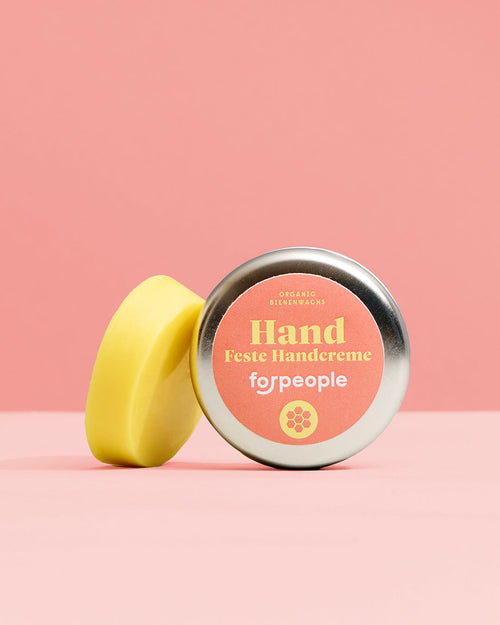
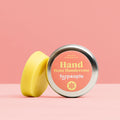
| Film, hands | Solid Hand Cream - Beeswax | 5 | no |
| Film, face | Jojoba Oil - pure | 1 | no |
The entries were counted from the ingredient lists in the shop, as of October 2026. Three steps cover basic care, but not every situation. None of the products named here has a sun protection factor; for days in the sun you need a separate sunscreen as the last layer. For the lips, a stick is more practical than a tin, and for the feet there are creams of their own.
Water-free products from forpeople
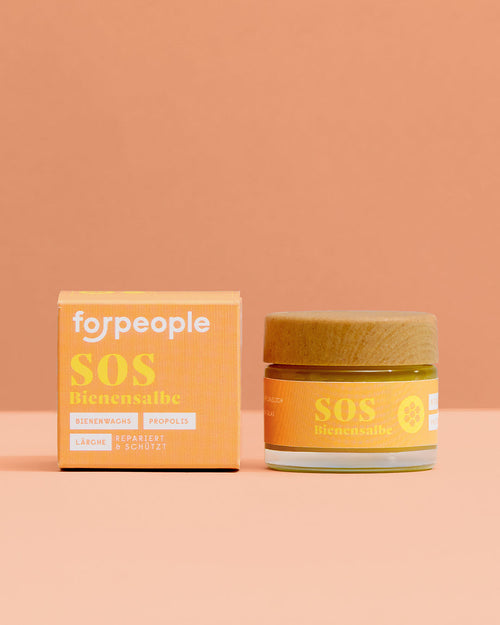
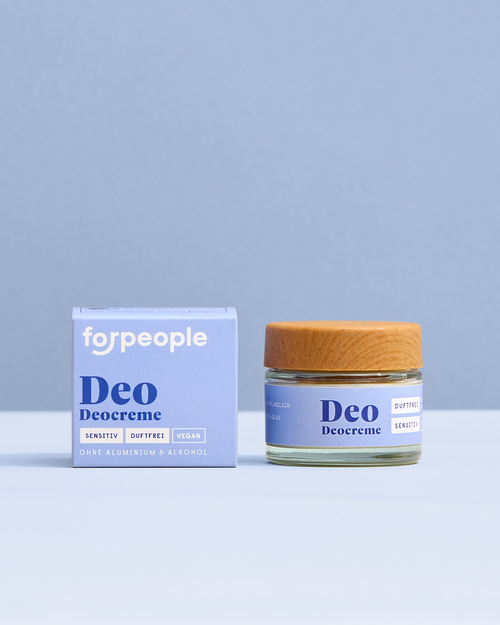
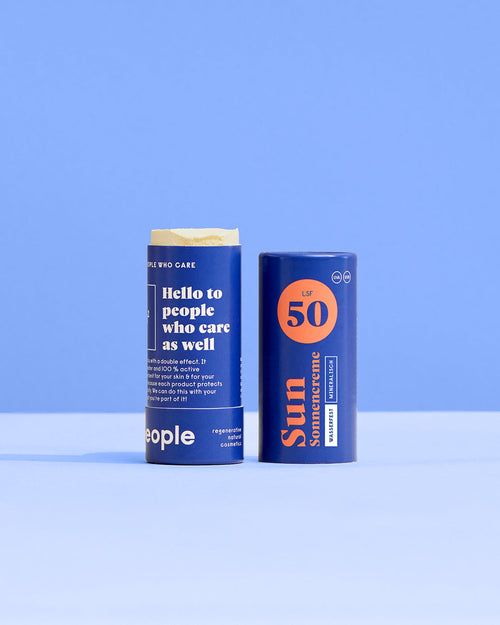
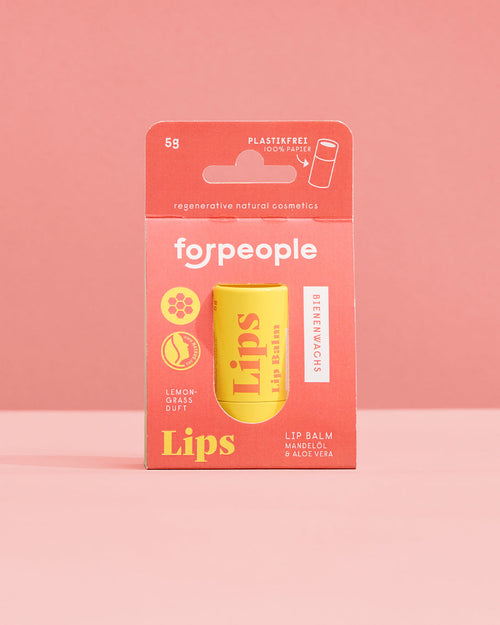
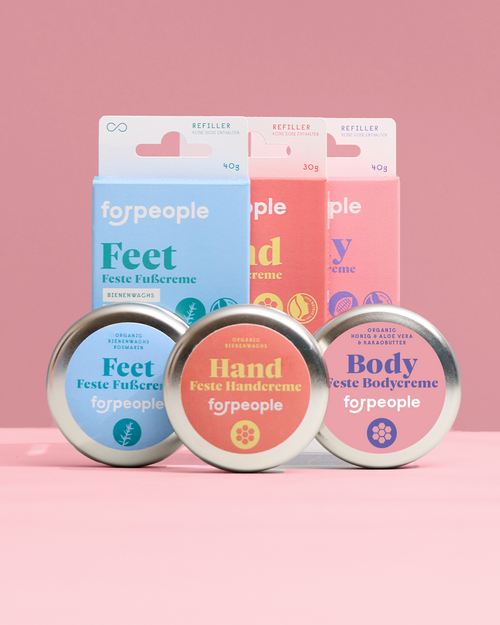
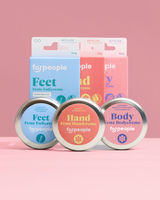
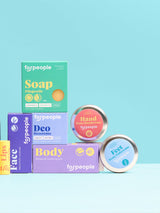
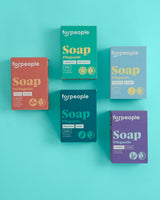
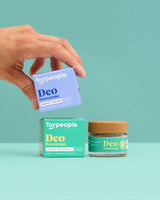
At forpeople, the solid creams, the salves, the deodorant creams, the lip balms, the solid sunscreen and the oils are water-free. The aloe vera serum and the solid soaps contain water.
- Solid hand cream – with beeswax or vegan with candelilla wax (bergamot)
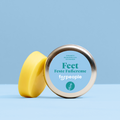
- Solid Foot Cream Rosemary & Sage
- Solid Body Butter
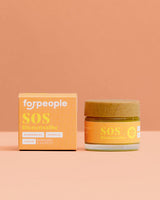
- Bee Salve, SOS Pitch Salve and deodorant cream
- Solid Sunscreen SPF 50 with the mineral filters zinc oxide and titanium dioxide
- Lip balm
- Pure oils and face oils
What customers say
A selection of verified reviews from our shop (collected via Judge.me), translated from German and partly shortened.
“A really long-lasting and really great hand cream. It really helps and keeps my hands supple. I admit it takes some getting used to when you switch to a solid salve. But the result on my hands speaks for itself. […]”
Customer review of Solid Hand Cream - Beeswax, 5 out of 5 stars, August 2026, verified purchase
“The solid creams take a bit of getting used to if you have used “normal” creams until now. Personally, I am not so keen on the solid texture. But they work very well, which is why I use the creams regularly. The foot cream in particular is great for my dry feet!”
Customer review of Solid Care for Dry Skin – Hands, Feet & Body, 4 out of 5 stars, February 2026, verified purchase
Read more: Rich cream or moisturiser? What dry skin needs · Solid cosmetics: the pros and cons, honestly explained.

Frequently asked questions
Do water-free cosmetics dry out the skin?
No. Water-free creams and salves contain no cleansing agents, but oils, butters and waxes. They leave a film on the skin that keeps in the moisture that is already there.
Does a solid cream feel greasy?
Not if you use the right amount. Warm the solid cream briefly between your hands, spread a small amount and massage it in. If it feels greasy, you used too much – take less next time.
Why do water-free cosmetics not need preservatives?
Germs need water to multiply. If a formula contains no water, this reason for preservatives no longer applies. How long a product keeps after opening is shown by the open-jar symbol on the packaging.
Are water-free cosmetics suitable for sensitive skin?
That depends on the ingredients, not on whether water is included. If you react to fragrances or essential oils, choose a fragrance-free version and try the product on a small area first. Fragrance-free care
Is the aloe vera serum water-free?
No. Aloe vera leaf juice consists mainly of the plant’s water. That makes the serum suitable as a first step before a water-free cream or salve.
Does a solid cream go further than a cream from a tube?
Usually yes, because no water dilutes the contents and even a small amount is enough. How long a tin lasts depends on how often and over how large an area you use it.
Why does a solid cream feel unfamiliar at first?
Because it does not come out of a tube but only softens with the warmth of your skin. Applying it therefore works differently from a cream with water: warm it briefly, take a little, massage it in. The guide Applying a solid cream correctly explains it step by step. Why some creams feel greasy and others don’t is covered in the guide Greasy or well cared for.
Can I take water-free cosmetics with me when travelling?
Yes. Solid creams don’t leak. What applies at airport security is explained in the guide Solid cream in hand luggage.
How long does the film stay on the skin?
That depends on how often you wash the area and how much strain it is under. More on this in the guide Using solid cream correctly.
Read more: Urea or water-free cream? · Without fragrance and essential oils · Humectants, occlusives, emollients · Using and storing solid cream correctly
Sources
- Richaud M, Rasasombat S, Cuq P et al. (2024): Water in cosmetics and Caenorhabditis elegans as an alternative model for lifespan assessment. Int J Cosmet Sci 46(1): 96–105. doi:10.1111/ics.12912
- Hamman JH (2008): Composition and applications of Aloe vera leaf gel. Molecules 13(8): 1599–1616. doi:10.3390/molecules13081599
- Verordnung (EU) Nr. 655/2013 der Kommission vom 10. Juli 2013 zur Festlegung gemeinsamer Kriterien zur Begründung von Werbeaussagen im Zusammenhang mit kosmetischen Mitteln. ABl. L 190 vom 11.7.2013, S. 31. eur-lex.europa.eu/eli/reg/2013/655/oj
- Verordnung (EG) Nr. 1223/2009 des Europäischen Parlaments und des Rates vom 30. November 2009 über kosmetische Mittel, Art. 3, 10 und 19. ABl. L 342 vom 22.12.2009, S. 59. eur-lex.europa.eu/eli/reg/2009/1223/oj
- Scientific Committee on Consumer Safety (SCCS) (2012): Opinion on fragrance allergens in cosmetic products. SCCS/1459/11, verabschiedet am 26.–27. Juni 2012. ec.europa.eu – sccs_o_102.pdf
Last updated: November 2026. forpeople products are cosmetics, not medicines.