









Why soap and water alone are such hard work
Lubricating oil and chain grease repel water and are thick and sticky. On top of that come solid particles such as metal dust, brake dust or soot, which settle in skin lines, small cracks and along the edges of your nails. Soap often only manages this after several rounds with a lot of rubbing, and every wash also takes away some of your skin's own lipids; see Dry, cracked hands from frequent washing: what helps?
Fat dissolves fat: a thin oil dilutes the thick grease so that soap picks it up more easily. The German Social Accident Insurance (DGUV) recommends this order as a way of avoiding hand cleaners with abrasive particles: loosen the dirt slightly with a skin cleansing oil, then wash it off with a little cleanser and water (DGUV 2026). What is meant is a cleansing oil made for this purpose; that cooking oil does the same job at home is experience, not a measurement. A paper from a manufacturer's laboratory points in the same direction: mixtures of surfactant and oil cleaned heavily soiled skin even without solvents and abrasive particles (Klotz et al. 2003).
Step by step: oil first, then soap
- Wipe off the worst. Take off the visible dirt dry, with paper or a rag. The accident insurance body also recommends this pre-cleaning (DGUV 2026).
- Rub oil into dry hands. About a teaspoon of cooking oil, until the grease loosens. Remember the edges of your nails and the spaces between your fingers.
- Add grains if needed. If dirt is stuck in the skin lines, add a pinch of sugar or some used coffee grounds to the oil and rub with little pressure.
- Wipe off. With paper or an old cloth.
- Wash with soap. Lukewarm water, rinse thoroughly, dry carefully, also between your fingers.
- Apply cream. Before longer breaks and at the end of work, a skincare product goes on dry skin after washing (DGUV 2026).
The methods compared
| Method | Effect on the dirt | Effect on your skin |
|---|---|---|
| Plant oil, then soap | loosens oil and grease; the soap takes off both | little friction, one wash |
| Oil with sugar or coffee grounds | the grains lift stubborn dirt out of the skin lines | more friction; only if needed and with little pressure |
| Abrasive hand cleaning paste | made for strongly adhering dirt | can put a strain on the skin barrier; use as rarely as possible |
| Washing-up liquid | dissolves fat well | also strips fat from the skin |
| Cleaning benzine, brake cleaner, paint thinner, fuel | dissolve oil at once | not skin cleansers; do not belong on your skin |
| Scrubbing brush, scouring pad | rub the dirt off | roughen the outer skin layer |
| Hot water | makes fat more fluid | increases the irritant effect of cleansers |
What occupational safety rules say about cleaning hands
The German occupational safety rule TRGS 401 requires skin to be cleaned as gently as possible and the cleanser to be matched to the degree of soiling: preferably without abrasive particles and without organic solvents. Hand cleaners with abrasive particles are intended for strongly adhering dirt and should be used as rarely as possible, for instance only at the end of the working day; cleaning brushes should be avoided (AGS 2022). The accident insurance body explicitly names technical solvents such as thinners as unsuitable (DGUV 2026). The rules are written for workplaces and serve as a yardstick for your own garage; more under Hand care for manual work and gardening: what works?
How much abrasive particles strain the skin depends on their type. In a wash test on the forearm with 16 people, water loss and redness increased after one week with grit-containing cleansers, and the outer skin layer became drier; the extent varied with the type, surface and amount of grit (Wigger-Alberti et al. 1999). The accident insurance body generally rates wax beads and cork particles as gentler on the skin than meal made from walnut shells, corn cobs or olive stones (DGUV 2026). Sugar and coffee grounds do not appear in these comparisons; use them sparingly.
On water temperature: water that is too cold cleans poorly, water that is too warm increases the irritant effect of cleansers (DGUV 2026). In a test with a surfactant solution at 4, 20 and 40 °C, the warmest one irritated the skin most (Berardesca et al. 1995). Washing-up liquid also dissolves the lipids of your skin; see Rough hands from washing up and cleaning: what helps?
Prevention: gloves and well-kept skin
The accident insurance body advises avoiding heavy soiling preferably by wearing gloves (DGUV 2026). For working on bikes and engines, disposable nitrile gloves are suitable; more on the material under Hand cream under latex or nitrile gloves? For used engine oil, Britain's Health and Safety Executive advises avoiding unnecessary skin contact, wearing protective clothing and using an after-work cream (HSE).
A cream before work does not replace gloves. For skin protection products, a protective effect against oils and greases has not been demonstrated so far (DGUV 2026), and according to TRGS 401, skincare products should not be used as protection before work (AGS 2022). Skincare belongs to the time afterwards.
It has a side effect there: dirt settles more firmly in rough, cracked skin and on torn cuticles than on smooth skin. That is experience, not a measurement. More on this: Dry, torn cuticles: how to care for them and Cracked fingertips in winter: causes and care.
Bike, car, garden, barbecue
- Bike chain: Chain oil with metal dust stains black. A pair of disposable gloves in your puncture kit saves you washing on the road.
- Car and motorbike: Wear gloves for oil changes and when working on the brakes. Oily rags do not belong in your trouser pocket, because the oil seeps through the fabric onto your skin (HSE).
- Garden tools: Chainsaw oil and lubricating grease come off with oil and soap. For resin, see Tree resin on your hands: how do you get it off?
- Fireplace and barbecue: Soot and old fat sit in the skin lines. Wipe off dry first, then oil, then soap.
When to seek medical advice?
Have your skin looked at by a doctor if redness, scaling, cracks or small blisters do not go away after a few days despite gloves and skincare, or keep coming back. If the strain is linked to your job, the occupational physician is the right contact; the skin protection plan of your workplace applies there. If oil, fuel or a solvent gets into your eye, rinse with plenty of water and have the eye looked at by a doctor. Neither abrasive particles nor cosmetics belong on open, bleeding or weeping areas. If your skin reacts to a skincare product with redness or stinging, stop using it.
Frequently asked questions
Which oil do I use to clean oil-smeared hands?
Any liquid cooking oil, for example rapeseed or sunflower oil. What matters is the order: oil on dry skin, wipe off, and only then water and soap.
Sugar or coffee grounds: which is gentler?
Nobody has compared them. Sugar dissolves when you rinse; coffee grounds are better wiped off with paper than rinsed into the sink. For both: use little, press lightly, and only when oil alone is not enough.
Why do black lines stay on my fingertips and nails?
Fine metal dust and soot settle in skin lines, small cracks and under the edge of the nail. Oil with a pinch of sugar loosens much of it. Experience shows that what remains fades over the following days; scrubbing only roughens the skin.
Does hand cream before work protect against oil and dirt?
You should not rely on it. Even for skin protection products, a protective effect against oils and greases has not been demonstrated, according to the accident insurance body. Gloves protect; skincare comes after work.
Is a scrub soap the same as a hand cleaning paste?
No. Hand cleaning pastes are skin cleansers for work and are listed in the skin protection plan of the workplace. A soap with scrub particles is a soap for home. Bar soap shared by several people does not meet hygiene standards at the workplace (DGUV 2026).
At forpeople
Our soaps and hand creams are meant for home: soap for washing after the oil, cream for the time afterwards. They are not hand cleaners or skin protection products in the sense of occupational safety rules, and they do not replace gloves.
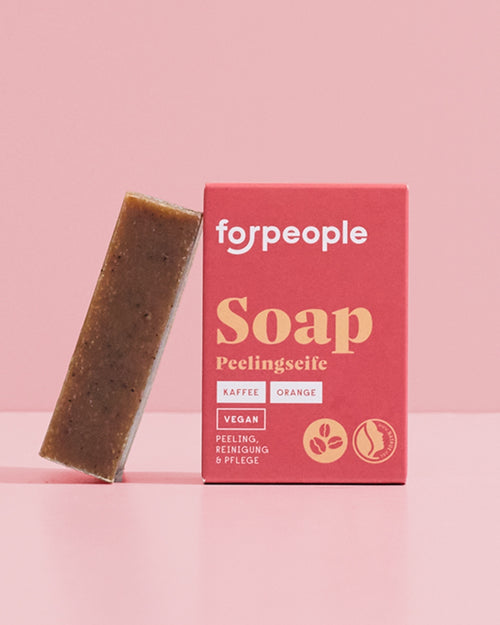
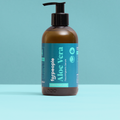
- Aloe Vera Soap with Scrub - Coffee & Orange, 75 g, €8.90: soap made from saponified plant oils with ground coffee as scrub particles; contains essential oils of orange and bitter orange.
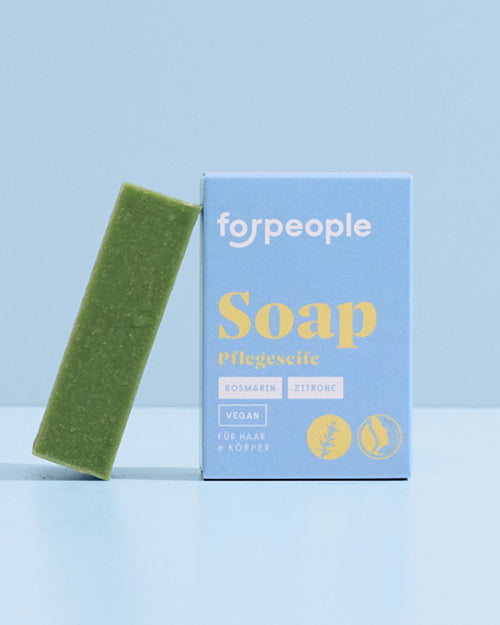
- Aloe Vera Soap – Rosemary & Lemon, 75 g, €8.90: soap without scrub particles for everyday hand washing; contains essential oils of rosemary and lemon.
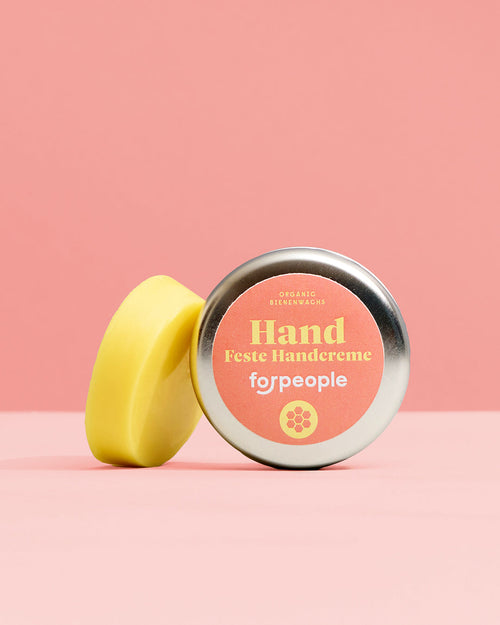
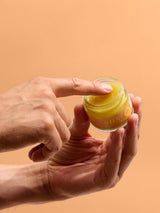
- Solid Hand Cream - Beeswax, 30 g, €9.90: water-free; according to the ingredient list beeswax, olive and sunflower oil, St. John's wort and aloe extract, no added fragrance.
- Solid Hand Cream Refill - Beeswax, 30 g, €7.90: the same formula for refilling the metal tin.
More on this: Cement and mortar: why do they dry out your hands? · Hand scrub for dry hands: a good idea or not? · Hand cream for men: what really matters
From the blog: The first solid hand cream - the Daumenschmaus - how it all began · Switching to solid skincare: what is different in the first weeks
Sources
- Deutsche Gesetzliche Unfallversicherung (2026): DGUV Information 212-017 Auswahl, Bereitstellung und Benutzung von beruflichen Hautmitteln. Ausgabe August 2026. https://publikationen.dguv.de/regelwerk/dguv-informationen/853/auswahl-bereitstellung-und-benutzung-von-beruflichen-hautmitteln
- Klotz A, Veeger M, Röcher W (2003): Skin cleansers for occupational use: testing the skin compatibility of different formulations. Int Arch Occup Environ Health 76(5): 367–373. https://doi.org/10.1007/s00420-002-0427-0
- Ausschuss für Gefahrstoffe (2022): TRGS 401 Gefährdung durch Hautkontakt – Ermittlung, Beurteilung, Maßnahmen. Ausgabe Oktober 2022, GMBl 2022 S. 895–926 (Nr. 40), zuletzt geändert GMBl 2024 S. 769 (Nr. 36). https://www.baua.de/DE/Angebote/Regelwerk/TRGS/TRGS-401
- Wigger-Alberti W, Fischer T, Greif C, Maddern P, Elsner P (1999): Effects of various grit-containing cleansers on skin barrier function. Contact Dermatitis 41(3): 136–140. https://doi.org/10.1111/j.1600-0536.1999.tb06104.x
- Berardesca E, Vignoli GP, Distante F, Brizzi P, Rabbiosi G (1995): Effects of water temperature on surfactant-induced skin irritation. Contact Dermatitis 32(2): 83–87. https://doi.org/10.1111/j.1600-0536.1995.tb00751.x
- Health and Safety Executive (HSE): Used engine oil. Motor vehicle repair, health and safety topics (abgerufen 08.10.2026). https://www.hse.gov.uk/mvr/topics/oil.htm