



Why water is not enough and oil helps
Tree resin is a mixture of resin acids and volatile terpenes. Purified larch resin, for example, contains about 50 to 65 percent resin acids and 15 to 20 percent essential oils (Lagoni 2012). Both repel water and dissolve in fat. A review article sums it up like this: resins are generally insoluble in water but soluble in alcohol, oil and ether (Truzzi et al. 2025).
That is why water simply beads off a patch of resin, while oil starts to dissolve it. Experience shows that soap on its own takes a lot of rubbing when the resin is fresh and sticky. After the oil, however, soap is the right choice: it takes off the oil together with the dissolved resin. How resin, colophony, turpentine and tar are related is explained on the page Larch resin, pine pitch, pine tar: the difference.
Step by step: dissolving resin with oil
- Start dry. Put the oil on dry hands. A film of water keeps it away from the resin.
- Rub in the oil. About a teaspoon of cooking oil is usually enough for both hands. Take your time and rub, also between your fingers and along the edges of your nails, until the resin softens.
- Wipe off. Wipe away oil and resin with kitchen paper or an old cloth. That keeps the resin out of the sink.
- Wash with soap. Lukewarm water, a little soap, rinse thoroughly. If bits still stick, repeat steps two and three rather than rubbing harder.
- Dry and apply cream. Along with the oil, soap also takes away some of your skin's own lipids. A cream on dry skin gives fat back; see How do I apply a solid cream correctly?
This order follows a recommendation by the German Social Accident Insurance (DGUV) for strongly adhering dirt at work: loosen it slightly with a skin cleansing oil, then wash it off with a little cleanser and water (DGUV 2026). What is meant there is a cleansing oil made for this purpose. That cooking oil does the same job at home is experience; as far as we know, nobody has measured it.
The options compared
| What you use | What it does to the resin | What it does to your skin |
|---|---|---|
| Cooking oil, for example rapeseed, sunflower or olive oil | starts to dissolve resin, spreads easily | stays as a film of fat and comes off with soap |
| Butter or margarine | works like oil because it consists mainly of fat | like oil |
| Fat-based, water-free cream or salve | starts to dissolve resin, a little more slowly than liquid oil | cares for the skin at the same time; handy when you are out |
| Soap on its own | only shifts fresh resin with a lot of rubbing | long, repeated washing dries the skin out |
| Alcohol-based hand gel | alcohol dissolves resin; not tested as a resin remover | is made for hands; stings on cracked areas |
| Abrasive hand cleaning paste | made for strongly adhering dirt in the workshop | abrasive particles put a strain on the skin; use as rarely as possible |
| Methylated spirits, nail polish remover | dissolve resin | strip fat from the skin; not meant for the skin of your hands |
| Turpentine, paint thinner, cleaning benzine | dissolve resin quickly | technical solvents; do not belong on your skin |
| Pumice stone, brush, scouring pad | rub the resin off mechanically | roughen the outer skin layer |
On hand gel: according to the accident insurance body, stinging often points to skin that was already compromised (DGUV 2026).
Why paint thinner, turpentine and brushes do not belong on your skin
Solvents dissolve not only resin but also the lipids of your skin. In a laboratory test on skin samples, all the solvents tested removed similar amounts of surface lipids. Mixtures with methanol also extracted lipids from the outer skin layer and increased water loss; acetone and hexane on their own did not do so in this test (Abrams et al. 1993).
The German occupational safety rule TRGS 401 requires skin to be cleaned as gently as possible: preferably without abrasive particles, without organic solvents and without cleaning brushes (AGS 2022). The accident insurance body explicitly names technical solvents such as thinners, and the scrubbing brush, as unsuitable (DGUV 2026). Both texts are written for workplaces; they are a good yardstick for home, too. More on this under Hand care for manual work and gardening: what works?
Turpentine oil is itself distilled from resin. Even in the past, irritation and allergic reactions had to be expected when it was used on the skin (Lagoni 2012). In the EU, turpentine is one of the fragrance allergens that have to be listed individually in the ingredient list of cosmetics (Regulation (EU) 2023/1545).
Christmas tree, firewood, hiking
- Christmas tree: Resin sits on the cut surface and on broken twigs. Put on work gloves before you trim the trunk, and have oil and kitchen paper ready.
- Firewood and pruning: Fresh softwood oozes resin at the cuts. Gloves made of leather or coated fabric keep most of it off.
- Cones and twigs: Resin on cones is often half hardened already and partly crumbles off. The sticky rest needs oil.
- Out and about: Without a kitchen, anything that contains fat helps: butter from your packed lunch or a fat-based cream from your bag. Do not scratch at the resin.
Resin in your hair also comes out with oil: massage it into the sticky strand, comb it out, wash with shampoo. On fabric, however, oil leaves a grease stain. There, people usually let the resin harden in the freezer and crumble it off. Both are household practice, not tested methods.
Resin as a raw material: the same solubility, used differently
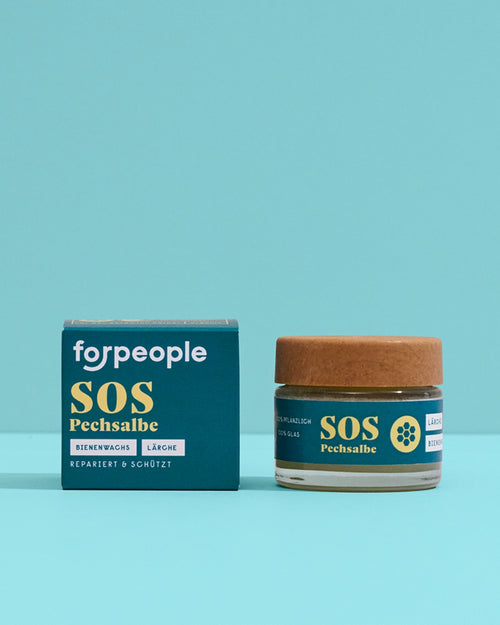
The fact that resin dissolves in oil is also the reason it can be made into a salve. For a resin salve, purified resin is dissolved in warm oil and bound with wax; more on this under Pitch salve: origin, name and how it was made. forpeople uses larch resin in the SOS Pitch Salve and in the Beeswax Salve Larch & Mandarin in a Glass Jar. Neither is meant for removing resin.
When to seek medical advice?
Resin on intact skin is usually just a nuisance. See a doctor if your skin repeatedly turns red, itches or forms small blisters after contact with resin, softwood or turpentine: resin and colophony can trigger a contact allergy. The background is explained under Allergic to tree resin, colophony or propolis? If resin or a solvent gets into your eye, rinse with plenty of water and have the eye looked at by a doctor. Neither oil for rubbing nor cosmetics belong on open, bleeding or weeping areas. If your skin reacts to a skincare product with redness or stinging, stop using it.
Frequently asked questions
Which oil dissolves tree resin best?
Any liquid cooking oil dissolves resin, whether rapeseed, sunflower or olive oil. Differences between the oils have not been studied for this purpose. Use whatever is in your kitchen.
Can I get resin off with hand cream as well?
With a fat-based, ideally water-free cream, yes, because it consists mainly of oil and wax. It takes a little longer than with liquid oil. A light lotion with a lot of water hardly dissolves resin.
Why is the resin still sticky after I have washed my hands?
Because resin does not dissolve in water, and soap only takes off fresh resin slowly. Dry your hands, rub in oil, wipe it off and then wash once more with soap.
Can I remove resin with nail polish remover or methylated spirits?
Both dissolve resin, but they strip fat from the skin at the same time. Methylated spirits is a technical product; nail polish remover is made for nails. Oil takes a little longer and is kinder to your hands.
Does the same work for handball resin or lubricating oil?
The principle is the same: loosen with fat first, then wash with soap. The details are under Removing handball resin: what dissolves it, and what your skin needs and Oil and grease on your hands: how do you wash them off gently?
At forpeople
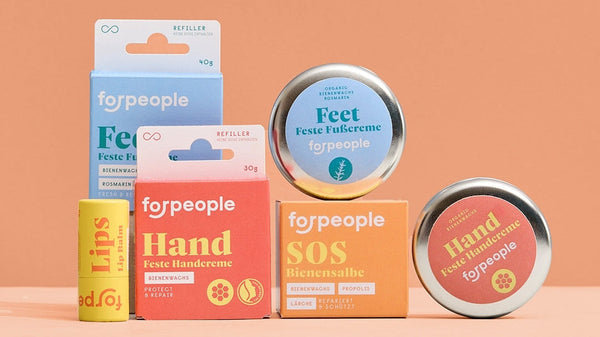
Any cooking oil is enough to dissolve resin; you do not need to buy anything for that. For washing afterwards and for skincare after that, these products fit:
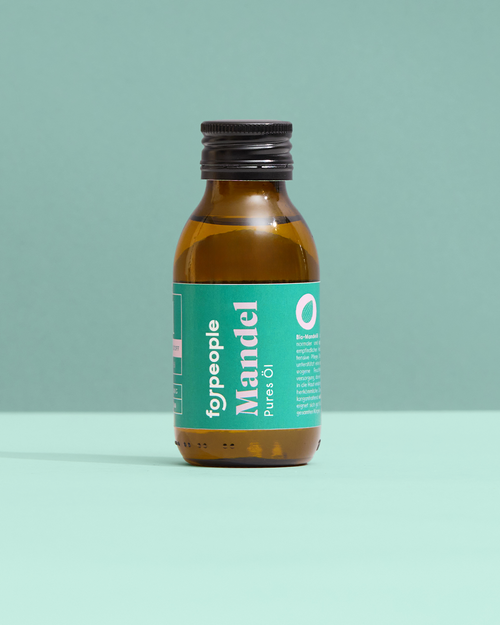
- Almond Oil - pure, 100 ml, €14.90: pure almond oil from certified organic farming. It dissolves resin like any other plant oil and is otherwise a skin oil.
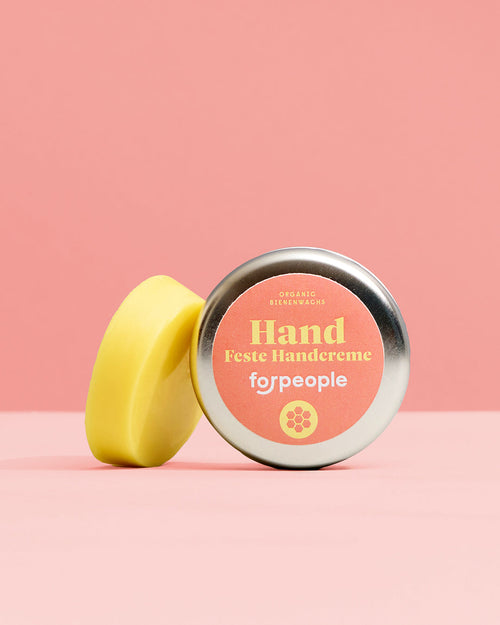
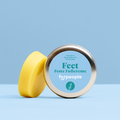
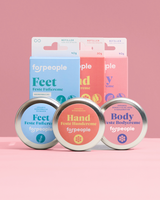
- Solid Hand Cream - Beeswax, 30 g, €9.90: water-free; according to the ingredient list beeswax, olive and sunflower oil, St. John's wort and aloe extract, no added fragrance. For skincare after washing.
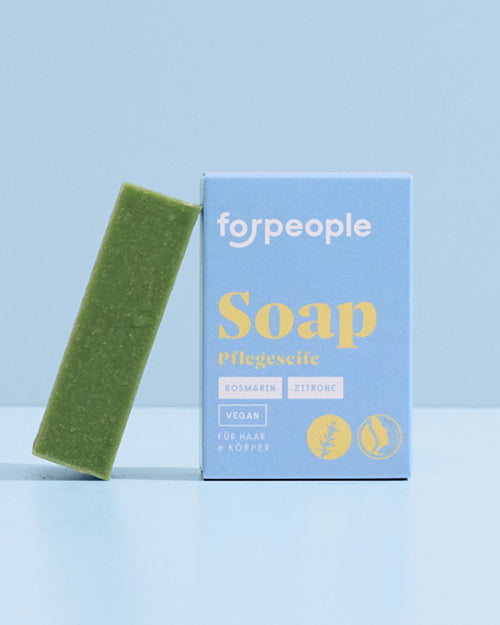
- Aloe Vera Soap – Rosemary & Lemon, 75 g, €8.90: soap made from saponified plant oils for washing afterwards; contains essential oils of rosemary and lemon.
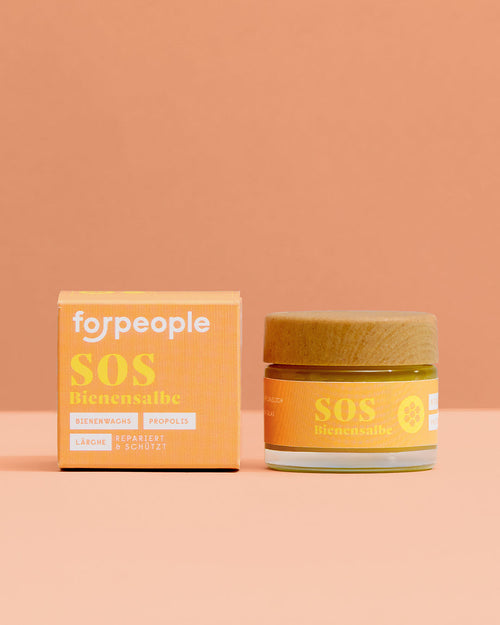
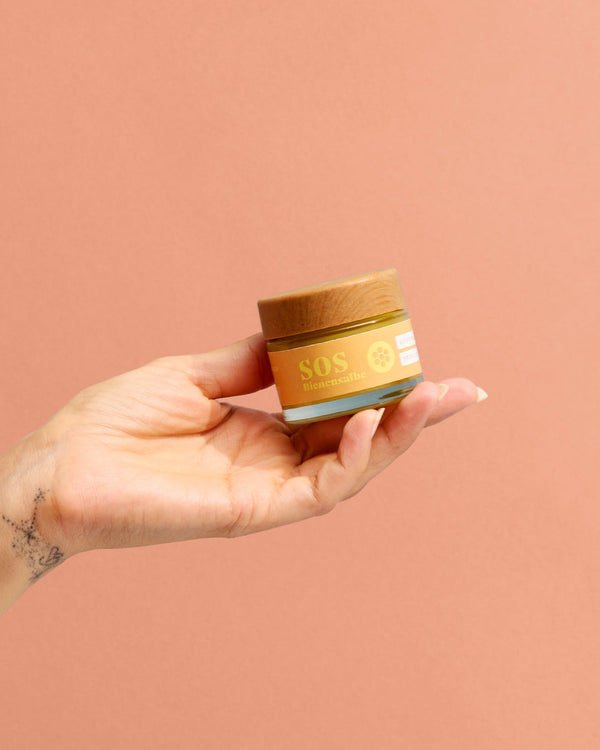
- SOS Pitch Salve - Larch Resin in a Glass Jar, 50 g, €16.90: olive oil, larch resin and beeswax; here, resin is the raw material. A cosmetic product for dry, rough areas, not for injured or irritated skin.
More on this: Bar soap or liquid soap: which is better for your hands? · Dry, cracked hands from frequent washing: what helps? · Trying a new product: how do I test it on a small area?
From the blog: Hands and feet through winter: a routine for morning and evening · Bee Balm with Beeswax and Propolis for Dry Skin
Sources
- Lagoni N (2012): Vom Lärchenharz zum Terpentin bis Lärchenöl. LWF Wissen 69: 79–81. Bayerische Landesanstalt für Wald und Forstwirtschaft. https://www.lwf.bayern.de/mam/cms04/biodiversitaet/dateien/vom_laerchenharz_w69.pdf
- Truzzi E, Vanti G, Grifoni L, Maretti E, Leo E, Bilia AR (2025): Plant Resin Delivery by Nanovectors as an Emerging Approach to Boost Solubility, Permeability and Bioavailability. Pharmaceutics 17(1): 53. https://doi.org/10.3390/pharmaceutics17010053
- Deutsche Gesetzliche Unfallversicherung (2026): DGUV Information 212-017 Auswahl, Bereitstellung und Benutzung von beruflichen Hautmitteln. Ausgabe August 2026. https://publikationen.dguv.de/regelwerk/dguv-informationen/853/auswahl-bereitstellung-und-benutzung-von-beruflichen-hautmitteln
- Abrams K, Harvell JD, Shriner D, Wertz P, Maibach H, Maibach HI, Rehfeld SJ (1993): Effect of organic solvents on in vitro human skin water barrier function. J Invest Dermatol 101(4): 609–613. https://doi.org/10.1111/1523-1747.ep12366068
- Ausschuss für Gefahrstoffe (2022): TRGS 401 Gefährdung durch Hautkontakt – Ermittlung, Beurteilung, Maßnahmen. Ausgabe Oktober 2022, GMBl 2022 S. 895–926 (Nr. 40), zuletzt geändert GMBl 2024 S. 769 (Nr. 36). https://www.baua.de/DE/Angebote/Regelwerk/TRGS/TRGS-401
- Europäische Kommission (2023): Verordnung (EU) 2023/1545 zur Änderung der Verordnung (EG) Nr. 1223/2009 hinsichtlich der Kennzeichnung allergieauslösender Duftstoffe in kosmetischen Mitteln. ABl. L 188: 1. https://eur-lex.europa.eu/eli/reg/2023/1545/oj