


What is in a body lotion – and what is in a body oil
A body lotion is usually an oil-in-water emulsion. A review gives 75 to 85 percent water, 10 to 15 percent oil and 5 to 10 percent humectants such as glycerin as the usual composition (Barnes et al. 2021). To keep water and oil together, the lotion needs an emulsifier. And because it contains water, it is preserved so that no germs multiply in it (Sethi et al. 2016).
On the skin a lotion is thin, spreads easily and leaves little film. Part of the water evaporates as you rub it in; that feels fresh, and the lotion seems to sink in quickly (Barnes et al. 2021).
A body oil is the fat phase only: one or several plant oils, sometimes with essential oil for scent. There is no second phase, so it needs no emulsifier. Fat-rich preparations with little or no water also need less preservation (Barnes et al. 2021). In return, an oil can turn rancid over time. More on this: Emulsifiers in Cosmetics: What They Do and Preservation and Water in Cosmetics.
Body lotion, body oil and solid body butter compared
The table describes the product types in general; what counts is the ingredient list of the individual product.
| Feature | Body lotion | Body oil | Solid body butter |
|---|---|---|---|
| Water | yes, usually the largest component | no | no |
| Emulsifier | yes | no | no |
| Preservation | as a rule, yes | mostly none; can turn rancid | mostly none; can turn rancid |
| What it brings | water, humectants and fat | fat | fat and wax |
| How to apply | on dry or damp skin | on damp skin or over a water-based product | on warm, still slightly damp skin |
| Film on the skin | slight | light | noticeable, stays longer |
| In the ingredient list | “Aqua” right at the front | no “Aqua”; names ending in “Oil” | no “Aqua”; “Butter”, wax and oil |
You will find the comparison of oil and butter by body area, time of day and season under Body Oil or Body Butter – Which One When?
How to tell lotion and oil apart in the ingredient list
The ingredient list (INCI) names the ingredients in descending order of weight. Anything that makes up less than one percent may follow in any order (Regulation (EC) No 1223/2009, Art. 19).
- Body lotion: “Aqua” is right at the front. Oils, emulsifiers and humectants such as “Glycerin” follow, with the preservatives further back.
- Body oil: There is no “Aqua”. The names end in “Oil”; with an essential oil, individually named fragrance constituents such as “Citral” follow.
- Body butter: A “body butter” from a jar is often a thick emulsion with water; then “Aqua” is in the list. A solid body butter made of plant butter, oil and wax contains none.
More on the terms: Salve, balm, butter, solid cream: the difference. How to read a list is explained in How to Read an INCI List.
What “moisturising” can mean for an oil
In skincare, moisture means water in the stratum corneum. It is held there by the fats between the horny cells and by water-binding substances inside the cells (Rawlings & Harding 2004).
A lotion raises the water content of the stratum corneum in two ways: it releases water from its water phase, and its fat content slows evaporation (Barnes et al. 2021). An oil can only do the second. In a study with six volunteers, four plant oils and paraffin oil stayed in the uppermost layers of the stratum corneum. Except for jojoba oil, they reduced water loss through the skin to a similar degree; the authors speak of semi-occlusion (Patzelt et al. 2012).
Strictly speaking, then, an oil does not add moisture; it holds it and makes the skin supple. Film-forming oils therefore work best on slightly dampened skin, for example when you have only patted yourself dry after a bath or shower (Sethi et al. 2016). How water binders and film formers work together is explained in Humectants, occlusives, emollients.
Combining oil and water yourself: three steps
With a body oil you put the two parts of a lotion together yourself, one after the other: first the water, then the fat. The steps are common practice, not measured values.
- Leave your skin damp: After showering, only pat yourself dry. Or apply a water-based product, for example an aloe vera serum, and wait briefly until it no longer runs.
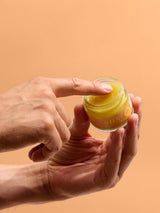
- Take a little oil: Rub a few drops between your palms. Work your way up from a small amount.
- Massage in and wait: Spread the oil and let it sink in for a few minutes before you get dressed. If your skin is still clearly shiny afterwards, it was too much.
You can also rub serum and oil together in your palm and apply them at once. This does not create a stable emulsion: without an emulsifier the two only mix briefly and separate again. That is enough for immediate use; do not mix anything in advance. More on this: Combining aloe vera serum with oil or solid cream and How soon should you moisturise after a shower? The 3-minute rule.
When does the lotion fit, and when the oil?
There is no ranking. The following points come from experience:
- Little time: The lotion is a single step and also works on dry skin. The oil needs the damp skin straight after the shower.
- Skin feel: If you do not like a film, you will usually get on better with a lotion. If you enjoy the feel of oil or want to massage your skin as you go, take the oil.
- Summer and winter: In warm weather a light lotion or a little oil on wet skin is enough for many people. In cold weather and heated indoor air the film may be more substantial, with a body butter on very dry areas.
- Hairy skin: What spreads well on the chest, arms and legs is covered in Body care on hairy skin: oil, lotion or butter?
When to seek medical advice?
If your skin stays very dry for weeks despite regular care, flakes heavily, cracks, weeps or is red, have it checked by a doctor. If your skin reacts to a product with redness or burning, stop using it and take the product or its ingredient list with you. Neither lotion nor oil belongs on broken or irritated skin unless a doctor has agreed to it.
Frequently asked questions
Does body oil moisturise?
Not in the literal sense. An oil contains no water. It slows evaporation and so holds the water that is already in your skin. That is why you apply it to damp skin.
Can body oil replace body lotion?
Yes, if the water comes from somewhere else: from skin that is still damp after the shower or from a water-based product underneath. If your skin feels tight despite the oil, this part is usually missing.
Can I use body lotion and body oil together?
Yes. Apply the lotion first and then add a few drops of oil on top. The rule is: water-based before oily.
Is oil or lotion better for very dry skin?
There is no general “better”. Dry skin needs water and fat. The lotion provides both in small amounts; the oil provides more fat and needs the water as well. On very dry areas a body butter stays on the skin longest as a film.
Is a body oil always scented?
No. A body oil with essential oil is scented; the list then names individual fragrance constituents. A pure plant oil such as almond oil has no added scent according to its list, only its own smell.
At forpeople
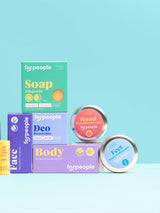
We do not carry a body lotion. Our body care consists of water-free oils and a solid body butter; the water comes from damp skin or from the aloe vera serum.
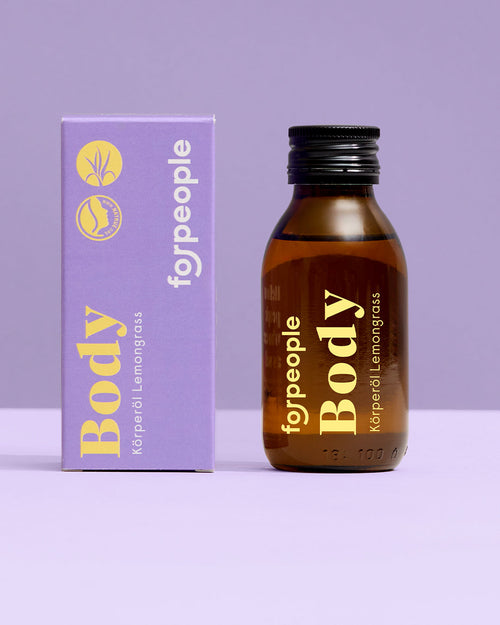
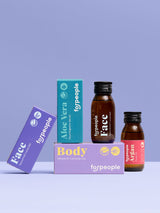
- Body Oil - Lemongrass, 100 ml, €16.90: sesame oil, safflower oil, sea buckthorn seed oil, sunflower oil, turmeric extract and lemongrass essential oil; without water and without an emulsifier according to the list.
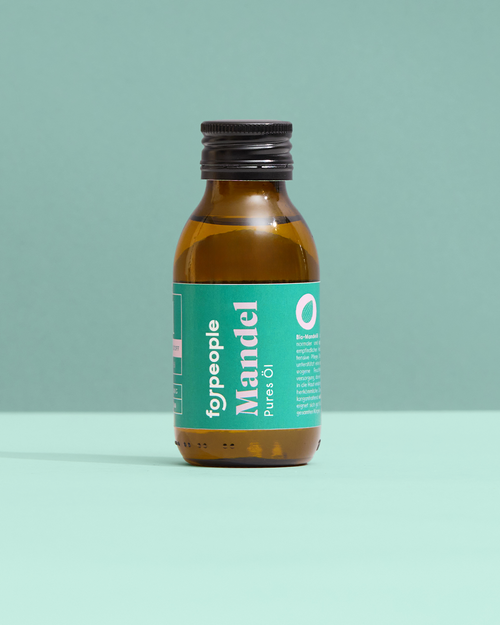
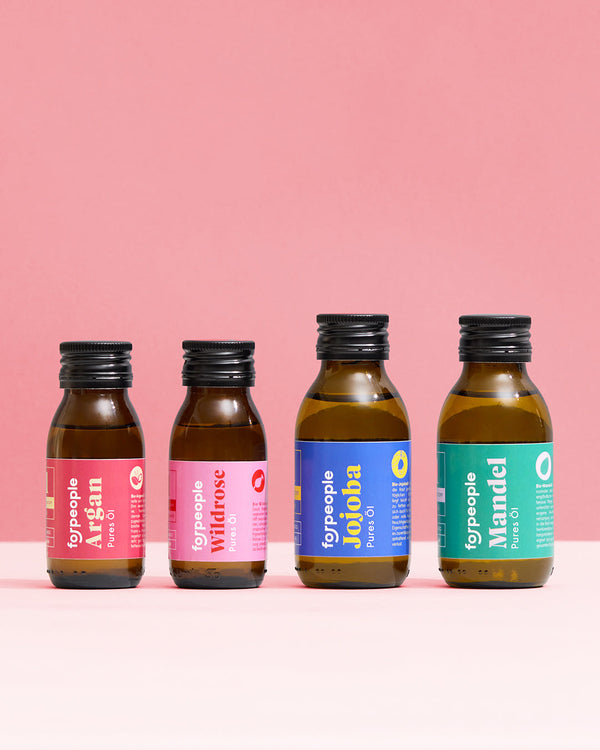
- Almond Oil - pure, 100 ml, €14.90: a single plant oil, without added scent according to the ingredient list.
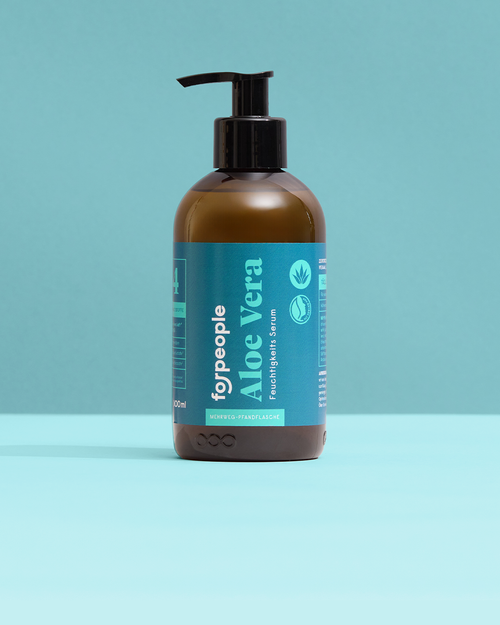
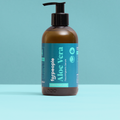
- Aloe Vera Serum 99.6% - Pump Bottle, 300 ml, €27.90: the water-based layer under the oil. According to the list it contains aloe juice, citric acid, potassium sorbate and sodium benzoate; so it contains water and is preserved.
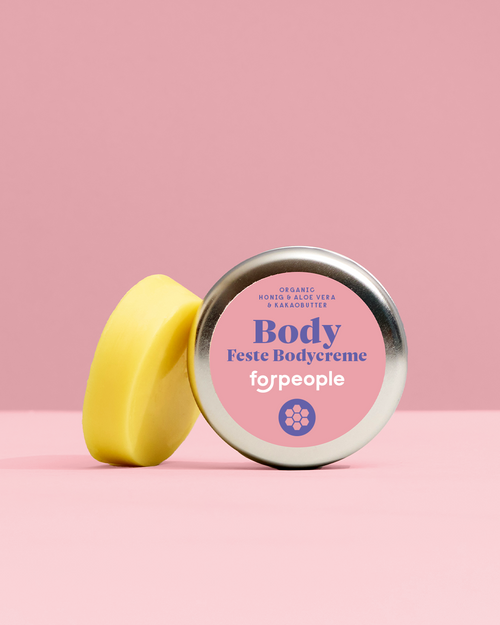
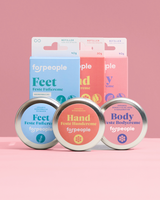
- Solid Body Butter - Beeswax & Aloe Vera, 40 g, €9.90: cocoa butter, olive oil, beeswax, sunflower oil, shea butter and aloe vera leaf extract; without water and without added essential oils according to the list.
For all of them: do not use on broken or irritated skin. If you notice a skin reaction, stop using the product.
More on this: Shower oil or body oil: what is the difference? · Body Oil or Body Butter – Which One When? · Combining aloe vera serum with oil or solid cream
From the blog: Face & Body Oils: Which Oil Suits Which Skin Type?
Sources
- Barnes TM, Mijaljica D, Townley JP, Spada F, Harrison IP (2021): Vehicles for Drug Delivery and Cosmetic Moisturizers: Review and Comparison. Pharmaceutics 13(12): 2012. https://doi.org/10.3390/pharmaceutics13122012
- Sethi A, Kaur T, Malhotra SK, Gambhir ML (2016): Moisturizers: The Slippery Road. Indian Journal of Dermatology 61(3): 279–287. https://doi.org/10.4103/0019-5154.182427
- Verordnung (EG) Nr. 1223/2009 des Europäischen Parlaments und des Rates vom 30. November 2009 über kosmetische Mittel, Art. 19 Abs. 1 Buchst. g. ABl. L 342 vom 22.12.2009, S. 59; konsolidierte Fassung vom 01.09.2025. https://eur-lex.europa.eu/eli/reg/2009/1223/oj
- Rawlings AV, Harding CR (2004): Moisturization and skin barrier function. Dermatologic Therapy 17 Suppl 1: 43–48. https://doi.org/10.1111/j.1396-0296.2004.04s1005.x
- Patzelt A, Lademann J, Richter H, Darvin ME, Schanzer S, Thiede G et al. (2012): In vivo investigations on the penetration of various oils and their influence on the skin barrier. Skin Research and Technology 18(3): 364–369. https://doi.org/10.1111/j.1600-0846.2011.00578.x