





Why cream gets caught in the hair
Skincare is meant for the skin, not the hair. With dense body hair, though, the hairs stand between your hand and your skin. A thick product clings to them as you rub it in, and only part of it arrives underneath. A liquid runs along the hairs down to the skin. That is everyday experience; we did not find a study that measures how body care spreads on hairy skin.
The specialist literature has a rule of thumb for this. A review of bases for medicines and skincare on the skin classifies the forms as follows (Barnes et al. 2021):
- Ointments, that is preparations of fat and wax with little or no water, are harder to spread than creams, lotions and solutions. Their greasy feel bothers some people, especially on hairy skin. They suit hairless skin such as palms and soles best, or skin with short or sparse hair.
- Lotions are easy to apply to hairy areas and spread quickly, on large areas too. In return, they form less of a film than creams and ointments.
- Solutions, that is clear liquids, are easier to spread than creams and ointments.
The review does not list body oil as a form of its own. That a thin oil spreads between hairs about as easily as other liquids is our interpretation. A solid body butter made of plant butter, oil and wax resembles an ointment in its make-up.
Oil, lotion or butter on hairy skin
The table summarises experience and describes the product types in general.
| Form | Spreading between the hairs | What stays in the hair | Suits |
|---|---|---|---|
| Body oil | runs along the hairs; very easy on wet skin | little; with too much oil the hair looks shiny | large hairy areas: chest, arms, legs, back |
| Thin body lotion | easy; turns white briefly as you rub it in | hardly anything if you rub it in thoroughly | large areas, if you do not like a film of oil |
| Thick cream or butter from a jar | stiff, pulls on the hairs | whitish residue possible | areas with little hair |
| Solid body butter | hard; it has to be rubbed over the skin | fat and wax on the hair | elbows, knees, edge of the shin, hands, feet |
What distinguishes lotion and oil in their make-up is covered in Body oil or body lotion: what is the difference?
How to do it: a little oil on wet skin
- Leave the skin damp: Just pat yourself dry after showering. According to a review, film-forming oils belong on damp skin, roughly as it is after patting dry (Sethi et al. 2016).
- Spread it in your hands: Put a little oil in one palm and rub it between both hands.
- Stroke in the direction of growth: The same review advises then applying the product lightly and in the direction of the hair, instead of rubbing vigorously (Sethi et al. 2016).
- Press on: Press your flat hands briefly onto the skin. With dense hair, it helps to go down to the skin with your fingertips.
- Check: If the hair is still clearly shiny after a few minutes, it was too much. Use less next time.
- Let it sink in: Wait a few minutes before clothing goes over the top. More on this: Does body oil stain? Clothes, bed linen, towels
Steps 4 to 6 are common practice. If you oil your skin while still in the shower, watch out for the slippery floor.
Areas with little hair: this is where butter fits
Elbows, knees, the edge of the shin, ankles, hands and feet have little or no hair and are often the driest areas. Warm the solid butter briefly between your hands and stroke it on. More on this: Why are elbows and knees so dry? and Body Oil or Body Butter – Which One When?
Do men need their own body care?
Body hair depends on hormones, not on a special skin type. Androgens turn small follicles with fine, barely visible hairs into larger follicles with thicker, pigmented hairs. How strongly a follicle responds depends on the body site (Randall 2008). How densely arms, legs or chest are covered with hair differs from person to person. What is written here applies to any hairy skin.
The skin itself differs somewhat on average. In a Hamburg study with 300 healthy women and men aged 20 to 74, the amount of sebum was higher in men in all age groups, the pH of the skin surface was below 5, and up to about 50 years of age men lost less water through the skin than women of the same age. From about 40, the moisture of the stratum corneum decreased step by step in men (Luebberding et al. 2013). Measurements were taken on the forehead, cheek, neck, inner forearm and back of the hand, not on the chest, back or legs.
A review of 57 studies confirms the higher sebum content in men and calls the results for other measurements conflicting. It also cites two smaller studies that found no difference in sebum (Rahrovan et al. 2018). Little follows from this for body care: dry skin needs water and fat, in women as in men. What changes is the form, and that depends on the hair. The same goes for the hands: Hand cream for men: what really matters.
After trimming or shaving
Short stubble holds hardly anything back; oil and lotion are then easy to spread. Freshly shaved skin, however, reacts more strongly for a while to what you apply. The details are in Moisturising after shaving your legs: what and when?; they also apply to chest, arms and back. On shaving itself: Shaving with oil instead of foam: does that work?
When to seek medical advice?
Seek medical advice if red, painful lumps or pustules form around individual hairs, that is inflamed hair follicles, if spots on the back or chest do not go away, if hairs keep growing in, or if the skin is very flaky, itchy, weeping or red for weeks. The specialist literature names vigorous rubbing-in of oil as a possible trigger of inflamed hair follicles (Sethi et al. 2016). If such areas appear, leave skincare off there until this has been clarified. If your skin reacts to a product, stop using it.
Frequently asked questions
Can I use body lotion despite body hair?
Yes. A thin lotion spreads well on hairy skin. It gets harder with thick creams: they tend to get caught in the hair. Use little and rub in the direction of growth.
Does oil make the hair stick together?
Only with too much oil. A few drops on wet skin spread thinly; after a few minutes the hair hardly shines any more. What oil does on hair is covered in Beard balm or beard oil: what is the difference?
Do men need their own body lotion?
No. On average, men's skin produces more sebum, but no separate formula follows from that. What matters is body hair, skin feel and scent. For the face: Face care for men: what does the skin really need?
Can I use solid body butter on a hairy chest?
It works, but it is laborious. Melt a little of it between your hands and stroke in the direction of growth. An oil is easier; the butter suits areas with little hair better.
Do I have to remove the hair for skincare to reach the skin?
No. The product only has to get down to the skin, and that works with a thin, runny form on damp skin.
At forpeople
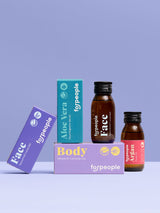
We do not carry a body lotion. For hairy skin, our oils are an option; for areas with little hair, the solid butter.
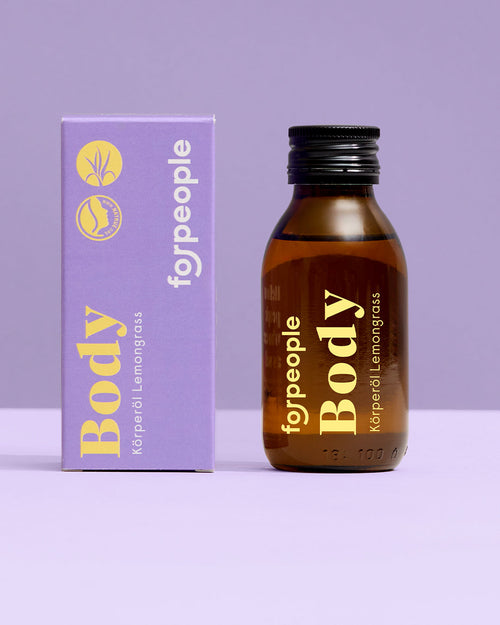
- Body Oil - Lemongrass, 100 ml, €16.90: sesame oil, safflower oil, sea buckthorn seed oil, sunflower oil, turmeric extract and lemongrass essential oil. Thin and runny, scented; the ingredient list names citral, geraniol and citronellol.
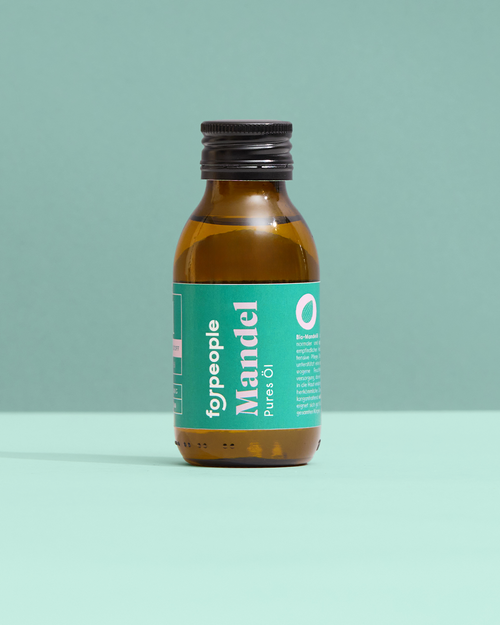
- Almond Oil - pure, 100 ml, €14.90: a single oil, without added scent according to the ingredient list. If you are allergic to almonds, do not use it.
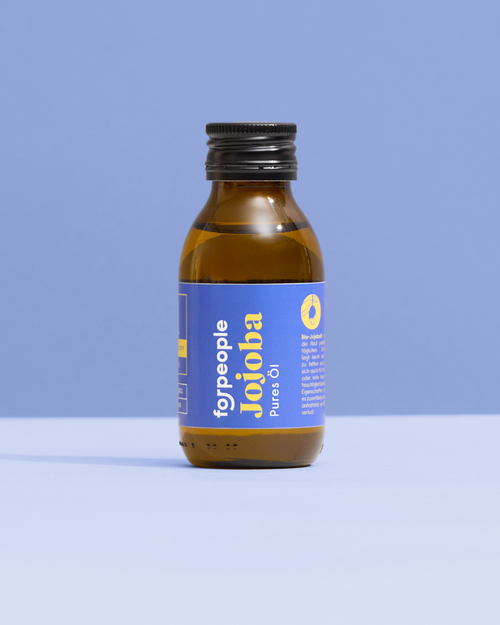
- Jojoba Oil - pure, 100 ml, €16.90: likewise a single oil without added scent.
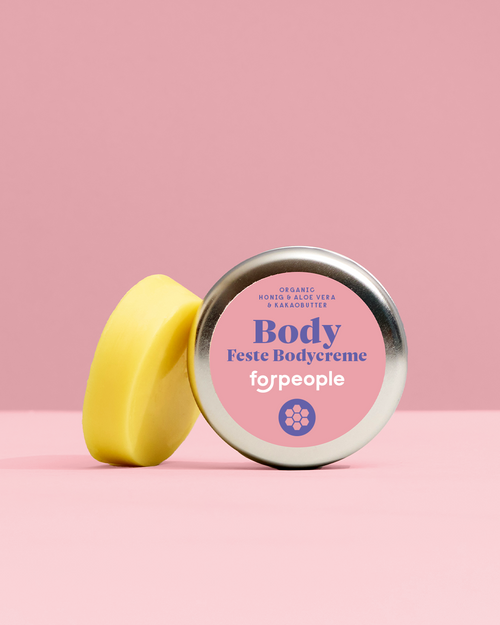
- Solid Body Butter - Beeswax & Aloe Vera, 40 g, €9.90: cocoa butter, olive oil, beeswax, sunflower oil, shea butter and aloe vera leaf extract, without added essential oils according to the ingredient list. For elbows, knees and other areas with little hair.
According to the product pages, the following applies to all four: do not use on injured or irritated skin. If you notice a skin reaction, stop using the product.
More on this: Hand cream for men: what really matters · Body Oil or Body Butter – Which One When? · Without fragrance and essential oils: ingredients at a glance
From the blog: Less in the bathroom: a skincare routine with three products
Sources
- Barnes TM, Mijaljica D, Townley JP, Spada F, Harrison IP (2021): Vehicles for Drug Delivery and Cosmetic Moisturizers: Review and Comparison. Pharmaceutics 13(12): 2012. https://doi.org/10.3390/pharmaceutics13122012
- Sethi A, Kaur T, Malhotra SK, Gambhir ML (2016): Moisturizers: The Slippery Road. Indian Journal of Dermatology 61(3): 279–287. https://doi.org/10.4103/0019-5154.182427
- Randall VA (2008): Androgens and hair growth. Dermatologic Therapy 21(5): 314–328. https://doi.org/10.1111/j.1529-8019.2008.00214.x
- Luebberding S, Krueger N, Kerscher M (2013): Skin physiology in men and women: in vivo evaluation of 300 people including TEWL, SC hydration, sebum content and skin surface pH. International Journal of Cosmetic Science 35(5): 477–483. https://doi.org/10.1111/ics.12068
- Rahrovan S, Fanian F, Mehryan P, Humbert P, Firooz A (2018): Male versus female skin: What dermatologists and cosmeticians should know. International Journal of Women's Dermatology 4(3): 122–130. https://doi.org/10.1016/j.ijwd.2018.03.002