












How to tell that care is no longer enough
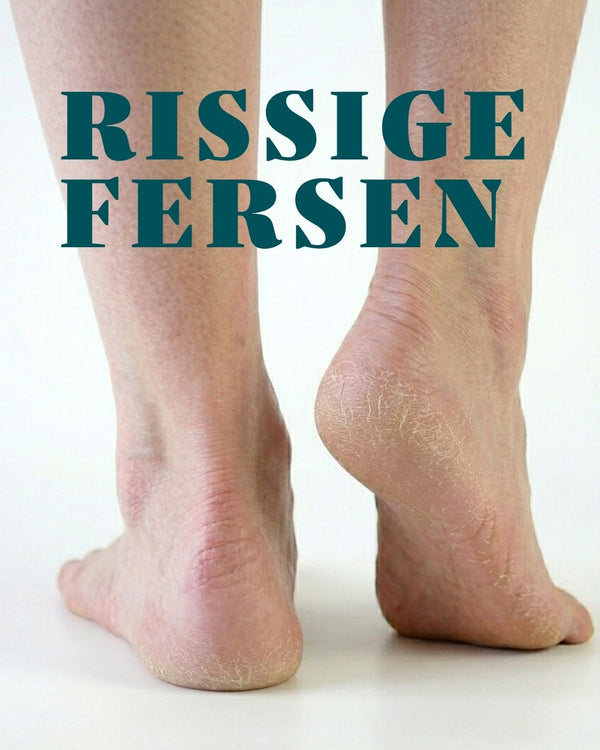
The outer layer of the heel consists of dead cells. As long as a crack lies only in this layer, you see a fine line and feel nothing. If it reaches the living skin, it hurts when you step down, bleeds or weeps. In a study of 93 people, dry and cracked heels contained markedly less moisture and were less elastic than unaffected skin (Hashmi et al. 2015). How the cracks develop is explained in Why heel skin gets so thick and cracks.
| Sign | Where to go | How urgent |
|---|---|---|
| dry, rough heels, fine lines, no pain | care for them yourself | apply cream daily, review after a few weeks |
| thick callus that you can no longer smooth yourself | podiatry or cosmetic foot care | book an appointment at your convenience |
| deep cracks, pain when walking | podiatry; a doctor for open areas | soon |
| cracks that bleed or stay open; no improvement despite care | GP or dermatologist | within the next few days |
| spreading redness, swelling, warmth, weeping, pus or fever | doctor or out-of-hours medical service | the same day |
| diabetes, numbness or tingling in the feet, circulation problems | doctor and podiatry; do not remove callus yourself | with every change |
| blood-thinning medication or medication that suppresses the immune system | ask your doctor before you remove callus | before your next foot care session |
The table is a guide and does not replace an examination. Cracked heels can also be linked to a skin condition or another underlying condition; only a doctor can clarify that.
Foot care, podiatry, doctor: who does what?
The following describes the situation in Germany. “Podologin” and “Podologe” (podiatrist) are protected professional titles there. Anyone who wants to use them needs a licence; the title “Medizinische Fußpflegerin” or “Medizinischer Fußpfleger” (medical foot care practitioner) may likewise only be used with this licence or an equivalent older authorisation (§ 1 PodG). Training takes two years full-time, or at most four years part-time, and ends with a state examination (§ 4 PodG). It comprises at least 2,000 hours of teaching and 1,000 hours of practical training (§ 1 PodAPrV).
The law also describes what the training should enable (our translation): to carry out foot care measures independently, “to recognise pathological changes or symptoms of diseases of the foot that require medical clarification” and “to carry out medically indicated podiatric treatments under medical guidance or at a doctor's instigation” (§ 3 PodG). A podiatry practice therefore recognises when you also need medical advice.
Cosmetic foot care (pedicure) is aimed at healthy feet: trimming nails, smoothing callus, caring for the skin. The German Podiatrists Act contains no requirements for the terms “Fußpflege” (foot care) or “kosmetische Fußpflege” (cosmetic foot care). So feel free to ask what training someone has.
GPs and dermatologists make diagnoses and treat open areas. For prescribed podiatric therapy, the German Remedies Directive (Heilmittel-Richtlinie) states explicitly: it is only permitted for damage to the foot without a skin defect; the treatment of skin defects and inflammation is a medical service provided by doctors (§ 27 para. 3 HeilM-RL).
Podiatric therapy on a doctor's prescription
The Remedies Directive of the Federal Joint Committee (Gemeinsamer Bundesausschuss) governs when doctors in Germany can prescribe podiatric therapy. Version cited: last amended on 15 May 2025, in force since 5 August 2025.
- For whom: podiatric therapy is a prescribable remedy if it serves to treat pathological damage to the skin and toenails where there is demonstrable loss of sensation in the feet as a result of diabetes mellitus (diabetic foot syndrome), or comparable damage due to a sensory or sensorimotor neuropathy or a spinal cord (paraplegic) syndrome (§ 27 para. 1).
- Requirement: it is only considered for patients who would suffer irreversible consequential damage to their feet without it. Among the risk factors, the directive names deep hyperkeratoses or hyperkeratoses with bleeding into the skin and rhagades, in other words deep thickened callus or callus with bleeding and cracks (§ 27 para. 2).
- Content: the professional removal of pathologically thickened callus, the treatment of pathologically thickened toenails, instruction in your own foot, skin and nail care and, at every session, a look at shoes and insoles (§ 27a).
- Scope: the catalogue of remedies lists up to six sessions per prescription and recommends an interval of four to six weeks.
- Beforehand: before the first prescription, an initial medical assessment with a skin finding and a neurological finding is required (§ 27b).
The directive also governs the treatment of ingrown toenails with nail correction braces (§ 28). Whether a prescription is an option for you is decided by your doctor. Your health insurer can tell you about costs.
Stricter rules apply with diabetes and reduced sensation
If you feel pressure and pain in your feet less well, you notice small injuries late. The international practical guidelines of the IWGDF working group list what people with diabetes and an increased risk of foot damage should learn (Schaper et al. 2024):
- look at both feet completely every day, including between the toes; anyone who cannot do this needs assistance
- wash the feet daily, with water below 37 °C, and dry them carefully
- do not remove calluses and corns with chemical agents or plasters, but see a healthcare professional
- do not walk barefoot, not even at home
- inform your healthcare team if a blister, cut, scratch or open area has developed
Which care suits your feet is something to discuss with your doctor.
What to do and what to avoid until your appointment
Avoid:
- Do not cut, plane or pull off callus at the crack. Blades easily injure the living skin.
- Do not put cream, oil or home remedies into open, bleeding or weeping cracks.
- No callus-dissolving plasters or acid preparations on cracked skin.
- Do not walk barefoot or in open-backed shoes (the reason is explained here).
Do:
- Wash your feet daily, briefly and with lukewarm water, and dry them thoroughly.
- Wear closed, well-fitting shoes and fresh socks.
- Keep applying cream to the intact skin around the heel, leaving out the open area.
- Note how long the crack has been there and take a photo so that its course can be compared.
If your heels are only dry and rough, daily care helps: Calluses keep coming back describes the routine, Pumice stone, file or callus plane? the tools.
What to bring to your appointment
- a list of your medication, especially blood thinners, and of your known conditions and allergies
- the shoes you wear most often, and your insoles
- the care products you use, or a photo of the ingredient list
- your notes: since when, where exactly, what you have tried so far
Come with washed feet, without freshly applied cream and without nail polish, so that skin and nails can be assessed properly.
Frequently asked questions
When does a crack in the heel count as deep?
When it no longer lies only in the callus but reaches the living skin. You can tell because it hurts when you step down, bleeds or weeps. Fine lines that do not hurt are superficial.
Do I need a doctor's prescription for podiatry?
You can also book an appointment without a prescription; clarify the costs with the practice beforehand. In Germany, the Remedies Directive provides for a prescription of podiatric therapy in the cases named above, for example diabetic foot syndrome.
How long can I care for my heels myself before I make an appointment?
With dry heels and fine, painless lines you can apply care daily for a few weeks and then check whether anything improves. With pain, blood, redness or swelling, do not hesitate. With diabetes or reduced sensation, have every change looked at straight away.
Can I keep using my foot cream if a heel has cracked?
On intact skin yes, in open cracks no. Creams with essential oils, such as our solid foot cream with rosemary and sage, can sting on injured skin. Which fragrance components a product contains is explained in Essential Oils and Fragrance Allergens.
Should I wear socks at night if my heels are cracked?
With dry heels and superficial lines, yes: cotton socks keep the cream on your skin, see Foot cream overnight with socks. With open or weeping areas, have the heel looked at first.
At forpeople
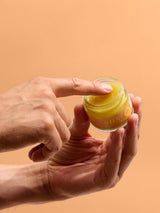
We make cosmetics. They are intended for the care of intact skin and do not treat medical conditions or open areas. For dry, rough heels there is the water-free Solid Foot Cream – Rosemary & Sage (40 g, €9.90) made from sunflower oil, beeswax, olive oil and shea butter, with essential oils of rosemary, eucalyptus and clary sage, and, to refill the tin, the Solid Foot Cream Refill - Rosemary & Sage (40 g, €7.90). More on this: Why do feet get drier with age? · Dry feet in winter · Urea or water-free cream?
From the blog: Cracked Heels, Dry Feet: What Really Helps – and What Doesn't
Sources
- Gesetz über den Beruf der Podologin und des Podologen (Podologengesetz – PodG) vom 4. Dezember 2001 (BGBl. I S. 3320), zuletzt geändert durch Artikel 8 des Gesetzes vom 24. Februar 2021 (BGBl. I S. 274); §§ 1, 3, 4. https://www.gesetze-im-internet.de/podg/
- Ausbildungs- und Prüfungsverordnung für Podologinnen und Podologen (PodAPrV) vom 18. Dezember 2001 (BGBl. 2002 I S. 12), zuletzt geändert durch Artikel 11 der Verordnung vom 7. Juni 2023 (BGBl. 2023 I Nr. 148); § 1. https://www.gesetze-im-internet.de/podaprv/
- Gemeinsamer Bundesausschuss: Richtlinie über die Verordnung von Heilmitteln in der vertragsärztlichen Versorgung (Heilmittel-Richtlinie/HeilM-RL) in der Fassung vom 19. Mai 2011, zuletzt geändert am 15. Mai 2025 (BAnz AT 04.08.2025 B3), in Kraft getreten am 5. August 2025; §§ 27 bis 28 und Heilmittelkatalog, Abschnitt „Maßnahmen der Podologischen Therapie“. https://www.g-ba.de/richtlinien/12/
- Schaper NC, van Netten JJ, Apelqvist J, Bus SA, Fitridge R, Game F et al. (2024): Practical guidelines on the prevention and management of diabetes-related foot disease (IWGDF 2023 update). Diabetes Metab Res Rev 40(3): e3657. https://doi.org/10.1002/dmrr.3657
- Hashmi F, Nester C, Wright C, Newton V, Lam S (2015): Characterising the biophysical properties of normal and hyperkeratotic foot skin. J Foot Ankle Res 8: 35. https://doi.org/10.1186/s13047-015-0092-7