


What makes a solid hand cream
A solid hand cream contains no water. It is made of wax, oils and often a plant butter such as shea or cocoa butter. As it cools, the wax crystallises and forms a fine network that holds the liquid oil in place. Mixtures like this are called oleogels. How firm they become does not depend on the amount of wax alone: in a study that always used 6% beeswax, the type of oil by itself changed the firmness, the crystal shape and how well the oil stayed bound (Frolova et al. 2022).
The reason a solid cream is hard in the tin yet softens on your hand lies in the wax. Beeswax does not melt at one fixed point but over a range of about 61 to 66 °C, and it already becomes plastic, meaning mouldable, at around 32 °C (Huanbutta et al. 2026). The warmth of your hand is enough to rub off a thin layer. On the skin, water-free bases made of waxes and oils form a film that reduces water loss; at the same time they are considered rather greasy (Oliveira and Almeida 2023). For more on the principle, see Water-free cosmetics and Occlusion and TEWL; for the terms, see Ointment, balm, butter, solid cream.
The criteria at a glance
This checklist helps you assess a solid hand cream in a shop or online. No single criterion makes a good cream on its own; what matters is that the cream suits your hands and your everyday life.
| Criterion | What to look for | Why it matters |
|---|---|---|
| Start of the INCI list | Wax, plant oils, plant butter at the top | The list is ordered by weight; the basic structure comes first |
| Type of wax | Cera Alba (beeswax) or plant waxes such as candelilla wax | Determines firmness, skin feel and whether the cream is vegan |
| Firmness | Keeps its shape at room temperature, rubs off with a warm hand | Too hard: barely rubs off. Too soft: smears and loses shape in your bag |
| Fragrance | Essential oils, “Parfum” and individually named fragrance substances at the end of the list | Important if you want to avoid fragrance |
| Length of the list | Few, understandable ingredients | Not a measure of quality in itself, but easier to check |
| Labelling | Nominal content in grams, shelf life (date or open-jar symbol) | Mandatory information under the EU Cosmetics Regulation |
| Format and packaging | Bar, stick or tin; material; refill option | Handling on the go, protection from dirt and heat |
Reading the ingredient list
Every cosmetic product carries a list of ingredients under the heading “Ingredients”. It is ordered by decreasing weight; ingredients below 1% may follow at the end in any order. Fragrances appear as “Parfum”, and certain fragrance substances must also be named individually (Regulation (EC) No 1223/2009, Art. 19). For solid hand creams this means:
- If a wax comes first or second, the cream is usually firm and easy to rub on. If it comes further down, it is softer, more like a balm.
- Oils with INCI names such as Olea Europaea Fruit Oil (olive oil), Helianthus Annuus Seed Oil (sunflower oil) or Simmondsia Chinensis Seed Oil (jojoba oil) form the oil phase. Butters such as Butyrospermum Parkii Butter (shea butter) or Theobroma Cacao Seed Butter (cocoa butter) make the cream firmer and richer.
- No “Aqua” in the list means no added water. Why that matters for preservation is explained in Preservation and water in cosmetics.
- Names such as Limonene, Linalool, Geraniol or Citral at the end indicate fragrance substances, often from essential oils. More in Essential oils and fragrance allergens and Without fragrance and essential oils.
A step-by-step guide for all kinds of cosmetics is in How to read an INCI list.
Beeswax or plant wax
Most solid hand creams use beeswax. Vegan formulas often use candelilla wax. The two feel noticeably different: according to the EU specification for food additives, beeswax melts in the range of 62 to 65 °C and candelilla wax at 68.5 to 72.5 °C (Regulation (EU) No 231/2012). Candelilla wax is harder and more brittle, so a vegan solid cream often needs less of it and feels a little different. Which wax suits you better comes down to preference and whether you want to avoid animal-derived ingredients. The differences in detail are in Candelilla wax or beeswax and Beeswax in skin care.
Bar, stick or tin
Solid hand cream comes in three basic formats. The formula can be the same; the handling differs a lot.
| Format | How you apply it | Strengths | What to watch |
|---|---|---|---|
| Bar (piece without a fixed case) | Rub directly over the backs of your hands and palms | Little packaging, easy to dose | Needs a dish or tin at home, softens in warm bags |
| Stick (twist-up tube) | Targeted on knuckles, fingertips, cuticles | Your hands stay clean while applying, good for single spots | The formula has to be firmer so the stick does not break; large areas take longer |
| Tin | Rub a finger or the back of your hand over the surface | Protected from dirt, closes in your bag, often refillable | Only take it out with dry, clean fingers |
If you are on the move a lot, a tin or a stick is usually easier. For dry knuckles and fingertips a stick is handy; see also Dry knuckles and Cracked fingertips in winter. How to keep water-free cosmetics clean is explained in Hygiene with water-free cosmetics.
Packaging, refills and storage
With packaging, concrete information helps more than general buzzwords: what is the tin made of, can it be refilled, is the content sold on its own? A tin that you refill with a refill stays in use over many refills. How that works in practice is explained in Refillable hand cream.
Solid creams react to heat. In summer, in the car or on a radiator they soften or melt and set again as they cool; the surface may change in the process. Store them somewhere cool and dry. More in Storing solid cosmetics. How long a cream keeps is shown by the best-before date or the open-jar symbol (Shelf life and the PAO symbol). Without water it is mainly the oils that age; if the cream smells rancid, stop using it.
Frequently asked questions
Is a solid hand cream better than a cream from a tube?
Not in general. Solid creams are water-free and leave a film on the skin; water-based tube creams often absorb faster. What suits when is explained in Solid cream or tube.
Why does my solid hand cream feel greasy?
Usually it is too much. Two or three short strokes over the back of your hand are enough, then massage in well. More in How do I apply a solid cream? and Greasy or cared for?.
Is every solid hand cream vegan?
No. If the list contains Cera Alba or Cera Flava (beeswax), lanolin or honey, it is not vegan. Vegan versions use plant waxes such as candelilla wax.
How often should I apply a solid hand cream?
After every hand wash and before bed is a good rhythm, because washing removes the film again. The background is in Dry hands despite moisturising.
What should I do with open or bleeding cracks?
Care creams do not belong on open skin. If cracks do not close, are painful, red or swollen, have them checked by a doctor.
At forpeople
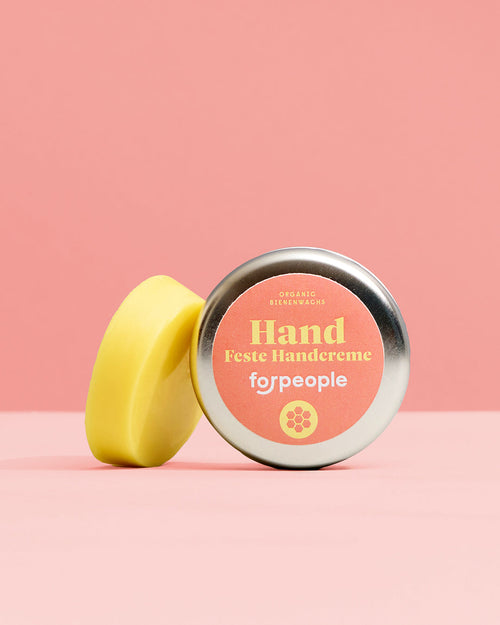
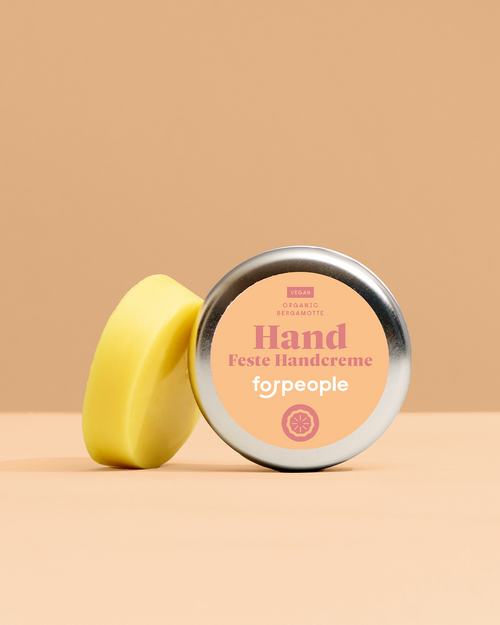
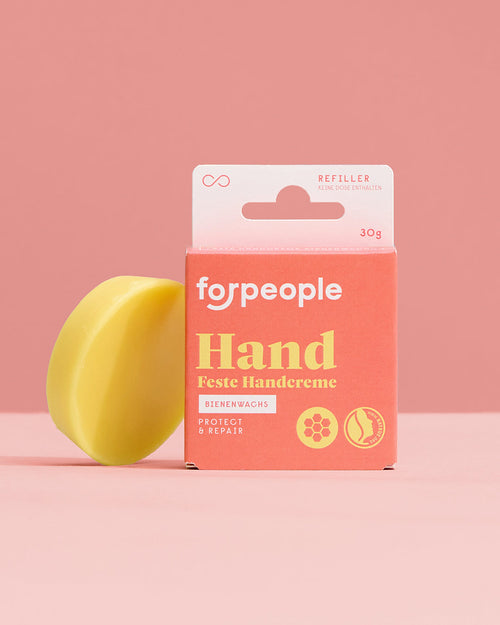
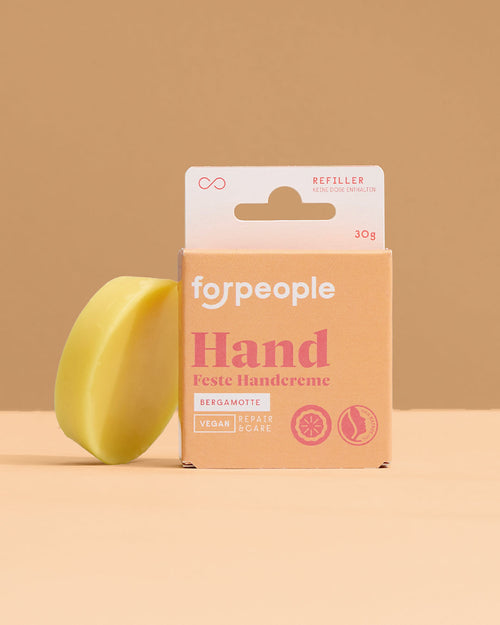
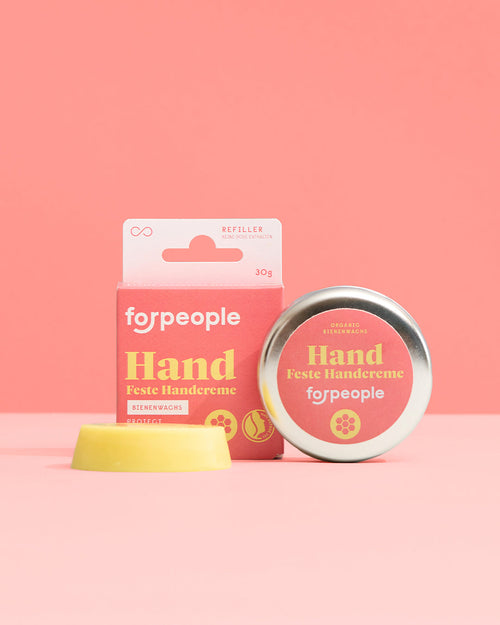
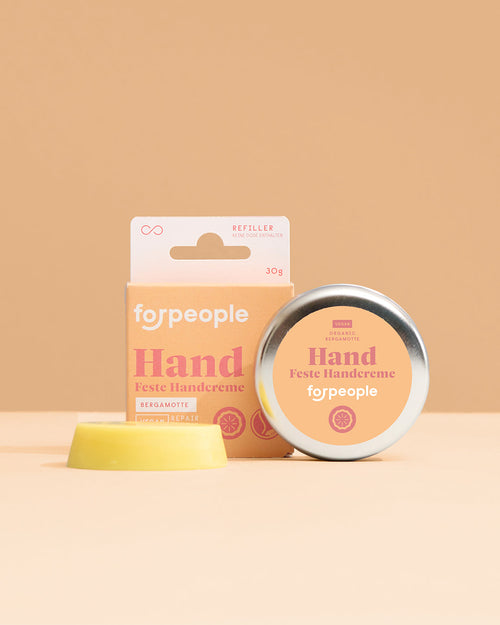
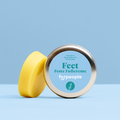
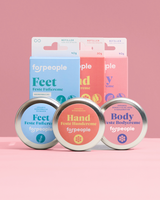
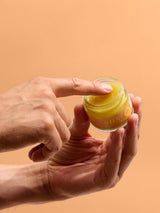
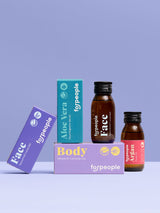
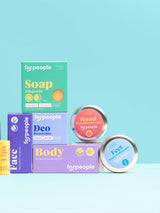
Our solid hand creams come in a metal tin that you can refill. The Solid Hand Cream - Beeswax (30 g, €9.90) has five ingredients according to its INCI: beeswax, olive and sunflower oil, St. John's wort and aloe extract, with no added fragrance or essential oils. The vegan Solid Vegan Hand Cream - Bergamot (30 g, €9.90) uses candelilla wax with jojoba, olive and hemp oil plus shea butter and is scented with lemon and bergamot oil. For refilling there are the Solid Hand Cream Refill - Beeswax and the Solid Vegan Hand Cream Refill - Bergamot (€7.90 each), and as a double pack the Hand Care Set – For Rough, Cracked Hands (2× Solid Hand Cream) and the Vegan Hand Care Set – For Dry Hands (2× Bergamot) (€16.90 each). An extra Empty Cosmetic Tin (€3.90) is handy for a second bag, for example. More on this: Why does solid cream last so long? · Why hands dry out faster · How hand cream tests measure · What is a lotion bar?
Sources
- Frolova Y, Sarkisyan V, Sobolev R, Makarenko M, Semin M, Kochetkova A (2022): The Influence of Edible Oils' Composition on the Properties of Beeswax-Based Oleogels. Gels 8(1): 48. https://doi.org/10.3390/gels8010048
- Huanbutta K, Chuttong B, Danmek K, Sriamornsak P, Suwanpitak K, Sangnim T (2026): Beeswax in Pharmaceutical Sciences: A Comprehensive Review of Its Chemical Composition, Functional Applications, Types, and Formulation Roles. Int J Mol Sci 27(8): 3486. https://doi.org/10.3390/ijms27083486
- Oliveira R, Almeida IF (2023): Patient-Centric Design of Topical Dermatological Medicines. Pharmaceuticals (Basel) 16(4): 617. https://doi.org/10.3390/ph16040617
- European Parliament and Council (2009): Regulation (EC) No 1223/2009 on cosmetic products, Art. 19. OJ L 342: 59. https://eur-lex.europa.eu/eli/reg/2009/1223/oj
- European Commission (2012): Commission Regulation (EU) No 231/2012 laying down specifications for food additives, Annex, E 901 beeswax and E 902 candelilla wax. OJ L 83: 1. https://eur-lex.europa.eu/eli/reg/2012/231/oj