


What the wax does in a lip balm
A water-free lip balm stick consists of wax, oils and often a plant butter. The wax gives the stick its structure: its crystal lattice keeps the formula stable (Loiacono et al. 2025). A thin film of wax and oil stays on the lips. Why lips need this film is explained under Why do lips dry out so quickly?
How strongly the wax shapes a stick is shown by a study on lipsticks made of beeswax, cocoa butter and plant oils (Kasparaviciene et al. 2016):
- The more beeswax the formula contained, the harder the stick and the higher its melting point.
- The 13 test formulas with roughly 12 to 33% beeswax melted between 51 and 69 °C.
- A mixture of roughly 20% beeswax, 58% oils and 23% cocoa butter performed best.
Beeswax and plant waxes compared
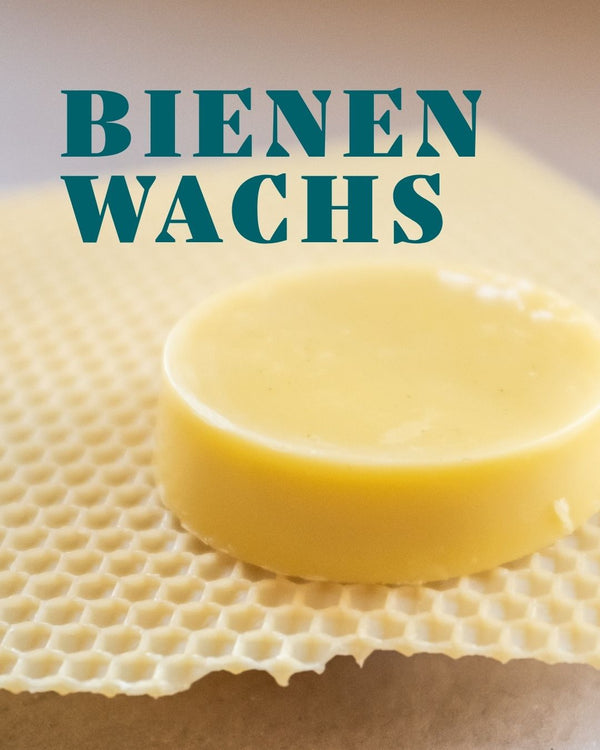
Beeswax is the wax honeybees use to build their combs. Plant waxes come from leaves, stems, seeds or fruit peel. Melting range and composition in the table follow a review article (Dimakopoulou-Papazoglou et al. 2025), the names in the ingredient list follow the EU database CosIng.
| Wax | Name in the ingredient list | Origin | Melting range | Main components |
|---|---|---|---|---|
| Beeswax | Cera Alba | combs of the honeybee | 61–65 °C | wax esters 60–80%, hydrocarbons 10–25% |
| Candelilla wax | Euphorbia Cerifera Cera or Candelilla Cera | stems and leaves of a spurge plant from northern Mexico | 68–73 °C | hydrocarbons 60–65%, wax esters 20–30% |
| Carnauba wax | Copernicia Cerifera Cera | leaves of a Brazilian palm | 80–85 °C | wax esters 50–70%, fatty alcohols 15–30% |
| Sunflower wax | Helianthus Annuus Seed Cera | seed hulls; a by-product of refining the oil | 75–80 °C | wax esters 96–97% |
| Rice wax | Oryza Sativa Cera | rice bran; a by-product of refining the oil | 78–82 °C | wax esters 90–97% |
Berry wax (Rhus Verniciflua Peel Cera) is, according to CosIng, obtained from the fruit peel of a sumac species; it is not covered in the review article. All values vary with origin and measuring method; other sources give slightly different figures. More on the two most common waxes: Candelilla wax or beeswax: the differences.
Hardness, melting point, feel: what you notice on your lips
Of the waxes listed, beeswax has the lowest melting range. Carnauba wax melts at the highest temperature and is considered a hard wax (Dimakopoulou-Papazoglou et al. 2025). Candelilla wax, too, is harder and more brittle than beeswax; the measurements are on the comparison page linked above. Beeswax therefore cannot be replaced one for one. One approach is to blend several plant waxes.
That this can work is shown by a paper from cosmetic science (Loiacono et al. 2025). It tested a blend of fruit wax, sunflower wax, glyceryl stearate and stearic acid as a replacement for beeswax:
- The melting point of the blend was around 65 °C, that of the beeswax it was compared with around 69 °C.
- 25 test persons found no significant difference between the stick with beeswax and the vegan stick.
One caveat: the paper was written together with a raw material manufacturer whose own wax blend was tested. It shows what is possible, not that every vegan lip balm turns out this way.
In everyday use, experience is: a stick with a lot of beeswax is firm in the cold and softens with the warmth of your lips. Beeswax also brings a light honey scent; more on that under Why does beeswax smell of honey, and why does the scent change?
How to recognise a vegan lip balm in the ingredient list
The EU Cosmetics Regulation does not define “vegan”. It does, however, require two things (Regulation (EC) No 1223/2009): claims must not imply characteristics that a product does not have (Article 20). And every cosmetic product must list its ingredients under the heading “Ingredients”, in descending order of weight; only ingredients below 1% may be listed in any order at the end (Article 19). These names stand for raw materials of animal origin:
| Name in the list | What it is | Origin |
|---|---|---|
| Cera Alba | beeswax | combs of the honeybee |
| Mel | honey | gathered and stored by honeybees |
| Propolis Extract, Propolis Cera | propolis | resinous material from the beehive |
| Royal Jelly | royal jelly | glandular secretion of worker bees |
| Lanolin | wool wax | sebaceous secretion of sheep |
| CI 75470 | carmine, a red colourant | dried female cochineal insects |
| Shellac | shellac | resin secreted by a scale insect |
The information comes from CosIng; that carmine is obtained from insects is stated in the EU specification for the colourant (Regulation (EU) No 231/2012). For some substances the name only gives the chemical compound and not the source, squalane for example. In that case, asking the manufacturer helps. How a list is structured is explained under How to Read an INCI List.
What “vegan” does not tell you
“Vegan” describes the origin of the raw materials, nothing more.
- Nothing about whether the product suits your skin: That depends on all the ingredients and on your skin. Plant-derived substances can also trigger reactions, for example components of essential oils; more on this under Essential Oils and Fragrance Allergens.
- Nothing about “natural”: From a vegan point of view, waxes can come from plants, from mineral sources or from synthesis (Loiacono et al. 2025). What makes natural cosmetics is explained under Natural cosmetics standards explained.
- Nothing about animal testing: The Cosmetics Regulation prohibits animal testing of finished cosmetic products and their ingredients in so far as it serves to meet the requirements of that regulation (Article 18). This applies to every lip balm, with or without beeswax.
When should you seek medical advice?
Have it checked by a doctor if your lips stay cracked, reddened or swollen for weeks despite care, if they weep or if a spot does not go away. If you suspect you are reacting to a lip balm, stop using it and take the product with its ingredient list to the practice. A contact allergy can involve animal-derived as well as plant-derived ingredients, such as propolis or fragrance substances; this can be clarified with a patch test by a skin specialist. More on this: Allergic to tree resin, colophony or propolis?
What customers say
A selection of verified reviews from our shop (collected via Judge.me), translated from German and partly shortened.
“Helps very well with dry lips. The consistency is perfect and has clearly improved compared with earlier products.”
Customer review of Lip Balm - Lemongrass, 5 out of 5 stars, January 2026, verified purchase
Frequently asked questions
Is the forpeople lip balm vegan?
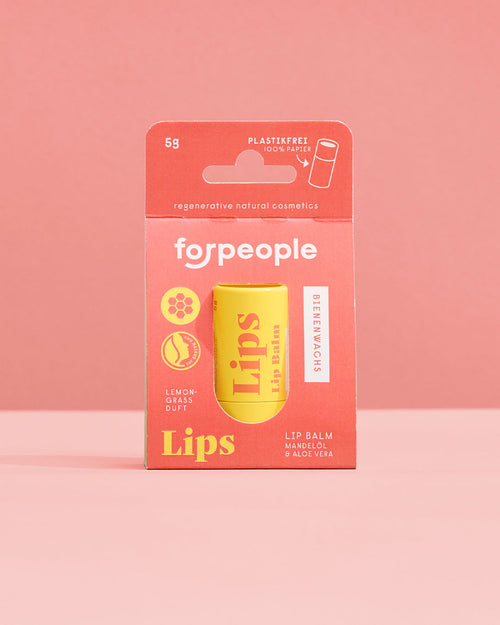
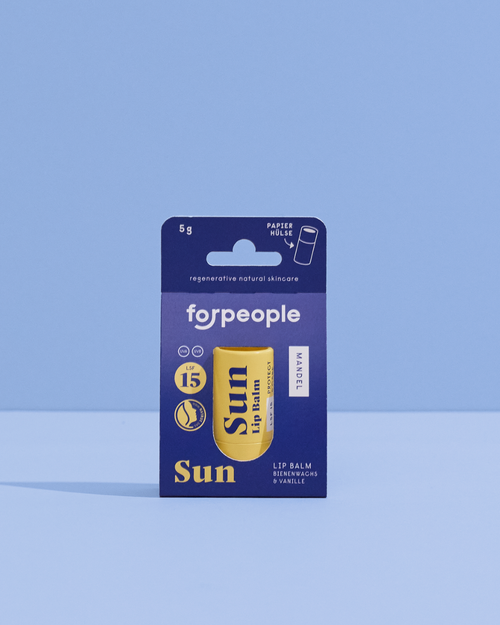
No. Both lip balms list beeswax (Cera Alba) first in the ingredient list. A few older reviews call the lip balm “vegan”; that is not correct for the current formula.
Why is a stick with beeswax so firm at first?
Because the wax gives the stick its shape: the higher the wax content, the harder it is. In reviews, customers describe our lip balm as firm at first, even more so in winter. Hold the stick against your lips for a moment or warm it in your hand.
Does lip balm with beeswax smell or taste of honey?
Slightly, yes: beeswax brings a scent of its own. In reviews, the taste of our lip balm is mostly described as neutral, occasionally as a hint of honey. Honey itself (Mel) is not in either of the two formulas.
Does beeswax care for the lips better than plant wax?
There is no general evidence for that. Both form a film; how a stick feels and how long the film stays depends on the whole formula. In the comparison mentioned above, 25 test persons found no significant difference.
Does lip balm with beeswax also contain propolis?
Not automatically. Propolis is a separate raw material and appears in the list as “Propolis Extract” or “Propolis Cera”. It is not listed as an ingredient in either of our two lip balms. Under the Cosmetics Regulation, impurities in raw materials do not count as ingredients for the list.
At forpeople
Both our lip balms are made with beeswax and are therefore not vegan: the Lip Balm - Lemongrass (5 g, €4.90) with beeswax, sunflower oil, shea butter, almond oil, hemp oil, aloe vera extract and lemongrass essential oil, and the Lip Balm - SPF15 Almond & Vanilla (5 g, €7.90), which contains the mineral UV filters zinc oxide and titanium dioxide instead of the essential oil. We do not currently offer a vegan lip balm.
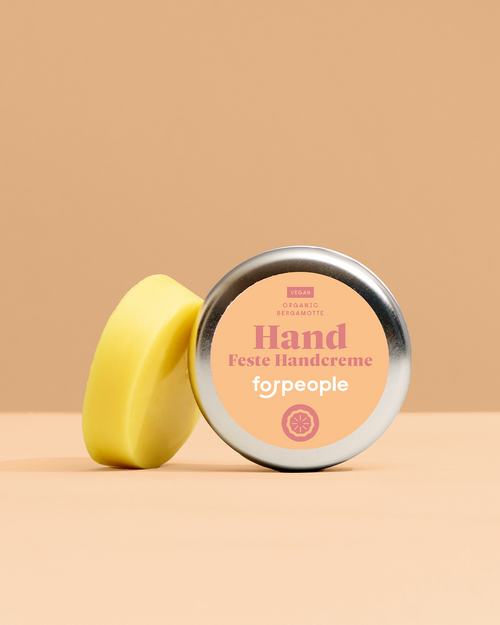
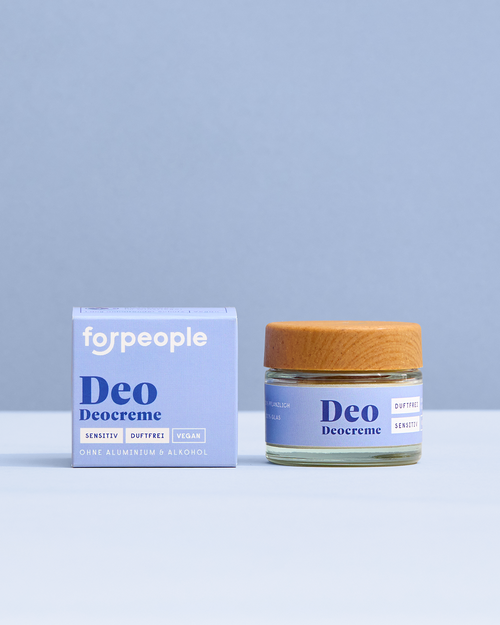
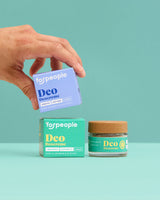
Without beeswax and, according to the ingredient list, without raw materials of animal origin are our Solid Vegan Hand Cream - Bergamot (30 g, €9.90) and the Sensitive Deodorant Cream (50 g, €8.90); both contain candelilla wax. They are not intended for the lips. Which other products contain beeswax is listed under Beeswax in skin care: composition and role. All products are cosmetics; if your skin reacts, stop using them.
More on this: Do I need lip balm with SPF? · Candelilla wax or beeswax: the differences · Lanolin or beeswax: what is the difference?
From the blog: Beeswax in Cosmetics: What It Does – and Why We Love It · Vegan Solid Hand Cream: Why Water-Free Hand Care Can Make Sense for Dry Hands
Sources
- Dimakopoulou-Papazoglou D, Zampouni K, Katsanidis E (2025): Natural Waxes as Gelators in Edible Structured Oil Systems: A Review. Gels 11(8): 656. https://doi.org/10.3390/gels11080656
- Kasparaviciene G, Savickas A, Kalveniene Z, Velziene S, Kubiliene L, Bernatoniene J (2016): Evaluation of Beeswax Influence on Physical Properties of Lipstick Using Instrumental and Sensory Methods. Evid Based Complement Alternat Med 2016: 3816460. https://doi.org/10.1155/2016/3816460
- Loiacono M, Padovano L, Malacarne MC, Conti S, Caruso E (2025): Formulation and evaluation of alternative to beeswax for vegan lipsticks. Int J Cosmet Sci 47(4): 626–638. https://doi.org/10.1111/ics.13060
- Europäisches Parlament und Rat (2009): Verordnung (EG) Nr. 1223/2009 vom 30. November 2009 über kosmetische Mittel, Artikel 18, 19 und 20, Anhang IV. ABl. L 342 vom 22.12.2009, S. 59; konsolidierte Fassung vom 18. Mai 2026. https://eur-lex.europa.eu/eli/reg/2009/1223/oj
- Europäische Kommission: CosIng, Datenbank für kosmetische Inhaltsstoffe. Einträge Cera Alba, Candelilla Cera, Euphorbia Cerifera Cera, Copernicia Cerifera Cera, Helianthus Annuus Seed Cera, Oryza Sativa Cera, Rhus Verniciflua Peel Cera, Mel, Propolis Extract, Propolis Cera, Royal Jelly, Lanolin, CI 75470, Shellac und Squalane, abgerufen am 3. Oktober 2026. https://ec.europa.eu/growth/tools-databases/cosing/
- Europäische Kommission (2012): Verordnung (EU) Nr. 231/2012 vom 9. März 2012 mit Spezifikationen für die in den Anhängen II und III der Verordnung (EG) Nr. 1333/2008 aufgeführten Lebensmittelzusatzstoffe, Eintrag E 120 (Echtes Karmin). ABl. L 83 vom 22.3.2012, S. 1. https://eur-lex.europa.eu/eli/reg/2012/231/oj