


Where the honey scent comes from
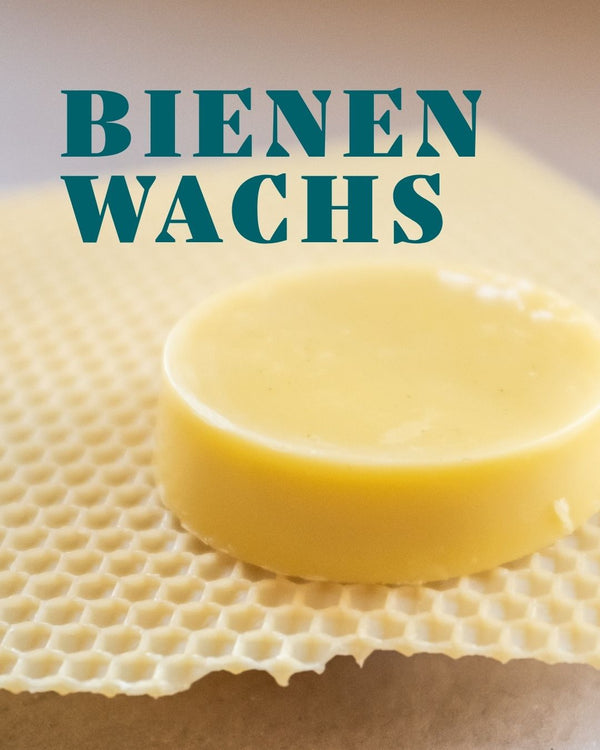
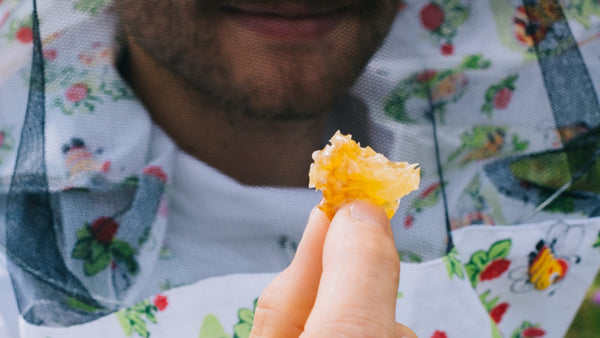
Bees produce wax in glands on their abdomen and build the comb from it. Freshly built wax is white. With use in the hive it darkens because pollen and other substances get into it; older combs also contain a good portion of propolis, the resinous sealant bees use (Krell 1996). Honey and pollen are stored in the cells. So the wax is constantly surrounded by scented substances.
That beeswax smells of honey is even written into an EU regulation: the purity criteria for the food additive E 901 describe it as pieces or plates “having an agreeable, honey-like odour” (Regulation (EU) No 231/2012). The scent was studied chemically as early as 1977: a research group used English beeswax with a good honey aroma as a source of honey volatiles and identified 28 compounds conclusively and a further 20 tentatively (Ferber & Nursten 1977). A recent review speaks of over 50 aroma compounds that give the wax its honey-like scent (Huanbutta et al. 2026).
Even so, wax and honey do not smell quite the same. A Polish research group compared wax, bee bread, pollen and honey from the same apiary. In the wax it found 20 volatile compounds, mainly alkanes (54.1%) and aldehydes (37.1%) such as octanal and nonanal. A trained panel rated the honey note two to three times as strong in honey as in wax and described a “waxy” note only for the wax (Starowicz et al. 2021). So beeswax smells of honey and of wax.
Yellow and white wax: why some hardly smells
Yellow beeswax is obtained by melting honeycomb with hot water and removing foreign matter; white beeswax is obtained by bleaching yellow beeswax (Regulation (EU) No 231/2012). Pure white wax on the market has always been bleached. According to the reference book of the UN Food and Agriculture Organization (FAO), bleaching destroys at least the aromatic compounds; bleached wax no longer has the typical aroma. Overheating also costs aroma (Krell 1996).
In pharmacy, yellow wax is called “Cera Flava” and bleached white wax “Cera Alba” (Huanbutta et al. 2026). In the ingredient list of cosmetics, by contrast, beeswax appears as “Cera Alba” or “Beeswax”; the EU glossary of ingredient names has no separate name for yellow wax (Implementing Decision (EU) 2022/677). So the name there does not tell you whether a wax has been bleached. The beeswax in forpeople products is unbleached. The scent says little about how a product cares for the skin. More on this: Beeswax in skin care: composition and role.
Why every batch smells a little different
Beeswax is a natural material, and its scent has several causes:
| What shapes the scent | What it does | Reference |
|---|---|---|
| Honey, pollen and propolis in the hive | the wax darkens and carries volatile substances | Krell 1996; Ferber & Nursten 1977 |
| Bee colony, region, plants, age of the wax | the composition varies | Starowicz et al. 2021; Huanbutta et al. 2026 |
| Heating during processing | prolonged heating above 85 °C can change colour and odour | Huanbutta et al. 2026 |
| Bleaching | yellow wax becomes white wax; the typical aroma is lost | Regulation (EU) No 231/2012; Krell 1996 |
In a cream, the other raw materials add to this. Olive oil, shea butter and cocoa butter have a smell of their own, and they too are harvested products. Small differences between two tins of the same cream are therefore normal. More on one of these raw materials: Shea butter: composition, origin and refining.
Why the scent of a cream changes over time
- Volatile substances evaporate. Each time you open the tin, a small part escapes; over months the honey note becomes quieter.
- Essential oils change. Their components are volatile and reactive; temperature, light and oxygen in particular determine how stable they remain (Turek & Stintzing 2013). A citrus or herbal scent then seems flatter. More on this: Essential Oils and Fragrance Allergens.
- Oils oxidise. Plant oils react slowly with oxygen. At first you can hardly smell it, later it smells rancid.
- Your nose gets used to it. If you use a product every day, you perceive its smell less strongly than on the first day.
The wax itself is the most stable part here: clean beeswax can be stored for a very long time without losing its major characteristics (Krell 1996). In a cream it is mainly the oils that age.
| What you notice | What it means | What to do |
|---|---|---|
| The scent is fainter than when first opened | normal: volatile substances evaporate | keep using it, close the tin well |
| Sharp, musty, of old fat or modelling clay | the oils are rancid | stop using it; see How to tell if a skin oil is rancid |
| Damp, stale smell with spots or a coating | possible spoilage, for example after water has got into the tin | dispose of it |
How to keep the scent for longer
- Close the tin after each use: less scent escapes and less oxygen reaches the cream.
- Store cool and dark, not next to the radiator or in the car. More on this: Storing solid cosmetics: heat, summer and winter.
- Note the shelf-life statement; the symbols are explained on Cosmetics Shelf Life and the PAO Symbol.
Without added fragrance does not mean odourless
“Without added fragrance” means: the ingredient list contains no “Parfum”, no essential oil and none of the fragrance substances that must be listed individually, such as Linalool or Limonene. The smell of a raw material itself does not count. A cream made of beeswax and plant oils therefore smells of beeswax and plant oils. Overview: Without fragrance and essential oils: ingredients at a glance.
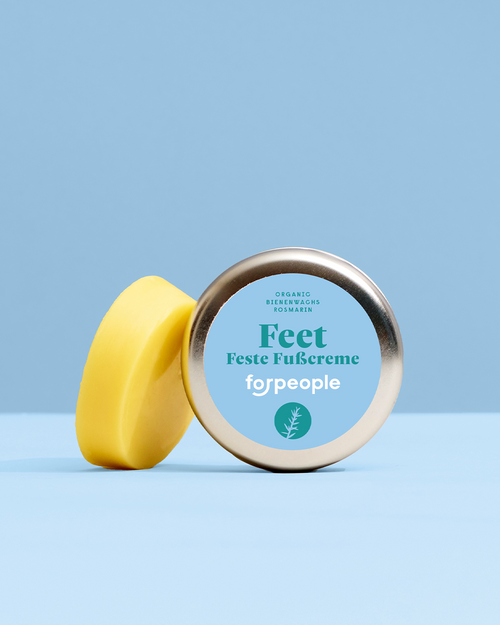
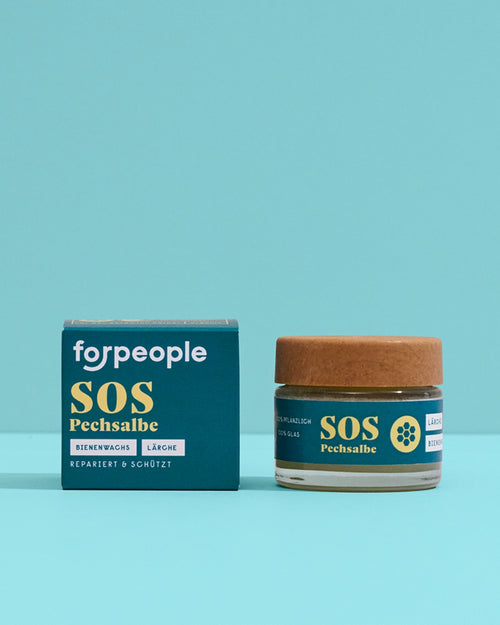
Conversely, essential oils mask the wax. In the Solid Foot Cream – Rosemary & Sage, beeswax is second in the ingredient list, but the scent is determined by rosemary, eucalyptus and sage oil. The SOS Pitch Salve - Larch Resin in a Glass Jar has no essential oil added; there the larch resin shapes the smell, and its terpenes are listed individually.
When to seek medical advice
A changed scent is no reason to see a doctor, a skin reaction is. If the skin turns red, stings or blisters after application, stop using the product; if the reaction persists, have it checked by a doctor. If you know or suspect a contact allergy to propolis, resins or fragrances, discuss products with beeswax with a skin specialist beforehand, because traces of propolis in the wax are possible. More on this: Allergic to tree resin, colophony or propolis? A trial at home does not replace an allergy test: Trying a new product: how do I test it on a small area?
Frequently asked questions
Is there honey in a cream that smells of honey?
Not necessarily. Honey would have to appear as a separate ingredient in the ingredient list. If it does not, the honey note comes from the beeswax. According to their ingredient lists, the Solid Hand Cream - Beeswax and the Solid Body Butter - Beeswax & Aloe Vera contain no honey.
Why does my new tin smell different from the last one?
Because beeswax and plant oils are natural raw materials whose smell varies slightly from batch to batch. In addition, a freshly opened tin has a stronger scent than one that has been in use for months.
My cream hardly smells of beeswax any more. Is it still good?
A fainter scent alone is not a sign that it has gone off. If the cream smells sharp, musty or of old fat, you should stop using it.
Is the smell of beeswax a fragrance?
No, not in the sense of the ingredient list. Beeswax brings its smell as a raw material; an added fragrance would appear there as “Parfum” or as an essential oil with the plant name.
I do not like the smell of beeswax. What is the alternative?
A cream with a plant wax, for example candelilla wax. It comes from a plant and brings no honey note; such formulas often contain essential oils, though. You will find the comparison of the two waxes on Candelilla wax or beeswax: the differences.
At forpeople
Our beeswax is unbleached, comes from northern Germany and from organic beekeeping with Bioland certification. Beeswax (“Cera Alba”) and no added fragrance, that is, neither Parfum nor essential oil: according to the ingredient lists this applies to the first three products (as of 3 October 2026). The fourth is the alternative without beeswax.
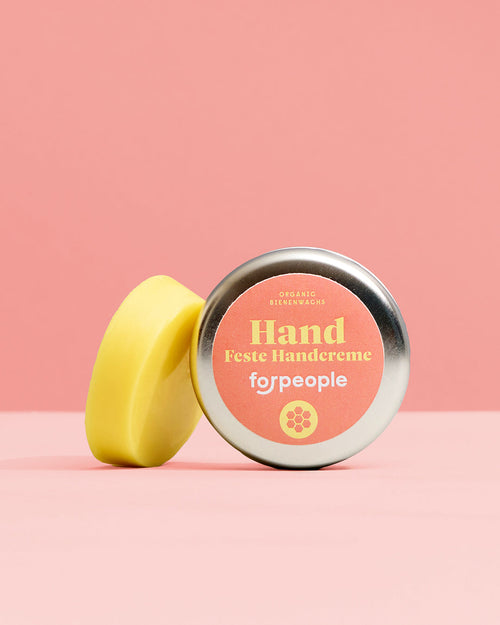
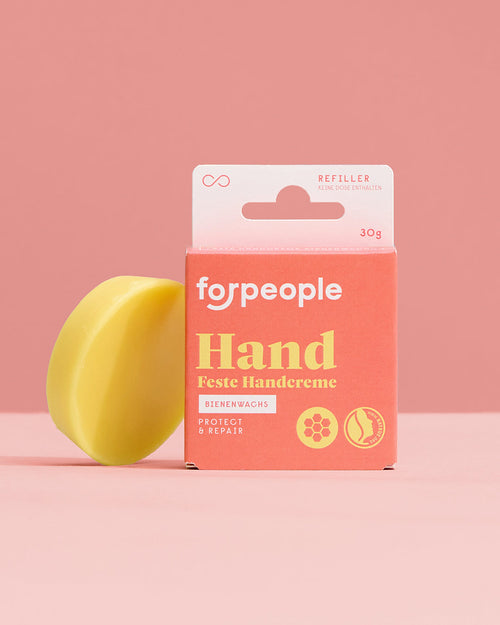
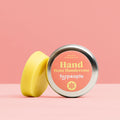
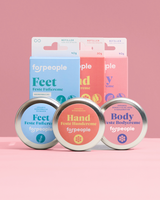
- Solid Hand Cream - Beeswax, 30 g, €9.90: Cera Alba is the first of five ingredients, followed by olive and sunflower oil. The product page describes a delicate, natural beeswax scent. For refilling there is the Solid Hand Cream Refill - Beeswax for €7.90.
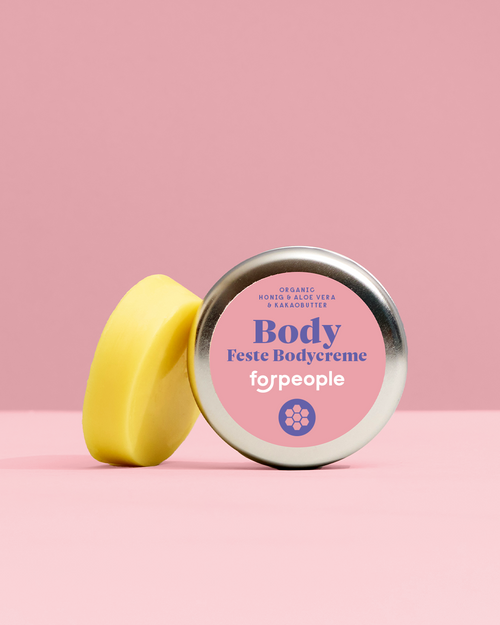
- Solid Body Butter - Beeswax & Aloe Vera, 40 g, €9.90: cocoa butter is first, Cera Alba third of six ingredients. It contains no honey; the product page attributes the delicate, natural honey scent to the beeswax.
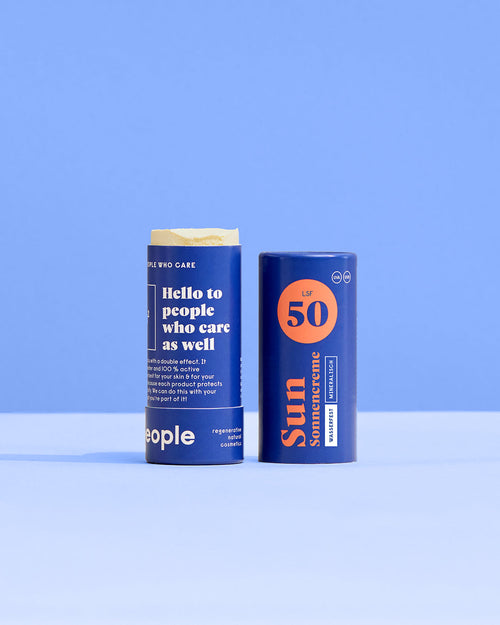
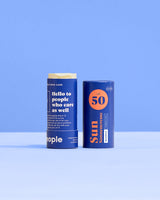
- Solid Sunscreen SPF50, 40 g, €17.90: shea butter is first, Cera Alba fifth of six ingredients.
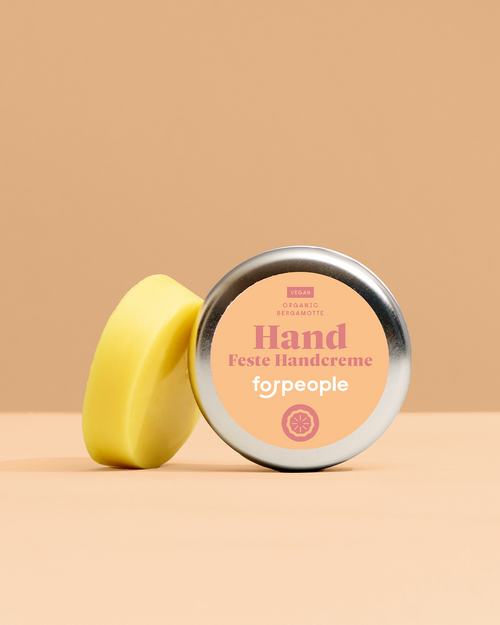
- Solid Vegan Hand Cream - Bergamot, 30 g, €9.90: with candelilla wax instead of beeswax; contains lemon and bergamot oil.
Read more: Lanolin or beeswax: what is the difference? · Lip balm with beeswax or vegan: what is the difference? · Petroleum jelly or beeswax salve: the difference · Can I still use last year's sunscreen?
From the blog: Beeswax in Cosmetics: What It Does – and Why We Love It · The many talents of beeswax
Sources
- Krell R (1996): Value-added products from beekeeping. FAO Agricultural Services Bulletin No. 124, Kapitel 4 „Wax“. Rom: Food and Agriculture Organization of the United Nations. https://www.fao.org/4/w0076e/w0076e12.htm
- Europäische Kommission (2012): Verordnung (EU) Nr. 231/2012 vom 9. März 2012 mit Spezifikationen für die in den Anhängen II und III der Verordnung (EG) Nr. 1333/2008 aufgeführten Lebensmittelzusatzstoffe, Eintrag E 901 „Bienenwachs, weiß und gelb“. ABl. L 83 vom 22.3.2012, S. 1. https://eur-lex.europa.eu/eli/reg/2012/231/oj
- Ferber CEM, Nursten HE (1977): The aroma of beeswax. J Sci Food Agric 28(6): 511–518. https://doi.org/10.1002/jsfa.2740280608
- Huanbutta K, Chuttong B, Danmek K, Sriamornsak P, Suwanpitak K, Sangnim T (2026): Beeswax in Pharmaceutical Sciences: A Comprehensive Review of Its Chemical Composition, Functional Applications, Types, and Formulation Roles. Int J Mol Sci 27(8): 3486. https://doi.org/10.3390/ijms27083486
- Starowicz M, Hanus P, Lamparski G, Sawicki T (2021): Characterizing the Volatile and Sensory Profiles, and Sugar Content of Beeswax, Beebread, Bee Pollen, and Honey. Molecules 26(11): 3410. https://doi.org/10.3390/molecules26113410
- Europäische Kommission (2022): Durchführungsbeschluss (EU) 2022/677 vom 31. März 2022 zur Festlegung von Vorschriften zur Durchführung der Verordnung (EG) Nr. 1223/2009 hinsichtlich des Glossars der gemeinsamen Bezeichnungen von Bestandteilen zur Verwendung bei der Kennzeichnung kosmetischer Mittel. ABl. L 127 vom 29.4.2022, S. 1. https://eur-lex.europa.eu/eli/dec_impl/2022/677/oj
- Turek C, Stintzing FC (2013): Stability of Essential Oils: A Review. Compr Rev Food Sci Food Saf 12(1): 40–53. https://doi.org/10.1111/1541-4337.12006