Your deodorant says “alcohol-free”, your face cream lists “Cetearyl Alcohol” in third place, and some aloe gels name “Alcohol Denat.” right after the aloe juice. Very different substances hide behind similar names. What matters for your skin is not the word “alcohol” but the size of the molecule, the amount and whether the product stays on your skin.
What “alcohol” means in chemistry
Chemically, an alcohol is any molecule with a hydroxyl group (–OH) attached to a saturated carbon atom. That applies to small ethanol with two carbon atoms just as much as to cetyl alcohol with sixteen, or to glycerin with three hydroxyl groups. The properties depend on the balance between the carbon chain and the hydroxyl group: small alcohols such as ethanol and isopropanol are liquid, mix with water and evaporate quickly. As the chain gets longer, alcohols become more like fats; cetyl and stearyl alcohol are solid at room temperature. Alcohols with several hydroxyl groups, such as glycerin, bind water. The EU database of cosmetic ingredients accordingly describes glycerin as a “polyhydric alcohol” (CosIng).
| INCI name | What it is | Functions according to CosIng | At forpeople according to the ingredient list |
|---|---|---|---|
| Alcohol | ethanol, not denatured | solvent, antimicrobial, astringent, antifoaming, fragrance, viscosity controlling | in none of our products |
| Alcohol Denat. | denatured ethanol | same as Alcohol | in none of our products |
| Isopropyl Alcohol | isopropanol, a small alcohol with three carbon atoms | solvent, antifoaming, viscosity controlling, fragrance | in none of our products |
| Benzyl Alcohol | aromatic alcohol | preservative, solvent, viscosity controlling, fragrance | in none of our products |
| Cetyl Alcohol, Stearyl Alcohol, Cetearyl Alcohol | fatty alcohols with 16 or 18 carbon atoms; cetearyl alcohol is a mixture of both | emollient, emulsion stabilising, viscosity controlling, opacifying | in none of our products |
| Lanolin Alcohol | mixture of alcohols from wool wax | emulsifying, emollient, viscosity controlling | in none of our products |
| Glycerin, Propylene Glycol | alcohols with three or two hydroxyl groups | humectant, solvent | not listed as an ingredient |
| Phenoxyethanol | aromatic ether alcohol | preservative | in none of our products |
| Linalool, Geraniol, Citronellol | terpene alcohols, constituents of essential oils | fragrance; fragrance substances that must be labelled | in products with essential oils, for example Face Oil - Lavender and Body Oil - Lemongrass |
The right-hand column comes from the ingredient lists of our products. The last row shows that “alcohol-free” never means “free of every substance with a hydroxyl group”: linalool from lavender oil is chemically an alcohol, too. What the other names mean in plain English is explained in INCI names explained: our ingredients in plain English; how the list is structured is covered in How to Read an INCI List.
Ethanol and alcohol denat.: what denatured means
Ethanol in cosmetics is the same substance as in wine or beer. It dissolves fragrances and plant extracts, evaporates quickly and leaves a cool, dry feel on the skin. At higher concentrations it inhibits microbes; CosIng also lists it as astringent (CosIng). That is why it is often found in sprays, roll-ons, toners and gels.
“Alcohol Denat.” is ethanol that has been denatured according to the rules of the EU country concerned (CosIng). Denaturing is a tax rule: the alcohol is made undrinkable so that it cannot be used as drinking alcohol. In Germany, the alcohol tax regulation specifies which agents may be used to denature alcohol for making cosmetics. Per 100 litres of pure alcohol, these include, for example, 0.5 kilograms of thymol or 0.8 grams of denatonium benzoate together with 78 grams of tertiary butanol (AlkStV § 54). Denatonium benzoate is an extremely bitter substance: a safety assessment describes it as detectable from 10 parts per billion and unpleasantly bitter from 10 parts per million (CIR 2008). Where the denaturant is present in the finished product, it can appear as a separate ingredient on the list, for example as “Denatonium Benzoate”; CosIng lists this substance with the function “denaturant” (CosIng). On products from the USA you will sometimes see “SD Alcohol” with a number instead, such as SD Alcohol 40; these are denaturing formulas defined there (CIR 2008).
Does alcohol dry out the skin? What studies show
The honest answer: partly. Ethanol has been studied most thoroughly in hand sanitisers, i.e. at high concentrations. In a study with 15 volunteers, 60 to 100 per cent alcohols in patch tests changed neither the skin barrier nor redness measurably, but skin hydration dropped significantly. In a wash test, 80 per cent ethanol irritated the skin significantly less than washing with a surfactant, and applied after washing it even reduced irritation, presumably because it mechanically removed surfactant residues (Löffler et al. 2007).
On the other side is the chemistry of the outer skin layer. In a model made of skin lipids (ceramide, palmitic acid, cholesterol), ethanol disturbed the order of the lipid layers even at low concentrations and selectively extracted lipids at moderate concentrations (Kwak et al. 2012). That is a laboratory system, not living skin, but it explains why ethanol can make it easier for other substances to enter the skin. A review notes that skin irritation has been described mainly in people with an inherited deficiency of an enzyme that breaks down alcohol, and that there is too little independent research on long-term effects on the skin and oral mucosa (Lachenmeier 2008).
In everyday terms: a toner with a lot of alcohol used twice a day is different from a perfume sprayed on clothing. The more often you use it, the larger the area and the drier your skin, the more evaporation matters. If your skin feels tight after an alcohol-based product, a care product containing fat afterwards helps; how humectants and fats work together is explained in Humectants, occlusives, emollients. Why alcohol stings on cracked skin is covered in Why does hand cream sting on cracked hands?; how hand sanitiser and hand cream fit together at work in Hand sanitiser and hand cream: which comes first?
Fatty alcohols: alcohol in name only
Cetyl alcohol, stearyl alcohol and cetearyl alcohol have only the hydroxyl group in common with drinking alcohol. According to CosIng, cetearyl alcohol is a mixture of alcohols with 16 to 18 carbon atoms; among its functions the database lists “emollient”, “emulsion stabilising” and “viscosity controlling” (CosIng). These substances are waxy, do not evaporate and give creams and lotions body. In oil-in-water creams they help the actual emulsifier keep the mixture of water and fat stable; more on this in Emulsifiers in Cosmetics: List, Examples, O/W and W/O. Lanolin alcohol from wool wax also serves as an emulsifier (CosIng); more on wool wax in Lanolin or beeswax: what is the difference?
So if you are looking for “alcohol-free” skincare, you do not need to avoid fatty alcohols. The reason they are missing from our products is a different one: water-free balms, sticks and solid creams do not need to stabilise an emulsion. Their firmness comes from waxes such as beeswax or candelilla wax and from plant butters. What else characterises water-free formulas is explained in Water-free cosmetics: what they are and what to look out for.
Benzyl alcohol: preservative, solvent and fragrance
Benzyl alcohol is an aromatic alcohol with three roles. As a preservative it may make up no more than 1.0 per cent of a cosmetic product (Regulation (EC) No 1223/2009, Annex V No 34). It is also permitted as a solvent or fragrance; in that case the presentation of the product must make clear that it is not used for preservation (Annex III No 45). Because it counts among the fragrance substances known to cause allergies, it must be listed individually above 0.001 per cent in products that stay on the skin and above 0.01 per cent in rinse-off products (Regulation (EU) 2023/1545). The other fragrance substances that must be labelled are shown in Fragrance allergens: the list of substances that must be labelled.
How often benzyl alcohol actually causes allergies is assessed differently. In the German Information Network of Departments of Dermatology, 146 of 70,867 people tested reacted positively, i.e. 0.21 per cent, and mostly only weakly. Among them were above-average numbers of people with skin changes on the legs and of people tested because of a suspected reaction to topically applied medicines. The authors therefore do not consider benzyl alcohol a significant contact allergen (Geier et al. 2022). The American Contact Dermatitis Society, by contrast, named it “Allergen of the Year 2026” because it is missing from many standard test series and reactions could therefore be overlooked (Le & Wu 2026). Both fit together: rare, but not ruled out. By the way, sodium benzoate is not an alcohol but the salt of benzoic acid.
“Alcohol-free”: how to check deodorant, aloe gel and toner
What counts is the ingredient list, not the front of the pack. Ingredients are listed in descending order of weight; only substances below one per cent may follow at the end in any order (Regulation (EC) No 1223/2009, Art. 19). If “Alcohol” is in second or third place, the product contains a lot of it. Technical aids that are no longer present in the finished product are not considered ingredients (Art. 19). In advertising, “alcohol-free” usually refers to ethanol; fatty alcohols or benzyl alcohol may still be present.
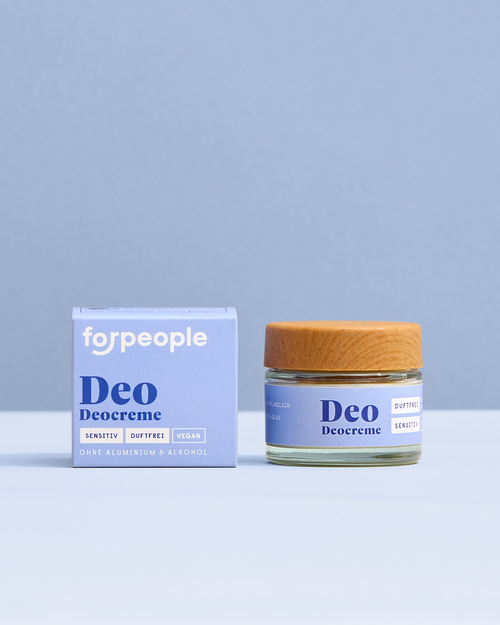
- Deodorant: In sprays and roll-ons, alcohol serves as a solvent, evaporates after application and inhibits bacteria. On freshly shaved skin it can sting; more on this in Deodorant after shaving: why does it sting, and what helps? How deodorants without aluminium salts work at all is explained in How do aluminium-free deodorants work?, the difference from an antiperspirant in Deodorant or antiperspirant: what is the difference? According to its ingredient list, our Sensitive Deodorant Cream contains potato starch, shea butter, baking soda, sunflower oil, corn starch and candelilla wax, but no alcohol.
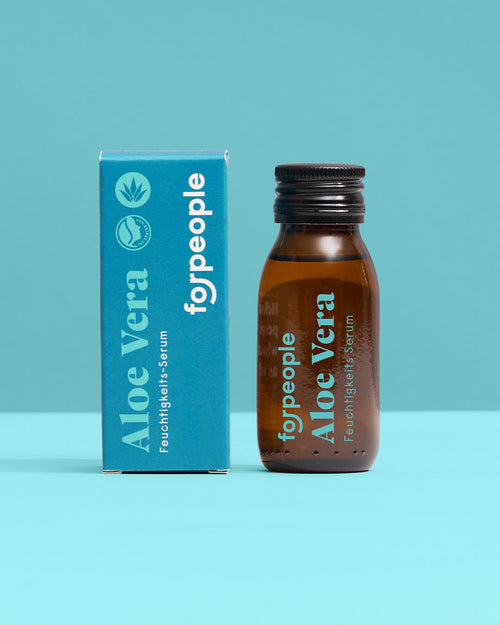
- Aloe vera gel: Only the list tells you whether a gel contains alcohol. According to its ingredient list, our Aloe Vera Serum 99.6% consists of aloe juice, citric acid, potassium sorbate and sodium benzoate; it contains no alcohol. What each ingredient does is explained in Aloe Vera Serum 99.6%: What Is Inside?; why aloe sometimes feels tight on dry skin in Does aloe vera dry out the skin?
- Toner: Here alcohol often provides the fresh, astringent feel. If your skin is dry, it is worth checking how far up the list it appears.
Water-based products without alcohol usually need a different kind of preservation. Why that is and what options there are is explained in Preservation and Water in Cosmetics.
When to seek medical advice
If your skin turns red after using a product, keeps burning, or develops blisters or wheals, stop using the product. If the reaction persists or comes back when you use the product again, have it checked by a dermatologist; an allergy test can show which substance is behind it. What you can do in the meantime and where you can report a reaction is covered in Reacting to a cosmetic: what to do, where to report, returns. Alcohol-based products do not belong on open or injured skin. This is especially important for children: a review describes that ethanol can be toxic through the skin only in children, above all through injured skin (Lachenmeier 2008). If you are pregnant or breastfeeding and unsure whether you want to use cosmetics containing alcohol, talk to your midwife or doctor.
Frequently asked questions
Is alcohol in cosmetics harmful?
There is no blanket answer. On intact skin, high-strength ethanol irritated the skin less than washing with surfactants in studies, but it lowered skin hydration. On broken skin it stings. According to a review, there is too little independent research on long-term effects.
Is cetearyl alcohol bad for the skin?
Cetearyl alcohol is a waxy fatty alcohol, not drinking alcohol. It does not evaporate, makes creams creamy and is classed by CosIng as an emollient. It has nothing to do with the drying reputation of ethanol.
How do I spot alcohol on an INCI list?
Ethanol appears as “Alcohol” or “Alcohol Denat.”, on US products also as “SD Alcohol” with a number. Isopropanol is called “Isopropyl Alcohol”. The further up the list the name appears, the more the product contains.
Deodorant with or without alcohol: what is the difference?
Alcohol dissolves the other ingredients, evaporates quickly and inhibits bacteria. It can sting on freshly shaved skin. Deodorant creams do not need a solvent because their base consists of fats, waxes and starch. Which suits you better depends on your skin and how you shave.
Is there aloe vera gel without alcohol?
Yes. Check the ingredient list for “Alcohol” or “Alcohol Denat.”. Without alcohol, a water-based aloe product needs a different preservative, for example potassium sorbate and sodium benzoate.
Is benzyl alcohol the same as alcohol?
No. Benzyl alcohol is an aromatic alcohol used as a preservative, solvent or fragrance. As a preservative, a maximum of 1.0 per cent is permitted, and above 0.001 or 0.01 per cent it is listed individually as a fragrance substance.
Do forpeople products contain alcohol?
According to the ingredient lists, none of our products contains Alcohol, Alcohol Denat., Isopropyl Alcohol, Benzyl Alcohol or fatty alcohols. Products with essential oils do, however, contain fragrance substances such as linalool or geraniol, which chemically count as alcohols and are therefore named individually.
At forpeople
According to their ingredient lists, our formulas contain no ethanol and no fatty alcohols. Three examples of products where the question about alcohol often comes up:
- Sensitive Deodorant Cream, 50 g, €8.90: six ingredients, including baking soda, starch and shea butter; no alcohol, no aluminium salts, no added fragrance. Some skin reacts to baking soda; more on this in Baking soda in deodorant: why it's there and skin reactions.
- Aloe Vera Serum 99.6%, 50 ml, €9.90 (also 250 ml for €24.90 and as a 300 ml pump bottle for €27.90): water-based care for face, body and hair, no alcohol, preserved with potassium sorbate and sodium benzoate.
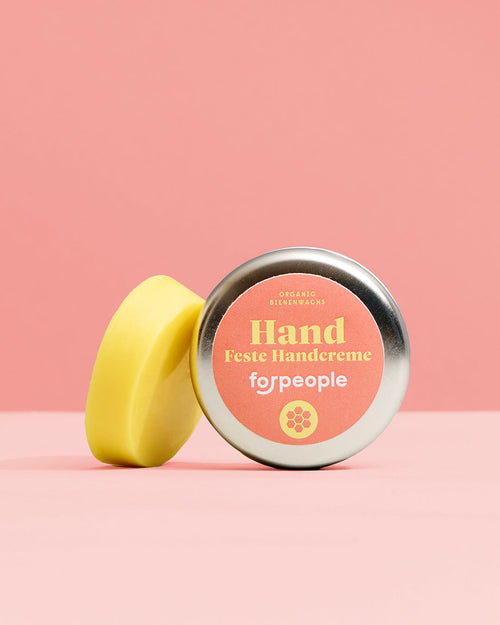
- Solid Hand Cream - Beeswax, 30 g, €9.90: five ingredients – beeswax, olive and sunflower oil, St John's wort and aloe extract; no water, no alcohol, no fatty alcohols, no added fragrance.
When you use a new product for the first time, try it on a small area first: Trying a new product: how do I test it on a small area?
Read more: Does glycerin dry out the skin? · Fragrance-free deodorant: what to look for with sensitive underarms · Cream with few ingredients: what does a short list give you?
Sources
- European Commission: CosIng – database of cosmetic substances and ingredients. Entries Alcohol, Alcohol Denat., Isopropyl Alcohol, Benzyl Alcohol, Cetyl Alcohol, Stearyl Alcohol, Cetearyl Alcohol, Lanolin Alcohol, Glycerin, Propylene Glycol, Phenoxyethanol, Denatonium Benzoate, Linalool, Geraniol; accessed 29 October 2026. ec.europa.eu/growth/tools-databases/cosing
- Regulation (EC) No 1223/2009 of the European Parliament and of the Council of 30 November 2009 on cosmetic products, Article 19(1)(g), Annex III No 45, Annex V No 34. eur-lex.europa.eu
- Commission Regulation (EU) 2023/1545 of 26 July 2023 amending Regulation (EC) No 1223/2009 as regards labelling of fragrance allergens in cosmetic products, Annex, entry 45. eur-lex.europa.eu
- German Alcohol Tax Regulation (Alkoholsteuerverordnung – AlkStV), § 54 Approved denaturants. gesetze-im-internet.de
- Cosmetic Ingredient Review Expert Panel (2008): Final report of the safety assessment of Alcohol Denat., including SD Alcohol 3-A, SD Alcohol 30, SD Alcohol 39, SD Alcohol 39-B, SD Alcohol 39-C, SD Alcohol 40, SD Alcohol 40-B, and SD Alcohol 40-C, and the denaturants, Quassin, Brucine Sulfate/Brucine, and Denatonium Benzoate. International Journal of Toxicology 27 (Suppl 1): 1–43. https://doi.org/10.1080/10915810802032388
- Lachenmeier DW (2008): Safety evaluation of topical applications of ethanol on the skin and inside the oral cavity. Journal of Occupational Medicine and Toxicology 3: 26. https://doi.org/10.1186/1745-6673-3-26
- Löffler H, Kampf G, Schmermund D, Maibach HI (2007): How irritant is alcohol? British Journal of Dermatology 157(1): 74–81. https://doi.org/10.1111/j.1365-2133.2007.07944.x
- Kwak S, Brief E, Langlais D, Kitson N, Lafleur M, Thewalt J (2012): Ethanol perturbs lipid organization in models of stratum corneum membranes: An investigation combining differential scanning calorimetry, infrared and 2H NMR spectroscopy. Biochimica et Biophysica Acta 1818(5): 1410–1419. https://doi.org/10.1016/j.bbamem.2012.02.013
- Geier J, Ballmer-Weber B, Buhl T, Rieker-Schwienbacher J, Mahler V, Dickel H, Schubert S; IVDK (2022): Is benzyl alcohol a significant contact sensitizer? Journal of the European Academy of Dermatology and Venereology 36(6): 866–872. https://doi.org/10.1111/jdv.17968
- Le NT, Wu PA (2026): Benzyl Alcohol: Allergen of the Year 2026. Dermatitis 37(1): 4–12. https://doi.org/10.1177/17103568251386038