


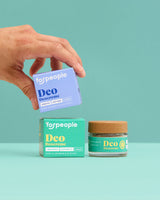
Two jobs: odour or wetness
Fresh sweat consists mainly of water, salts and proteins and is odourless at first. The odour only develops when bacteria of the skin flora break down components of the sweat. The underarm offers them good conditions: it is warm and moist, and each underarm has more than 25,000 sweat glands (Teerasumran et al. 2023).
- Deodorant: It targets the odour: with substances that slow the growth of odour-forming bacteria, with fragrances that mask the odour, and with odour absorbers such as baking soda (Teerasumran et al. 2023). The amount of sweat stays the same.
- Antiperspirant: It targets the sweat. Aluminium salts ensure that less sweat reaches the surface of the skin. The bacteria then lack part of what they feed on, so less odour develops as well.
Many products on the shelf are both at once: they contain an aluminium salt and fragrance and are sold as a deodorant-antiperspirant (Teerasumran et al. 2023). The word “deo” on the front therefore tells you little; what counts is the ingredient list. The switch is described on the page Deodorant without aluminium: how it works and switching.
How aluminium salts close the sweat pore
In the product, the aluminium salts are dissolved and acidic. On the skin they enter the uppermost section of the sweat duct. There they meet sweat, are neutralised and precipitate. Together with proteins from the sweat they form a gel-like plug that closes the duct (Teerasumran et al. 2023).
The German Federal Institute for Risk Assessment (BfR) describes it like this: aluminium salts contract the duct openings and block them temporarily. In addition, they act on the bacteria that break down sweat. Aluminium chlorohydrate is the salt used most often (BfR 2023).
How to tell from the INCI list
In the INCI list, aluminium salts appear in the American spelling “Aluminum”. The following names and their functions come from CosIng, the European Commission's database of cosmetic ingredients (CosIng).
| Deodorant | Antiperspirant | Alum crystal (“deodorant crystal”) | |
|---|---|---|---|
| Targets | odour | amount of sweat, and through that odour | odour; alum is astringent (it has a tightening effect) |
| Typical substances in the INCI list | for example Sodium Bicarbonate (baking soda), Zinc Ricinoleate, Triethyl Citrate, Parfum | Aluminum Chlorohydrate, Aluminum Sesquichlorohydrate, Aluminum Zirconium Tetrachlorohydrex GLY | Potassium Alum, Ammonium Alum |
| Contains an aluminium salt | no | yes | yes |
| Amount of sweat | unchanged | reduced | depends on the salt: in CosIng, Ammonium Alum is also listed as an antiperspirant, Potassium Alum as astringent |
Alum is a double salt of aluminium sulphate and potassium or ammonium sulphate. A crystal made of alum is therefore not aluminium-free.
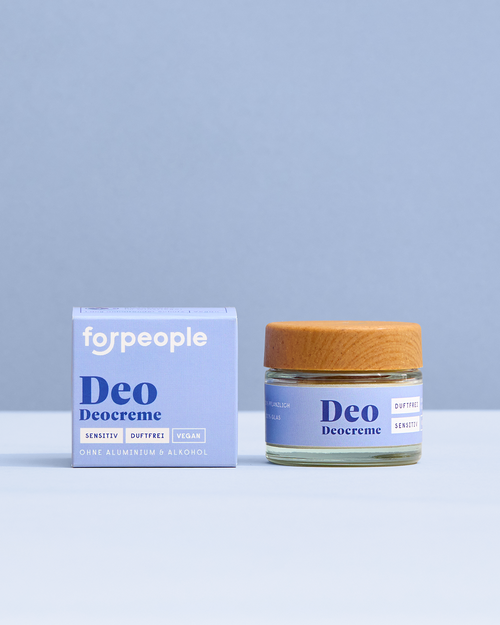
Starch, such as Solanum Tuberosum Starch (potato) or Zea Mays Starch (corn), is listed in CosIng as absorbent. It takes up moisture but does not change how much sweat is produced. One example of a deodorant without an aluminium salt is the Sensitive Deodorant Cream: its INCI list names potato starch, shea butter, baking soda, sunflower oil, corn starch and candelilla wax. What baking soda does there is explained on the page Baking soda in deodorant.
What “0% aluminium” on the pack means
“0% aluminium”, “without aluminium salts” or “aluminium-free” are product claims, not terms defined by law. The general rules for cosmetics apply to them: a claim must not imply something the product does not have (Regulation (EC) No 1223/2009, Art. 20). It must be truthful and supported by evidence, and it must not denigrate ingredients that are legally used in cosmetics (Regulation (EU) No 655/2013).
What is meant: the product contains no aluminium salt against sweat. This is how you check the claim:
- The INCI list contains no substance beginning with “Aluminum” and no “Alum”.
- “Without aluminium chlorohydrate” refers only to that one substance, not to alum.
- Antiperspirants today are based on aluminium salts (Teerasumran et al. 2023). A product without them is, as a rule, a deodorant and does not reduce the amount of sweat.
How authorities assess aluminium in antiperspirants
In the EU, deodorants and antiperspirants are cosmetic products and need a safety assessment (Regulation (EC) No 1223/2009). Food is a significant source of aluminium. The question examined was therefore how much additionally enters the body through the skin from antiperspirants.
- BfR: In 2014 the data were contradictory. After new studies in humans, the institute concluded in 2020 and again in October 2023 that considerably less aluminium is absorbed through the skin than previously assumed: in the most robust study, 0.00192% of the amount applied. According to current knowledge, the probability of a health impairment from regular use of antiperspirants containing aluminium chlorohydrate is very low. The BfR sees no robust data basis for a causal link between aluminium and Alzheimer's dementia or breast cancer (BfR 2023).
- SCCS: The EU's Scientific Committee on Consumer Safety considers aluminium compounds in deodorants and antiperspirants safe up to the maximum levels it specifies; for sprays, an additional condition on droplet size applies. It notes that intake from cosmetics and food combined may exceed the levels regarded as safe for people with particularly high intake (SCCS 2024).
- EU law: In 2026 the maximum levels were written into the Cosmetics Regulation: 7.73% aluminium in non-aerosol and 3.24% in aerosol antiperspirants or deodorants. Products that do not comply may no longer be placed on the market from 1 January 2027 and no longer be made available on the market from 1 July 2028 (Regulation (EU) 2026/909). Aluminium zirconium compounds have been regulated for longer: no more than 20%, not in sprays, with the warning “Do not apply to irritated or damaged skin” (Regulation (EC) No 1223/2009, Annex III).
Whether you use an antiperspirant or prefer to do without aluminium salts remains a personal decision.
Which product fits when?
- Odour is your main concern: A deodorant is enough. You sweat as usual.
- Wet underarms or sweat marks bother you: Only an antiperspirant reduces the amount of sweat.
- You want to do without aluminium salts: Then a deodorant is the option. Check the INCI list, also on a crystal.
- You avoid fragrances: Both product types exist with and without parfum. More on this under Fragrance-free deodorant: what to look for with sensitive underarms.
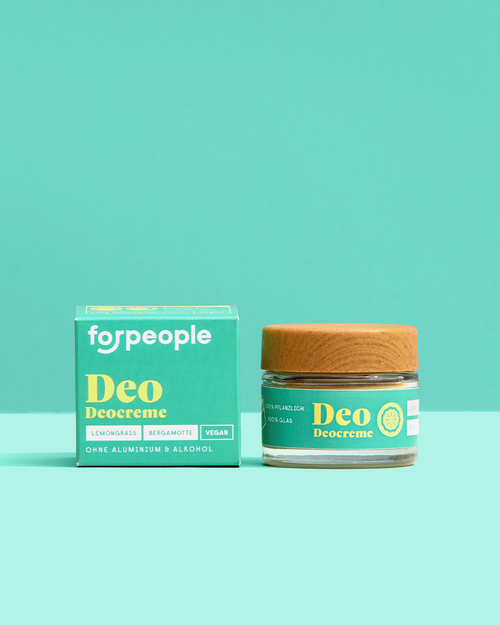
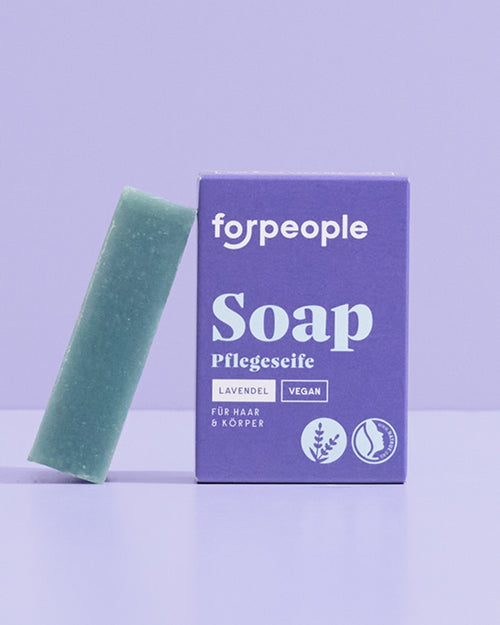
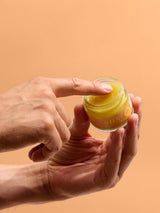
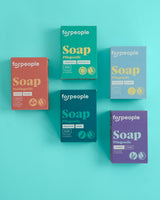
For both: apply to clean, dry skin, not to freshly shaved skin, see Deodorant after shaving: why does it sting, and what helps? A deodorant cream such as the Deodorant Cream - Lemon is applied with your fingers: How to apply deodorant cream: how much, when, how often? For washing beforehand, water and soap are enough, for example the Aloe Vera Soap – Lavender.
When to seek medical advice
Cosmetics influence odour or the amount of sweat within the usual range; they do not treat medical conditions. Seek medical advice if you sweat very heavily without an apparent reason, or if your sweating or body odour changes markedly all of a sudden. There are medical treatments for excessive sweating (hyperhidrosis). A skin reaction in the underarm that does not subside after you stop using the product, or that keeps coming back, also belongs in a doctor's hands.
Frequently asked questions
Is a deodorant crystal aluminium-free?
No. The crystal consists of alum, in the INCI list “Potassium Alum” or “Ammonium Alum”. Both are aluminium salts.
My pack says “deo”. How do I recognise an antiperspirant?
By the INCI list: if it contains a substance beginning with “Aluminum”, such as Aluminum Chlorohydrate, it is an antiperspirant.
Are antiperspirants with aluminium permitted in the EU?
Yes. The BfR and the SCCS have assessed them. Since 2026 the Cosmetics Regulation has set maximum levels for aluminium; they apply from 2027 to products newly placed on the market.
Can a deodorant also reduce the amount of sweat?
Only if it additionally contains an aluminium salt and is therefore an antiperspirant as well. Starch in a deodorant cream takes up moisture. It does not change how much you sweat.
How long does a deodorant cream last compared with an antiperspirant?
That cannot be stated in hours, and the two cannot be equated. A deodorant cream acts on odour and does not hold back sweat. How long that is enough depends on how much you sweat, how warm it is and what you wear.
At forpeople
forpeople offers deodorants, not antiperspirants. According to their INCI lists, both deodorant creams contain no aluminium salt, no alcohol and no water, but they do contain baking soda.
- Sensitive Deodorant Cream, 50 g, €8.90: without added fragrance and without essential oils according to the INCI list.
- Deodorant Cream - Lemon, 50 g, €8.90: the same base, plus essential oils of bergamot and lemongrass.
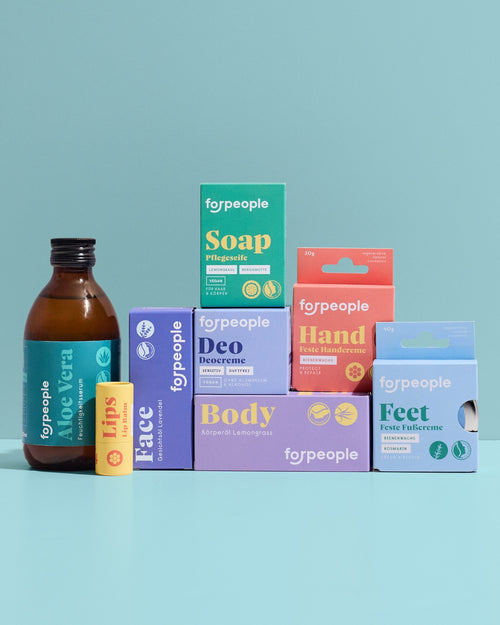
- All-Round Set for Dry Skin, €89.90: includes, among other products, the Sensitive Deodorant Cream.
More on this: Deodorant without aluminium: how it works and switching · Baking soda in deodorant · Does deodorant cream stain? Prevent and remove · Hygiene and Water-Free Cosmetics: What to Watch
From the blog: Deodorant Cream: How Well Does Natural Deodorant Cream Really Work?
Sources
- Teerasumran P, Velliou E, Bai S, Cai Q (2023): Deodorants and antiperspirants: New trends in their active agents and testing methods. Int J Cosmet Sci 45(4): 426–443. https://doi.org/10.1111/ics.12852
- Bundesinstitut für Risikobewertung (BfR) (2023): Neue Studien zu aluminiumhaltigen Antitranspirantien: Gesundheitliche Beeinträchtigungen durch Aluminium-Aufnahme über die Haut sind unwahrscheinlich. Stellungnahme Nr. 045/2023 vom 6. Oktober 2023 (ersetzt die Stellungnahme Nr. 030/2020 vom 20. Juli 2020). https://doi.org/10.17590/20231006-150131-0
- Scientific Committee on Consumer Safety (SCCS) (2024): Opinion on the safety of aluminium in cosmetic products – Submission IV. SCCS/1662/23, vorläufige Fassung vom 14. Dezember 2023, endgültige Fassung vom 27. März 2024. health.ec.europa.eu – sccs_o_284.pdf
- Verordnung (EG) Nr. 1223/2009 des Europäischen Parlaments und des Rates vom 30. November 2009 über kosmetische Mittel, Art. 2, 10 und 20 sowie Anhang III Eintrag 50. ABl. L 342 vom 22.12.2009, S. 59. eur-lex.europa.eu/eli/reg/2009/1223/oj
- Verordnung (EU) 2026/909 der Kommission vom 27. April 2026 zur Änderung der Verordnung (EG) Nr. 1223/2009 hinsichtlich der Verwendung unter anderem von Aluminium in kosmetischen Mitteln. ABl. L, 2026/909, 28.4.2026. eur-lex.europa.eu/eli/reg/2026/909/oj
- Verordnung (EU) Nr. 655/2013 der Kommission vom 10. Juli 2013 zur Festlegung gemeinsamer Kriterien zur Begründung von Werbeaussagen im Zusammenhang mit kosmetischen Mitteln. ABl. L 190 vom 11.7.2013, S. 31. eur-lex.europa.eu/eli/reg/2013/655/oj
- Europäische Kommission: CosIng – Datenbank für kosmetische Stoffe und Bestandteile. Einträge Aluminum Chlorohydrate, Aluminum Sesquichlorohydrate, Aluminum Zirconium Tetrachlorohydrex GLY, Potassium Alum, Ammonium Alum, Sodium Bicarbonate, Zinc Ricinoleate, Triethyl Citrate, Solanum Tuberosum Starch, Zea Mays Starch; abgerufen am 2. Oktober 2026. ec.europa.eu/growth/tools-databases/cosing