The problem: aloe feels fresh at first, then the skin feels tight
The pattern is typical: right after application, aloe vera feels cool and fresh. Ten to thirty minutes later the skin feels tight and looks dull, and fine flakes appear on the cheeks or forehead. Some people also notice a slight pulling or tingling while the gel dries. In summer this was hardly noticeable; in autumn and winter it becomes obvious.
Common situations are an aloe gel bought as an after-sun product in summer that continues as the only facial care in winter; aloe after showering with nothing oily on top; an aloe gel that also contains alcohol; or aloe on skin that is already irritated and rough from washing, cold and wind. Behind this there is usually no reaction to an ingredient, but simple physics: water without fat does not stay long in dry air. If the skin turns clearly red, burns or itches, that is a different matter; more on this under “When to seek medical advice”.
Why this happens in autumn and winter
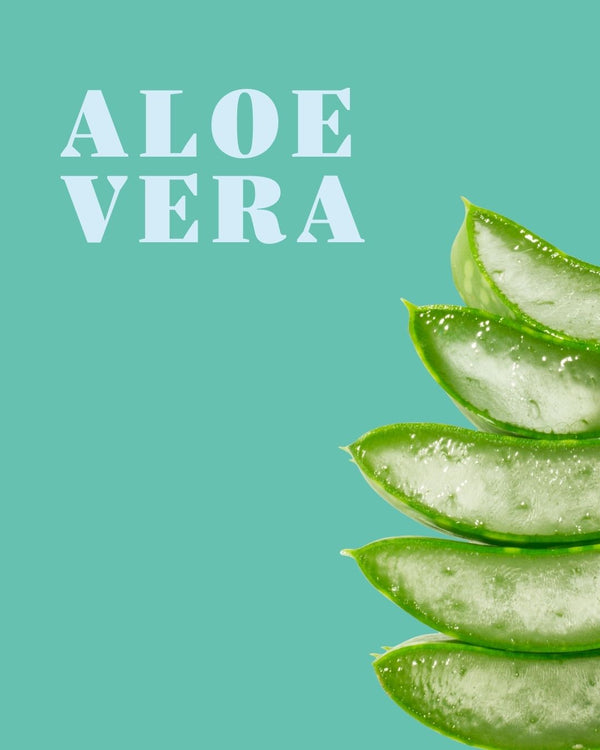
Aloe is almost entirely water. The gel inside the aloe leaf is about 99.5 % water; the remaining 0.5 to 1 % are mainly polysaccharides, that is, sugar chains such as acemannan, plus minerals and organic acids (Hamman 2008). It contains no fat that would slow evaporation.
Humectants work in both directions. Substances that bind water draw it from a humid environment, but also from deeper skin layers into the stratum corneum. If the air is dry, this water is easily lost from there to the surroundings; a dermatological review therefore calls humectants a “double-edged weapon” that is combined with an occlusive film of fat (Sethi et al. 2016). The basics are explained in Humectants, occlusives, emollients.
Winter air and cold weaken the barrier. A review concludes that low humidity and low temperatures generally impair the skin’s barrier function and make it more susceptible to mechanical stress and irritants (Engebretsen et al. 2016). Why heated air is so dry and which indoor values make sense is covered in Humidity and skin.
A drying stratum corneum is under tension. When the stratum corneum loses water, it contracts and builds up mechanical stress. In laboratory tests this stress rose more strongly and faster the more skin lipids had been extracted beforehand (Bow et al. 2020). You feel this contraction as tightness, explained in detail in Why does skin feel tight after a shower?
What studies on aloe show is mixed. In a study with 20 women, creams with 0.25 and 0.5 % freeze-dried aloe extract increased the water content of the stratum corneum after a single application, and all tested concentrations did so after two weeks; water loss through the skin remained unchanged (Dal'Belo et al. 2006). Another study, by contrast, applied pure polysaccharide fractions from aloe gel dissolved in water: after one application the skin was about as hydrated as with water alone, and after several weeks of daily use it showed a drying effect compared with water (Fox et al. 2014). The authors explain the difference partly by the formulation: aloe in a cream with other ingredients behaves differently from aloe on its own. Both studies were carried out under laboratory conditions on the forearm, not in dry winter air; we have not found a study on exactly this question.
Additives in the gel. Some aloe gels contain ethanol, listed as “Alcohol” or “Alcohol Denat.”. It evaporates quickly and can lower skin moisture; what studies show on this is covered in Alcohol in cosmetics. Then there are the preservatives and acids that a water-based product needs. The bitter yellow sap under the leaf rind contains anthraquinones; for aloe raw materials in cosmetics, an expert panel names a maximum of 50 ppm (CIR Expert Panel 2007). More in Aloe inner leaf or whole leaf: what is aloin?
The solution step by step
Aloe does not have to disappear from your winter routine. In winter it simply needs a partner made of fat. The principle “water-based before oily” is described in detail in Combining aloe vera serum with oil or solid cream; here is the short version for winter.
| Step | What you do | Why |
|---|---|---|
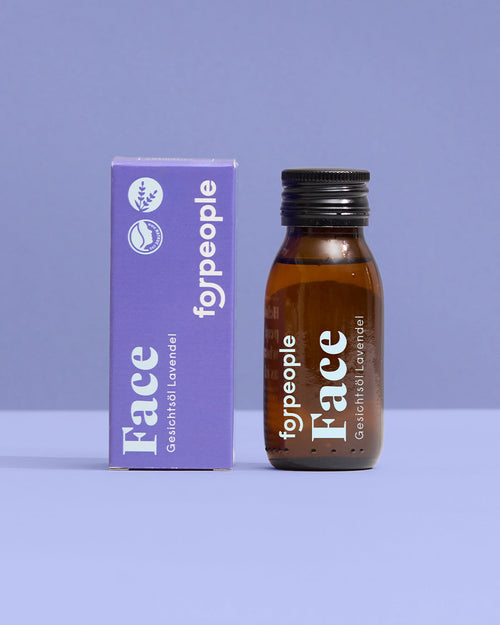
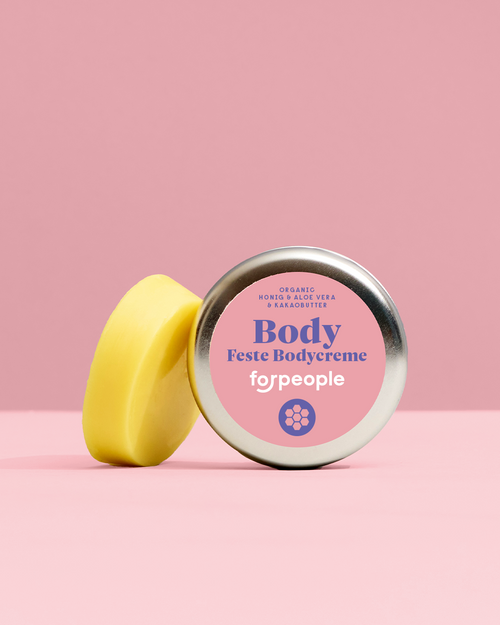
| Immediately, when it feels tight | Do not add more aloe. Put two to three drops of oil on the face or a thin layer of solid cream on hands and body, for example Face Oil - Lavender for the face or Solid Body Butter - Beeswax & Aloe Vera for the body. | More water without fat evaporates again; the film of fat slows evaporation (Sethi et al. 2016). |
| Every day: amount | On the face, pat an almond-sized amount of serum onto cleansed skin that is still slightly damp, no more. | The thicker the water-based layer, the more has to evaporate; the amount matches the directions on the product page. |
| Every day: order | While the skin is still damp, put oil or solid cream on top. Water-based first, then oily. | Oily substances work best on slightly dampened skin (Sethi et al. 2016); the other way round, the water-based product beads off the fat. |
| Every day: evening | In the evening, emphasise fat: a little more oil or a butter; aloe can stay underneath or be left out. | Overnight, the skin spends a long time in dry heated air. |
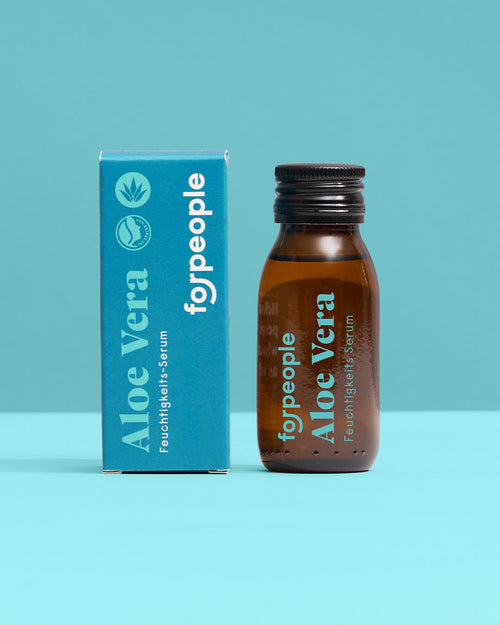
| Prevention: check the product | Look in the ingredients list to see whether “Alcohol” or “Alcohol Denat.” comes near the top. One aloe serum without alcohol is the Aloe Vera Serum 99.6%. | Alcohol evaporates on top; the order of the list follows the amount. |
| Prevention: indoor air | Check with a hygrometer and do not overheat rooms; guide values in Humidity and skin. | Low humidity weakens the barrier (Engebretsen et al. 2016). |
| Prevention: cleansing | Wash your face with lukewarm rather than hot water and use only as much soap as necessary. | Extracted skin lipids increase the stress during drying (Bow et al. 2020). |
It works the same way on the body: pat dry after showering, apply a little aloe to tight areas if needed, then immediately body oil or body butter. Whether oil or butter suits you better depends mainly on how it feels on your skin. On the face, oil alone can be enough if the skin mainly needs fat; when it is not is explained in Can a face oil replace face cream?
What helps – and what rather does not
| Measure | Assessment |
|---|---|
| Oil or solid cream on top of the aloe | Helps: the film of fat slows the water from evaporating straight away. |
| Adding more aloe gel when it feels tight | Rather not: it brings more water and humectants without fat. |
| Choosing an aloe gel without alcohol | Helps if your previous gel had alcohol near the top of the list. |
| Chilling aloe in the fridge | Feels fresher but does not change the fact that water evaporates. For the serum it is not necessary; according to the product page it is stored cool and out of direct sunlight. |
| Gel fresh from the houseplant | Keeps only a few days without preservation, and the yellow sap under the rind does not belong in it; see Making aloe vera gel yourself. |
| Humidifier | Can improve indoor air but must be cleaned regularly. |
| Aloe as the only winter care for the face | Usually not enough in dry air; fat belongs with it. |
| Cream with glycerin instead of aloe | Glycerin is also a humectant; in a cream with fat that is no problem, see Does glycerin dry out the skin? |
The assessments follow from the mechanisms and sources described above; there are no dedicated studies on the individual home remedies.
Typical mistakes
- Letting aloe dry completely: if you wait until the gel has fully absorbed and the skin is dry again, the fat goes on too late.
- Too much at once: a thick layer of gel feels rich at first and then tightens all the more.
- Wrong order: oil first, then aloe: the water-based product spreads poorly over the film of fat.
- After-sun gel in winter: summer products are often designed for coolness and quick absorption, not for cold and heated air.
- Aloe on cracked or irritated skin: neither the serum nor other cosmetics should be used on broken or irritated skin.
- Keeping home-made gel for weeks: without preservation it spoils quickly.
More on fat and moisture in the individual skin layers: Fat and moisture: what belongs in which layer of the skin barrier. General winter tips are in Dry skin in winter.
When to seek medical advice
Like other plant substances, aloe products can cause skin reactions. Cases of acute eczema, contact urticaria, that is, wheals after skin contact, and skin inflammation after application to the skin have been described (CIR Expert Panel 2007). In the study with polysaccharide solutions mentioned above, participants reported a red rash with burning or itching, especially while the gel was drying on the skin (Fox et al. 2014). Stop using the product, rinse the area with lukewarm water and seek medical advice if
- the skin turns clearly red, burns, itches, or forms wheals or blisters after application,
- the reaction does not subside within a few days after stopping, or spreads,
- the skin stays dry, flaky or itchy for weeks despite oily care, or cracks,
- swelling around the eyes or lips occurs; then immediately.
What to do if you react to a product is covered in Reacting to a cosmetic: what to do?; test new products on a small area first, see Trying a new product: how do I test it on a small area?
Frequently asked questions
Does aloe vera dry out the skin?
Aloe on its own can make the skin feel drier, especially in dry air, because it brings water and humectants without a film of fat. In a study with pure aloe polysaccharide solutions, a drying effect appeared after several weeks; in another with aloe extract in a cream, the opposite. With oil or solid cream on top, this can usually be avoided in practice.
Why does my skin feel tight after aloe vera gel?
Because the water from the gel and part of the water from the stratum corneum evaporate as soon as nothing oily is on top. The stratum corneum contracts as it dries; you feel this as tightness. If the gel contains alcohol, this is stronger.
How do I recognise an aloe gel without alcohol?
The ingredients list then contains neither “Alcohol” nor “Alcohol Denat.”. Fatty alcohols such as cetyl alcohol are something different, see Alcohol in cosmetics. According to its ingredients list, our serum contains aloe juice, citric acid, potassium sorbate and sodium benzoate.
Can I use aloe vera on my face in winter?
Yes, as the first, water-based step. In winter, put a few drops of face oil or a cream on top straight away, while the skin is still damp.
Aloe first or oil first?
Aloe first, then oil. On a film of oil, the water-based product beads off and spreads poorly.
Why does aloe sometimes sting briefly?
On freshly shaved, cracked or irritated skin, many water-based products sting. With the serum, according to the product page, the citric acid can in rare cases redden the skin briefly. If the stinging persists or itching is added, stop using the product.
Is an aloe serum the same as an aloe gel?
Not necessarily. A gel usually contains a thickener, often with water as its base. Our serum consists of 99.6 % aloe juice, contains no thickener and is therefore liquid. What aloe products can contain is explained in How to spot a good aloe vera product.
At forpeople
For winter, you combine a water-based and an oily step; the full ingredients list is on each product page.
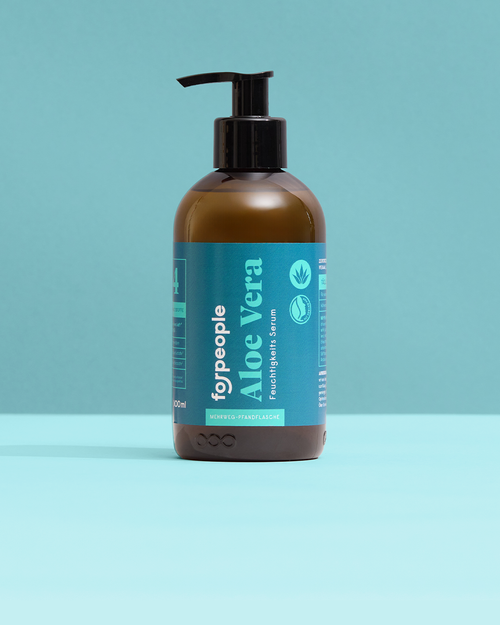
- Aloe Vera Serum 99.6%, 50 ml, €9.90: aloe juice, citric acid, potassium sorbate and sodium benzoate, without alcohol, perfume or essential oils; for face, body and hair. Also with 250 ml for €24.90 and as a 300 ml pump bottle for €27.90.
- Face Oil - Lavender, 50 ml, €21.90: argan, rosehip, jojoba, borage and hemp oil with lavender oil, for the face after the serum.
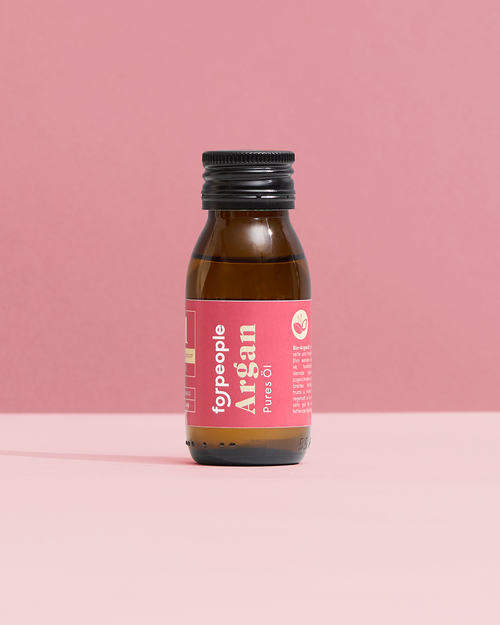
- Argan Oil - pure, 50 ml, €19.90: pure argan oil without added fragrance, for skin and hair.
- Solid Body Butter - Beeswax & Aloe Vera, 40 g, €9.90: water-free butter with cocoa butter, shea butter, oils, beeswax and aloe extract for the body.
Do not use on broken or irritated skin, and stop using if your skin reacts. Avoid contact with the eyes.
More on this: Aloe Vera Serum 99.6%: what is inside?
From the blog: Aloe vera serum: what it does for skin and how to use it · Face and lips through winter: a routine for every day
Sources
- Hamman JH (2008): Composition and applications of Aloe vera leaf gel. Molecules 13(8): 1599–1616. https://doi.org/10.3390/molecules13081599
- Sethi A, Kaur T, Malhotra SK, Gambhir ML (2016): Moisturizers: The Slippery Road. Indian Journal of Dermatology 61(3): 279–287. https://doi.org/10.4103/0019-5154.182427
- Engebretsen KA, Johansen JD, Kezic S, Linneberg A, Thyssen JP (2016): The effect of environmental humidity and temperature on skin barrier function and dermatitis. Journal of the European Academy of Dermatology and Venereology 30(2): 223–249. https://doi.org/10.1111/jdv.13301
- Bow JR, Sonoki Y, Uchiyama M, Shimizu E, Tanaka K, Dauskardt RH (2020): Lipid Loss Increases Stratum Corneum Stress and Drying Rates. Skin Pharmacology and Physiology 33(4): 180–188. https://doi.org/10.1159/000507456
- Dal'Belo SE, Gaspar LR, Maia Campos PM (2006): Moisturizing effect of cosmetic formulations containing Aloe vera extract in different concentrations assessed by skin bioengineering techniques. Skin Research and Technology 12(4): 241–246. https://doi.org/10.1111/j.0909-752X.2006.00155.x
- Fox LT, du Plessis J, Gerber M, van Zyl S, Boneschans B, Hamman JH (2014): In vivo skin hydration and anti-erythema effects of Aloe vera, Aloe ferox and Aloe marlothii gel materials after single and multiple applications. Pharmacognosy Magazine 10(Suppl 2): S392–S403. https://doi.org/10.4103/0973-1296.133291
- Cosmetic Ingredient Review Expert Panel (2007): Final report on the safety assessment of Aloe Andongensis Extract, Aloe Barbadensis Leaf Juice and related Aloe-derived ingredients. International Journal of Toxicology 26(Suppl 2): 1–50. https://doi.org/10.1080/10915810701351186