One tube says “moisturising”, the other “rich lipid care”. If you have dry skin, you will wonder which of these your skin actually needs and where what you apply ends up. The basics, meaning the picture of bricks and mortar and the four building blocks of the barrier, are in The skin barrier explained simply. This page goes one level deeper: how thick the layers are, where exactly water and fat sit, what washing changes and which skincare ingredient belongs in which layer.
The layers from the outside in
The stratum corneum is thin and varies in thickness. Using confocal Raman spectroscopy, which measures water content at different depths, researchers estimated its thickness at 16.8 micrometres on the cheek, 22.6 on the forearm, 29.3 on the back of the hand and 173.0 micrometres on the palm (Egawa et al. 2007). Above it lies a thin surface film, below it the living epidermis.
| Layer | What it consists of | What it means for water and fat |
|---|---|---|
| Surface film | sebum from the sebaceous glands, sweat, shed cell debris | sebum contains above all wax esters and squalene; there are no sebaceous glands on the palms and soles |
| Stratum corneum: corneocytes | dead, flat cells full of keratin, with a firm protein envelope | this is where water is bound, by the natural moisturising factor (NMF) |
| Stratum corneum: spaces between cells | ordered lipid layers of ceramides, cholesterol and free fatty acids | slow the passage of water; the only continuous pathway through the stratum corneum |
| Boundary with the living epidermis | tightly joined cells | here the water content rises sharply |
| Living epidermis | cells with a nucleus, water channels in the membranes | rich in water; this is where corneocytes, NMF precursors and barrier lipids are formed |
Sources: sebum (Smith & Thiboutot 2008); NMF and lipid layers (Rawlings & Harding 2004), (Bouwstra et al. 2023); boundary layer and water channels (Verdier-Sévrain & Bonté 2007), (Warner et al. 1988).
Where the water sits
In the living cells, the water content is high and roughly even. At the boundary with the stratum corneum it drops abruptly, and across the stratum corneum it keeps decreasing roughly evenly towards the outside. Measurements on rapidly frozen skin already showed this; the authors concluded that water loss is governed mainly by the passage of water into the lipid regions (Warner et al. 1988). At the boundary with the stratum corneum there are also tight cell junctions, and in the living epidermis there are water channels in the cell membranes, the aquaporins (Verdier-Sévrain & Bonté 2007).
In the stratum corneum, water is bound by the natural moisturising factor. This is a mixture of small, water-soluble substances that forms inside the corneocytes when the protein filaggrin is broken down (Rawlings & Harding 2004). Raman measurements can track its main components at different depths: amino acids such as serine, glycine, arginine and alanine, plus pyrrolidone carboxylic acid and urocanic acid; lactic acid and urea come from sweat (Caspers et al. 2001). Glycerol also occurs in the stratum corneum as one of the skin's own humectants (Verdier-Sévrain & Bonté 2007).
The moisturising factor increases towards the inside, and washing removes it: in a study using adhesive tapes, researchers found more of it in deeper layers. Removing lipids combined with soaking in water caused a greater loss than either measure alone (Robinson et al. 2010). This fits the experience that a long hot bath with a lot of soap can leave the skin drier afterwards than a short shower. How that feels and what helps is described in Why does skin feel tight after a shower?
Water matters for more than the feel. The stratum corneum only matures properly with enough moisture, and the enzymes that loosen the connections between the uppermost corneocytes need free water. If it is lacking, the cells no longer come off individually but in visible, powdery flakes (Harding et al. 2000), (Verdier-Sévrain & Bonté 2007).
Where the fat sits: three different lipids
“Skin fat” is not a single substance. In and on the stratum corneum there are three lipid systems with different tasks.
- The lipid layers between the corneocytes: ceramides, cholesterol and free fatty acids form lamellae stacked parallel to the skin surface. X-ray measurements show two arrangements with repeat distances of about 13 and 6 nanometres; the lipid chains are mostly very densely packed, in the so-called orthorhombic arrangement (Bouwstra et al. 2023). Because water has to take a long, winding route around the corneocytes, this detour alone slows evaporation (Rawlings & Harding 2004). What ceramides are and what oils can contribute is covered in more depth in Ceramides and plant oils: what oils can do for the skin barrier.
- The lipid coat of the corneocytes: a single layer of lipids, including ceramides, is firmly bound to the protein envelope of each corneocyte. It serves as a template along which the lamellae line up parallel to the cell surface (Bouwstra et al. 2023).
- Sebum: it comes from the sebaceous glands and coats the surface. It is characterised by wax esters and squalene. Sebaceous glands are found almost everywhere, except on the palms and soles (Smith & Thiboutot 2008). Why hands therefore dry out faster is explained in Why hands dry out faster than other skin.
The corneocytes are also held together by protein rivets, the corneodesmosomes, and by their interlocking shape (Harding et al. 2000). So the lipid layers are seal and cement at the same time, but not the only thing holding the stratum corneum together.
What skincare does in which layer
Skincare cannot replace the skin's own barrier. But it can act where water is lost. The table assigns the usual building blocks to the layers.
| Building block | Examples on the ingredient list | Where it acts | What it does, what it does not |
|---|---|---|---|
| Water | Aqua, Aloe Barbadensis Leaf Juice | surface, uppermost layers | briefly swells the stratum corneum; evaporates again quickly without a film |
| Humectants | glycerin, urea, lactic acid | upper stratum corneum | bind water, similar to the skin's own moisturising factor; do not hold it permanently without a film |
| Oils (emollients) | plant oils, jojoba oil | surface and uppermost layers of the stratum corneum | smooth rough areas, form a partly permeable film |
| Waxes, butters, petrolatum (occlusives) | Cera Alba, Butyrospermum Parkii Butter, Petrolatum | on the surface | slow evaporation as a denser film; bring no water |
| Skin-identical lipids | ceramides, cholesterol, fatty acids | spaces in the stratum corneum | can fit into the lamellae; the mixture is what counts |
Classification based on the sources in the text: swelling (Egawa et al. 2007); penetration depth and sealing of oils and petrolatum (Patzelt et al. 2012); moisturising factor (Rawlings & Harding 2004). The division into humectants, emollients and occlusives is explained in Humectants, occlusives, emollients; whether glycerin dries out the skin in Does glycerin dry out the skin?
There is a clear measurement of penetration depth: in six volunteers, four plant oils and paraffin oil only reached the first, uppermost layers of the stratum corneum. Except for jojoba oil, all oils reduced water loss to a similar extent, petrolatum the most (Patzelt et al. 2012). So oils act as a semi-occlusive film and by smoothing the uppermost layers, not in the depths. How tightly a film should seal is described in Occlusion and TEWL: how a wax film protects your skin.
The order: water-based before oil-based
A simple rule follows from where the layers lie: first water into the stratum corneum, then fat on top. After a shower or a bath, the stratum corneum is soaked; in the Raman measurement, 90 minutes of contact with water increased its apparent thickness up to twofold (Egawa et al. 2007). This water evaporates in the minutes that follow. A film of oil, butter or wax, applied to still slightly damp skin, holds part of it for longer.
- Wash briefly and with lukewarm water, using soap only where it is needed.
- Only pat the skin dry, do not rub it.
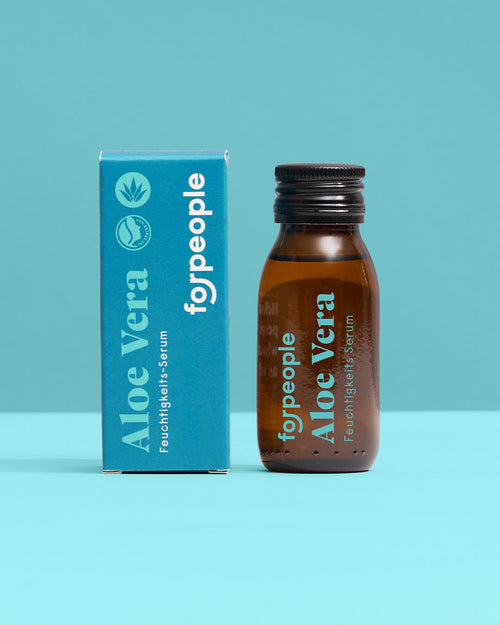
- On the face or on larger areas, apply a water-based product if you like, for example the Aloe Vera Serum 99.6%.
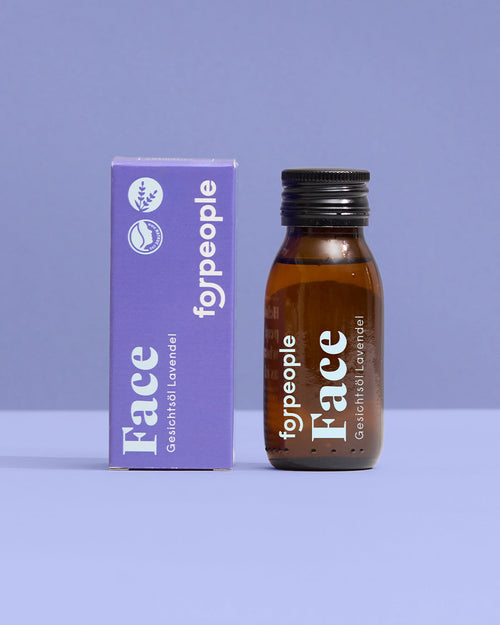
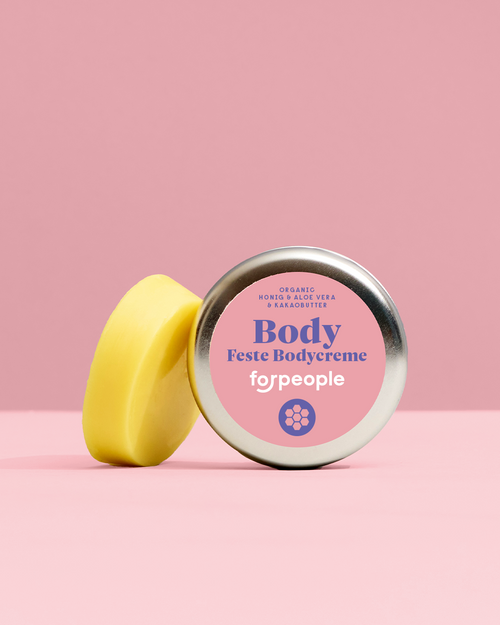
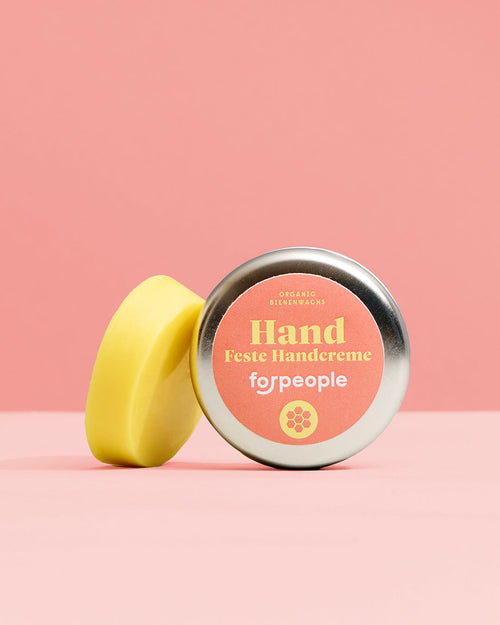
- Then a film of fat on top: a few drops of oil on the face, for example the Face Oil - Lavender, the Solid Body Butter - Beeswax & Aloe Vera on the body, the Solid Hand Cream - Beeswax on the hands.
How quickly this should happen after a shower is covered in How soon should you moisturise after a shower? The 3-minute rule, and combining serum and solid cream in Combining aloe vera serum with oil or solid cream. An evening variant with a particularly tight seal is Slugging and skin flooding: what is behind them and how to do it with water-free care. When the richer and when the more water-based cream fits is compared in Rich cream or moisturiser? What dry skin needs, and the part indoor air plays in Humidity and skin.
When to get medical advice
If your skin keeps flaking badly for weeks despite this routine, cracks, bleeds, weeps or itches noticeably, have it looked at by a doctor. Persistently dry skin can be caused by skin diseases or internal causes that cosmetics do not treat.
Frequently asked questions
Can you add moisture to the skin from the outside?
In the short term, yes: water and humectants make the upper layers of the stratum corneum swell. For the water to stay, a film of fat is needed on top; otherwise it evaporates again.
Does an oil moisturise?
No. Oil contains no water. It reduces how quickly existing water evaporates and makes the surface supple. It does most on slightly damp skin.
How deep does oil penetrate the skin?
According to measurements by laser microscopy, only into the uppermost layers of the stratum corneum. That is not a shortcoming: this is where the brake on evaporation is needed.
Why does dry skin flake?
The enzymes that loosen the connections between the uppermost corneocytes need water. If the stratum corneum is too dry, the cells come off in visible flakes instead of individually and unnoticed.
Why does skin feel drier after a long bath than before?
Long soaking and soap dissolve lipids and water-binding substances from the upper layers. Afterwards the absorbed water evaporates, and the substances that would hold it are missing.
How thick is the stratum corneum?
Around 17 micrometres on the face, around 23 on the forearm and around 29 on the back of the hand; on the palm many times that, about 173 micrometres according to one measurement.
Do hands need more fat than the face?
Palms have no sebaceous glands and are washed often. They lack the film of sebum the skin forms by itself elsewhere. That is why a film of fat after washing is especially worthwhile there.
At forpeople
For layering water and fat; the full ingredient lists are on the product pages.
- Aloe Vera Serum 99.6%, 50 ml, €9.90: the water-based layer for face, body and hair, made of aloe juice, with citric acid, potassium sorbate and sodium benzoate.
- Face Oil - Lavender, 50 ml, €21.90: argan, rosehip, jojoba, borage and hemp seed oil with essential lavender oil; as a film of fat over the serum on the face.
- Solid Body Butter - Beeswax & Aloe Vera, 40 g, €9.90: water-free, with cocoa butter, olive oil, beeswax, sunflower oil and shea butter; for the body after showering.
- Solid Hand Cream - Beeswax, 30 g, €9.90: water-free, made of beeswax, olive and sunflower oil, without essential oils; for the hands after washing.
Do not use on injured or irritated skin, and stop using the product if your skin reacts. Keep the serum away from the eyes.
Read more: Shea, cocoa or mango butter? Plant butters compared
From the blog: Face and lips through winter: a routine for every day
Sources
- Egawa M, Hirao T, Takahashi M (2007): In vivo estimation of stratum corneum thickness from water concentration profiles obtained with Raman spectroscopy. Acta Dermato-Venereologica 87(1): 4–8. https://doi.org/10.2340/00015555-0183
- Warner RR, Myers MC, Taylor DA (1988): Electron probe analysis of human skin: determination of the water concentration profile. Journal of Investigative Dermatology 90(2): 218–224. https://doi.org/10.1111/1523-1747.ep12462252
- Caspers PJ, Lucassen GW, Carter EA, Bruining HA, Puppels GJ (2001): In vivo confocal Raman microspectroscopy of the skin: noninvasive determination of molecular concentration profiles. Journal of Investigative Dermatology 116(3): 434–442. https://doi.org/10.1046/j.1523-1747.2001.01258.x
- Rawlings AV, Harding CR (2004): Moisturization and skin barrier function. Dermatologic Therapy 17 Suppl 1: 43–48. https://doi.org/10.1111/j.1396-0296.2004.04s1005.x
- Harding CR, Watkinson A, Rawlings AV, Scott IR (2000): Dry skin, moisturization and corneodesmolysis. International Journal of Cosmetic Science 22(1): 21–52. https://doi.org/10.1046/j.1467-2494.2000.00001.x
- Robinson M, Visscher M, Laruffa A, Wickett R (2010): Natural moisturizing factors (NMF) in the stratum corneum (SC). I. Effects of lipid extraction and soaking. Journal of Cosmetic Science 61(1): 13–22. PMID 20211113. https://pubmed.ncbi.nlm.nih.gov/20211113/
- Verdier-Sévrain S, Bonté F (2007): Skin hydration: a review on its molecular mechanisms. Journal of Cosmetic Dermatology 6(2): 75–82. https://doi.org/10.1111/j.1473-2165.2007.00300.x
- Bouwstra JA, Nădăban A, Bras W, McCabe C, Bunge A, Gooris GS (2023): The skin barrier: An extraordinary interface with an exceptional lipid organization. Progress in Lipid Research 92: 101252. https://doi.org/10.1016/j.plipres.2023.101252
- Smith KR, Thiboutot DM (2008): Thematic review series: skin lipids. Sebaceous gland lipids: friend or foe? Journal of Lipid Research 49(2): 271–281. https://doi.org/10.1194/jlr.R700015-JLR200
- Patzelt A, Lademann J, Richter H, Darvin ME, Schanzer S, Thiede G et al. (2012): In vivo investigations on the penetration of various oils and their influence on the skin barrier. Skin Research and Technology 18(3): 364–369. https://doi.org/10.1111/j.1600-0846.2011.00578.x