In the morning the skin on your face feels tight, your lips are rough, and fine flakes appear on your shins, even though you moisturised the evening before. Outside it is cold and damp; inside, the heating has been on for weeks. That the two are connected is well studied. How strongly, and what you can do about it, is the question of this page.
Relative and absolute humidity: why heated air is dry
The warmer air is, the more water vapour it can hold. Absolute humidity states how much water vapour is actually in the air; relative humidity states what percentage that is of the maximum possible at that temperature. Relative humidity is the figure usually given; it shows how far the air is from saturation and therefore how easily water evaporates. A review on climate and skin explains the terms in detail (Engebretsen et al. 2016).
In winter, outdoor air contains little water vapour, even if it feels damp. When it comes in through an open window and is warmed to room temperature, the amount of water stays the same, but the relative humidity falls sharply. How sharply can be calculated with an approximation formula commonly used in meteorology (Alduchov & Eskridge 1996):
| Outdoor air | relative humidity outside | after warming to 21 °C | after warming to 19 °C |
|---|---|---|---|
| −10 °C | 85 % | about 10 % | about 11 % |
| −5 °C | 85 % | about 14 % | about 16 % |
| 0 °C | 85 % | about 21 % | about 24 % |
| 5 °C | 85 % | about 30 % | about 34 % |
| 10 °C | 80 % | about 40 % | about 45 % |
These values are our own example calculations. They show the pure effect of heating. In a lived-in home, moisture is added from breathing, cooking, showering, plants and laundry, so measured values are usually higher. Two things can still be read from the table: the colder it is outside, the drier the indoor air becomes, and a slightly cooler room is slightly more humid with the same amount of water. The very dry air on planes comes about in a similar way; see Dry skin on a plane: causes and what helps.
What dry air does to the skin
The stratum corneum, the top layer of the skin, takes up water from inside the body and releases it to the surroundings. When the air is dry, more evaporates and the stratum corneum becomes more brittle. How this layer is built is explained in The skin barrier explained simply. What individual studies show:
| Study | Conditions | Result |
|---|---|---|
| Egawa et al. 2002 | healthy skin on forearm and cheek, 3 or 6 hours in dry air | The water content of the stratum corneum fell after just 3 hours; the skin surface became measurably rougher (Egawa et al. 2002) |
| Sunwoo et al. 2006 | 16 young men, 25 °C, relative humidity 50, 30 and 10 % | At 30 % and below, eyes and skin became dry, at 10 % the nasal mucosa as well; sebum production stayed unchanged (Sunwoo et al. 2006) |
| Denda et al. 1998 | mice, two weeks below 10 % versus above 80 % relative humidity | In dry air the skin adapted: thicker stratum corneum, more skin lipids, 31 % less water loss (Denda et al. 1998) |
| Sato et al. 2002 | mice, sudden change from very humid to dry air | Water loss 6 to 7 times higher within 2 days, back to normal after 7 days; a change from normal to dry air made no difference (Sato et al. 2002) |
This gives a nuanced picture. In the short term, dry air dries out the skin surface and makes it rougher. In the longer term, the skin can adapt to dry air, at least in animal experiments; it struggles with sudden changes. A review concludes for humans that low humidity and cold reduce barrier function and make the skin more susceptible to mechanical stress and irritants (Engebretsen et al. 2016). A second review calls the overall evidence inconsistent, but describes that dry, air-conditioned rooms go along with dry skin and that humidifying with a fine mist increased the water content of the stratum corneum (Goad & Gawkrodger 2016).
Which areas are especially affected in winter and why is shown in Dry skin in winter: what helps with cold and indoor heating. The water in the shower, the other big strain in winter, has its own page: Hard water and dry skin.
How humid should indoor air be?
The German Environment Agency recommends a relative humidity between 40 and 60 percent indoors to keep the risk of mould as low as possible, and suggests a simple hygrometer (Umweltbundesamt 2024). As a long-term upper limit it gives 65 to 70 percent (Umweltbundesamt 2013). So the recommendation is aimed at the building, but it also suits the skin: in Sunwoo's experiments, eyes and skin only became dry at 30 percent and below.
How to measure properly: the hygrometer belongs in the room where you spend a lot of time, such as the living room or bedroom, not right next to the radiator, by the window or in the steam from the bathroom. Read it at different times of day, for example in the morning before airing and in the evening. This is our practical recommendation, not a measuring standard.
Air the room less? No. In winter, airing briefly lowers humidity because dry outdoor air comes in, but it also removes moisture that would otherwise encourage mould on cold walls. Short, thorough airing remains right; you protect your skin better with care than with closed windows.
Humidifying the air: what helps and what to watch out for
If humidity stays well below 40 percent for weeks, you can counteract it:
- Don't overheat. One or two degrees less raises relative humidity a little, as the table above shows.
- Use sources of moisture, with an eye on the hygrometer. Laundry, plants and cooking release water into the air. If humidity stays above 60 percent or windows and cold corners mist up, it is too much.
- Humidifiers. There are devices that evaporate water through a mat, devices that boil it into steam, and nebulisers that release fine droplets into the air. For household devices that produce a watery aerosol, the Robert Koch Institute, in connection with Legionella, calls for regular and thorough cleaning; when not in use, they should be cleaned and stored dry (Robert Koch-Institut 2024).
In everyday terms: don't leave water standing in the tank but renew it regularly, clean and descale the device according to the manufacturer's instructions, and store it empty and dry in summer. Whether a humidifier improves dry skin in everyday life has not been tested in long-term studies. It is one building block, not a replacement for skincare.
What skin needs in dry air
Dry air draws water from the skin. Care therefore works in two places: bringing water into the top layer and slowing its evaporation. Humectants such as glycerin attract water, but in very dry air mainly from deeper layers of the skin; a film of fat on top keeps it there. The basics are in Humectants, occlusives, emollients and Occlusion and TEWL: how a wax film protects your skin.
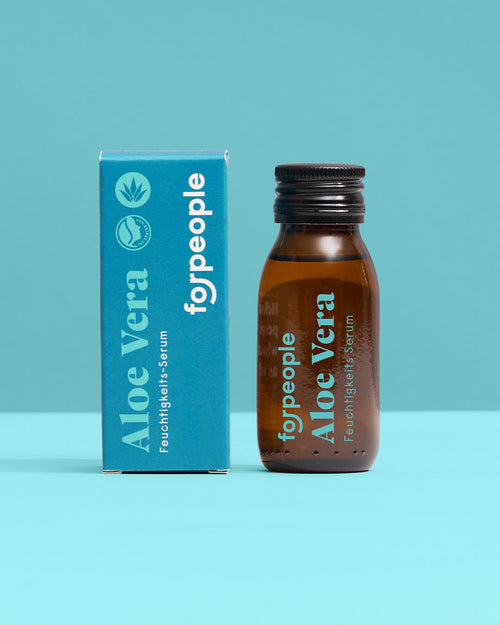
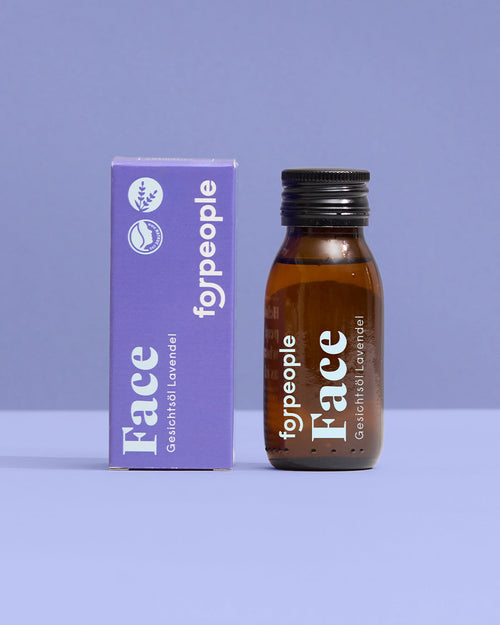
- Face: first a water-based layer on freshly cleansed, still slightly damp skin, such as the Aloe Vera Serum 99.6%, then two or three drops of oil such as the Face Oil - Lavender. How the layers fit together is shown in Combining aloe vera serum with oil or solid cream.
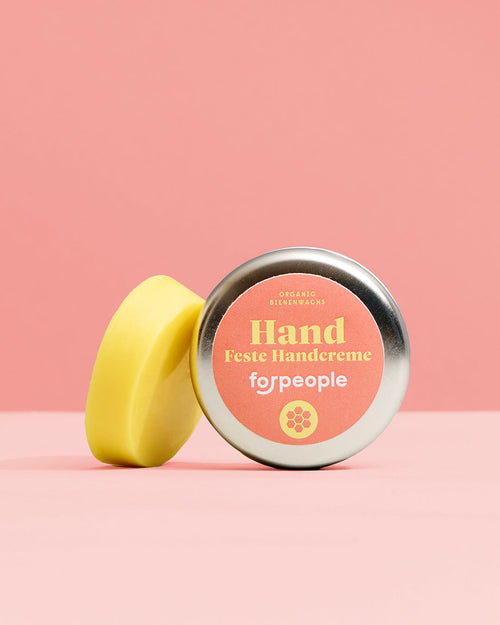
- Hands: a small amount of hand cream after every wash, for example the Solid Hand Cream - Beeswax. If you want more in the evening, see Overnight hand mask: what it does and how to do it.
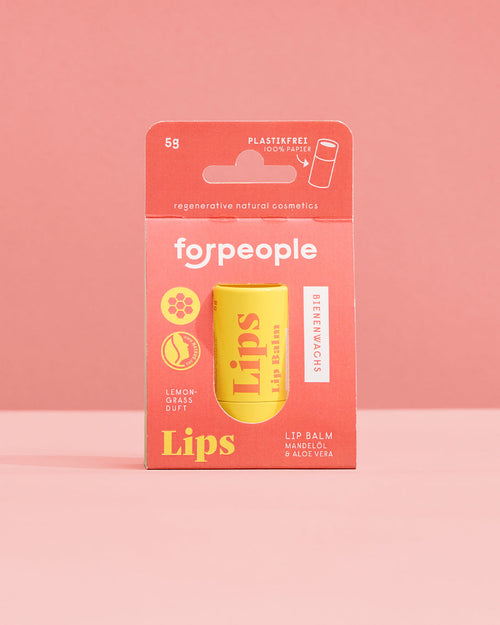
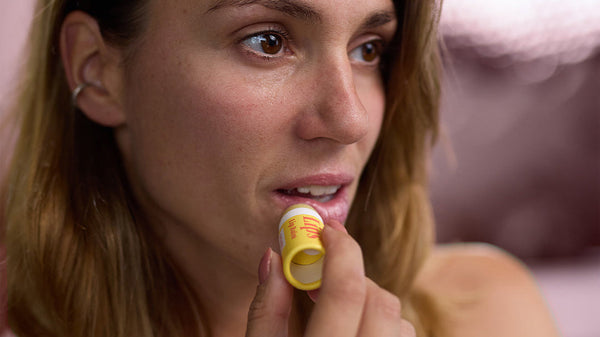
- Lips: they have hardly any fat of their own and dry out particularly quickly in heated air; a balm of wax and oil puts a film over them, such as the Lip Balm - Lemongrass. Background: Why do lips dry out so quickly?
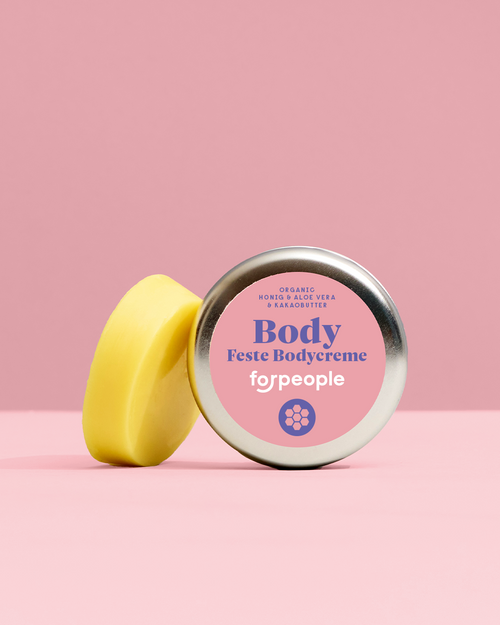
- Body: after showering, an oil or butter on still-damp skin, such as the Solid Body Butter - Beeswax & Aloe Vera.
A common question is whether glycerin tends to dry out the skin in dry air. The answer, with the evidence, is in Does glycerin dry out the skin?
When to seek medical advice?
Dry skin from heated air can usually be managed with skincare. Have it checked by a doctor if your skin stays red, scaly or cracked for weeks despite care, itches badly or weeps, if your eyes or nose are permanently burning or dry, and if coughing, shortness of breath or fever occur after using a humidifier; in that case switch the device off. With atopic eczema, questions about indoor climate and skincare belong with a dermatologist.
Frequently asked questions
What humidity is good for the skin?
There is no fixed limit for the skin. For living spaces, the German Environment Agency recommends 40 to 60 percent (Umweltbundesamt 2024); in experiments, skin and eyes became dry at 30 percent and below (Sunwoo et al. 2006).
Does a humidifier help against dry skin?
It can bring indoor air into a range in which the skin loses less water, and humidifying increased the water content of the stratum corneum in studies (Goad & Gawkrodger 2016). Long-term studies of everyday use are lacking. Without regular cleaning, a device brings problems of its own.
Is a bowl of water on the radiator enough?
It releases some moisture, but the amount is small. Whether it makes a difference in your room is shown by the hygrometer. Change the water regularly and clean the bowl.
Does the skin get used to dry air?
In animal experiments, yes: after two weeks in very dry air, the stratum corneum was thicker and lost less water (Denda et al. 1998). The skin had more trouble with a sudden change from very humid to dry air (Sato et al. 2002). Whether this works the same way in humans has not been studied.
Does air conditioning dry out the skin too?
It can lower humidity; a review describes dry skin in air-conditioned rooms with low humidity (Goad & Gawkrodger 2016). The same applies as in winter: measure and care.
Why do lips dry out first in heated air?
The red of the lips has a thin stratum corneum and hardly any fat of its own. A slightly thicker layer of balm in the evening helps many people; see Dry lips in the morning: does lip balm overnight help?
What helps the nose when the air is dry?
You care for the skin on the nose like the rest of your face. If it is irritated from blowing, the approach is described in Sore nose from blowing: what the skin needs now. For the mucous membrane inside, see the medical advice section above.
At forpeople
We have nothing in our range against dry air itself, but we do for its effects on the skin. These products suit care during the heating season, each for the purpose stated on its product page:
- Solid Body Butter - Beeswax & Aloe Vera, 40 g, €9.90: for the body, after showering onto still-damp skin; without water.
- Solid Hand Cream - Beeswax, 30 g, €9.90: beeswax, olive and sunflower oil, without essential oils.
- Lip Balm - Lemongrass, 5 g, €4.90: beeswax, sunflower oil, shea butter, almond and hemp oil, with lemongrass essential oil.
- Aloe Vera Serum 99.6%, 50 ml, €9.90: the water-based layer for face and body, without perfume or essential oils, preserved.
Test anything new on a small area first; if your skin reacts, stop using the product.
Read more: Why are shins dry and flaky in winter?
From the blog: Face and lips through winter: a routine for every day
Sources
- Alduchov OA, Eskridge RE (1996): Improved Magnus Form Approximation of Saturation Vapor Pressure. Journal of Applied Meteorology 35(4): 601–609. https://doi.org/10.1175/1520-0450(1996)035<0601:IMFAOS>2.0.CO;2
- Engebretsen KA, Johansen JD, Kezic S, Linneberg A, Thyssen JP (2016): The effect of environmental humidity and temperature on skin barrier function and dermatitis. Journal of the European Academy of Dermatology and Venereology 30(2): 223–249. https://doi.org/10.1111/jdv.13301
- Egawa M, Oguri M, Kuwahara T, Takahashi M (2002): Effect of exposure of human skin to a dry environment. Skin Research and Technology 8(4): 212–218. https://doi.org/10.1034/j.1600-0846.2002.00351.x
- Sunwoo Y, Chou C, Takeshita J, Murakami M, Tochihara Y (2006): Physiological and subjective responses to low relative humidity. Journal of Physiological Anthropology 25(1): 7–14. https://doi.org/10.2114/jpa2.25.7
- Denda M, Sato J, Masuda Y, Tsuchiya T, Koyama J, Kuramoto M, Elias PM, Feingold KR (1998): Exposure to a dry environment enhances epidermal permeability barrier function. Journal of Investigative Dermatology 111(5): 858–863. https://doi.org/10.1046/j.1523-1747.1998.00333.x
- Sato J, Denda M, Chang S, Elias PM, Feingold KR (2002): Abrupt decreases in environmental humidity induce abnormalities in permeability barrier homeostasis. Journal of Investigative Dermatology 119(4): 900–904. https://doi.org/10.1046/j.1523-1747.2002.00589.x
- Goad N, Gawkrodger DJ (2016): Ambient humidity and the skin: the impact of air humidity in healthy and diseased states. Journal of the European Academy of Dermatology and Venereology 30(8): 1285–1294. https://doi.org/10.1111/jdv.13707
- Umweltbundesamt (last updated 13.12.2024): Wie lüfte ich richtig? Tipps und Tricks zur Schimmelvermeidung. https://www.umweltbundesamt.de/themen/gesundheit/umwelteinfluesse-auf-den-menschen/schimmel/wie-luefte-ich-richtig-tipps-tricks-zur
- Umweltbundesamt (08.06.2013): Richtiges Lüften beugt Schimmel vor. https://www.umweltbundesamt.de/themen/richtiges-lueften-beugt-schimmel-vor
- Robert Koch-Institut (as of 30.04.2024): Legionellose – Sicherung der hygienischen Qualität von untersuchungspflichtigen Trinkwasserinstallationen durch die Trinkwasserverordnung. https://www.rki.de/DE/Themen/Infektionskrankheiten/Infektionskrankheiten-A-Z/L/Legionellose/OEGD/Hygiene-Trinkwasserinstallationen.html