After a move, the soap suddenly barely lathers, a grey film stays on the shower wall, and your skin feels dull and tight after towelling off. Often the water is the reason. What is behind it can be explained quite precisely. It is just as clear what research has not been able to show so far.
What hard water is and how to find out your water hardness
Water hardness describes the amount of dissolved calcium and magnesium salts. In Germany, the Detergents and Cleaning Products Act defines three hardness ranges, measured in millimoles of calcium carbonate per litre. Water suppliers must state the hardness range of their drinking water at least once a year and whenever it changes permanently (WRMG § 9). If you don't know your own hardness, your local supplier will.
| Hardness range | Calcium carbonate per litre by law | converted to milligrams per litre | converted to degrees of German hardness | Link to the studies below |
|---|---|---|---|---|
| soft | less than 1.5 millimoles | below 150 mg | below about 8.4 °dH | – |
| medium | 1.5 to 2.5 millimoles | 150 to 250 mg | about 8.4 to 14 °dH | The SWET study counted 200 mg per litre and above as hard |
| hard | more than 2.5 millimoles | above 250 mg | above about 14 °dH | The SOFTER study only included households above 250 mg per litre |
The ranges are set by law. Milligrams and degrees are converted: 1 millimole of calcium carbonate equals 100 milligrams and about 5.6 °dH. The last column shows that studies define "hard" differently; a review found values from 76 to over 350 milligrams per litre in the studies it included (Jabbar-Lopez et al. 2021). What hardness means for washing your hair with soap is covered in Washing hair with soap: hard water, acid rinse and the switch.
What happens when you wash: lime soap and surfactant residue
Soap consists of sodium or potassium salts of fatty acids. When they meet calcium and magnesium, insoluble lime soaps form (Verbraucherzentrale NRW 2026). Part of the soap is lost for cleansing: it lathers less, a grey, greasy film stays in the shower and basin, and a fine film stays on the skin that many people describe as dull. How soap is made from oil and lye is explained in Is there still lye in natural soap? Saponification explained.
Synthetic cleansing agents, such as those in shower gel, do not form lime soap. That does not mean they are free of the problem. Two experiments show this:
- Soap and syndet compared: Volunteers repeatedly washed areas of skin with a sodium soap, a triethanolamine soap and a synthetic cleansing bar, once in fully deionised water and once in hard water (11 grain by the US measure, roughly 190 milligrams of calcium carbonate per litre). With the less intensive of the two washing procedures, the areas washed with hard water were drier, redder and less hydrated. All three cleansers behaved similarly. More soap stuck to the skin, and the hardness of the rinse water mattered more than that of the wash water. With the very intensive washing procedure, the difference disappeared (Warren et al. 1996).
- Surfactant residue despite rinsing: 80 people, some healthy and some with a chronic skin condition, were washed with the surfactant sodium lauryl sulfate in water of different hardness and chlorine levels and then rinsed. After hard water, clearly more surfactant remained on the skin. This residue increased water loss and irritated the skin, most strongly in people with an inherited weaker skin barrier. Water softened by ion exchange reduced these effects; chlorine showed no clear effect (Danby et al. 2018).
This points to a coherent mechanism: limescale means more cleansing agent stays on the skin, and this residue affects the top layer of the skin. How the skin barrier is built and why it loses water is explained in Occlusion and TEWL: how a wax film protects your skin.
What studies on water hardness show and what they don't
Most studies come from the UK and focus on children with a chronic skin condition. They only partly apply to ordinary dry skin in adults, but they show how well the link is supported.
| Study | Who took part | What was studied | Result |
|---|---|---|---|
| McNally et al. 1998 | around 7,600 schoolchildren in Nottinghamshire | frequency of the skin condition by water hardness at home | more common among primary school children in the hardest category (17.3 versus 12.0 percent in the past year), no difference among older children (McNally et al. 1998) |
| Jabbar-Lopez et al. 2021 | review of 16 studies, including observational data from 385,901 people | water hardness and risk, water hardness and skin barrier | children in hard water areas were affected more often; the certainty of this finding is rated very low (Jabbar-Lopez et al. 2021) |
| SWET study, Thomas et al. 2011 | 336 children aged 6 months to 16 years in households with at least 200 mg per litre | whole-house ion-exchange softener in addition to usual treatment, 12 weeks | both groups improved similarly (by 20 and 22 percent); the softener brought no additional benefit (Thomas et al. 2011) |
| SOFTER study, Jabbar-Lopez et al. 2022 | 78 babies from families with a predisposition, households above 250 mg per litre | softener installed before birth, followed for 6 months | visible signs in 33 versus 48 percent; as a pilot study without a statistical test, it was only meant to check feasibility (Jabbar-Lopez et al. 2022) |
In short: observational studies find a link, and laboratory experiments show a plausible route via surfactant residue. But the attempt to improve an existing skin condition with softened water failed. Whether a softener can prevent it from developing in babies remains open. We did not find a study comparing hard and softened water in adults with dry skin.
What helps in everyday life
The most important adjustments cost nothing. They target the points where the experiments locate the problem: the amount of cleansing agent and the time afterwards.
- Shower briefly and lukewarm. Hot water and long showers remove more fat from the top layer of the skin; the study on this is described in Why does skin feel tight after a shower?
- Less cleanser, only where it is needed. Armpits, groin and feet need soap; arms and legs often only need water. Less surfactant means less residue.
- Lather first, then onto the skin. Work the soap into a lather in wet hands or a pouch instead of rubbing the bar over your skin for a long time. That way a little soap goes a long way, even in hard water.
- Rinse thoroughly. In Warren's experiment, the rinse water mattered more than the wash water. With hard water, however, the residue cannot be removed completely (Danby et al. 2018).
- Pat dry instead of rubbing and leave the skin slightly damp.
- Apply a fat within a few minutes. An oil or butter on still-damp skin slows the evaporation of the water the top layer has absorbed in the shower. How quickly this should happen is covered in How soon should you moisturise after a shower? The 3-minute rule; which suits when, in Body Oil or Body Butter – Which One When?
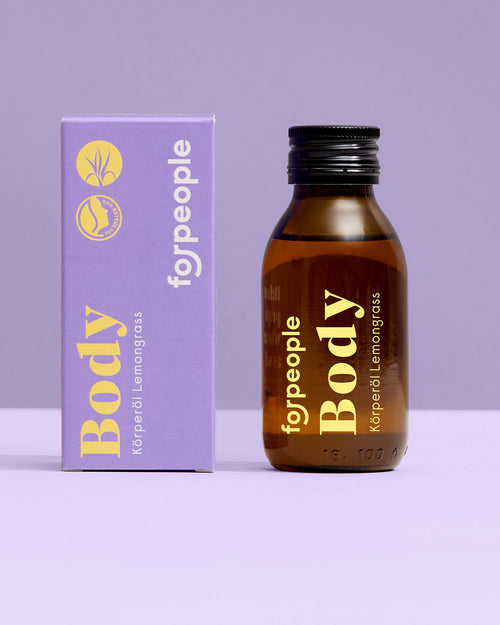
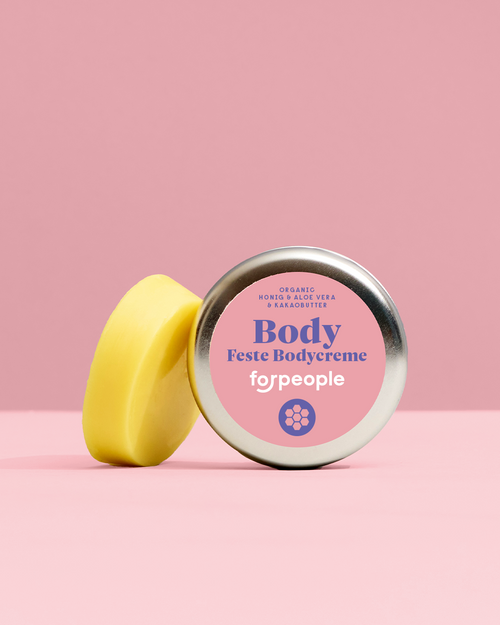
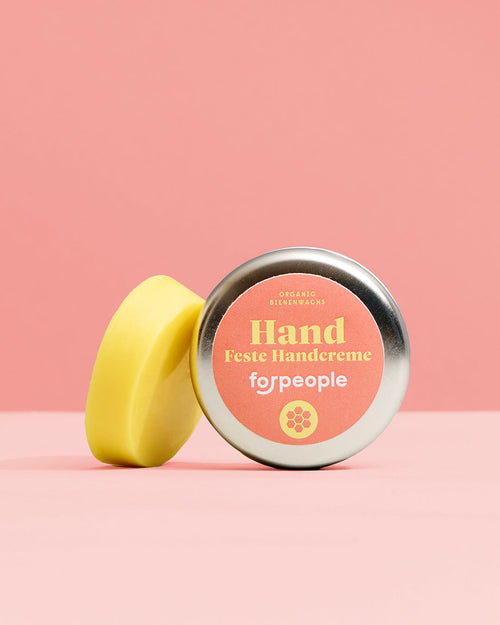
For the body, the Body Oil - Lemongrass works, for example; according to its product page it goes onto still-damp skin after showering. Or the Solid Body Butter - Beeswax & Aloe Vera, which softens with body heat. For hands, which are washed more often than any other part of the body, a hand cream after drying helps, such as the Solid Hand Cream - Beeswax. More on hands that get rough from washing: Dry, cracked hands: causes and what helps.
Water softener or shower filter? The studies tested ion exchangers that soften the water for the whole house. So far, they have not shown a benefit for the skin in everyday life. If you install one, it is better to decide for other reasons, such as limescale in appliances and pipes. Shower head filters were not tested in these studies.
Soap or shower gel with hard water?
Both have a drawback with hard water, just a different one. In Warren's experiment, soap and a synthetic cleansing bar hardly differed in their effect on the skin (Warren et al. 1996). What matters more is how much you use and how you rinse.
| Cleanser | What happens with limescale | What you notice | What to watch |
|---|---|---|---|
| Soap (solid; in the INCI list you recognise it by oils plus sodium hydroxide, or by names such as Sodium Olivate) | forms insoluble lime soap | less lather, grey film in the bathroom, dull feel on the skin | use little, lather it in a pouch, keep the bar dry |
| Syndet (shower gel, liquid soap, synthetic cleansing bar) | no lime soap; but the surfactant sticks to the skin more in hard water | lathers well even in hard water | also use sparingly, rinse thoroughly |
How the two forms differ otherwise is compared in Bar soap or shower gel: differences for skin and everyday use; an overview of curd soap, olive oil soap and more is in Curd soap, olive oil soap, Aleppo, glycerin soap: types of soap compared. So that a bar can dry between showers, it belongs on a rack that lets the water drain away. The other side of winter, dry heated air, is covered in Humidity and skin.
When to seek medical advice?
If your skin stays red, cracked or scaly for weeks despite a changed routine, if it itches persistently, if cracks bleed or patches spread, have it looked at by a doctor. Research on water hardness comes mainly from the field of atopic eczema. If you or your child are dealing with it, discuss washing habits and skincare with a dermatologist or paediatrician before spending money on a water softener. More on this: Itchy skin in winter: showering, care and when to see a doctor.
Frequently asked questions
How do I find out how hard my water is?
In Germany, your water supplier must state the hardness range at least once a year (WRMG § 9). If it gives a value in degrees of German hardness, the table above helps you place it.
Does hard water dry out the skin?
In experiments, skin washed with soap or surfactant in hard water was drier and lost more water than after soft water. So the effect is linked to the cleansing agent. Whether hard water dries out the skin without any cleanser was not tested in these studies.
Does a water softener help against dry skin?
There is no evidence for this. In the largest study, a softener brought no additional benefit to children with a chronic skin condition (Thomas et al. 2011). In the laboratory, softened water reduced surfactant residue on the skin (Danby et al. 2018).
Does a filter on the shower head do anything?
This was not investigated in the studies on water hardness; they tested whole-house systems. Whether a filter removes a meaningful amount of calcium at all depends on its design and should be backed up by the manufacturer.
Why does my soap barely lather?
Part of the soap binds calcium and magnesium and turns into lime soap, which does not lather. In a soap pouch or between wet hands, a little soap produces more lather. Using more soap does not help your skin.
Does chlorine in tap water play a role too?
In Danby's experiment, chlorine showed no clear effect on surfactant residue (Danby et al. 2018). Pool water is more heavily chlorinated; see Dry skin after the pool: what does chlorinated water do?
Can I use bar soap on my face with hard water?
Yes, if you use little and rinse thoroughly. What else matters is explained in Can I use bar soap on my face?
At forpeople
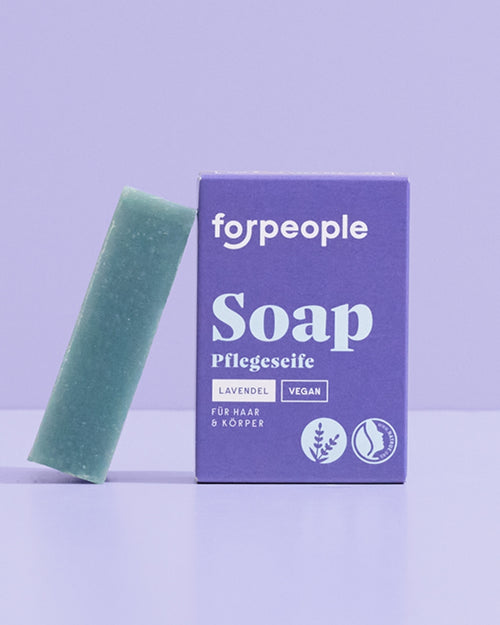
Our solid soaps are real soaps made from plant oils and sodium hydroxide; according to the INCI list, olive and coconut oil come first, along with shea butter, castor oil and argan oil. They too form lime soap in hard water and then lather less. That is why a pouch for lathering and care for afterwards go with them.
- Aloe Vera Soap – Lavender, 75 g, €8.90: according to the product page for hands, face and body; with lavender and lavandin oil, without added glycerin.
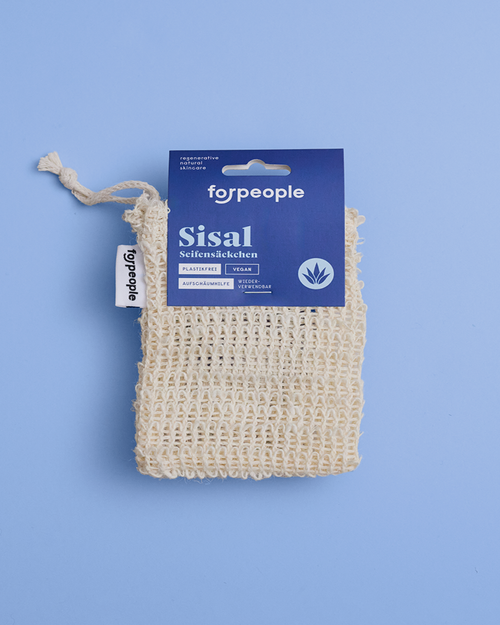
- Sisal Soap Pouch, €3.90: put the bar inside and lather it under water; that way a little soap is enough.
- Solid Body Butter - Beeswax & Aloe Vera, 40 g, €9.90: cocoa butter, olive oil, beeswax, sunflower oil, shea butter and aloe vera, without water; after showering onto still-damp skin.
- Body Oil - Lemongrass, 100 ml, €16.90: sesame, safflower, sea buckthorn seed and sunflower oil with lemongrass essential oil.
Test anything new on a small area first; how to do that is explained in Trying a new product: how do I test it on a small area? If your skin reacts, stop using the product.
Read more: Why does skin feel tight after a shower? · Humidity and skin
Sources
- Gesetz über die Umweltverträglichkeit von Wasch- und Reinigungsmitteln (Wasch- und Reinigungsmittelgesetz – WRMG), § 9 Angabe der Wasserhärtebereiche. https://www.gesetze-im-internet.de/wrmg/__9.html
- Verbraucherzentrale NRW (as of 31 August 2026): Shampoo: Was unterscheidet Shampoo-Seifen und Shampoo-Bars? https://www.verbraucherzentrale.nrw/schadstoffe/kosmetik/shampoo-was-unterscheidet-shampooseifen-und-shampoobars-43315
- Warren R, Ertel KD, Bartolo RG, Levine MJ, Bryant PB, Wong LF (1996): The influence of hard water (calcium) and surfactants on irritant contact dermatitis. Contact Dermatitis 35(6): 337–343. https://doi.org/10.1111/j.1600-0536.1996.tb02414.x
- Danby SG, Brown K, Wigley AM, Chittock J, Pyae PK, Flohr C, Cork MJ (2018): The Effect of Water Hardness on Surfactant Deposition after Washing and Subsequent Skin Irritation in Atopic Dermatitis Patients and Healthy Control Subjects. Journal of Investigative Dermatology 138(1): 68–77. https://doi.org/10.1016/j.jid.2017.08.037
- Jabbar-Lopez ZK, Ung CY, Alexander H, Gurung N, Chalmers J, Danby S et al. (2021): The effect of water hardness on atopic eczema, skin barrier function: A systematic review, meta-analysis. Clinical & Experimental Allergy 51(3): 430–451. https://doi.org/10.1111/cea.13797
- Thomas KS, Dean T, O'Leary C, Sach TH, Koller K, Frost A, Williams HC; SWET Trial Team (2011): A randomised controlled trial of ion-exchange water softeners for the treatment of eczema in children. PLoS Medicine 8(2): e1000395. https://doi.org/10.1371/journal.pmed.1000395
- Jabbar-Lopez ZK, Ezzamouri B, Briley A, Greenblatt D, Gurung N, Chalmers JR et al. (2022): Randomized controlled pilot trial with ion-exchange water softeners to prevent eczema (SOFTER trial). Clinical & Experimental Allergy 52(3): 405–415. https://doi.org/10.1111/cea.14071
- McNally NJ, Williams HC, Phillips DR, Smallman-Raynor M, Lewis S, Venn A, Britton J (1998): Atopic eczema and domestic water hardness. The Lancet 352(9127): 527–531. https://doi.org/10.1016/S0140-6736(98)01402-0