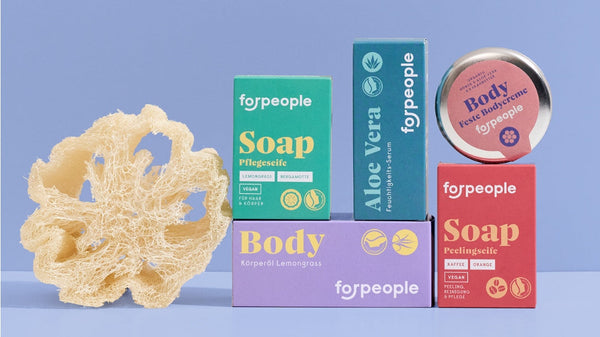
Many bathrooms have both: the bottle in the shower, the bar of soap by the sink. If you want to switch to the bar in the shower, you usually ask three things: Does soap clean just as well? Does it dry out the skin more? And how long does a bar last?
What is in soap and what is in shower gel
Both clean with surfactants. These substances loosen skin oil, sweat and dirt so that they can be rinsed off; water alone does this only partly (Mijaljica et al. 2022). The difference lies in the type of surfactant.
Soap forms when oils react with sodium hydroxide lye. The cleansing substances are the sodium salts of fatty acids, and glycerin forms as a second product. The INCI list either names the starting materials, such as “Olea Europaea Fruit Oil, Cocos Nucifera Oil, Aqua, Sodium Hydroxide”, or the finished soap salts such as Sodium Olivate. The process is explained in Is there still lye in natural soap? Saponification explained, and the different kinds are compared in Curd soap, olive oil soap, Aleppo, glycerin soap: types of soap compared.
Shower gel almost always cleans with synthetic surfactants; cleansers like this are called syndets. Typical examples are anionic surfactants such as Sodium Laureth Sulfate or Sodium Cocoyl Isethionate, often combined with an amphoteric surfactant such as Cocamidopropyl Betaine. Added to this are water, moisturising ingredients, foam boosters, preservatives, fragrance and colour (Mijaljica et al. 2022).
In between sits the solid shower bar, often sold as “solid shower gel”. It looks like soap but is usually a syndet in solid form. Only the INCI list tells you what you are holding: oils with Sodium Hydroxide or soap salts such as Sodium Olivate mean soap, ingredients such as Sodium Cocoyl Isethionate mean a syndet. You will find plain-English names in INCI names explained: our ingredients in plain English.
| Feature | forpeople bar soaps | Solid shower bar (syndet) | Shower gel (syndet) |
|---|---|---|---|
| Cleansing substances | soap salts from olive, coconut and other plant oils | synthetic surfactants | synthetic surfactants |
| How the INCI list starts | Olea Europaea Fruit Oil, Cocos Nucifera Oil, Aqua, Sodium Hydroxide; in Lemongrass, aloe juice comes third | for example Sodium Cocoyl Isethionate | usually Aqua, then for example Sodium Laureth Sulfate and Cocamidopropyl Betaine |
| pH | alkaline, like every soap | adjustable, usually slightly acidic to neutral | adjustable, usually slightly acidic to neutral |
| Water | needed to make it, a residue remains in the finished bar | little | main ingredient |
| Preservative | none according to the INCI list | depends on the formula | usually yes |
| Scent | essential oils, fragrance components listed individually | depends on the product | depends on the product, also available unscented |
| Storage | needs to dry between showers | needs to dry between showers | in the bottle |
Sources: Mijaljica et al. 2022, Halla et al. 2018; our soaps according to their INCI lists. Glycerin forms in every saponification; according to the manufacturer, none is added to our soaps.
pH and how your skin feels
The skin surface is slightly acidic. In a series of measurements with 330 people, its natural pH averaged about 4.7; soaps and even tap water raise it, after water alone for up to six hours (Lambers et al. 2006). Soap usually sits at pH 9 to 10: of 64 soaps tested, 53 fell within this range (Tarun et al. 2014). Syndets can be adjusted to pH 5.5 to 7, newer ones to 5.0 to 5.5 (Mijaljica et al. 2022).
In experiments, alkaline solutions at pH 10 made the outer layer of the skin swell more and changed its lipids, even without any surfactant. Just as important, though, is how strongly a surfactant interacts with the skin's proteins, and individual surfactants differ clearly in this (Ananthapadmanabhan et al. 2004). So pH alone does not decide how your skin feels after a shower. One review, whose authors work for a maker of medical skin care, sees syndets at an advantage because of their skin-like pH (Mijaljica et al. 2022).
In everyday terms:
- Your skin does not feel tight after showering: both work; it comes down to what you prefer.
- Your skin feels tight or flaky after every soap: shower shorter and lukewarm, use soap only on underarms, groin and feet, and moisturise afterwards. If it stays that way, a syndet with a lower pH is the obvious choice. More in Why does skin feel tight after a shower? and, for the cold season, Itchy skin in winter: showering, care and when to see a doctor.
- You avoid fragrance: read the INCI list for both forms. Our soaps are all scented with essential oils; more in Essential Oils and Fragrance Allergens.
- Your water is very hard: hard water forms insoluble lime soaps (Verbraucherzentrale NRW 2026), and the soap lathers less. On water hardness: Washing hair with soap: hard water, acid rinse and the switch.
If your skin stays red, cracked or flaky for weeks despite an adjusted routine, keeps itching or weeps, have it looked at by a doctor. Soap and shower gel clean; they do not treat skin conditions.
Water content and preservation
The INCI list names ingredients in descending order of weight; only those below one per cent may follow in any order (Regulation (EC) No 1223/2009). If Aqua comes first, as in most shower gels, water is the largest ingredient. For liquid shampoos, the consumer advice centre of North Rhine-Westphalia gives 70 to 90 per cent water (Verbraucherzentrale NRW 2026); shower gel is likewise a watery surfactant solution.
Where there is water, microorganisms can grow. Water-based cosmetics are therefore protected in several ways: with preservatives from the positive list of the EU Cosmetics Regulation, a suitable pH and packaging that lets little in during use; bottles with a narrow opening, for example, keep shower water out of shampoo and shower gel (Halla et al. 2018). More in Preservation and Water in Cosmetics.
Soap is made with water, because the lye is dissolved in it; part of it stays in the finished bar. So soap is not a water-free cosmetic. What protects it is the small amount of water and its high pH: liquid soaps at pH 9.5 to 10.5 offer microorganisms unfavourable conditions, and in cosmetics with a pH above 10 or below 4 they generally can neither multiply nor survive (Halla et al. 2018). Our bar soaps list no preservative in their INCI; the tocopherol (vitamin E) at the end of the list is an antioxidant.
How to shower with a bar of soap
- Shower lukewarm and briefly. Hot water and long showers wash more oil and water-binding substances out of the outer skin layer.
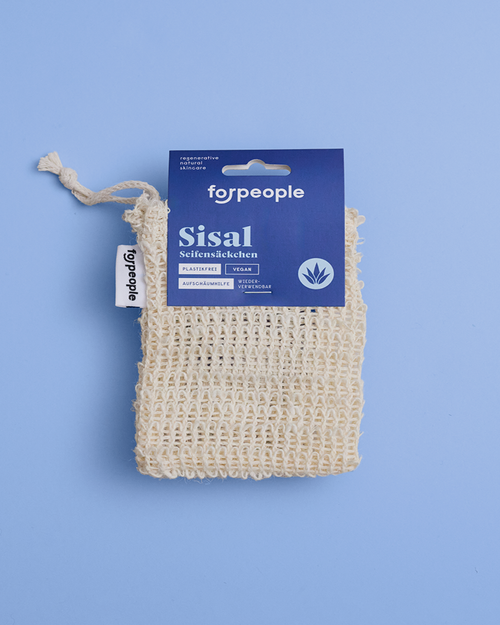
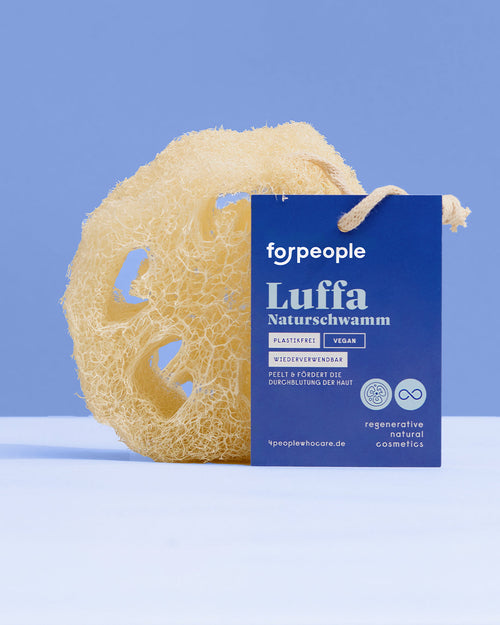
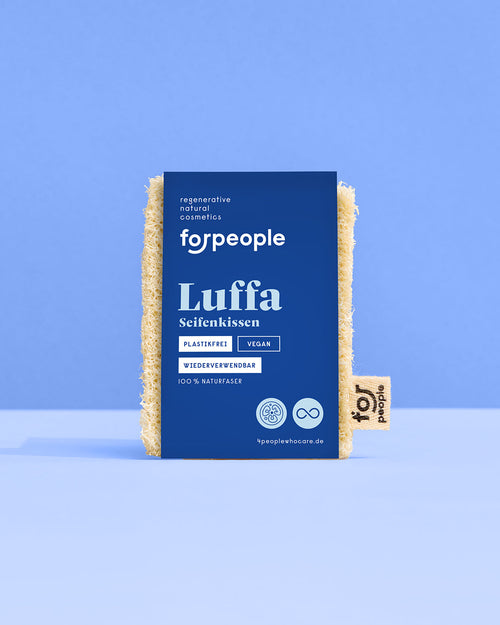
- Lather instead of rubbing. Turn the wet bar between your hands or put it into a Sisal Soap Pouch, work up a lather and spread the foam. The Luffa Shower Sponge - Cleansing & Exfoliation works too; leave out freshly shaved or irritated skin.
- Soap where it is needed. Underarms, groin and feet need soap; on arms, legs and back, water is enough on many days. This is common practice, not a measured rule. What a deodorant then does in the underarm is explained in How do aluminium-free deodorants work? Odour, sweat and ingredients.
- Rinse thoroughly. A little longer with hard water, so that no soap residue stays on the skin.
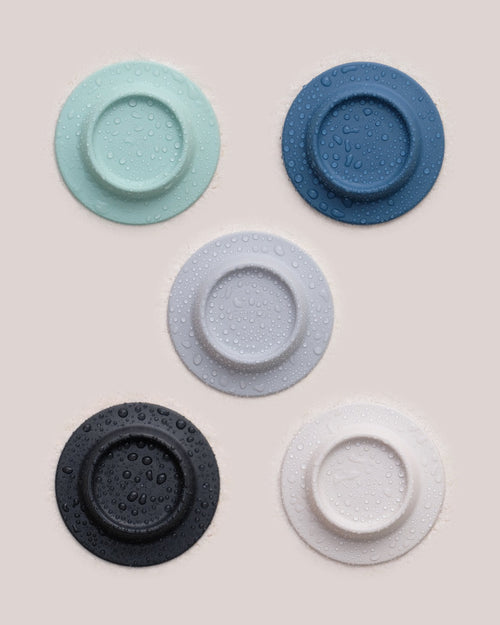
- Put the bar out of the spray. Rinse it briefly, let it drip and place it so that air can reach it from all sides, for example on the Soapi Magnetic Soap Holder for Bar Soap or the Luffa Soap Dish – Natural. Why soap otherwise goes soft is explained in Mushy bar soap: causes and proper storage.
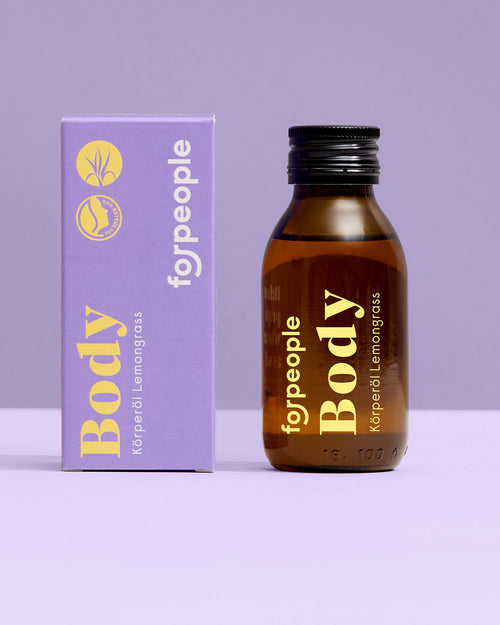
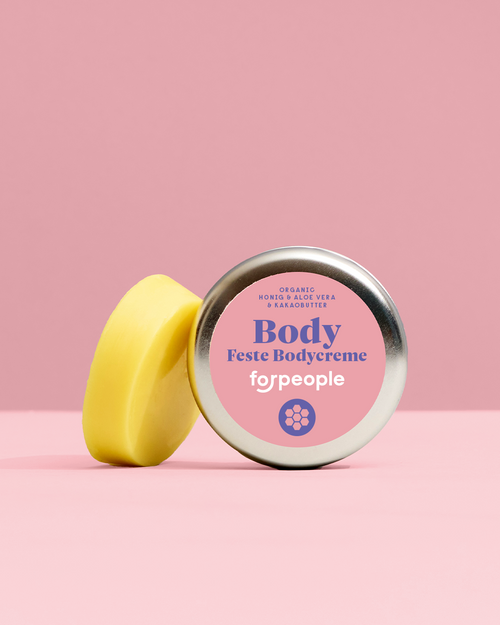
- Moisturise afterwards. Apply an oil or a butter to the still slightly damp skin, for example the Body Oil - Lemongrass (100 ml, €16.90) or the Solid Body Butter - Beeswax & Aloe Vera (40 g, €9.90). On timing: How soon should you moisturise after a shower? The 3-minute rule.
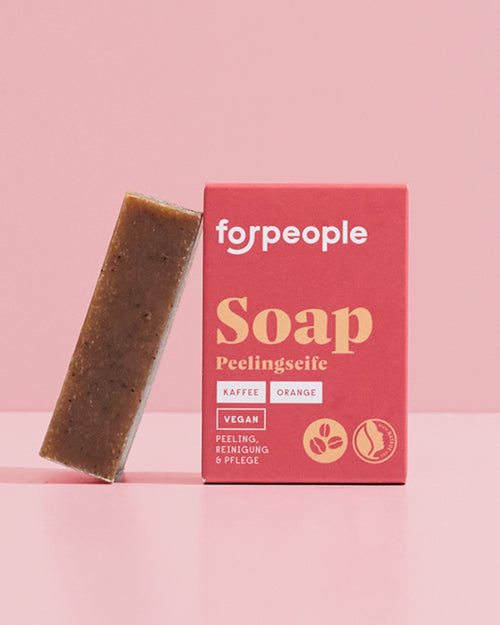
If you are coming from shower gel, you will often notice less lather and a different skin feel at first; this is down to the different cleansing substance and, with hard water, to lime soap. Soap foam and oil make the shower floor slippery, so rinse it before you step out. The Aloe Vera Soap with Scrub - Coffee & Orange contains ground coffee and is not meant for the face.
How long does a bar of soap last?
The question has two sides: how quickly a bar gets used up and how long it keeps.
Use: a fixed number cannot be given in good faith. A bar lasts longer if it dries between showers, does not sit in the spray and is only used where soap is needed. Small leftovers can be used up in the sisal pouch.
Shelf life: if a cosmetic product keeps for 30 months or less, a best-before date must be on the pack; if it keeps longer, the pack states instead how long it can be used after opening (Regulation (EC) No 1223/2009). What the symbols mean is explained in Cosmetics Shelf Life: Hourglass Symbol and PAO After Opening. For our soaps, the shelf life is printed on the packaging. What ages in a soap is mainly the share of oil that was not saponified: the soap then smells rancid or develops yellowish spots. The scent on the open surface also fades over time. So store spare bars wrapped, cool, dry and dark.
Frequently asked questions
Does soap clean just as thoroughly as shower gel?
Yes. Both loosen oil and dirt with surfactants. They differ in pH, lather and skin feel.
Does soap dry out the skin more than shower gel?
Not as a rule. Soap is alkaline, and an alkaline solution makes the outer skin layer swell more. How dry your skin feels afterwards also depends on the individual surfactant, on temperature and duration, and on the care afterwards. If your skin feels tight after every soap, a syndet is the obvious alternative.
Is solid shower gel the same as soap?
Usually not. Many solid shower bars are syndets in solid form. In the INCI list you recognise soap by oils with Sodium Hydroxide or by soap salts such as Sodium Olivate, and a syndet by ingredients such as Sodium Cocoyl Isethionate.
Why does soap lather less for me than shower gel?
Often it is the water: in hard water, part of the soap forms lime soap, which no longer lathers. In a sisal pouch or with a loofah sponge, lather builds more easily.
Can I also wash my hair with the same soap?
You can, but soap behaves differently from shampoo in the hair, especially with hard water. An acid rinse usually goes with it; how that works is explained in Washing hair with soap.
Are your soaps also available unscented?
No. All five varieties contain essential oils; their fragrance components such as Linalool or Limonene are listed individually in the INCI.
At forpeople
Our bar soaps are alkaline soaps made from plant oils, according to the manufacturer with no added glycerin, and scented with essential oils; according to the product page, do not use on broken or irritated skin. Each variety is also available in packs of 3, 5 and 10 (€24.90, €37.90, €69.90).
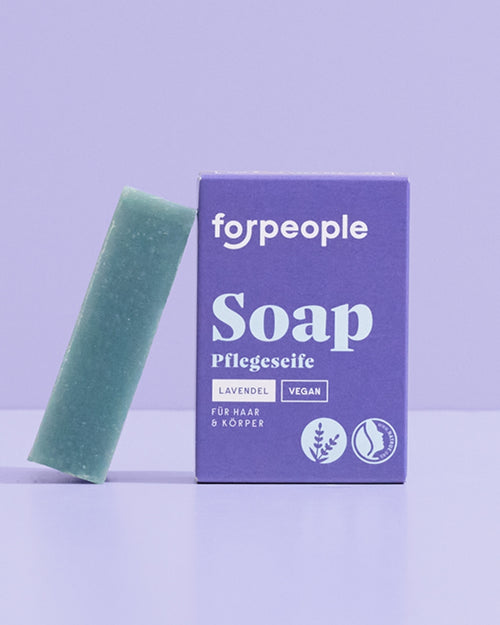
- Aloe Vera Soap – Lavender, 75 g, €8.90: with lavandin and lavender oil.
- Aloe Vera Soap - Lemongrass, 75 g, €8.90: with aloe juice in third place of the INCI list, lemongrass and bergamot oil.
- Organic Soap Set – 5 Scents in a Value Pack, 5 soaps, €39.90: Lemongrass, Lavender, Rosemary & Lemon, Eucalyptus & Sage and Coffee & Orange.
- Sisal Soap Pouch, €3.90: for lathering in the shower and hanging up afterwards.
More on this: Bar soap or liquid soap · Types of soap compared · Mushy bar soap · Why does skin feel tight after a shower?
From the blog: Less in the bathroom: a skincare routine with three products
Sources
- Mijaljica D, Spada F, Harrison IP (2022): Skin Cleansing without or with Compromise: Soaps and Syndets. Molecules 27(6): 2010. https://doi.org/10.3390/molecules27062010
- Ananthapadmanabhan KP, Moore DJ, Subramanyan K, Misra M, Meyer F (2004): Cleansing without compromise: the impact of cleansers on the skin barrier and the technology of mild cleansing. Dermatol Ther 17(Suppl 1): 16–25. https://doi.org/10.1111/j.1396-0296.2004.04s1002.x
- Tarun J, Susan J, Suria J, Susan VJ, Criton S (2014): Evaluation of pH of Bathing Soaps and Shampoos for Skin and Hair Care. Indian J Dermatol 59(5): 442–444. https://doi.org/10.4103/0019-5154.139861
- Lambers H, Piessens S, Bloem A, Pronk H, Finkel P (2006): Natural skin surface pH is on average below 5, which is beneficial for its resident flora. Int J Cosmet Sci 28(5): 359–370. https://doi.org/10.1111/j.1467-2494.2006.00344.x
- Halla N, Fernandes IP, Heleno SA, Costa P, Boucherit-Otmani Z, Boucherit K, Rodrigues AE, Ferreira ICFR, Barreiro MF (2018): Cosmetics Preservation: A Review on Present Strategies. Molecules 23(7): 1571. https://doi.org/10.3390/molecules23071571
- Regulation (EC) No 1223/2009 of the European Parliament and of the Council of 30 November 2009 on cosmetic products, Article 19(1)(c) and (g) and Annex V. OJ L 342, 22.12.2009, p. 59. eur-lex.europa.eu/eli/reg/2009/1223/oj
- Verbraucherzentrale NRW (as of 31 August 2026): Shampoo: Was unterscheidet Shampoo-Seifen und Shampoo-Bars? (in German) verbraucherzentrale.nrw