The topic comes up with the heating season. Your cheeks feel tight after a walk in the wind, the skin next to your nose flakes, and in short videos faces shine under a thick layer of petroleum jelly. Which of this suits your skin depends less on the trend than on what it lacks right now: water, fat or both.
What slugging and skin flooding mean
The name comes from the slug, a snail without a shell, and refers to the shiny film on the face. An article in a dermatology journal describes slugging as a trend from the video platform TikTok: as the last step of the evening routine, a petroleum jelly-based ointment is applied generously. Of the first 50 videos on the keyword, a good third discussed benefits or risks, and videos by healthcare professionals did so far more often than those by influencers. Because of the strongly sealing effect, the authors see a potential risk in it (Pagani et al. 2022).
Skin flooding also comes from social media. There is no fixed definition; in the PubMed literature database, no scientific article uses the term (search in October 2026). It usually means: cleanse your face, do not rub it dry, apply several water-based products one after the other, such as a water spray, toner and a serum with humectants such as glycerin or hyaluronic acid, and finish with a cream or an oil.
| Feature | Slugging | Skin flooding |
|---|---|---|
| Focus | dense film of fat as the last layer | several water-based layers on damp skin |
| Typical last layer | petroleum jelly or another water-free ointment | cream or oil |
| Time of day | evening, overnight | morning or evening |
| Studies on the routine | no comparative studies | none |
What is behind it: binding water, slowing evaporation
Your skin constantly releases water through its surface, even without sweating; experts call this transepidermal water loss. Skin care works at two points, explained in detail under Occlusion and TEWL: how a wax film protects your skin and Humectants, occlusives, emollients.
- Humectants such as glycerin attract water, from deeper layers of the skin and, in humid air, from the surroundings. A review calls them double-edged: they can even increase water loss because they draw water upwards, where it evaporates easily. This is why they are usually combined with occlusives (Sethi et al. 2016). For skin flooding, this means that water-based layers without a fatty seal are only half the routine.
- Occlusives form a water-repellent film on the skin, most effectively on slightly damp skin. Petroleum jelly reduces water loss by more than 98 per cent from a concentration of just 5 per cent; lanolin, mineral oil and silicones reach 20 to 30 per cent (Sethi et al. 2016). Plant oils only penetrate the uppermost layers of the stratum corneum and seal partially, in one measurement similarly to paraffin oil, jojoba oil less so; petroleum jelly sealed most tightly (Patzelt et al. 2012).
This gives the order for both trends: water-based before oily, and the fat on still damp skin. How this works with serum, oil and solid cream is shown in Combining aloe vera serum with oil or solid cream; why dry skin usually needs water and fat is explained in Rich cream or moisturiser? What dry skin needs.
The evening suits both: at night the shine does not matter, and measurements over 24 hours show that the skin is more permeable in the evening and at night than in the morning (Yosipovitch et al. 1998). Aloe belongs to the water-based side: in a study with 20 women, creams with aloe extract increased the water content of the stratum corneum but did not change water loss; the researchers suspect a humectant effect (Dal'Belo et al. 2006). Evaporation is only slowed by the film on top.
Petroleum jelly on the face: what speaks for it and against it
What speaks for petroleum jelly is its dense film; in pure form it has no fragrance and remains stable for a long time. How it is made and how the German Federal Institute for Risk Assessment (BfR) assesses mineral oil in cosmetics is explained in Petroleum jelly or beeswax salve: the difference. Other points speak against a thick layer all over the face:
- Skin feel: the review names odour, potential allergies and the greasy feel as limiting factors of most occlusives (Sethi et al. 2016). Petroleum jelly also rubs off onto pillows and hair. More on this in Greasy or well cared for? Why creams feel greasy.
- What lies underneath is absorbed more easily: according to a review on occlusion, a dense seal can increase the absorption of substances applied beforehand; in addition, the stratum corneum takes up more water, which can impair its protective function (Zhai & Maibach 2002). So leave out skin care products with acids or retinoids on such evenings, and only cover creams prescribed by a doctor after checking with them.
- Blackheads: a review on petroleum jelly classifies the widespread assumption that petroleum jelly causes spots as a misconception (Kamrani et al. 2024). The well-known comedogenicity lists rate raw materials, originally in animal tests; in humans, finished products containing such raw materials were not necessarily comedogenic themselves (Draelos & DiNardo 2006). More on this in Face oil on oily skin: does that work? This is no promise for your skin.
Who slugging is less suited to: oily skin that tends to get blackheads already has its own film of fat; an additional dense film then mainly adds shine. The same applies in warm weather and high humidity. Partial slugging is an option: only dry areas, for example next to the nose or on the chin, get a thin layer. This classification is based on experience, not on measurements.
Slugging with water-free care: how to do it
Our face care consists of a water-based serum and oils. Oils are water-free and form the fatty layer, but they seal less tightly than petroleum jelly (Patzelt et al. 2012). Strictly speaking, this is the lighter form of slugging. If you want the dense film, use petroleum jelly or an unfragranced ointment from the pharmacy as the last layer. According to their product pages, our solid creams and salves are intended for hands, feet, body and lips, not for the face.
- Cleanse: remove make-up and sunscreen thoroughly; see Removing make-up with oil: how does it work, and which oil? Then just pat dry lightly.
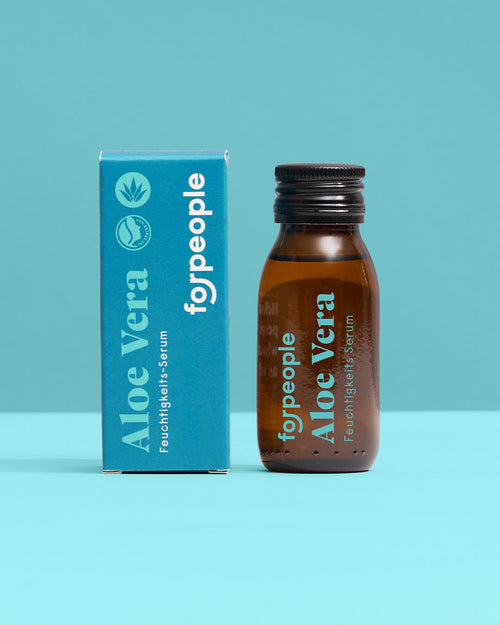
- Water-based layer: pat an almond-sized amount of Aloe Vera Serum 99.6% onto your skin. For the skin flooding variant, apply a second thin layer as soon as the first no longer runs.
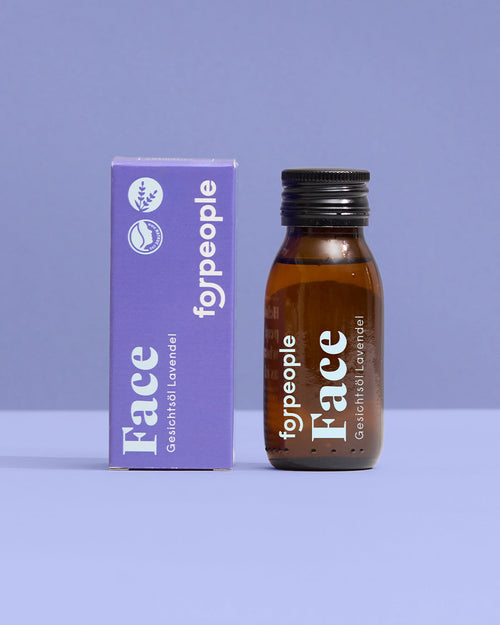
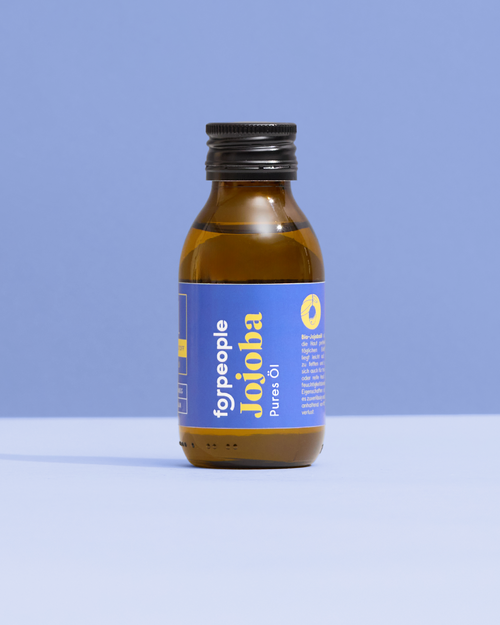
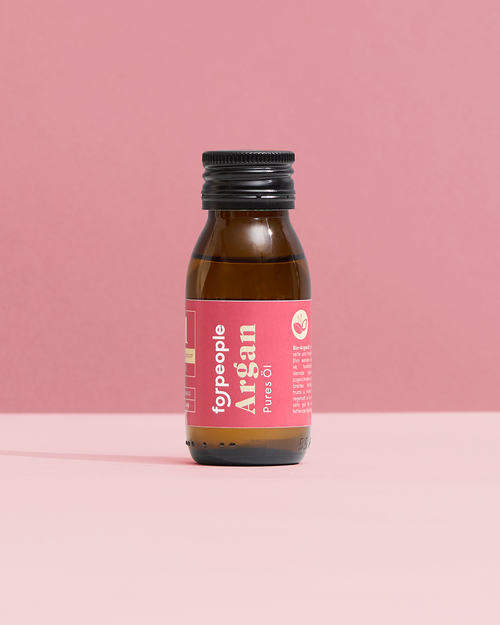
- Oil while the skin is still damp: warm two to three drops of Face Oil - Lavender or a pure oil such as Jojoba Oil - pure or Argan Oil - pure between your palms and press them onto your face. More on argan oil: Argan oil for skin, hair and nails: how to use it.
- Seal more tightly if needed: only on individual very dry areas, a thin layer of unfragranced ointment.
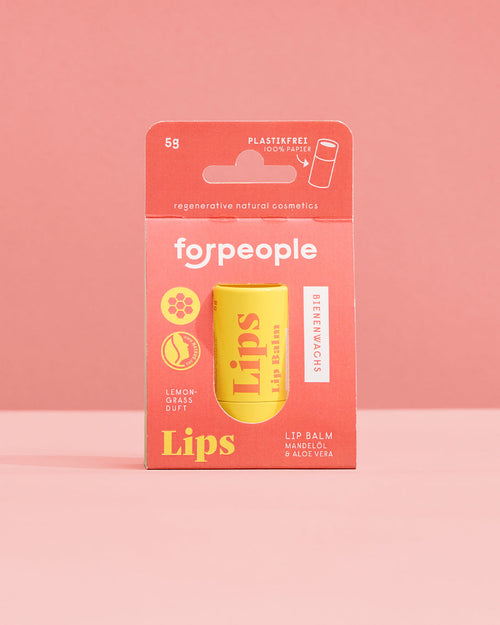
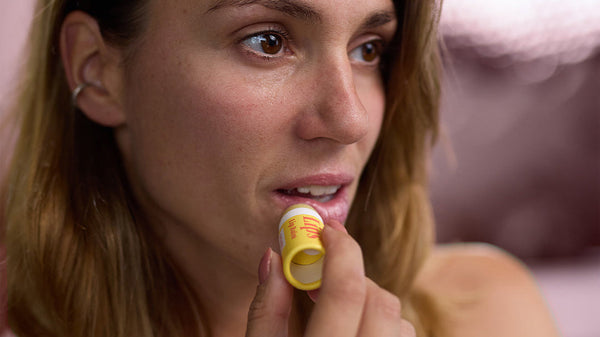
- Lips: finally a lip balm, for example the Lip Balm - Lemongrass; see Dry lips in the morning: does lip balm overnight help?
- In the morning: wash your face with water, then use light care and sun protection during the day.
How often: this has not been studied. To start with, one or two evenings a week are enough; if your skin stays smooth, without more shine or blackheads, you can shorten the intervals. A seal that is as dense as possible every night is not the goal. Always test new products on a small area first: Trying a new product: how do I test it on a small area?
| Product or product type | Composition | Film | What to look out for |
|---|---|---|---|
| Petroleum jelly (petrolatum) | purified hydrocarbons from crude oil | very dense | clearly shiny, rubs off |
| Unfragranced ointment from the pharmacy | depending on the product, petroleum jelly, paraffin, waxes or wool wax | dense, depending on the formula | read the ingredient list |
| Face Oil - Lavender | argan, rosehip, jojoba, borage and hemp oil, lavender oil | partial, like plant oils in general | scented; according to the ingredient list contains linalool and limonene |
| Jojoba Oil - pure | jojoba oil only, chemically a liquid wax | lower than other oils in one measurement | thin, no added fragrance |
| Argan Oil - pure | argan oil only | partial, like plant oils in general | no essential oils; according to the product page for the face in the evening |
| Aloe Vera Serum 99.6% (water-based layer) | aloe juice, citric acid, potassium sorbate, sodium benzoate | none | no perfume and no essential oils; needs oil on top |
Basis: the products' ingredient lists, Sethi et al. 2016 and Patzelt et al. 2012. The “Film” column describes groups of substances, not measurements of the individual products.
When to see a doctor
Slugging and skin flooding are skin care, not treatment. Seek medical advice if your skin remains very dry for weeks despite care, if it is red, burns, itches, weeps or cracks, if small red bumps form around your mouth, nose or eyes, or if you suspect acne, rosacea or eczema. If you have atopic dermatitis or other skin conditions, discuss any new layering routine with your dermatologist beforehand, especially if you use prescribed creams: under a dense film they can penetrate the skin more strongly (Zhai & Maibach 2002). No layer belongs on injured or irritated skin. If your skin reacts to a product, stop using it.
Frequently asked questions
What does the word slugging mean?
It is not a technical term. A slug is a snail without a shell; the word refers to the shiny film that a thick layer of petroleum jelly leaves on the face.
What is the difference between skin flooding and slugging?
Skin flooding focuses on several water-based layers, slugging on the dense film of fat at the end. You can combine both: water-based first, then fatty.
Is petroleum jelly harmful on the face?
Not in general; how the German Federal Institute for Risk Assessment assesses petroleum jelly is explained in Petroleum jelly or beeswax salve. Its drawbacks are the greasy feel and that it rubs off.
How often should I do slugging?
There are no studies on this. Start with one or two evenings a week and watch your skin for two to three weeks. If it is very shiny in the morning or more blackheads appear, take longer breaks or stop.
Does slugging clog pores?
This has not been shown for petroleum jelly itself; a review considers the assumption a misconception (Kamrani et al. 2024). But whatever lies underneath also stays under the film, such as make-up residue. If you tend to get blackheads, limit it to dry areas.
Can I use beeswax salve or solid hand cream on my face?
They are not intended for that. According to its product page, our beeswax salve is meant for dry areas on hands, heels and elbows and as a thin layer of care for the lips; it contains larch resin, propolis and essential oils. The solid creams are made for hands, feet and body. For your face, use oil or, for a denser film, an unfragranced ointment.
Does the principle also work on hands and feet?
Yes, a dense film overnight is usually less bothersome there. How to do it with cotton gloves: Overnight hand mask: what it does and how to do it.
At forpeople
We do not offer an ointment for the face. For the lighter, water-free form of slugging, these products are suitable; their product pages name the face or the lips:
- Aloe Vera Serum 99.6%, 50 ml, €9.90: the water-based layer; contains water and is preserved, without perfume and essential oils.
- Face Oil - Lavender, 50 ml, €21.90: five oils with lavender oil; according to the product page as the second step after the aloe serum, also in the evening.
- Jojoba Oil - pure, 100 ml, €16.90: pure, no added fragrance, for face, body and hair.
- Lip Balm - Lemongrass, 5 g, €4.90: beeswax, sunflower oil and shea butter, with lemongrass essential oil.
For all of them: do not apply to injured or irritated skin, test new products on a small area first, and stop using them if your skin reacts.
More on this: Dry skin in winter: what helps with cold and indoor heating
From the blog: Face and lips through winter: a routine for every day
Sources
- Pagani K, Lukac D, Martinez R, Jablon K, McGee JS (2022): Slugging: TikTok™ as a source of a viral “harmless” beauty trend. Clinics in Dermatology 40(6): 810–812. https://doi.org/10.1016/j.clindermatol.2022.08.005
- Sethi A, Kaur T, Malhotra SK, Gambhir ML (2016): Moisturizers: The Slippery Road. Indian Journal of Dermatology 61(3): 279–287. https://doi.org/10.4103/0019-5154.182427
- Patzelt A, Lademann J, Richter H, Darvin ME, Schanzer S, Thiede G et al. (2012): In vivo investigations on the penetration of various oils and their influence on the skin barrier. Skin Research and Technology 18(3): 364–369. https://doi.org/10.1111/j.1600-0846.2011.00578.x
- Yosipovitch G, Xiong GL, Haus E, Sackett-Lundeen L, Ashkenazi I, Maibach HI (1998): Time-dependent variations of the skin barrier function in humans: transepidermal water loss, stratum corneum hydration, skin surface pH, and skin temperature. Journal of Investigative Dermatology 110(1): 20–23. https://doi.org/10.1046/j.1523-1747.1998.00069.x
- Dal'Belo SE, Gaspar LR, Maia Campos PM (2006): Moisturizing effect of cosmetic formulations containing Aloe vera extract in different concentrations assessed by skin bioengineering techniques. Skin Research and Technology 12(4): 241–246. https://doi.org/10.1111/j.0909-752X.2006.00155.x
- Zhai H, Maibach HI (2002): Occlusion vs. skin barrier function. Skin Research and Technology 8(1): 1–6. https://doi.org/10.1046/j.0909-752x.2001.10311.x
- Kamrani P, Hedrick J, Marks JG, Zaenglein AL (2024): Petroleum jelly: A comprehensive review of its history, uses, and safety. Journal of the American Academy of Dermatology 90(4): 807–813. https://doi.org/10.1016/j.jaad.2023.06.010
- Draelos ZD, DiNardo JC (2006): A re-evaluation of the comedogenicity concept. Journal of the American Academy of Dermatology 54(3): 507–512. https://doi.org/10.1016/j.jaad.2005.11.1058