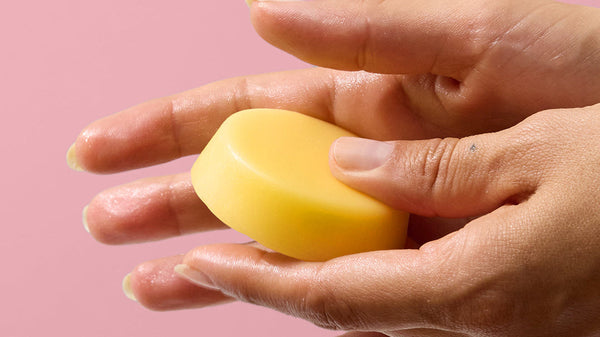
A piece of cocoa butter lies in your hand as hard as a bar of chocolate, yet on the skin surface it turns glossy within a few seconds. Shea butter from the jar gives under your finger and is sometimes grainy in winter. Many recipes list mango butter as an alternative to both. If you read ingredient lists or make your own skincare, you will wonder what really sets the three apart. This page compares composition, melting behaviour, minor components and shelf life, and shows where we use shea and cocoa butter.
What a plant butter is
In cosmetics, “butter” is not a protected term. It refers to plant fats that are solid at room temperature. All three come from seeds: cocoa butter from the beans of the cacao tree (Theobroma cacao), shea butter from the kernels of the shea tree (Vitellaria paradoxa), mango butter from the kernel inside the mango stone (Mangifera indica). On the ingredient list they appear as Theobroma Cacao Seed Butter, Butyrospermum Parkii Butter and usually as Mangifera Indica Seed Butter. How a butter differs from a salve, balm and cream is explained in Balm, salve, cream, butter: what is the difference?
Chemically, butters, like oils, are mostly triglycerides: glycerol with three fatty acids attached. They are solid because saturated fatty acids such as stearic and palmitic acid make up a large share. The kernels differ in yield: in a study of 36 samples from seven countries, shea kernels contained 30 to 54 % fat (Akihisa et al. 2010); according to a review, mango kernels contain about 15 % (Nadeem et al. 2016), and in seven Pakistani varieties the yield was 6.3 to 9.9 % (Zahoor et al. 2023).
Of all places, food law shows how closely related the three are. The EU chocolate directive allows chocolate to contain up to 5 % of certain plant fats other than cocoa butter. Only six are permitted, among them shea and mango kernel. They must be rich in symmetrical monounsaturated triglycerides, meaning fat molecules with saturated fatty acids on the outside and oleic acid in the middle, and they must mix with cocoa butter in any proportion (Directive 2000/36/EC, Art. 2 and Annex II). In mango kernel fat, the triglyceride with two stearic acids and one oleic acid makes up 28.9 to 65.0 % (Jin et al. 2019).
The fatty acids compared
Which fatty acids dominate determines hardness, skin feel and shelf life. The table shows the four most important ones. For cocoa and shea butter, the values come from the US nutrient database; for mango kernel fat, from a study of seven mango varieties.
| Fatty acid (per 100 g fat) | Cocoa butter | Shea butter | Mango kernel fat |
|---|---|---|---|
| Palmitic acid (saturated) | 25.4 g | 4.4 g | 10.0–13.3 g |
| Stearic acid (saturated) | 33.2 g | 38.8 g | 24.7–38.5 g |
| Oleic acid (monounsaturated) | 32.6 g | 43.5 g | 25.7–48.6 g |
| Linoleic acid (polyunsaturated) | 2.8 g | 4.9 g | 7.7–16.5 g |
| Total saturated fatty acids | 59.7 g | 46.6 g | 41.9–52.9 g |
Sources: cocoa and shea butter (USDA 2019), mango kernel fat (Zahoor et al. 2023). Natural products vary a great deal. For shea butter, the study of the 36 samples found 28 to 56 % stearic acid and 34 to 61 % oleic acid; butter from West Africa generally contained more stearic acid than butter from East Africa (Akihisa et al. 2010). More on shea butter on its own: Shea butter: composition, origin and refining.
This gives three profiles. Cocoa butter has the most saturated fatty acids and hardly any linoleic acid. Shea butter has little palmitic acid but a lot of stearic and oleic acid. Mango kernel fat lies in between for saturated fatty acids but brings clearly more linoleic acid. What separates oleic and linoleic acid on the skin is covered in Linoleic and oleic acid in plant oils; tallow, whose fatty acid pattern resembles cocoa butter, is covered in Beef tallow on the skin: what is behind the trend.
Melting: why cocoa butter softens suddenly and shea butter does not
Cocoa butter consists largely of a few very similar triglycerides. It can set in six crystal forms, each melting at a different temperature. The form found in well-made chocolate melts between 30.0 and 34.5 °C, the most stable form between 33.5 and 38.5 °C (Stobbs et al. 2025). The skin surface is at around 32 °C (Bouwstra et al. 2023). That is why cocoa butter is hard in the tin and turns liquid within a short time when you apply it.
Shea butter is a mixture of many different triglycerides. In a measurement by differential scanning calorimetry, it melted over a wide temperature range with several melting peaks instead of at one point (Lawer-Yolar et al. 2019). In everyday terms, shea butter already softens at room temperature and becomes supple on the skin bit by bit without suddenly running. For mango kernel fat, a review gives a melting point of 32 to 36 °C; it is solid at room temperature (Nadeem et al. 2016).
| Feature | Cocoa butter | Shea butter | Mango butter |
|---|---|---|---|
| At 20 °C | hard, snaps | soft, can be pressed in | firm, a little softer than cocoa butter |
| Melting behaviour | narrow, around skin temperature | broad, softens gradually | melting point 32–36 °C |
| Typical appearance after heat | whitish dots or haze (fat crystals) | small grains | rarely described |
| Own scent, unrefined | of cocoa | nutty, smoky | faint |
| Role in a formula | gives firmness | makes it supple | gives firmness, substitute for cocoa butter |
Sources: melting behaviour as in the text; hardness at 20 °C, scent and role in the formula are practical experience, not measured values.
The many crystal forms also explain the white dots that can appear on a body butter after a hot day. If cocoa butter melts and slowly sets again, parts of it crystallise in other forms; in chocolate this is called fat bloom (Stobbs et al. 2025). Shea butter forms similar small grains. Both are cosmetic flaws, not spoilage; the crystals melt on the skin. How to get solid skincare through summer and winter is explained in Storing solid cosmetics: heat, summer and winter.
Minor components: what else is in there besides fat
Besides the triglycerides, every plant fat contains a small share of substances that do not turn into soap during saponification: the unsaponifiable fraction. It includes plant sterols, tocopherols (forms of vitamin E), squalene and, in shea butter, above all triterpene alcohols.
- Shea butter: 2 to 12 % unsaponifiables, 22 to 72 % of which are triterpene alcohols (Akihisa et al. 2010). The US database measures 357 mg plant sterols per 100 g (USDA 2019).
- Cocoa butter: 201 mg plant sterols and 1.8 mg alpha-tocopherol per 100 g (USDA 2019).
- Mango kernel fat: 1.2 to 3.3 % unsaponifiables in seven varieties (Zahoor et al. 2023), plus sterols, tocopherols and squalene (Jin et al. 2019) and phenolic compounds such as mangiferin (Nadeem et al. 2016).
This is where the honest limit of what is known lies. Many statements about minor components come from laboratory and food studies. Whether a few per cent of triterpene alcohols or phenols in a butter do anything measurable on the skin has hardly been studied for the pure butters. What is established is their contribution to the shelf life of the fat itself. Refining removes part of them; what happens during refining is explained in Cold-pressed or refined: what the difference is.
On the skin: what the butters do and what they do not
At their core, all three butters do the same thing on the skin: they leave a film of fat that slows the evaporation of water from the stratum corneum and keeps rough patches supple. How strongly a film slows evaporation depends more on its thickness and density than on the plant; this is explained in Occlusion and TEWL: how a wax film protects your skin. No butter brings water with it. Which layer of the skin fat belongs in and what reaches it is described in Fat and moisture: what belongs in which layer of the skin barrier.
The differences show mainly in the feel. Cocoa butter turns liquid quickly, spreads thinly and becomes a little firmer again on the skin as it cools. Shea butter stays soft and creamy for longer. Mango butter lies in between. These are descriptions from practice; we have not found comparative measurements of the skin feel of the pure butters. Whether a film of fat feels greasy depends above all on the amount.
On the question of whether any of the butters clogs pores, figures from so-called comedogenicity scales circulate. Where these scales come from and why they say little about a finished product is explained in Comedogenic oils: where the scale comes from and what it is worth.
Shelf life: which butter keeps longest
Fats turn rancid when oxygen attacks the double bonds of unsaturated fatty acids. Heat, light, traces of metal and free fatty acids speed this up; the fatty acid composition sets the basic pace (Choe & Min 2006). All three butters contain few polyunsaturated fatty acids and are therefore much more stable than oils such as rosehip or sunflower oil.
Among the three, cocoa butter, with only 2.8 % linoleic acid, has the most favourable profile. Mango kernel fat contains more linoleic acid but showed high oxidative stability in food tests, 58.8 to 85.2 hours at 110 °C (Jin et al. 2019). The same review calls the fat a source of natural antioxidants such as tocopherol. A weak point of mango kernel fat is how it is obtained: if the kernels are dried at high heat for a long time, triglycerides split and free fatty acids form (Jin et al. 2019).
In practice, the same applies to all three: store them cool, dark and closed, and take them out with dry fingers or a spatula. If a butter smells of old fat instead of its own scent, it has gone off. How to recognise that is explained in How to tell if a skin oil is rancid.
Shea and cocoa butter in our products
The order of the ingredient list follows the quantity: what comes first is present in the largest amount. The table shows where the butters appear on the list on the product page and what the product is meant for.
| Product | Butter according to the ingredient list | Meant for |
|---|---|---|
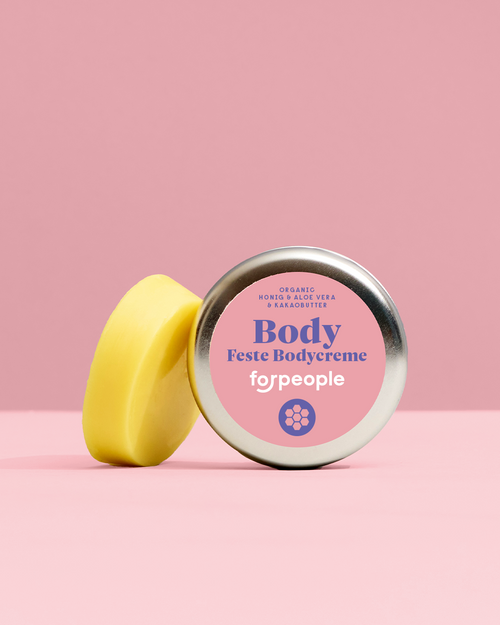
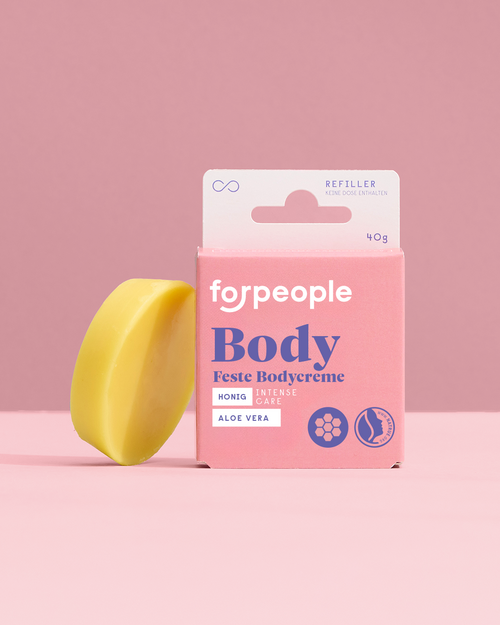
| Solid Body Butter - Beeswax & Aloe Vera | cocoa butter in 1st, shea butter in 5th place | dry skin on the body |
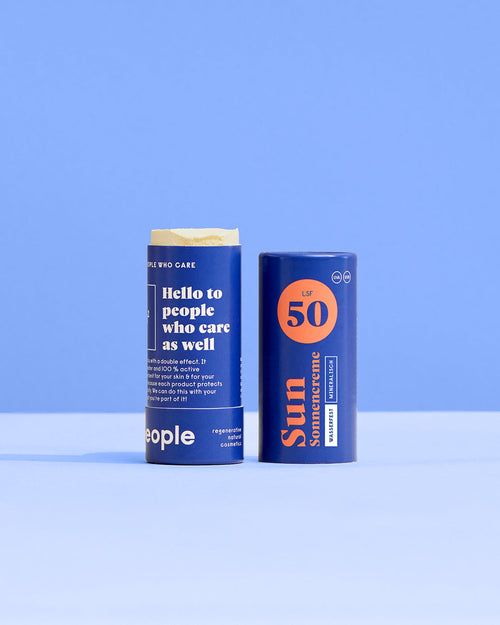
| Solid Sunscreen SPF50 | shea butter in 1st place | sun protection for face and body |
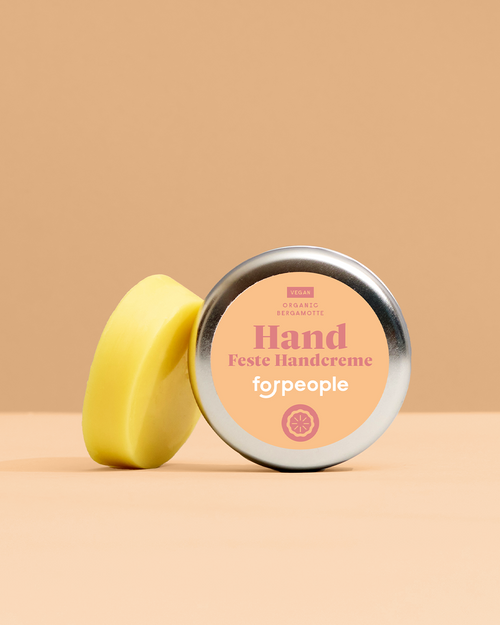
| Solid Vegan Hand Cream - Bergamot | shea butter in 4th place | dry hands, vegan |
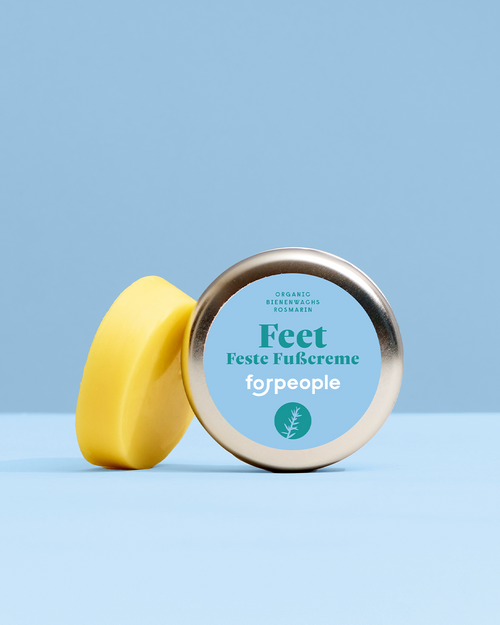
| Solid Foot Cream – Rosemary & Sage | shea butter in 4th place | dry feet and heels |
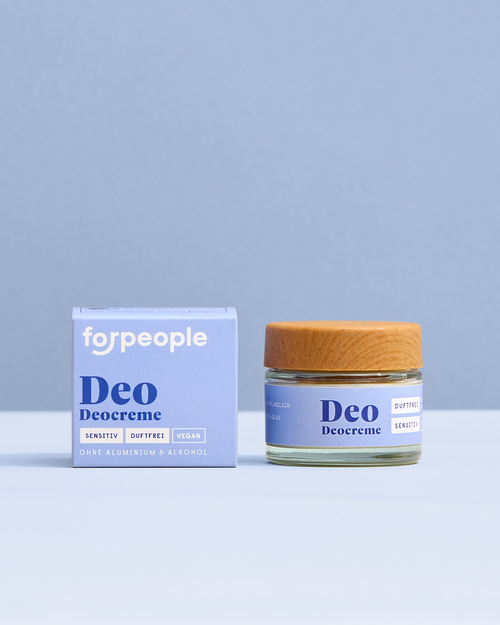
| Sensitive Deodorant Cream | shea butter in 2nd place | underarms, without fragrance |
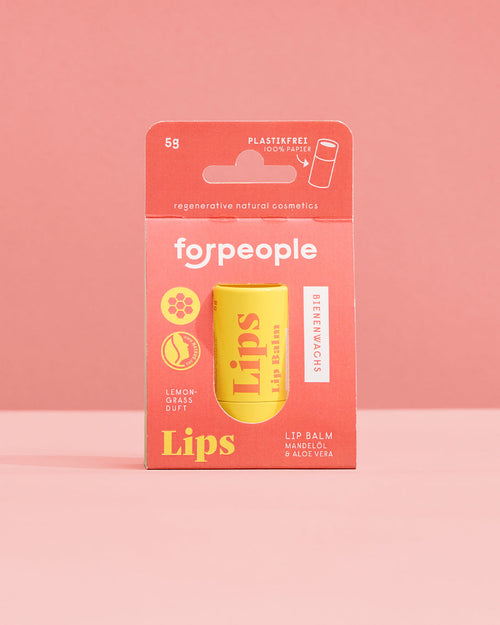
| Lip Balm - Lemongrass | shea butter in 3rd place | dry lips |
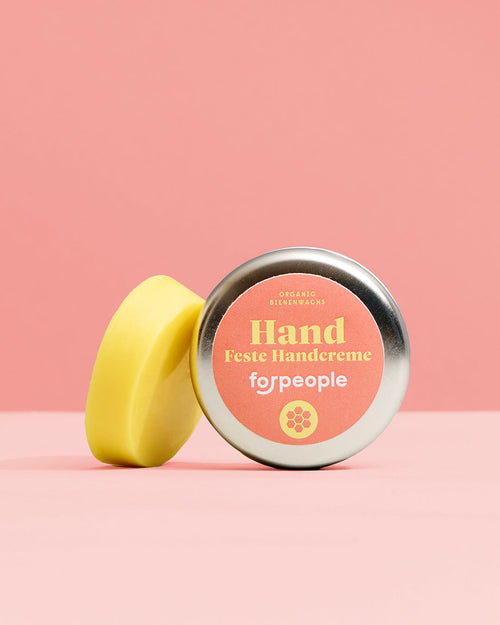
The bar soaps also contain shea butter; during saponification, however, most of it turns into soap itself. The Solid Hand Cream - Beeswax and the beeswax salve do without plant butter; they consist of beeswax and oils. We do not use mango butter in any product.
In the body butter, cocoa butter comes first because it gives the piece its firmness; shea butter, olive oil and sunflower oil make it supple, and beeswax holds it together. Whether oil or butter suits you better is described in Body Oil or Body Butter – Which One When?.
Frequently asked questions
Which plant butter is the richest?
All three consist almost entirely of fat. They do not differ in fat content but in how hard they are and how long the film stays soft. Cocoa butter feels firmer, shea butter creamier.
Why has my body butter developed white dots?
Usually heat followed by slow setting. Cocoa butter then partly crystallises in other crystal forms. The dots are fat, not mould and not spoilage; if the butter smells as usual, you can keep using it.
Why is my shea butter grainy?
Here too, individual fats crystallise separately as the butter cools slowly. The grains melt on the skin. Stored cool and without big temperature changes, this happens less often.
Is mango butter more suitable for the face than shea butter?
There are no comparative studies on this. Mango kernel fat contains more linoleic acid, shea butter more minor components. For the face, many people prefer a few drops of oil to a butter; try anything new on a small area first.
Does cocoa butter smell of chocolate?
Unrefined cocoa butter smells clearly of cocoa, deodorised cocoa butter hardly at all. In a formula with other fats and wax, the scent recedes.
Can I swap one butter for another when making my own skincare?
Yes, but the consistency changes. Cocoa or mango butter instead of shea butter makes the mixture firmer, shea butter instead of cocoa butter makes it softer. Amounts and wax shares are covered in Making solid cream: how much wax to oil?
Is shea butter a problem if I have a nut allergy?
Shea butter comes from a seed kernel. If you react to nuts or seeds, ask a doctor before using it and try a new product on a small area first.
Are plant butters vegan?
The butters themselves are. A product is only vegan if the other ingredients are plant-based too; our body butter contains beeswax, the Solid Vegan Hand Cream - Bergamot does not.
At forpeople
These products contain shea or cocoa butter; the full ingredient list is on each product page.
- Solid Body Butter - Beeswax & Aloe Vera, 40 g, €9.90: cocoa butter, olive oil, beeswax, sunflower oil, shea butter and aloe extract, without essential oils; as a refill for the tin 40 g, €7.90.
- Solid Vegan Hand Cream - Bergamot, 30 g, €9.90: vegan, with candelilla wax, jojoba oil, olive oil, shea butter and hemp seed oil; scent from lemon and bergamot oil.
- Solid Sunscreen SPF50, 40 g, €17.90: shea butter in first place, mineral UV filters zinc oxide and titanium dioxide, non-nano.
- Lip Balm - Lemongrass, 5 g, €4.90: beeswax, sunflower oil, shea butter, almond and hemp seed oil, with essential lemongrass oil.
Do not use on injured or irritated skin, and stop using the product if your skin reacts.
Read more: Ceramides and plant oils: what oils can do for the skin barrier
From the blog: What is in the solid body butter – and why
Sources
- U.S. Department of Agriculture, Agricultural Research Service (2019): FoodData Central, SR Legacy. Oil, cocoa butter (FDC 171421); Oil, sheanut (FDC 171429). Accessed 28.10.2026. https://fdc.nal.usda.gov/food-details/171421/nutrients
- Akihisa T, Kojima N, Katoh N, Ichimura Y, Suzuki H, Fukatsu M et al. (2010): Triterpene alcohol and fatty acid composition of shea nuts from seven African countries. Journal of Oleo Science 59(7): 351–360. https://doi.org/10.5650/jos.59.351
- Zahoor S, Anwar F, Qadir R, Soufan W, Sakran M (2023): Physicochemical Attributes and Antioxidant Potential of Kernel Oils from Selected Mango Varieties. ACS Omega 8(25): 22613–22622. https://doi.org/10.1021/acsomega.3c01155
- Nadeem M, Imran M, Khalique A (2016): Promising features of mango (Mangifera indica L.) kernel oil: a review. Journal of Food Science and Technology 53(5): 2185–2195. https://doi.org/10.1007/s13197-015-2166-8
- Jin J, Jin Q, Akoh CC, Wang X (2019): Mango kernel fat fractions as potential healthy food ingredients: A review. Critical Reviews in Food Science and Nutrition 59(11): 1794–1801. https://doi.org/10.1080/10408398.2018.1428527
- Stobbs JA, Ghazani SM, Donnelly ME, Marangoni AG (2025): Chocolate Tempering: A Perspective. Crystal Growth & Design 25(9): 2764–2783. https://doi.org/10.1021/acs.cgd.5c00269
- Lawer-Yolar G, Dawson-Andoh B, Atta-Obeng E (2019): Novel phase change materials for thermal energy storage: Evaluation of tropical tree fruit oils. Biotechnology Reports 24: e00359. https://doi.org/10.1016/j.btre.2019.e00359
- Directive 2000/36/EC of the European Parliament and of the Council of 23 June 2000 relating to cocoa and chocolate products intended for human consumption, Art. 2(1) and Annex II. OJ L 197, 3.8.2000, p. 19. https://eur-lex.europa.eu/eli/dir/2000/36/oj
- Choe E, Min DB (2006): Mechanisms and Factors for Edible Oil Oxidation. Comprehensive Reviews in Food Science and Food Safety 5(4): 169–186. https://doi.org/10.1111/j.1541-4337.2006.00009.x
- Bouwstra JA, Nădăban A, Bras W, McCabe C, Bunge A, Gooris GS (2023): The skin barrier: An extraordinary interface with an exceptional lipid organization. Progress in Lipid Research 92: 101252. https://doi.org/10.1016/j.plipres.2023.101252