Cream tubes say “with ceramides”, oil bottles say “for the skin barrier”. Both sound as if they were about the same thing. In fact, ceramides and plant oils are chemically different substances that act at different points in the skin. This page explains what ceramides are, what role linoleic acid plays, what studies on oils on the skin show and where the limits are. The structure of the stratum corneum as a whole is described in The skin barrier explained simply.
What ceramides are
Ceramides belong to the sphingolipids. Their backbone is a sphingoid base, a long chain with an amino group, to which a fatty acid is bound. In the body, ceramides are the framework of all sphingolipids and occur in small amounts in cell membranes. In the stratum corneum, by contrast, they are a main component: together with cholesterol and free fatty acids, they fill the spaces between the corneocytes. The ceramides of the stratum corneum have their own, very diverse composition, which so far has only been found in land-dwelling mammals (Uchida & Park 2021).
According to a review, the lipids between the corneocytes consist of about 50 % ceramides, 25 % cholesterol and 15 % free fatty acids. The skin produces them in the living cells of the epidermis, packs precursors into small storage bodies and releases them into the spaces between the cells; there, enzymes turn them into the finished lipid layers (Feingold 2007). These layers are stacked in an ordered way and form the only continuous pathway through the stratum corneum (Bouwstra et al. 2023). How water and fat are distributed across the layers of the skin is covered in more depth in Fat and moisture: what belongs in which layer of the skin barrier.
There is no such thing as “the” ceramide. Specialists name the classes with letters: the last letter stands for the base, the first ones for the type of fatty acid.
| Code | Meaning | Example |
|---|---|---|
| S, P, dS, H | Base: sphingosine, phytosphingosine, dihydrosphingosine, 6-hydroxysphingosine | CER NS: non-hydroxy fatty acid on sphingosine |
| N | non-hydroxy fatty acid | CER NP |
| A | alpha-hydroxy fatty acid | CER AP |
| EO | very long omega-hydroxy fatty acid to which a further fatty acid is bound, mostly linoleic acid | CER EOS, CER EOP |
Source: Bouwstra et al. 2023. So far, 24 such subclasses have been described in the human stratum corneum (Bouwstra et al. 2023). Counting the different chain lengths, an analysis by mass spectrometry estimates more than 1,000 individual ceramide structures (t’Kindt et al. 2012). The codes reappear on the ingredient lists of creams, for example as “Ceramide NP”.
Linoleic acid: the link between oil and ceramide
One group of ceramides stands out: the acylceramides with the code EO. They have a particularly long fatty acid chain, at the end of which hangs a further fatty acid with 18 carbon atoms, in most cases linoleic acid. These ceramides only occur in the epidermis. In model experiments, CER EOS is crucial for the formation of the long layered arrangement of lipids that is typical of the barrier (Bouwstra et al. 2023).
Linoleic acid is the most abundant polyunsaturated fatty acid in the skin. The body cannot make it; it has to come from food and is incorporated in the skin into these ceramides, among other molecules (Wang et al. 2024). If essential fatty acids are lacking, the stratum corneum changes in structure and function (Feingold 2007).
The season plays a part as well. In a study of face, hands and legs, the lipids of the stratum corneum were clearly lower in winter than in spring and summer, and with age the ceramides in particular decreased. In the acylceramide, the share carrying linoleic acid fell in winter and in older skin, while the share carrying oleic acid rose (Rogers et al. 1996). What this means for skincare in winter is covered in Dry skin in winter: what helps with cold and indoor heating.
What plant oils contain and what they do not
Fatty plant oils consist mostly of triglycerides: glycerol with three fatty acids. They also contain small amounts of free fatty acids, tocopherols, sterols, phospholipids, waxes, squalene and phenolic compounds (Lin et al. 2017). Ceramides are not among their meaningful components. An oil cannot give the skin ceramides, but it can give fatty acids, which are distributed very differently depending on the oil.
| Fat (per 100 g) | Linoleic acid | Oleic acid | In our products, for example |
|---|---|---|---|
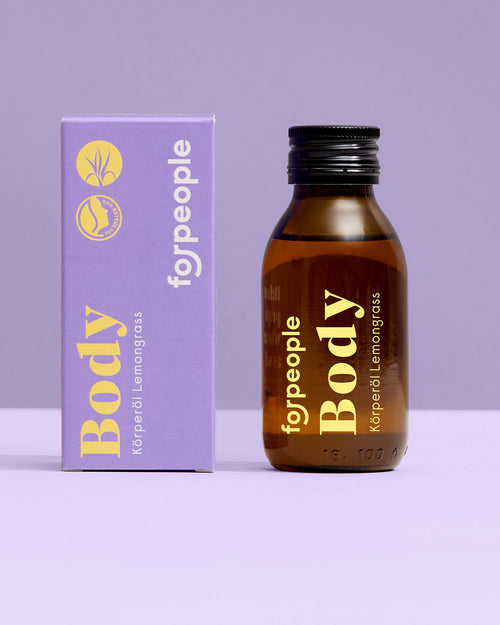
| Safflower oil, high-linoleic type | 74.6 g | 14.4 g | Body Oil - Lemongrass |
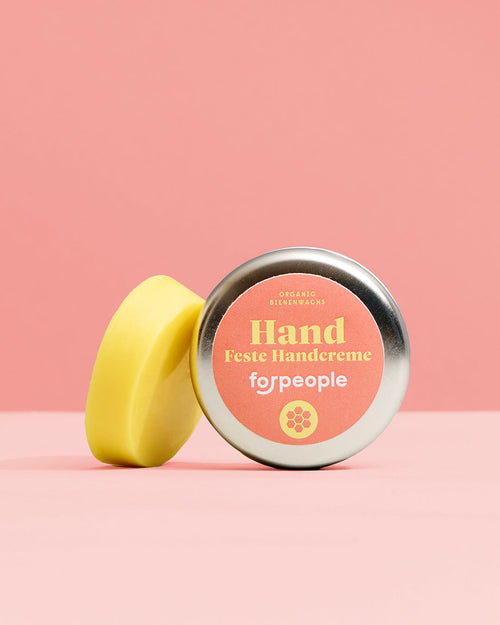
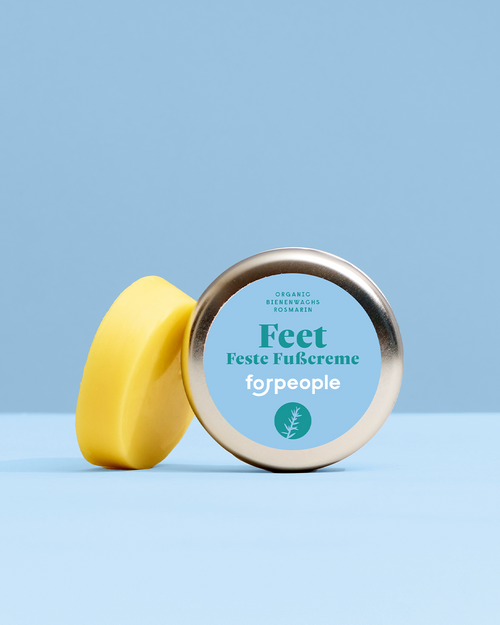
| Sunflower oil, high-linoleic type | 65.7 g | 19.5 g | Solid Hand Cream - Beeswax, Solid Foot Cream – Rosemary & Sage |
| Olive oil | 9.8 g | 71.3 g | hand cream with beeswax, foot cream, body butter, beeswax salve |
| Shea butter | 4.9 g | 43.5 g | body butter, foot cream, hand cream with bergamot |
| Cocoa butter | 2.8 g | 32.6 g | body butter |
Source of the values: US nutrient database (USDA 2019); information on our products according to the ingredient list. Sunflower and safflower oil also exist as high-oleic varieties; which variety a product contains cannot be seen from the ingredient list. The fatty acids of other oils such as argan, hemp or rosehip oil are compared in Linoleic and oleic acid in plant oils; the butters are covered in Shea, cocoa or mango butter? Plant butters compared.
What studies on oil on the skin show
Most studies on plant oils on the skin are small, and many come from cell or animal experiments. Still, three findings are useful for everyday life.
- Oleic acid loosens, linoleic acid does not. A review sums up: linoleic acid plays a direct role in the water barrier, oleic acid can disrupt it with continued use; oils rich in oleic acid are even studied as aids meant to help active ingredients pass through the skin more easily (Lin et al. 2017).
- Olive oil and sunflower oil compared. In a trial with 19 adults, participants applied six drops of pure oil to the forearm twice a day for four to five weeks. Olive oil reduced the integrity of the stratum corneum and led to mild redness; sunflower oil preserved the stratum corneum and improved skin hydration (Danby et al. 2013). What was tested was pure oil, not a blend with wax and butter. Details are in Olive oil and sunflower oil on the skin.
- The film works without penetrating deeply. The same review notes that the film of an oil reduces water loss from the stratum corneum even if the oil does not get deeper into the epidermis (Lin et al. 2017). This effect is described in Occlusion and TEWL: how a wax film protects your skin.
Whether linoleic acid from an oil you put on your skin gets into the acylceramides of healthy skin in meaningful amounts in everyday life has not been established. A review on linoleic acid stresses that much of the evidence for its effects is based on cell and animal experiments (Wang et al. 2024). Put honestly: oils rich in linoleic acid fit what the skin needs; that they measurably increase ceramides with normal skincare has not been shown.
Ceramide creams: what matters
Creams with ceramides usually contain manufactured ceramides modelled on the skin's own, often together with cholesterol and fatty acids. Behind this is a series of experiments on damaged mouse skin: if only one or two of the three barrier lipids were applied, the barrier recovered more slowly than without treatment. Only a mixture of ceramides, cholesterol and fatty acids in equal molar proportions allowed normal recovery, and increasing the share of one component up to threefold sped up recovery. Preliminary results on human skin pointed in the same direction. Interesting for the question about oils: in these mixtures, triglycerides could replace the free fatty acids (Man et al. 1996).
Two things follow from this. A single ceramide on its own is not automatically helpful; the mixture is what counts. And triglycerides from oils are a possible building block, but only together with the other barrier lipids. How much ceramide a cream contains is usually not stated on the pack; the ingredient list only gives the order of the amounts.
| Ceramide cream | Pure plant oil | Water-free care made of oil, butter, wax | |
|---|---|---|---|
| Contains ceramides | yes, usually manufactured | no | no |
| Supplies fatty acids | depending on the formula | yes | yes |
| Slows evaporation | depending on fat content | a little to moderately | more strongly, through wax and butter |
| Brings water | usually yes (emulsion) | no | no |
Classification based on the sources in the text; the gradation for slowing evaporation follows the general principle that denser films seal more. Our products contain no ceramides. We therefore do not sell them as a substitute for the skin's own lipids, but as care that protects the skin from drying out. Which other building blocks a cream can have is explained in Humectants, occlusives, emollients.
What you can take away from this
- Spare your own ceramides: hot water and frequent washing dissolve lipids from the stratum corneum. Showering lukewarm and applying a product afterwards helps more than any single oil. More on this in Why does skin feel tight after a shower?
- Oil on damp skin: oil brings no water, it keeps existing water in the skin for longer. It does most straight after showering.
- Pure oil every day on large areas: based on the limited, small studies so far, more speaks for oils rich in linoleic acid than for pure olive oil. This has not been studied for blends with wax and butter.
- Store oils rich in linoleic acid in a cool place: many double bonds make them prone to oxidation. How to recognise rancid oil is explained in How to tell if a skin oil is rancid.
When to get medical advice
If your skin stays very dry, scaly or cracked for weeks despite regular care, itches badly, is red or weeps, have it looked at by a doctor. Skin diseases such as atopic dermatitis or psoriasis are associated with altered ceramides (Uchida & Park 2021); their treatment belongs in medical hands, not in a self-experiment with oils or cosmetics.
Frequently asked questions
Do plant oils contain ceramides?
Not in meaningful amounts. Fatty plant oils consist mostly of triglycerides. They supply fatty acids, not finished ceramides.
Can the skin make ceramides from oil?
The skin incorporates linoleic acid into certain ceramides, and it cannot make linoleic acid itself. Whether oil on the skin measurably increases this incorporation in healthy skin has not been established.
Which oil has the most linoleic acid?
Among common oils, high-linoleic safflower and sunflower oil are near the top, with about 75 and 66 g per 100 g. Olive oil has just under 10 g, but a lot of oleic acid.
Is olive oil bad for the skin?
Applied pure and daily to the same area, it loosened the stratum corneum in a small study. This has not been studied in a formula with wax, butter and other oils. If you are looking for a pure oil, you can choose one rich in linoleic acid.
Does dry skin need a ceramide cream?
Not necessarily. Often it already helps to wash less hot and then protect the skin from drying out with a film of fat. Ceramide creams are an option if that is not enough; if problems persist, the skin should be seen by a doctor.
What does “Ceramide NP” on the pack mean?
It is a ceramide with a non-hydroxy fatty acid (N) on phytosphingosine (P). The codes follow the same system specialists use to name the ceramides of the skin.
Do ceramides decrease in winter?
In one study, the lipids of the stratum corneum were clearly lower in winter than in spring and summer, and with age the ceramides in particular decreased.
At forpeople
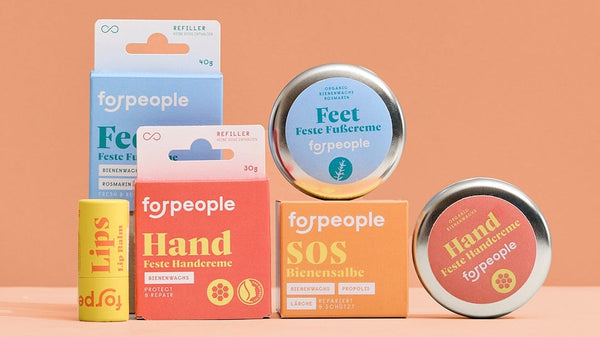
Our products contain no ceramides. These contain oils rich in linoleic acid; the full ingredient lists are on the product pages.
- Solid Hand Cream - Beeswax, 30 g, €9.90: beeswax, olive and sunflower oil, St. John's wort and aloe extract, without essential oils; for dry hands.
- Solid Foot Cream – Rosemary & Sage, 40 g, €9.90: sunflower oil in first place, plus beeswax, olive oil and shea butter; with essential oils, not for children under 7.
- Body Oil - Lemongrass, 100 ml, €16.90: sesame, safflower, sea buckthorn seed and sunflower oil with essential lemongrass oil; for the body after showering.
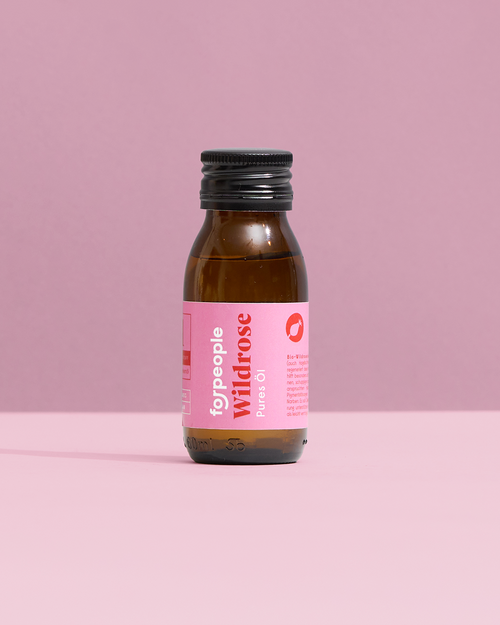
- Wild Rose Seed Oil - pure, 50 ml, €19.90: pure oil for face, body and hair; rich in polyunsaturated fatty acids, so store it cool and dark.
Do not use on injured or irritated skin, and stop using the product if your skin reacts.
Read more: Argan, jojoba, almond or rosehip oil: how do they differ? · Skin microbiome and skincare: what research knows
From the blog: Hands and feet through winter: a routine for morning and evening
Sources
- Uchida Y, Park K (2021): Ceramides in Skin Health and Disease: An Update. American Journal of Clinical Dermatology 22(6): 853–866. https://doi.org/10.1007/s40257-021-00619-2
- Feingold KR (2007): Thematic review series: skin lipids. The role of epidermal lipids in cutaneous permeability barrier homeostasis. Journal of Lipid Research 48(12): 2531–2546. https://doi.org/10.1194/jlr.R700013-JLR200
- Bouwstra JA, Nădăban A, Bras W, McCabe C, Bunge A, Gooris GS (2023): The skin barrier: An extraordinary interface with an exceptional lipid organization. Progress in Lipid Research 92: 101252. https://doi.org/10.1016/j.plipres.2023.101252
- t’Kindt R, Jorge L, Dumont E, Couturon P, David F, Sandra P, Sandra K (2012): Profiling and characterizing skin ceramides using reversed-phase liquid chromatography-quadrupole time-of-flight mass spectrometry. Analytical Chemistry 84(1): 403–411. https://doi.org/10.1021/ac202646v
- Wang X, Jia Y, He H (2024): The Role of Linoleic Acid in Skin and Hair Health: A Review. International Journal of Molecular Sciences 26(1): 246. https://doi.org/10.3390/ijms26010246
- Rogers J, Harding C, Mayo A, Banks J, Rawlings A (1996): Stratum corneum lipids: the effect of ageing and the seasons. Archives of Dermatological Research 288(12): 765–770. https://doi.org/10.1007/BF02505294
- Danby SG, AlEnezi T, Sultan A, Lavender T, Chittock J, Brown K, Cork MJ (2013): Effect of olive and sunflower seed oil on the adult skin barrier: implications for neonatal skin care. Pediatric Dermatology 30(1): 42–50. https://doi.org/10.1111/j.1525-1470.2012.01865.x
- Lin TK, Zhong L, Santiago JL (2017): Anti-Inflammatory and Skin Barrier Repair Effects of Topical Application of Some Plant Oils. International Journal of Molecular Sciences 19(1): 70. https://doi.org/10.3390/ijms19010070
- Man MQ, Feingold KR, Thornfeldt CR, Elias PM (1996): Optimization of physiological lipid mixtures for barrier repair. Journal of Investigative Dermatology 106(5): 1096–1101. https://doi.org/10.1111/1523-1747.ep12340135
- U.S. Department of Agriculture, Agricultural Research Service (2019): FoodData Central, SR Legacy. Oil, safflower, linoleic, over 70 % (FDC 171026); Oil, sunflower, linoleic, approx. 65 % (171025); Oil, olive (171413); Oil, sheanut (171429); Oil, cocoa butter (171421). Accessed 28.10.2026. https://fdc.nal.usda.gov/food-details/171026/nutrients