“Microbiome-friendly”, “with prebiotics”, “protects the skin flora”: labels like these now appear on many jars. At the same time, many people wonder whether a daily shower with soap or hand sanitiser washes away the good bacteria. This page sums up what research knows about life on the skin, what washing and skincare measurably change, what lies behind the marketing terms and where knowledge ends.
Who lives on the skin
With around 1.8 m², the skin is a large and very varied habitat. It is generally cool, acidic and dry, and it is colonised by a diverse community of microorganisms, most of which are harmless or even beneficial. Besides bacteria, yeasts of the genus Malassezia and tiny hair follicle mites (Demodex) are part of the normal colonisation (Grice & Segre 2011). At the same time, the dry, nutrient-poor and acidic surface makes it hard for pathogens to settle (Byrd et al. 2018).
In a fundamental study of 20 body sites in 10 healthy people, most bacteria belonged to four phyla: Actinobacteria (51.8 %), Firmicutes (24.4 %), Proteobacteria (16.5 %) and Bacteroidetes (6.3 %). Sites with similar conditions carried similar communities (Grice et al. 2009). Roughly, three habitats can be distinguished.
| Habitat | Examples | Typical residents |
|---|---|---|
| oily (sebaceous) | face, chest, back | lipid-loving bacteria, above all Cutibacterium (formerly Propionibacterium); yeasts of the genus Malassezia |
| moist | armpits, groin, navel, back of the knee | above all Staphylococcus and Corynebacterium |
| dry | forearm, hands, buttocks | the greatest diversity, a mix of several bacterial phyla |
Sources: Grice & Segre 2011; Taléns-Visconti et al. 2026. The skin renews itself constantly: the uppermost corneocytes are shed after travelling up from the lowest layer for about four weeks (Grice & Segre 2011). How the stratum corneum is built is described in The skin barrier explained simply.
How stable the microbiome is
Despite showering, clothing and constant contact with the environment, the colonisation is remarkably stable. A research group studied 12 healthy adults at 17 body sites, at intervals of about one month and of one to two years. Bacteria, fungi and viruses remained largely stable over time; people kept their own strains rather than picking them up anew from their surroundings. The feet were the least stable (Oh et al. 2016).
At the same time, the microbiome is very personal. On the palms of 51 young adults, researchers found on average more than 150 bacterial species per hand. The two hands of the same person shared only 17 % of them, the hands of different people 13 %. How long ago the hands had last been washed measurably affected the composition (Fierer et al. 2008). The authors conclude that it is hard to define what a “healthy” bacterial community is. This is exactly what makes marketing claims about the microbiome so hard to check.
Washing, soap and pH
The skin surface is slightly acidic. In a study with 330 people, the pH on the forearm after 24 hours without showering and cosmetics was 4.9; the authors estimate the natural value at 4.7. Tap water with a pH of around 8 raised skin pH for up to six hours, and soaps had a clear influence. In experiments, the skin's own bacteria stayed attached to the skin at an acidic pH (4 to 4.5) and came off more easily at an alkaline pH (8 to 9) (Lambers et al. 2006).
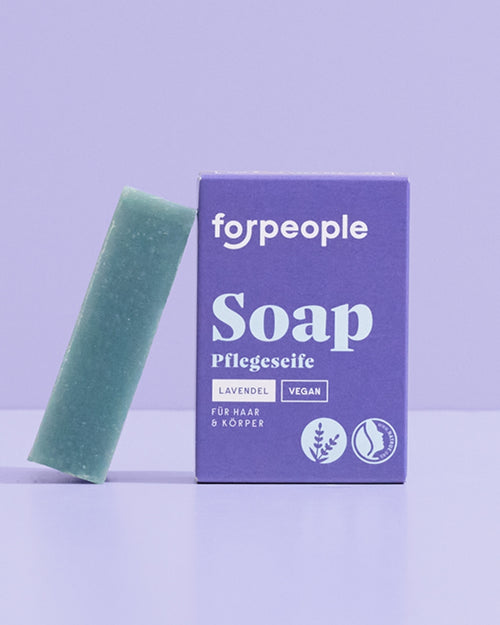
For everyday life this means: washing shifts the environment temporarily, and afterwards the acidic pH returns by itself. Real soap is alkaline, shower gels are usually closer to the pH of the skin; the differences are explained in Bar soap or shower gel: differences for skin and everyday use, and why soap is alkaline in Is there still lye in natural soap? Saponification explained. Our bar soaps, such as the Aloe Vera Soap – Lavender, are real soaps and therefore alkaline.
Disinfectants have a stronger effect: skin antiseptics such as 70 % alcohol temporarily reduce the number and the diversity of bacteria (Taléns-Visconti et al. 2026). When hand disinfection makes sense and how to care for the skin afterwards is covered in Hand sanitiser and hand cream: which comes first?. What role limescale in water plays for dry skin is covered in Hard water and dry skin.
What skincare products change: one study in detail
A nine-week study examined how strongly cosmetics shift the microbiome. Eleven volunteers (twelve had started; one participant dropped out because of skin irritation) went without any products except a shared shower gel for three weeks, then used the same four products for three weeks – an antiperspirant, a foot powder, a facial lotion and a body lotion – and finally returned to their own products. Bacteria and skin chemistry were measured at the armpit, forearm, face and feet (Bouslimani et al. 2019).
- Products linger: ingredients of previously used products could still be detected weeks later despite daily showering, with half-lives of 0.5 to 1.9 weeks.
- Armpits and feet react clearly: antiperspirant and foot powder changed the diversity and composition of the bacteria. At the start, Staphylococcus and Corynebacterium dominated in the armpit.
- Lotions hardly: the lotions on the arm and face mainly changed the chemistry of the skin and hardly the bacteria.
- Everyone reacts differently: the changes varied greatly from person to person.
Source: Bouslimani et al. 2019. The study was small, and it says nothing about whether the changes are good or bad. A recent review concludes overall that most common cosmetic products do not cause a major disruption of the microbiome on healthy skin when they are properly formulated; it describes the effect of emollient fats such as plant oils or shea butter on the colonisation as generally neutral (Taléns-Visconti et al. 2026). What happens in the armpit with aluminium-free deodorants is covered in How do aluminium-free deodorants work? Odour, sweat and ingredients.
“Microbiome-friendly”, probiotics, postbiotics: what lies behind the terms
The terms sound scientific but are neither defined by law nor tested in a uniform way. The review on cosmetics and the microbiome states: the evidence for products meant to influence the microbiome in a targeted way is preliminary; the studies are mostly small, short and designed differently, and uniform criteria for the claim “microbiome-friendly” are lacking (Taléns-Visconti et al. 2026).
| Term | What is meant | What is known |
|---|---|---|
| microbiome-friendly | The product is meant not to disturb the existing colonisation. | no uniform test method, no fixed criteria |
| probiotics | live microorganisms applied to the skin | rare in conventional cosmetics, because water-based products have to be preserved |
| prebiotics | substances, such as certain sugars, meant to serve beneficial bacteria as food | individual small studies |
| postbiotics | metabolic products or fragments of microorganisms, without live germs | individual small studies |
| paraprobiotics | inactivated microorganisms or their cell components | individual small studies |
Source: Taléns-Visconti et al. 2026. Legally, every claim made for a cosmetic must be supported by adequate and verifiable evidence (Regulation (EU) No 655/2013, Annex), and it must not suggest characteristics the product does not have (Regulation (EC) No 1223/2009, Art. 20). In addition, the safety report for every cosmetic product must cover its microbiological quality, including the results of the preservation challenge test (Annex I Part A No. 3). Why water-based products need preservation and water-free ones usually do not is explained in Preservation and Water in Cosmetics.
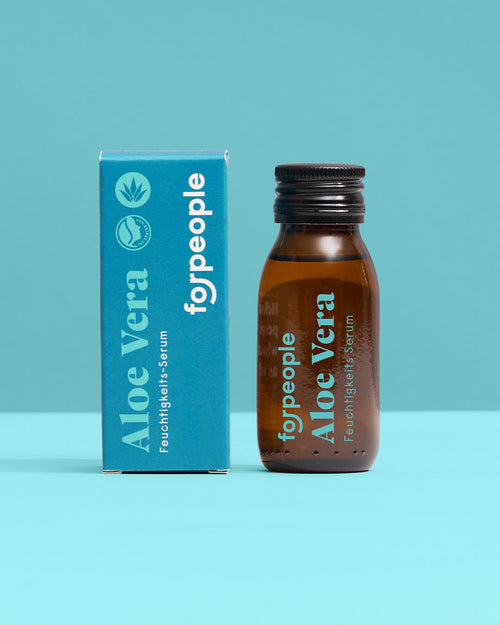
Our position: we have no studies on how our products affect the skin microbiome. That is why we do not call them microbiome-friendly and make no claims about the skin flora. What we can say is on the ingredient list: our solid creams and oils contain no water and no preservatives; the Aloe Vera Serum 99.6% contains water and is preserved with potassium sorbate and sodium benzoate.
What you can do in everyday life
- Wash as often and as thoroughly as needed: lukewarm water, and soap or shower gel mainly where it is needed, for example on hands, armpits and feet. According to the study with 330 people, after tap water the pH returns by itself within hours.
- Disinfect where it makes sense: in hospitals and care settings, hand disinfection is part of infection control; for the skin in everyday life, washing with water and soap is usually enough.
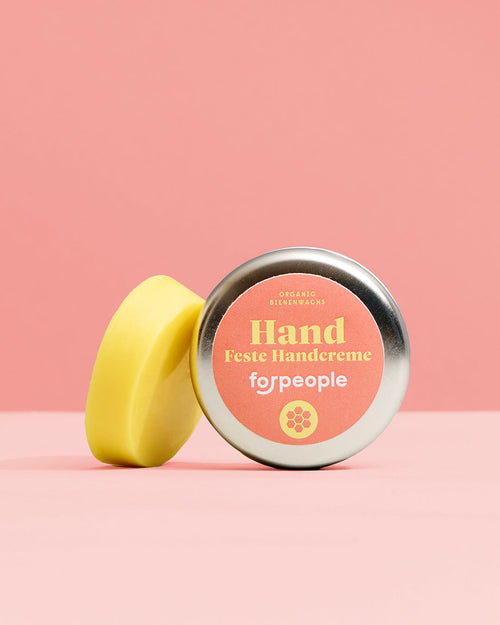
- Apply a product after washing: a film of oil, butter or wax keeps the skin supple; for the hands, the Solid Hand Cream - Beeswax is one option. We do not promise any effect on the microbiome with it.
- Take solid care out with dry fingers: water does not belong in the tin. Tips are in Hygiene and Water-Free Cosmetics: What to Watch
- Read marketing claims critically: with “microbiome-friendly” or “probiotic”, ask what evidence supports it and on how many people it was tested.
When to get medical advice
A large part of microbiome research concerns skin diseases, such as atopic dermatitis, acne or infections. Skin changes that weep, fester, spread, itch badly or hurt belong in medical treatment, not in an experiment with cosmetics that claim to change the microbiome. What to do if your skin reacts to a product is explained in Reacting to a cosmetic: what to do, where to report, returns
Frequently asked questions
Does soap destroy the skin flora?
As far as is known, not permanently. Soap and tap water raise the pH of the skin for a few hours, after which it returns by itself. In healthy adults, the microbiome stays largely stable over months to years, even though they wash regularly.
Is hand sanitiser bad for the microbiome?
Alcohol-based products temporarily reduce the number and diversity of bacteria. Where infection control is needed, it comes first; at home in everyday life, washing your hands is usually enough.
What does “microbiome-friendly” mean?
It usually means that a product is meant not to disturb the existing colonisation. There are no uniform criteria or prescribed test methods for it.
Does healthy skin need probiotics?
There is no robust evidence for this. Studies on probiotic cosmetics have so far been small and short. Live germs are hard to include in water-based cosmetics, because these have to be preserved.
Does a deodorant change the bacteria in the armpit?
Yes. In one study, both stopping the usual deodorants and using an antiperspirant changed the diversity and composition of the bacteria in the armpit for weeks. Whether that is good or bad cannot be concluded from it.
How long do skincare products stay on the skin?
Longer than you might think: ingredients could still be detected weeks later despite daily showering, with half-lives of half a week to almost two weeks.
Is water-free skincare better for the microbiome?
There are no studies on this. Water-free products need no preservatives because microorganisms need water to grow; but that does not mean any proven effect on the skin flora.
At forpeople
We do not call any of our products microbiome-friendly. These products fit the everyday steps above; the full ingredient lists are on the product pages.
- Aloe Vera Soap – Lavender, 75 g, €8.90: saponified plant oils with aloe extract and essential lavender oil; a real soap and therefore alkaline.
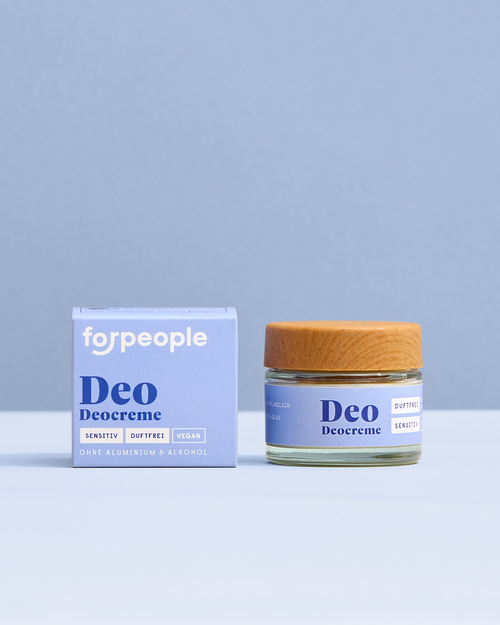
- Sensitive Deodorant Cream, 50 g, €8.90: without fragrance, without aluminium salts and without alcohol; baking soda binds odour substances, starch absorbs moisture.
- Solid Hand Cream - Beeswax, 30 g, €9.90: water-free, made of beeswax, olive and sunflower oil, without essential oils; for the hands after washing.
- Aloe Vera Serum 99.6%, 50 ml, €9.90: water-based care made of aloe juice, with citric acid, potassium sorbate and sodium benzoate.
Do not use on injured or irritated skin, and stop using the product if your skin reacts.
Read more: Ceramides and plant oils: what oils can do for the skin barrier · Fat and moisture: what belongs in which layer of the skin barrier
From the blog: Less in the bathroom: a skincare routine with three products
Sources
- Grice EA, Segre JA (2011): The skin microbiome. Nature Reviews Microbiology 9(4): 244–253. https://doi.org/10.1038/nrmicro2537
- Grice EA, Kong HH, Conlan S, Deming CB, Davis J, Young AC et al. (2009): Topographical and temporal diversity of the human skin microbiome. Science 324(5931): 1190–1192. https://doi.org/10.1126/science.1171700
- Byrd AL, Belkaid Y, Segre JA (2018): The human skin microbiome. Nature Reviews Microbiology 16(3): 143–155. https://doi.org/10.1038/nrmicro.2017.157
- Oh J, Byrd AL, Park M, NISC Comparative Sequencing Program, Kong HH, Segre JA (2016): Temporal Stability of the Human Skin Microbiome. Cell 165(4): 854–866. https://doi.org/10.1016/j.cell.2016.04.008
- Fierer N, Hamady M, Lauber CL, Knight R (2008): The influence of sex, handedness, and washing on the diversity of hand surface bacteria. Proceedings of the National Academy of Sciences of the USA 105(46): 17994–17999. https://doi.org/10.1073/pnas.0807920105
- Lambers H, Piessens S, Bloem A, Pronk H, Finkel P (2006): Natural skin surface pH is on average below 5, which is beneficial for its resident flora. International Journal of Cosmetic Science 28(5): 359–370. https://doi.org/10.1111/j.1467-2494.2006.00344.x
- Bouslimani A, da Silva R, Kosciolek T, Janssen S, Callewaert C, Amir A et al. (2019): The impact of skin care products on skin chemistry and microbiome dynamics. BMC Biology 17(1): 47. https://doi.org/10.1186/s12915-019-0660-6
- Taléns-Visconti R, Diez-Sales O, Nácher A (2026): Cosmetic Interventions for Skin Microbiome Modulation: Current Strategies and Future Directions. Skin Research and Technology 32(4): e70352. https://doi.org/10.1111/srt.70352
- Commission Regulation (EU) No 655/2013 of 10 July 2013 laying down common criteria for the justification of claims used in relation to cosmetic products, Annex. OJ L 190, 11.7.2013, p. 31. https://eur-lex.europa.eu/eli/reg/2013/655/oj
- Regulation (EC) No 1223/2009 of the European Parliament and of the Council of 30 November 2009 on cosmetic products, Art. 20 and Annex I Part A No. 3. OJ L 342, 22.12.2009, p. 59. https://eur-lex.europa.eu/eli/reg/2009/1223/oj