On the second evening with a new cream, the skin around your eyes starts to burn, and the next morning your eyelids are red. Three questions come up at once: what do I do for my skin now, who do I tell, and what happens to the product? This page goes through them one by one.
The first steps
- Stop: Do not apply the product again, not even "just once more to check". If you avoid the trigger, a contact reaction settles over time (NHS 2023a).
- Rinse: Remove any residue with lukewarm water as soon as possible (NHS 2023a). Do not rub or exfoliate; pat dry with a soft towel. If something has got into your eye, rinse it out thoroughly with water straight away.
- Nothing new: Do not try another new product on the irritated area. Otherwise it becomes impossible to tell what caused the reaction. Ask your doctor or pharmacist what you can use until it has settled.
- Record it: Take a photo of the area and note the date, time and what you felt; by the time of your appointment there is often less to see. This is common practice.
- Keep it: Do not throw away the product or its packaging. The German consumer advice centre (Verbraucherzentrale) recommends taking the suspect product with you to the doctor (Verbraucherzentrale 2026). The packaging shows the ingredient list, the batch number and the responsible person, meaning the company you can contact (Regulation (EC) 1223/2009, Art. 19).
Irritation or allergy?
A reaction to cosmetics is usually one of two kinds. With irritation, a substance damages the outer layer of the skin directly; this is the most common form of contact dermatitis. With a contact allergy, the immune system reacts to a specific substance, for example one in a cosmetic product (NHS 2023a). An allergic reaction usually appears 24 to 72 hours after contact. And it can develop against a substance you have been in contact with for years without any problems (DermNet 2025).
| Irritation | Contact allergy | Emergency | |
|---|---|---|---|
| What happens | a substance attacks the skin surface | the immune system reacts to a specific substance | a reaction of the whole body |
| When | within hours to days; burning often as soon as you apply it | usually 24 to 72 hours after contact | suddenly |
| Typical signs | burning, redness, dry or cracked skin where the product touched | itching, redness, blisters; often noticed only a day or more later | swelling of lips, tongue or throat, difficulty breathing, dizziness |
| What you do | stop, rinse, watch | stop, have it checked by a doctor | call 112 |
Sources for the table: NHS 2023a, NHS 2023b, DermNet 2025; the burning on application is practical experience. The columns are a guide, not a diagnosis; irritation and allergy can look the same.
The area that reacts is not always where you applied the product. With cosmetics, the face is affected most often, frequently the eyelids. Allergens also get there via the hands, for example from nail polish, or with shampoo and conditioner running over the face and neck as you rinse (Zirwas 2019). If a cream stings on cracked skin, the broken skin itself may be the reason; see Why does hand cream sting on cracked hands?
When should you see a doctor?
Call 112 straight away if your lips, mouth, tongue or throat suddenly swell, you struggle to breathe, your throat feels tight, your skin or lips turn bluish or pale, or you suddenly feel dizzy (NHS 2023b).
See a GP or dermatologist if
- the reaction has not clearly improved a few days after you stopped, or it spreads,
- the skin weeps, forms blisters, swells a lot or hurts,
- your eyes are affected and symptoms remain after rinsing,
- you react again and again to different products or the symptoms are severe (NHS 2023a),
- you have a rash and want to know which ingredient causes it (Verbraucherzentrale 2026).
Take the product, the packaging and your photos with you. Whether you have a contact allergy, and to what, is shown by a patch test on the back. It is the diagnostic standard for allergic contact dermatitis (Mahler et al. 2019). How it works is described in Colophony allergy, propolis, beeswax: symptoms and advice.
Reporting, complaining, returning: who is responsible for what
Reporting a reaction and returning a product are two different things. A report makes sure manufacturers and authorities learn about the reaction. Whether you get your money back is a question of the purchase contract. EU cosmetics law calls any negative effect on health attributable to normal or reasonably foreseeable use an undesirable effect; it counts as serious if it results, for example, in functional incapacity, hospitalisation or an immediate risk to life (Regulation (EC) 1223/2009, Art. 2).
| Where | How | What happens next |
|---|---|---|
| Manufacturer (responsible person on the packaging) | informally by email or letter | The company must report serious undesirable effects to the competent authority. |
| Retailer you bought from | informally | Retailers are also obliged to report serious undesirable effects to the authority. |
| Local food and consumer safety authority (Lebensmittelüberwachung) | informally | In Germany this is usually the authority that supervises cosmetics. |
| BVL (Germany) | online form via verwaltung.bund.de, free of charge | The BVL forwards the report within 20 working days. |
Sources for the table: Verbraucherzentrale 2026, Bundesportal 2025, Regulation (EC) 1223/2009, Art. 23. Outside Germany, the national authority for cosmetics in your country is the right contact.
You can also report milder reactions such as itching or redness (Bundesportal 2025). These details help (Verbraucherzentrale 2026; Bundesportal 2025):
- the name of the product and the batch number, if legible,
- what happened and when, where on the body and what the consequences were,
- for the BVL form, also your initials and year of birth,
- a contact for questions; you can report anonymously, for example via your doctor's practice.
Companies must report serious undesirable effects without delay, at the latest 20 days after becoming aware of them (Bundesportal 2025). If you report a serious effect to the authority yourself, it passes the information on to the responsible person (Regulation (EC) 1223/2009, Art. 23). In addition, the responsible person must make existing data on undesirable effects of its product easily accessible to the public; you can ask for it (Regulation (EC) 1223/2009, Art. 21).
Returns: Whether an opened product is taken back is decided by the retailer. For orders from forpeople, this is set out in our refund policy. We are the responsible person for our products; please write to us via Contact even if you do not want to send anything back, with the product name, batch number and the reaction.
Narrowing down the trigger and preventing it next time
Once your skin has settled, the ingredient list is worth a look. Put the lists of the products you started using in the days before the reaction side by side and look for substances that appear more than once. How the list is structured is explained in How to Read an INCI List; what the Latin names mean is in INCI names explained: our ingredients in plain English.
The table shows groups of substances that are often suspected after a reaction, and where they appear in our products according to the ingredient list; a reading aid, not a ranking.
| Group of substances | How it appears in the INCI list | Contained in, for example | Not contained in, for example |
|---|---|---|---|
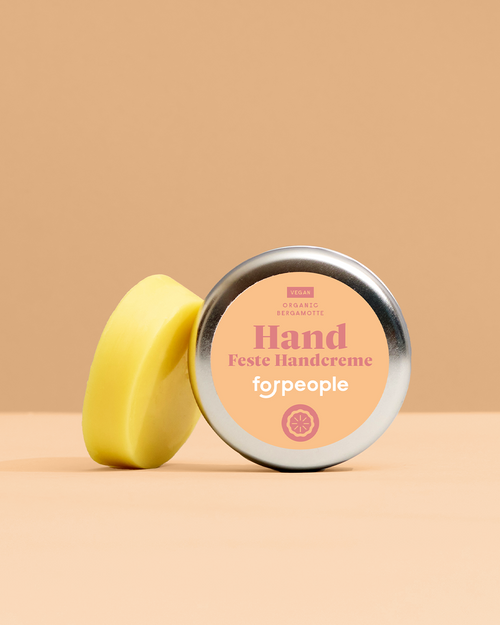
| Fragrances and essential oils | "Parfum", plant oils such as "Lavandula Angustifolia Oil", plus individual substances such as Linalool, Limonene, Geraniol, Citral | Solid Foot Cream – Rosemary & Sage, Solid Vegan Hand Cream - Bergamot, Face Oil - Lavender | Solid Hand Cream - Beeswax, Solid Body Butter - Beeswax & Aloe Vera, Jojoba Oil - pure |
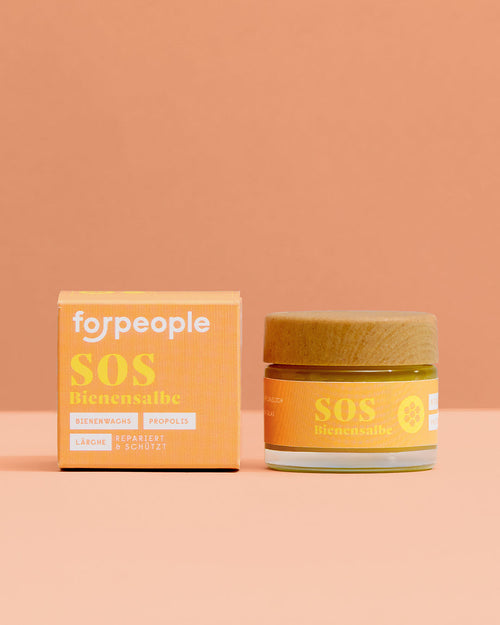
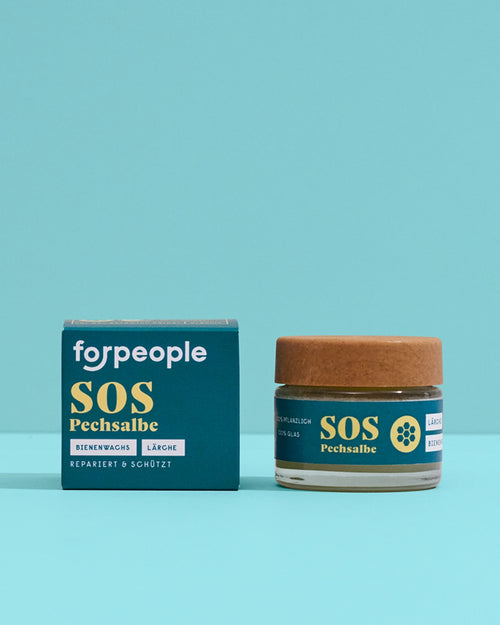
| Resin and propolis | Larix Decidua Resin, Terebinthina Laricina, Propolis Cera | Beeswax Salve – Larch & Mandarin in a Glass Jar, SOS Pitch Salve - Larch Resin in a Glass Jar (no propolis) | all creams, oils, soaps and deodorant creams |
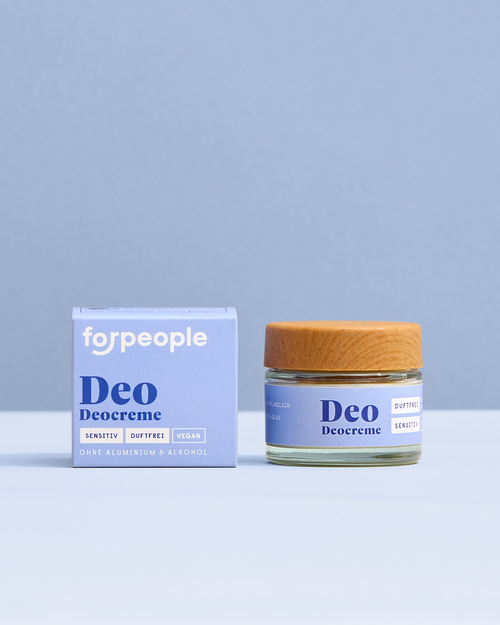
| Beeswax | Cera Alba | hand and foot cream with beeswax, body butter, salves, lip balms | Solid Vegan Hand Cream - Bergamot (candelilla wax), Sensitive Deodorant Cream, pure oils |
| Baking soda | Sodium Bicarbonate | Sensitive Deodorant Cream | creams, salves, oils, soaps |
| Preservatives | for example Potassium Sorbate, Sodium Benzoate | Aloe Vera Serum 99.6% (contains water) | the water-free creams, salves and oils |
More on the individual groups: Essential Oils and Fragrance Allergens, Colophony allergy, propolis, beeswax, Baking soda in deodorant: why it's there and skin reactions and Preservation and Water in Cosmetics. An overview of all products without added fragrance is in Without fragrance and essential oils: ingredients at a glance.
For the future: introduce new products one at a time and try them on a small area first. The routine over one to two weeks is described in Trying a new product: how do I test it on a small area? Use up opened products within the period after opening; what the open-jar symbol means is in Cosmetics Shelf Life: Hourglass Symbol and PAO After Opening.
Frequently asked questions
How long does it take for a reaction to cosmetics to settle?
There is no fixed time. If the reaction has not clearly improved a few days after you stopped, or if it spreads, have it checked by a doctor.
I have used this cream for years. Can it still be the trigger?
Yes. A contact allergy can develop against a substance your skin has been in contact with for a long time. A new batch or a changed formula is also possible; compare the ingredient list with an older pack if you still have one.
Can I put cream on the irritated area?
Not something new. According to their safety notes, our products are not meant for broken or irritated skin. Your doctor or pharmacist can tell you what to apply until it has settled.
Do I need an allergy test?
If you react again and again or want to know which substance is behind it, yes. A patch test at a dermatologist's shows what you are allergic to. Bring the suspect product with its packaging.
Will I get my money back if I react to a product?
That depends on the retailer you bought from. For orders from forpeople, our refund policy applies.
Does natural cosmetics protect against such reactions?
No. Essential oils, resins and propolis are natural substances and still known causes of contact allergies. The ingredient list is more reliable than the label "natural"; more in Essential Oils and Fragrance Allergens.
At forpeople
Every product page shows the full ingredient list and the safety notes; the batch code is printed on the packaging. According to their ingredient lists, these four products contain neither perfume nor essential oils. How your skin responds to them can only be shown by a test on a small area, and after a reaction only once your skin is back to normal.
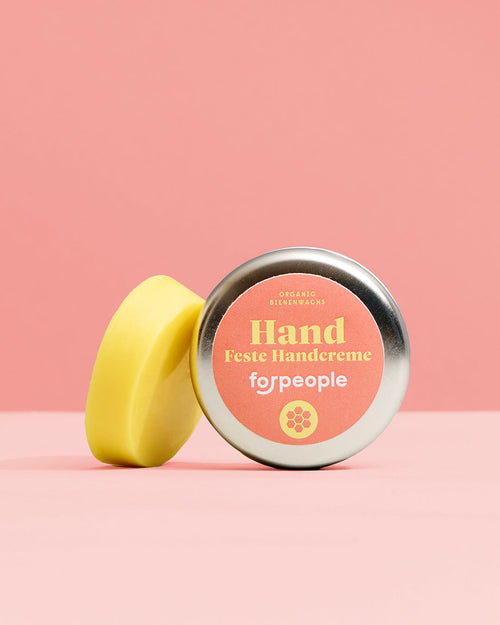
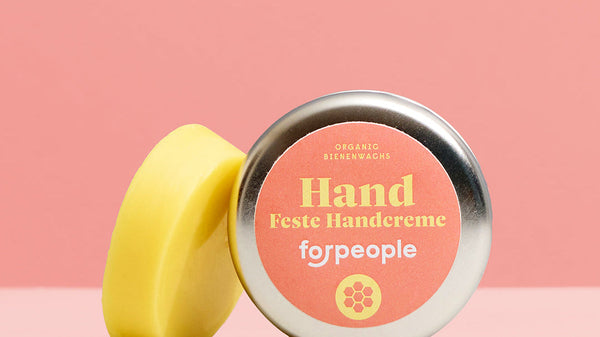
- Solid Hand Cream - Beeswax, 30 g, €9.90: for dry hands; five ingredients, including beeswax, olive and sunflower oil.
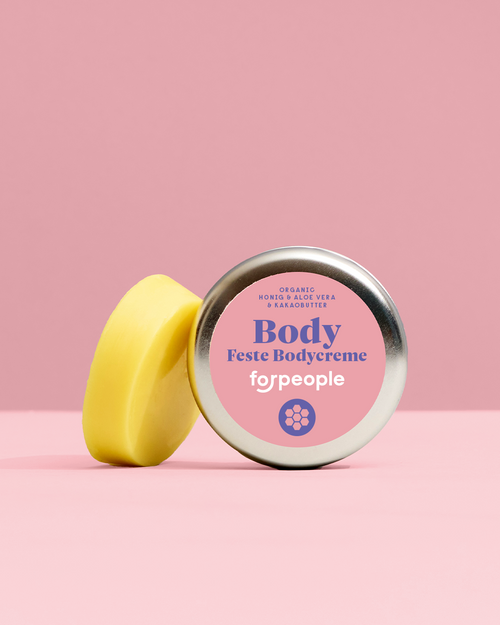
- Solid Body Butter - Beeswax & Aloe Vera, 40 g, €9.90: for dry areas of skin on the body; cocoa butter, olive oil, beeswax, sunflower oil, shea butter, aloe extract.
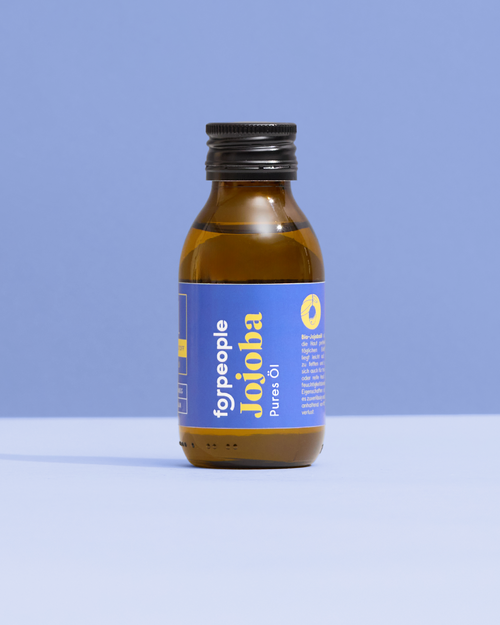
- Jojoba Oil - pure, 100 ml, €16.90: for face, body and hair; a single ingredient.
- Aloe Vera Serum 99.6%, 50 ml, €9.90: watery care for face, body and hair; aloe juice with citric acid and two preservatives.
Read more: Cream with few ingredients: what does a short list give you? · Fragrance-free sunscreen: how to recognise it
From the blog: Switching to solid skincare: what is different in the first weeks
Sources
- Verbraucherzentrale (2026): Kosmetik: Inhaltsstoffe, Kennzeichnung und unerwünschte Wirkungen. Stand 23.07.2026, accessed 28.10.2026. https://www.verbraucherzentrale.de/wissen/umwelt-haushalt/produkte/kosmetik-inhaltsstoffe-kennzeichnung-und-unerwuenschte-wirkungen-26338
- Bundesportal verwaltung.bund.de (2025): Unerwünschte Wirkungen und Gesundheitsschäden bei Kosmetik melden. Responsible body: Bundesamt für Verbraucherschutz und Lebensmittelsicherheit (BVL). Stand 05.06.2025, accessed 28.10.2026. https://verwaltung.bund.de/leistungsverzeichnis/de/leistung/99118045261000
- Regulation (EC) No 1223/2009 of the European Parliament and of the Council of 30 November 2009 on cosmetic products. OJ L 342, 22.12.2009, p. 59; Art. 2, 19, 21 and 23. https://eur-lex.europa.eu/eli/reg/2009/1223/oj
- NHS (2023a): Contact dermatitis. Page last reviewed 03.05.2023, accessed 28.10.2026. https://www.nhs.uk/conditions/contact-dermatitis/
- NHS (2023b): Anaphylaxis. Page last reviewed 21.06.2023, accessed 28.10.2026. https://www.nhs.uk/conditions/anaphylaxis/
- DermNet (2025): Allergic contact dermatitis. Oakley A (1997), updated by Post R (2016) and Fuller JS (2025), last reviewed August 2025, accessed 28.10.2026. https://dermnetnz.org/topics/allergic-contact-dermatitis
- Zirwas MJ (2019): Contact Dermatitis to Cosmetics. Clinical Reviews in Allergy & Immunology 56(1): 119–128. https://doi.org/10.1007/s12016-018-8717-9
- Mahler V, Nast A, Bauer A et al. (2019): S3 guidelines: Epicutaneous patch testing with contact allergens and drugs – Short version, Part 1. Journal der Deutschen Dermatologischen Gesellschaft 17(10): 1076–1093. https://doi.org/10.1111/ddg.13956