The problem: your skin has been dry since you started a medicine
Your skin feels tight after showering, your shins flake, your lips crack, your hands get rough. Sometimes this coincides with a new medicine, a higher dose or a few weeks after starting treatment, often together with the first heated indoor air in autumn. Then the obvious question is whether the tablets are to blame.
Sometimes they are. In a Dutch population study, dermatologists examined 5,547 middle-aged and older people. 60 per cent had dry skin, a fifth of them all over the body. People taking statins or diuretics were more likely to have dry skin all over the body; previous chemotherapy was also associated with dry skin (Mekić et al. 2019). The study shows an association, not proof. People who need such medicines are often older or have conditions that change the skin themselves; age, outdoor temperature and eczema were also among the factors in the same study.
If no medicine is involved and your whole skin suddenly becomes dry, see Suddenly dry skin all over the body.
Why medicines can dry out the skin, and why you notice it in winter
For some groups of active ingredients, dry skin has been described as a side effect or as a statistical association. The overview names groups only, not individual products, and it is not complete. Whether dry skin is known for your medicine is listed under side effects in the package leaflet; your doctor or pharmacist can assess it.
| Group of active ingredients | What it is used for | What has been described |
|---|---|---|
| Retinoids taken by mouth, such as isotretinoin | severe acne | In the studies of a Cochrane review, milder side effects were more frequent with isotretinoin, including dry lips, dry skin and cracked, inflamed lips (Costa et al. 2018). |
| Water tablets (diuretics) | high blood pressure, heart failure, fluid retention | Association with dry skin all over the body (Mekić et al. 2019); named as one of the external causes of dry skin in older people (White-Chu & Reddy 2011). |
| Statins | high cholesterol | Association with dry skin all over the body (Mekić et al. 2019). A possible explanation, not proven in humans: the skin makes its own cholesterol for its barrier. In an animal study, a statin applied directly to the skin delayed the recovery of the disrupted barrier (Feingold et al. 1990). |
| Certain cancer medicines, especially targeted therapies and immune checkpoint inhibitors | cancer treatment | Drying of the skin with flaking, itching and painful cracks is among the possible changes (Krebsinformationsdienst 2026). With EGFR inhibitors, the maturation of skin cells changes; dryness often starts 30 to 60 days after treatment begins (Lacouture et al. 2011). |
| Cortisone on the skin, over a long period | eczema and other inflammatory skin conditions | With prolonged use, mainly thinner skin, stretch marks, small bruise-like bleeds and facial skin changes such as rosacea or perioral dermatitis; dry skin is not among the most frequent effects listed there (Hengge et al. 2006). |
| Antibiotics | bacterial infections | Common side effects are diarrhoea and feeling sick; allergic rashes are rare. The British health service does not list dry skin. Tetracyclines make the skin more sensitive to sunlight (NHS 2022). |
For diuretics and statins there are mainly observational data, and the mechanism is unclear. And dry skin after a course of cortisone is often not a side effect of the cortisone but a sign of the skin condition it was treating; in atopic eczema, for example, dry skin is part of the condition, see Dry skin or atopic eczema? How to continue your skincare afterwards is something to discuss with your doctor.
In autumn and winter, other reasons are added that have nothing to do with the medicine. Cold outdoor air holds little water, heated indoor air is dry, and long, hot showers remove fat from the outer layer of the skin. In the Rotterdam study, dry skin was also linked to outdoor temperature (Mekić et al. 2019). What cold and heated air do to the skin is explained in Dry skin in winter: what helps with cold and indoor heating and Humidity and skin: what dry heated air does and what helps.
The solution step by step
| Step | What you do | Why |
|---|---|---|
| Right away | keep taking the medicine as prescribed; do not skip doses and do not change the dose yourself | only your doctor can weigh up whether a medicine can be changed; some medicines must not be stopped suddenly |
| Right away | write down since when your skin has been dry, where, and what you take, including ointments, over-the-counter products and supplements | this helps clarify whether there is a link in time |
| In the next few days | ask at the pharmacy or mention it to your doctor; with isotretinoin or cancer treatment, go directly to the team treating you | they know the medicine, the dose and possible alternatives |
| Every day | shower briefly in lukewarm water, use soap only on armpits, groin and feet, then pat dry instead of rubbing | hot water and soap remove fat from the outer layer of the skin |
| Every day | straight afterwards, apply a fat-based product without perfume or essential oils to skin that is still slightly damp, including shins and back | in the Rotterdam study, daily use of cream was associated with fewer dry patches |
| Prevention | do not overheat rooms, care for your lips during the day, and with medicines that increase light sensitivity, think of sun protection in winter too | heated air dries out the skin; some medicines make the skin more sensitive to light |
Sources for the table: Mekić et al. 2019, NHS 2022, Krebsinformationsdienst 2026; the order of the steps and the showering advice are common practice. How warm and how long to shower is explained in detail in Itchy skin in winter: showering, care and when to see a doctor; for sun protection in the darker months, see Sunscreen in winter: when it makes sense in everyday life.
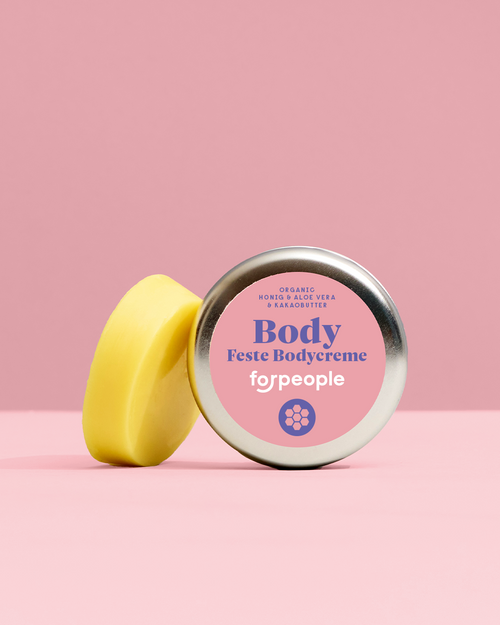
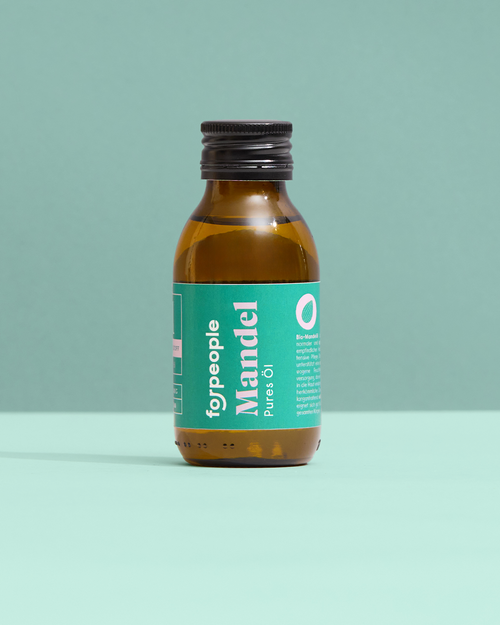
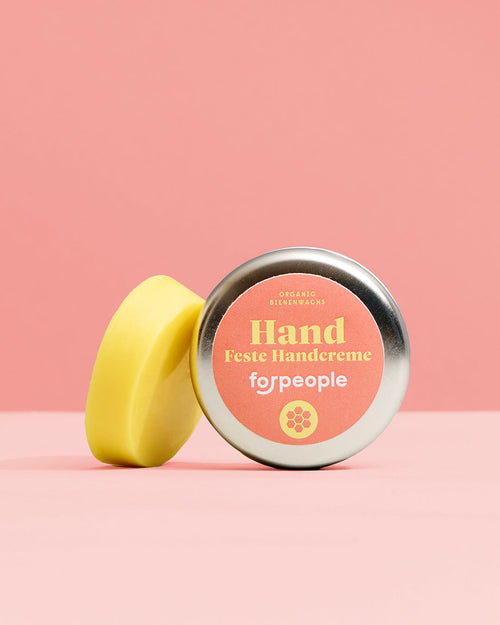
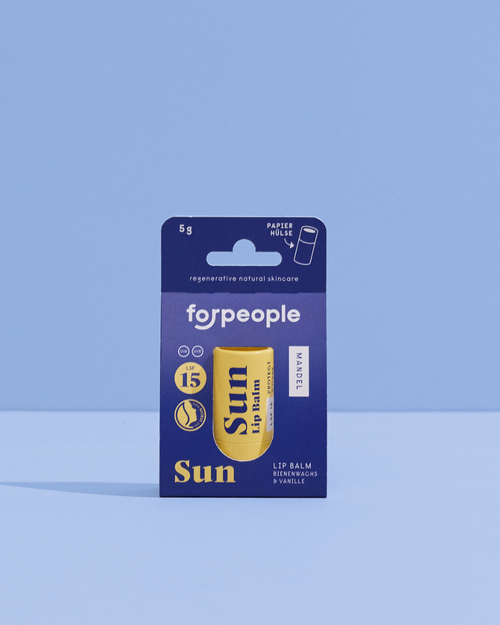
For care from the outside, each product's intended use applies. On the body, the Solid Body Butter - Beeswax & Aloe Vera, made from six ingredients without essential oils, is a good fit. On large areas such as back and legs, the pure Almond Oil - pure spreads more easily. The Solid Hand Cream - Beeswax is meant for dry, rough hands, and the Lip Balm - SPF15 Almond & Vanilla, also without essential oils, for chapped lips. They care for dry, unbroken skin; they do not treat a side effect. Try anything new on a small area first, as described in Trying a new product: how do I test it on a small area?
For retinoids applied to the skin and acid peels there is a separate routine: Dry skin after retinol, acid peels or laser. While taking isotretinoin, follow what your doctor says about skincare.
Different rules apply during cancer treatment. The cancer information service of the German Cancer Research Center advises discussing the use of your own creams or lotions with your doctor, because not every product is suitable in every phase of treatment (Krebsinformationsdienst 2026). This also applies to our products. For this period we therefore give no skincare recommendations of our own. Your treatment team is the right contact; in Germany, the Krebsinformationsdienst also answers questions free of charge on 0800 420 30 40, daily from 8 am to 8 pm.
What helps, and what tends not to
| Measure | Assessment |
|---|---|
| Stopping a medicine or taking it less often because your skin is dry | tends not to help: it can harm your treatment. Talk to your doctor first. |
| Applying a fat-based product every day | fits: a film of fat slows the evaporation of water from the skin; the mechanism is explained in Occlusion and TEWL: how a wax film protects your skin. |
| Products with humectants such as urea or glycerin | possible, especially for very dry, flaky skin; ask at the pharmacy. The difference between fat-based and water-binding care is explained in Rich cream or moisturiser? What dry skin needs. |
| Perfumed products or lots of essential oils | tends not to help while the skin is irritated; fragrances can trigger contact allergies. More in Essential Oils and Fragrance Allergens. |
| Rubbing off flakes, scrubs, brushes | tends not to help: friction puts extra strain on dry skin. |
| Additional drying ingredients such as retinol or fruit acids while you take isotretinoin | tends not to help without checking with your doctor |
| Blaming one medicine alone | be careful: winter, age, hot showers and skin conditions often play a part; see Dry skin in old age: causes, winter care and applying oil safely. |
Common mistakes
- Stopping the medicine on your own. Dry skin can usually be cared for; an interrupted treatment is not so easy to make up for.
- Not saying what you take. Ointments, over-the-counter products and supplements also belong on the list for your doctor and pharmacist.
- Showering hotter and longer because your skin itches. Afterwards it is drier than before.
- Trying many new products at once. If your skin reacts, you will not know to what.
- Following tips from the internet during cancer treatment without asking your treatment team; that includes the suggestions on this page.
- Dismissing warning signs as "just dry". A new rash after a new medicine belongs in medical hands, not under a cream.
When to get medical advice
Cosmetics care for dry skin. Whether a medicine is the cause and what follows from that is for your doctor to clarify.
Call the emergency number straight away (112 in Germany) or go to an emergency department if, after a new medicine, a rash appears that forms blisters, if your skin peels off, if your mouth, lips, eyes or throat become sore or swollen, or if you are wheezing or struggling to breathe. A rare, severe skin reaction can start like flu with fever, sore throat and joint pain; days later a rash spreads, blisters form and the skin peels off easily. It is often triggered by medicines, including some epilepsy medicines, some antibiotics and certain painkillers and anti-rheumatic drugs (NHS 2026), (NHS 2022).
See your doctor in the next few days if
- the dryness started with a new medicine or a higher dose,
- a new rash, hives or red, scaly patches appear,
- your skin itches badly, especially at night, or weeps, bleeds or cracks,
- your lips crack badly or bleed while you take isotretinoin,
- nothing improves after a few weeks of regular care.
During cancer treatment, report any change in your skin and nails to your treatment team early. According to the Krebsinformationsdienst, such changes usually regress once the medicines are stopped, and if they become too severe, the team can, for example, adjust the dose (Krebsinformationsdienst 2026). That is the team's decision, not yours alone.
If a product has irritated your skin further, Reacting to a cosmetic: what to do, where to report, returns explains what to do next.
Frequently asked questions
Which medicines cause dry skin?
It has been described for retinoids taken by mouth such as isotretinoin, for diuretics, for statins and for certain cancer medicines, among others. Whether it applies to your medicine is listed in the package leaflet; your doctor or pharmacist can assess it.
Can blood pressure medicines dry out the skin?
Among blood pressure medicines, diuretics in particular have been linked to dry skin. Do not stop them because of this; mention your skin to your doctor and meanwhile apply a fat-based product every day.
Do statins cause dry skin?
In a large population study, people taking statins more often had dry skin all over the body; the study does not show whether the statin is the cause. Mention it at your next appointment.
Do antibiotics dry out the skin?
Dry skin is not among the typical side effects listed by the British health service. If your skin is dry after an infection, this is often due to fever, sweating and heated indoor air; more in Dry skin after a cold or flu. A rash while taking an antibiotic, on the other hand, needs to be seen by a doctor.
Why is my skin dry after a course of cortisone?
Often the skin condition that was treated with cortisone, such as eczema, shows again. With long-term use, cortisone can also make the skin thinner. How to end the treatment and care for your skin afterwards is something to discuss with your doctor.
What helps with dry skin during chemotherapy?
Discuss this with your treatment team before you apply anything, including our products; not every product suits every phase of treatment.
Should I stop the medicine if my skin gets dry?
No, not on your own. Talk to your doctor or pharmacist. With a rash that blisters, peeling skin or difficulty breathing, call the emergency number straight away.
At forpeople
We make cosmetics for dry, unbroken skin. They do not treat side effects and do not replace a conversation about the medicine. During cancer treatment, agree any skincare, including ours, with your treatment team first. The following products contain no essential oils.
Solid Body Butter - Beeswax & Aloe Vera, 40 g, €9.90: water-free, made from cocoa butter, olive oil, beeswax, sunflower oil, shea butter and aloe vera extract; for dry areas on the body.
Almond Oil - pure, 100 ml, €14.90: pure almond oil; spreads over large areas such as legs and back.
Solid Hand Cream - Beeswax, 30 g, €9.90: beeswax, olive and sunflower oil, St John's wort and aloe vera extract; for dry, rough hands.
Lip Balm - SPF15 Almond & Vanilla, 5 g, €7.90: beeswax, shea butter and plant oils with mineral UV filters; for chapped lips.
More on this: Dry skin with diabetes · Why does skin feel tight after a shower? · Why do lips dry out so quickly?
Sources
- Mekić S, Jacobs LC, Gunn DA, Mayes AE, Ikram MA, Pardo LM, Nijsten T (2019): Prevalence and determinants for xerosis cutis in the middle-aged and elderly population: A cross-sectional study. J Am Acad Dermatol 81(4): 963–969. https://doi.org/10.1016/j.jaad.2018.12.038
- White-Chu EF, Reddy M (2011): Dry skin in the elderly: complexities of a common problem. Clin Dermatol 29(1): 37–42. https://doi.org/10.1016/j.clindermatol.2010.07.005
- Feingold KR, Man MQ, Menon GK, Cho SS, Brown BE, Elias PM (1990): Cholesterol synthesis is required for cutaneous barrier function in mice. J Clin Invest 86(5): 1738–1745. https://doi.org/10.1172/JCI114899
- Costa CS, Bagatin E, Martimbianco ALC, da Silva EM, Lúcio MM, Magin P et al. (2018): Oral isotretinoin for acne. Cochrane Database Syst Rev 11(11): CD009435. https://doi.org/10.1002/14651858.CD009435.pub2
- Lacouture ME, Anadkat MJ, Bensadoun RJ, Bryce J, Chan A, Epstein JB et al. (2011): Clinical practice guidelines for the prevention and treatment of EGFR inhibitor-associated dermatologic toxicities. Support Care Cancer 19(8): 1079–1095. https://doi.org/10.1007/s00520-011-1197-6
- Krebsinformationsdienst, Deutsches Krebsforschungszentrum (2026): Medikamentöse Tumortherapien: Nebenwirkungen an Haut und Nägeln. Informationsblatt, as of 15 January 2026. https://www.krebsinformationsdienst.de/service/iblatt/iblatt-hautnebenwirkungen.pdf
- Hengge UR, Ruzicka T, Schwartz RA, Cork MJ (2006): Adverse effects of topical glucocorticosteroids. J Am Acad Dermatol 54(1): 1–15. https://doi.org/10.1016/j.jaad.2005.01.010
- NHS (2022): Side effects – Antibiotics. Last reviewed 11 November 2022, accessed 29 October 2026. https://www.nhs.uk/conditions/antibiotics/side-effects/
- NHS (2026): Stevens-Johnson syndrome. Last reviewed 4 March 2026, accessed 29 October 2026. https://www.nhs.uk/conditions/stevens-johnson-syndrome/