The problem: how to recognise it
A few days after the first retinol serum, your face feels tight, it flakes around the nose, mouth and chin, water stings when you wash, and the cream that was otherwise pleasant suddenly burns. After an acid peel the skin peels in fine shreds; after a vitamin C serum it tingles and turns red. Many people start retinol or peels in autumn because the sun is getting weaker; that is exactly when the heating comes back on. After microneedling, laser or IPL, the skin is red and flaky for a few days, and while taking isotretinoin tablets the lips and face become noticeably drier.
Which reaction fits which active is shown in the overview below, based on medical sources. It does not replace an examination: with severe or persistent symptoms, only a medical examination brings clarity.
| What you used | Typical reaction | What applies now |
|---|---|---|
| Retinol, retinal, prescription retinoids | itching, burning, redness, peeling, mostly in the first weeks; more common with tretinoin and tazarotene than with retinol or retinal (Mukherjee et al. 2006); the skin becomes more sensitive to light (DermNet, Topical retinoids) | pause, then use less often; discuss prescribed products with the practice |
| Fruit acids such as glycolic or lactic acid | irritation, depending on concentration and acidity; higher UV sensitivity (Kornhauser et al. 2010) | pause, sun protection |
| Vitamin C serum with ascorbic acid | rarely stinging, redness, dryness (Telang 2013) | use less often or pause |
| Isotretinoin tablets | dry lips (at higher doses in practically everyone), dry skin, dry eyes and nose (DermNet, Isotretinoin) | only according to the practice's instructions |
| Microneedling, laser, IPL | with microneedling, an intended, temporary inflammatory reaction (Springer et al. 2026); with laser and IPL the reaction depends on the device and settings | only according to the practice's instructions |
Why it happens in autumn and winter
The active irritates. The most common side effect of retinoids applied to the skin is the so-called retinoid reaction, with itching, burning, redness and peeling. It mostly occurs in the first weeks and is probably triggered by inflammatory messenger substances in the skin. To reduce it, the usual advice is to apply less often or to switch to a less irritating retinoid (Mukherjee et al. 2006). Retinoids are drying, can make eczema worse and are particularly irritating close to the eyes and lips (DermNet, Topical retinoids). Among experts, the adjustment phase is often called "retinisation"; there is no fixed duration for it.
Acids and vitamin C work in the acidic range. For fruit acids, the US Cosmetic Ingredient Review expert panel (CIR) recommended concentrations below 10 percent and a pH of at least 3.5 to reduce irritation. The panel also advised daily sun protection. In one experiment, 10 percent glycolic acid applied for four weeks made the skin more sensitive to UV radiation (Kornhauser et al. 2010). Vitamin C as ascorbic acid only stays stable at a pH below 3.5; stinging, redness and dryness occur rarely (Telang 2013). If you combine several such products on the same evening, for example retinol, an acid toner and vitamin C, you expose your skin to several irritants at once.
Winter makes it worse. Low humidity and cold reduce the skin's barrier function, and it then reacts more strongly to irritants (Engebretsen et al. 2016). The same retinol routine that worked well in summer can sting in December. Cleansing adds to this: cleansers dissolve lipids and water-binding substances from the outer skin layer; tightness, roughness and flaking after washing are possible consequences (Mijaljica et al. 2022).
Medical treatments are a separate case. Microneedling and microdermabrasion deliberately trigger a temporary inflammatory reaction, which is followed by renewal of the skin (Springer et al. 2026). Isotretinoin tablets almost always dry out lips and skin; during treatment and for six months afterwards, the medical source advises against waxing, mechanical dermabrasion and ablative lasers (DermNet, Isotretinoin). What the skin needs in these cases is decided by the practice.
The solution step by step
| When | What you do | Why |
|---|---|---|
| Right away | Pause retinol, acid peels, acid toners, vitamin C serum, scrubs with grains and brushes until your skin no longer stings and hardly flakes. Don't stop prescribed products on your own; call the practice instead. | Without the irritant, the barrier can recover; with prescribed products, the decision is part of the treatment. |
| Right away | Rinse your face with lukewarm water only, use cleanser at most in the evening and sparingly, with your fingers rather than a washcloth, and pat dry. | Cleansing and hot water dissolve further lipids from the outer skin layer. |
| While it stings | Apply a thin layer of simple, fragrance-free care without actives and without essential oils; if in doubt, one from the pharmacy; ask there for care for irritated skin. | On stinging skin, what matters is adding as little new as possible. |
| Once it no longer stings | Apply a water-based layer and a little oil on top to damp skin, a little more in the evening; how this works is explained in Facial skin feels tight in winter. | Water plus a thin film of fat keeps the outer skin layer supple. |
| During the day | Sun protection on skin that is no longer irritated, especially on snow, in the mountains and on winter holidays; see Sunscreen in winter. | Retinoids and fruit acids make the skin more sensitive to light. |
| Starting again | At the earliest once your skin has not stung for one to two weeks: only one active, at first on a few evenings a week, keeping away from eyes, the sides of the nose and the corners of the mouth. Prescribed products only after consultation. | Applying less often is the usual advice for a retinoid reaction; areas close to the eyes and lips are particularly prone to irritation. |
| After laser, IPL, microneedling | Use only the products and intervals the practice specifies; your own care only once it allows it. | After these procedures the skin is deliberately injured or inflamed; aftercare is part of the treatment. |
Whether a new product suits you after the break is something you test on a small area first, see Trying a new product.
What helps – and what rather does not
| Habit or advice | Assessment |
|---|---|
| "Push through, your skin will get used to it" | only with mild dryness: a retinoid reaction in the first weeks is common. With stinging, weeping or cracks, a pause helps, not pushing through |
| Applying less often | helps: the usual advice for a retinoid reaction |
| Pulling off or scrubbing away the flakes | rather not: exposes thin, irritated skin |
| Using an acid against the flakes | rather not: a second irritant on the same skin |
| Scented creams, essential oils, toner with alcohol | rather not on irritated skin; more in Essential oils and fragrance allergens |
| Cortisone cream from the cupboard | not on your own; on the face only on medical instruction |
| Briefly cooling with cold water | pleasant when it stings; then pat dry and apply a thin layer of care |
| Make-up over the flaky areas | tends to make them more visible; see Make-up on dry skin |
| Sun protection in winter | sensible as soon as the skin is no longer irritated, above all on snow and in the mountains |
Typical mistakes
The most common mistake is wanting too much at once: retinol, acid toner, vitamin C and a peel in the same week, possibly on the same evening. The second: starting daily straight away instead of on a few evenings. Third: applying retinol right up to the eyes, the sides of the nose and the corners of the mouth, where the skin reacts fastest; how delicate the skin is there is explained in Dry skin around the eyes and Dry skin around the mouth. Fourth: filling the break with a new active product. Fifth: going on a winter holiday in the snow without sun protection, even though your skin is currently more sensitive to light. Sixth: going back to your own products after a treatment at a practice before the practice allows it. And seventh: secretly leaving out a prescribed acne product instead of talking to the practice about the dryness. If dry and blemished skin occur at the same time, Spots in winter will help.
When to seek medical advice
Mild dryness and flaking in the first weeks with a new active are common and usually subside after a break. Seek medical advice if one of these points applies:
- The skin weeps, forms blisters or crusts, swells, or the stinging lasts longer than a few days after stopping.
- Hives appear, you itch all over, or your eyelids and lips swell. If your tongue or throat swells or you have difficulty breathing, call the emergency number 112.
- After laser, IPL, microneedling or a peel at a practice, pain, redness or swelling increase instead of decreasing, the area becomes warm, produces pus, or you develop a fever. Contact the practice that treated you straight away.
- You are taking isotretinoin or using a prescribed acne product, and the dryness of your skin, lips or eyes is bothering you. Don't stop anything on your own; the practice can adjust the treatment and tell you which care fits. More in Dry skin caused by medication.
- You are pregnant or would like to become pregnant: some retinoids applied to the skin are not permitted during pregnancy (DermNet, Topical retinoids). Ask a doctor before using them.
- Your skin stays red and flaky after a two- to three-week break. Then something else may be behind it, such as eczema or rosacea.
How to proceed after a reaction to a product is described in Reacting to a cosmetic: what to do.
Frequently asked questions
Why is my skin so dry after retinol?
Retinoids irritate the skin, especially in the first weeks; redness, burning and peeling are the most common side effects. In winter, the dry air adds to this. Pause until it no longer stings, and then use retinol less often.
How long does retinisation take?
There is no fixed duration. The reaction mostly occurs in the first weeks. If your skin stings or cracks, that is no longer getting used to it but a sign to take a break.
Should I keep using retinol in winter?
You can if your skin copes with it. Many people get on better in winter with fewer evenings a week. If your skin is already stinging, pause. On snow and in the mountains you need sun protection.
My skin is peeling after a peel. What should I do?
Don't pull off the flakes, wash with lukewarm water only, apply a thin layer of simple care without fragrance and protect your skin from the sun. If you had the peel at a practice, its instructions apply.
Can a vitamin C serum dry out the skin?
It happens rarely. Ascorbic acid is only stable in a very acidic environment, and that can sting on dry winter skin. Then use it less often or pause.
What helps with dry skin after microneedling or laser?
The practice's aftercare. It knows how deep the treatment went and tells you what you can apply and when. Your own products, scrubs and actives only once it allows them.
Dry skin from isotretinoin: what can I do?
Dry lips and skin are among the most common side effects. Tell the practice how much it is bothering you; you will get advice on care there, and the treatment can be adjusted. Don't stop the tablets on your own.
Can I apply sunscreen after retinol?
Yes, sun protection is particularly important with retinoids because the skin becomes more sensitive to light. But sunscreen does not belong on stinging or broken skin either; there, shade and clothing protect.
At forpeople
We don't sell retinol, acid peels or other active products. While your skin stings, weeps or is broken, our products do not belong on it either; that is what their safety notes say. For the time afterwards, when your skin is only dry, these products fit; according to their product pages they are intended for the face:
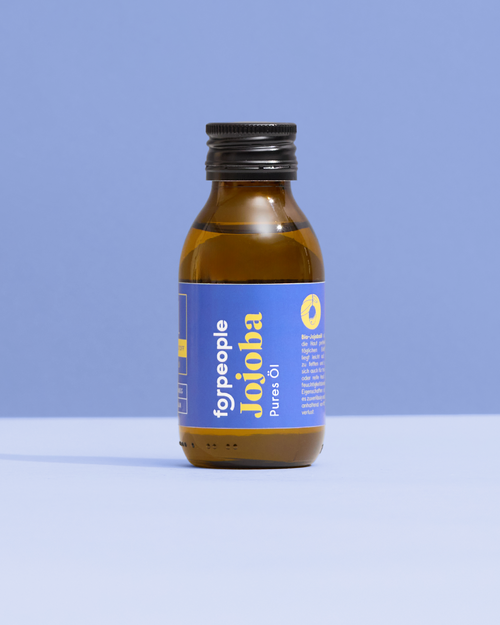
- Jojoba Oil - pure, 100 ml, €16.90: a single ingredient, no fragrance; a few drops on damp skin.
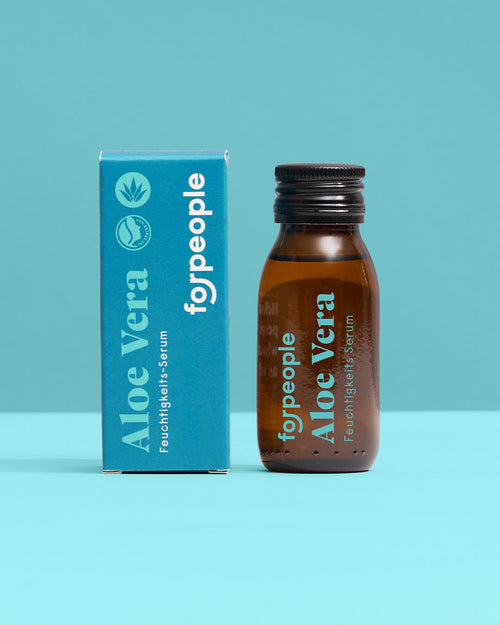
- Aloe Vera Serum 99.6%, 50 ml, €9.90: aloe vera juice with citric acid, potassium sorbate and sodium benzoate; without alcohol, perfume or essential oils. According to the product page, the citric acid can make the skin turn red briefly in rare cases; after irritation, test it on a small area first.
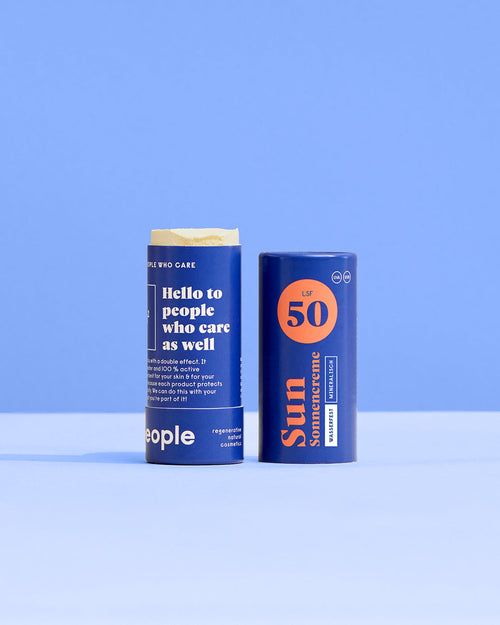
- Solid Sunscreen SPF50, 40 g, €17.90: the mineral UV filters zinc oxide and titanium dioxide, non-nano according to the product information, without fragrance; for face and body, avoiding the eye area.
More on this: Sun protection in the mountains and on snow · Combining aloe vera serum with oil or solid cream · Facial skin feels tight in winter
From the blog: Face and lips through winter: a routine for every day
Sources
- Mukherjee S, Date A, Patravale V, Korting HC, Roeder A, Weindl G (2006): Retinoids in the treatment of skin aging: an overview of clinical efficacy and safety. Clinical Interventions in Aging 1(4): 327–348. https://doi.org/10.2147/ciia.2006.1.4.327
- DermNet: Topical retinoids. Samaranayaka S, Jarrett P (July 2021). Accessed 29 October 2026. dermnetnz.org/topics/topical-retinoids
- Kornhauser A, Coelho SG, Hearing VJ (2010): Applications of hydroxy acids: classification, mechanisms, and photoactivity. Clinical, Cosmetic and Investigational Dermatology 3: 135–142. https://doi.org/10.2147/CCID.S9042
- Telang PS (2013): Vitamin C in dermatology. Indian Dermatology Online Journal 4(2): 143–146. https://doi.org/10.4103/2229-5178.110593
- DermNet: Isotretinoin. Oakley A (1999), updated by Oakley A, Rademaker M (February 2016), minor amendment November 2025. Accessed 29 October 2026. dermnetnz.org/topics/isotretinoin
- Engebretsen KA, Johansen JD, Kezic S, Linneberg A, Thyssen JP (2016): The effect of environmental humidity and temperature on skin barrier function and dermatitis. Journal of the European Academy of Dermatology and Venereology 30(2): 223–249. https://doi.org/10.1111/jdv.13301
- Mijaljica D, Spada F, Harrison IP (2022): Skin Cleansing without or with Compromise: Soaps and Syndets. Molecules 27(6): 2010. https://doi.org/10.3390/molecules27062010
- Springer A, Helfenbein E, Blaak J (2026): Mechanically Induced Skin Renewal: Evidence-Based Insights Into Clinical, Structural and Inflammatory Changes Activated by Microneedling, Microdermabrasion and Microvibration. Journal of Cosmetic Dermatology 25(5): e70908. https://doi.org/10.1111/jocd.70908