







The problem: how to recognise it
The skin around the lips becomes rough and flaky, the chin feels like paper after washing, the upper lip feels tight, and fine flakes sit in the fold between the nose and the corner of the mouth. Sometimes a red, rough ring forms all around the mouth. This is typical of the cold season: after a walk with a scarf over your mouth, on windy days, during cold season when your nose runs, or when you keep moistening dry lips.
Not everything that flakes around the mouth is simple dryness. The overview below helps you sort it out. It is based on medical sources but does not replace a diagnosis: only a medical examination brings clarity.
| What you see | What may be behind it | What fits now |
|---|---|---|
| Finely flaking, tight skin, hardly red, no bumps | simple dryness from cold, heated air and washing | care as described below |
| Red, rough, flaky skin right around the lips, together with dry, cracked lips | irritation from saliva with frequent licking (Fonseca et al. 2020) | stop licking, care for the lips; if no improvement, see a doctor |
| Small red bumps, blisters or pustules around the mouth, nose and sometimes the eyes; a clear strip right at the red of the lips; the surrounding skin dry, stinging or tight | perioral dermatitis (DermNet, Periorificial dermatitis) | no thick creams, dermatologist |
| Red, flaking lips and surrounding skin that started after a new toothpaste or lip balm | irritation or contact allergy (Phillips et al. 2026) | leave out the product, have it checked |
Cracked corners of the mouth are covered in detail in Cracked corners of the mouth: causes, care and when to see a doctor, and the lips themselves in Why do lips dry out so quickly? This page is about the skin around them.
Why it happens in autumn and winter
The skin around the nose and mouth becomes measurably drier in winter. In 16 women, the skin in the fold between nose and mouth lost significantly more water in winter than in autumn. It was redder and flakier, and the film of fat on its surface had a less favourable composition (De Paepe et al. 2009). A review concludes that cold and dry air reduce the skin's barrier function overall and make it react more strongly to irritants (Engebretsen et al. 2016).
Saliva irritates. Dry lips are common in winter, and many people then lick them to moisten them. That keeps the cycle going. Saliva contains digestive enzymes that attack the thin skin of the lips, break down its protective barrier and make it more vulnerable to further irritants (Fonseca et al. 2020). The saliva evaporates quickly and leaves the skin drier than before. The redness then often sits exactly where the tongue and saliva reach.
Moist warmth, then cold. A scarf over the mouth catches the moist air you breathe out. The skin underneath becomes alternately damp and warm, then cold again, and the wool rubs as well. For face masks it has been measured: after a year of daily wear, the skin under the mask differed from the skin next to it, for example in water loss and in the moisture of the outer skin layer (Park et al. 2022).
Toothpaste. In a study of 289 toothpastes from large UK retailers, almost all contained flavourings, just over half contained sodium lauryl sulfate, a foaming surfactant, and about one in fourteen contained stannous fluoride, which has been associated with allergic reactions on the lips. Toothpaste can trigger reactions on the lips and in the mouth (Phillips et al. 2026). Residue that dries around the mouth after brushing is therefore a simple, often overlooked source of irritation. Fluoride is important for your teeth; whether you switch toothpaste is something to discuss with your dental practice.
Too much cream and cortisone. In perioral dermatitis the skin barrier is disturbed. The skin loses more water and feels tight, and many people then apply more and more cream, which irritates it further. Triggers include cortisone, cosmetics, thick occlusive creams and ointments, toothpaste, and also UV light, heat and wind (DermNet, Periorificial dermatitis). The link with cortisone creams on the face is supported most strongly by the evidence (Searle et al. 2021). On the chin, men also have shaving; what the blade does to the skin is explained in After shaving: what does facial skin need?
The solution step by step
| When | What you do | Why |
|---|---|---|
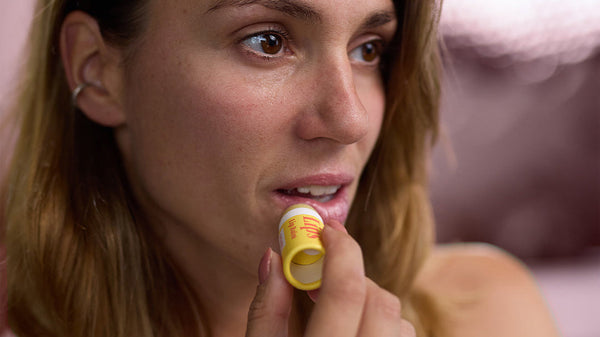
| Right away | Stop licking your lips. Keep a lip balm within reach and use it as soon as your lips feel tight. | Saliva attacks the skin and evaporates quickly; a balm leaves a film instead. |
| Right away | If there are small red bumps around the mouth and nose: no more thick creams, ointments or make-up there, and make an appointment with a dermatologist. | Occlusive creams can make perioral dermatitis worse. |
| After brushing your teeth | Rinse mouth and chin with lukewarm water and pat dry. | Otherwise flavourings and surfactants from the toothpaste stay on the skin. |
| Morning and evening | Wash your face with lukewarm water, use cleanser sparingly and only in the evening, don't scrub chin and upper lip. | Hot water and a lot of cleansing dissolve lipids from the outer skin layer. |
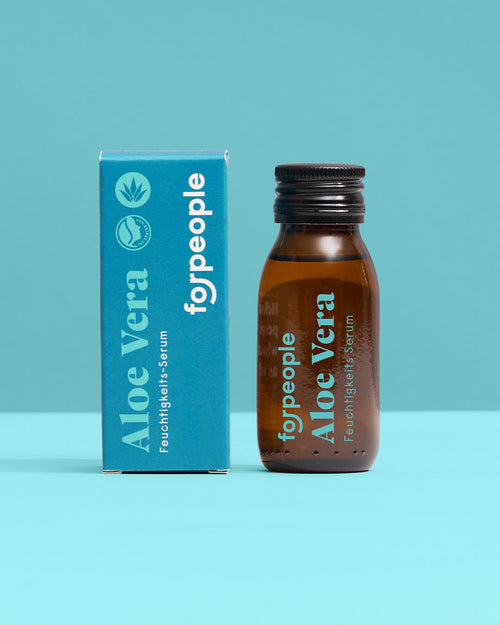
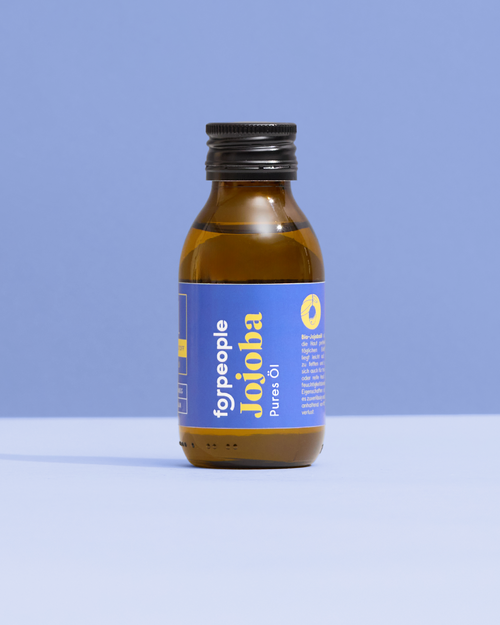
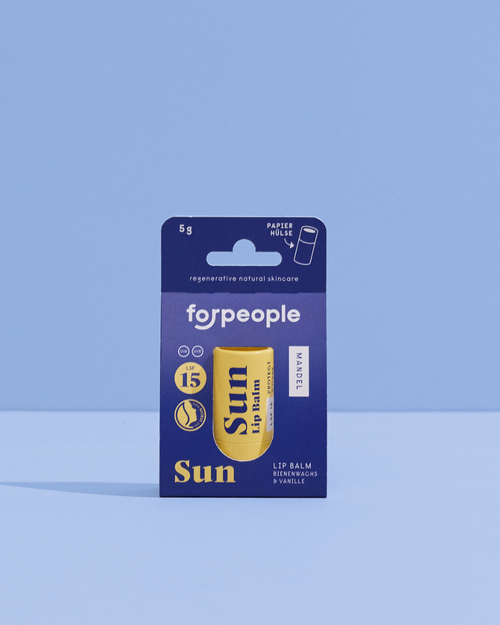
| Every day | With simple dryness, apply a thin water-based layer and one or two drops of oil on top to skin that is still damp, for example Aloe Vera Serum 99.6% and Jojoba Oil - pure. Care for your lips with a balm without essential oils, such as Lip Balm - SPF15 Almond & Vanilla. | Water plus a thin film of fat keeps the outer skin layer supple without sealing it; how layering works is explained in Combining aloe vera serum with oil or solid cream. |
| Outdoors | Apply lip balm before going out; wear your scarf loosely and change it when it has become damp in front of your mouth. | Damp wool, cold and friction together dry out the skin. |
| Prevention | Change lip balm, toothpaste or face products only one at a time and test them on a small area first, see Trying a new product. | That way a trigger can be identified. |
If your nose is sore from blowing and the skin below it is irritated, Sore nose from blowing will help.
What helps – and what rather does not
| Measure or home remedy | Assessment |
|---|---|
| Zero therapy if perioral dermatitis is suspected | named by medical sources as the first step: leave out all creams, make-up and skincare products on the face and wash with warm water only; mild cases can settle this way (DermNet), (Mokos et al. 2015). The diagnosis is made by a dermatologist. |
| Cortisone cream from the medicine cabinet | not on your own: cortisone on the face is considered the most important trigger of perioral dermatitis. Don't stop a prescribed treatment on your own; if it is stopped suddenly, the skin can flare up badly (DermNet). Discuss it with the practice. |
| Thick fatty cream or petroleum jelly over a large area around the mouth | a thin layer is possible with simple dryness; with bumps rather not, because occlusive creams can make perioral dermatitis worse |
| Moistening your lips with your tongue | rather not: saliva irritates, the skin becomes drier |
| Scrub or washcloth on the chin | rather not while the skin is flaking or stinging |
| Tea tree oil or other essential oils on red spots | rather not: concentrated fragrance oils irritate disturbed skin in particular; more in Essential oils and fragrance allergens |
| Honey, quark or kitchen oil | assessed for the lips in Do home remedies help chapped lips?; on the skin around the mouth they do not replace a thin film of fat |
| Rinsing off toothpaste residue | sensible: a simple step with no downside |
Typical mistakes
The most common mistake is putting more and more cream on red bumps around the mouth because the skin feels tight. With perioral dermatitis, this makes the cycle worse. The second is using a cortisone cream from the cupboard there: cortisone can mask the picture, and once it is stopped the skin can flare up badly (DermNet). Third: spreading lip balm with fragrance, mint or essential oils far beyond the edge of the lips onto irritated skin. Fourth: working on the chin with a scrub or a rough washcloth to get rid of the flakes. Fifth: thinking only about care and overlooking the trigger, such as licking, a damp scarf, toothpaste residue or a new lip balm.
When to seek medical advice
Simple dryness around the mouth usually improves within one to two weeks if you leave out the triggers and apply thin layers of care. Have the skin looked at by a doctor if one of these points applies:
- Small red bumps, blisters or pustules form around the mouth, nose or eyes and stay, and the skin stings or feels tight. This may be perioral dermatitis. It is diagnosed by a doctor, and treatment often takes several weeks (DermNet).
- You have used a cortisone cream on your face, and the skin flares up after stopping it.
- The redness started after a new toothpaste, lip balm or face cream. Whether a contact allergy is behind it can be clarified with an allergy test at a dermatologist.
- Groups of blisters form that tingled beforehand, or yellowish crusts or weeping areas appear.
- The corners of your mouth stay cracked for longer than two to three weeks.
- For children, the paediatrician is the first port of call; perioral dermatitis also occurs in children (DermNet).
- After two weeks of simple care it is not better, or your lips and the skin around your mouth swell. If your lips, tongue or throat suddenly swell or you have difficulty breathing, call the emergency number 112.
What you can do after a reaction to a product is described in Reacting to a cosmetic: what to do.
Frequently asked questions
Why is the skin around my mouth so dry?
In winter, the skin around the nose and mouth loses more water. Licking, saliva, a damp scarf, toothpaste residue and shaving add to this. Usually it is several of these things together.
What helps with dry skin on the chin?
Wash with lukewarm water, use little cleanser, don't scrub, rinse after brushing your teeth and apply a thin water-based layer and a little oil to the damp skin. If you see bumps instead of flakes, have it looked at.
What is perioral dermatitis?
A common rash with small red bumps, blisters or pustules around the mouth, nose and sometimes the eyes. A narrow strip right at the edge of the lips usually stays clear, and the surrounding skin is often dry and stings. It mainly affects women between 20 and 45, but also children.
What does zero therapy mean?
All creams, make-up and skincare products on the face are left out, and you wash with water only. Medical sources name this as the first step for perioral dermatitis. Cortisone is not simply stopped in the process but according to a medical plan.
Can toothpaste irritate the skin around the mouth?
Yes, that is possible. Toothpastes almost always contain flavourings and often foaming surfactants. Rinse the skin after brushing. Whether a switch makes sense is something to clarify with your dermatologist and dental practice, because fluoride is important for your teeth.
My child has dry, red skin around the mouth. What should I do?
Possible causes include licking, eczema or perioral dermatitis, which also occurs in children. Have it looked at by a paediatrician before you apply creams.
Why does the skin above my upper lip and in the nasal fold flake?
The skin next to the nose becomes measurably drier and flakier in winter, and blowing your nose irritates it further. Yellowish, greasy flakes on red skin can also be seborrhoeic eczema, see Dry skin on the forehead, eyebrows and nose.
Can I put lip balm on the skin around my mouth?
Lip balm is made for the lips. On the skin next to them, a thin water-based layer with a little oil is enough. With red bumps, neither balm nor cream belongs on the area until the practice says otherwise.
At forpeople
For dry lips and for simply dry skin around the mouth, these products fit, each for the purpose stated on its product page. According to their safety notes they should not be used on irritated or broken skin or on red bumps around the mouth; we do not recommend a product for children here.
- Lip Balm - SPF15 Almond & Vanilla, 5 g, €7.90: for the lips; according to the ingredient list it contains, among other things, beeswax, sunflower oil, shea butter, almond oil, hemp oil, aloe vera, vanilla extract and the mineral UV filters zinc oxide and titanium dioxide, without essential oils.
- Aloe Vera Serum 99.6%, 50 ml, €9.90: water-based care for the face; aloe vera juice with citric acid, potassium sorbate and sodium benzoate, without alcohol, perfume or essential oils.
- Jojoba Oil - pure, 100 ml, €16.90: pure jojoba oil without fragrance; one or two drops on the damp skin.
More on this: Cracked corners of the mouth · Dry lips in the morning: does lip balm overnight help? · Facial skin feels tight in winter · Dry skin around the eyes
From the blog: Face and lips through winter: a routine for every day
Sources
- De Paepe K, Houben E, Adam R, Hachem JP, Roseeuw D, Rogiers V (2009): Seasonal effects on the nasolabial skin condition. Skin Pharmacology and Physiology 22(1): 8–14. https://doi.org/10.1159/000159772
- Engebretsen KA, Johansen JD, Kezic S, Linneberg A, Thyssen JP (2016): The effect of environmental humidity and temperature on skin barrier function and dermatitis. Journal of the European Academy of Dermatology and Venereology 30(2): 223–249. https://doi.org/10.1111/jdv.13301
- Fonseca A, Jacob SE, Sindle A (2020): Art of prevention: Practical interventions in lip-licking dermatitis. International Journal of Women's Dermatology 6(5): 377–380. https://doi.org/10.1016/j.ijwd.2020.06.001
- Phillips PF, Rogers A, Soriano LF (2026): Mint condition? A survey of allergenic ingredients in UK toothpastes. Clinical and Experimental Dermatology 51(6): 1066–1069. https://doi.org/10.1093/ced/llag006
- Park SR, Han J, Yeon YM, Kang NY, Kim E, Suh BF (2022): Effects of one year of daily face mask wearing on the skin during the coronavirus disease 2019 pandemic. Skin Research and Technology 28(5): 729–739. https://doi.org/10.1111/srt.13193
- DermNet: Periorificial dermatitis (Perioral dermatitis). Shah N (July 2022). Accessed 29 October 2026. dermnetnz.org/topics/periorificial-dermatitis
- Mokos ZB, Kummer A, Mosler EL, Čeović R, Basta-Juzbašić A (2015): Perioral dermatitis: still a therapeutic challenge. Acta Clinica Croatica 54(2): 179–185. PMID 26415314
- Searle T, Ali FR, Al-Niaimi F (2021): Perioral dermatitis: Diagnosis, proposed etiologies, and management. Journal of Cosmetic Dermatology 20(12): 3839–3848. https://doi.org/10.1111/jocd.14060