After a few days of cold wind and heated air, the corner of your mouth pulls when you yawn. In the morning there is a small red crack, and your tongue keeps running over it. Specialists call this angular cheilitis. The French name perlèche roughly means "through licking" (Brizuela & Daley 2025), which describes one of the most common triggers.
Why the corners of the mouth in particular crack
At the corner of the mouth, the skin of the face meets the mucous membrane of the mouth. The spot works like a hinge: every time you open your mouth, it moves and stretches more than the rest of the lip (Brizuela & Daley 2025). Moisture adds to this. Saliva collects in folds at the corners of the mouth and keeps the skin constantly moist (Stoopler et al. 2013). Softened skin cracks more easily, and once the saliva has evaporated it is drier than before.
According to a review, people with deep folds at the corners of the mouth and people who often lick them are particularly affected; it is more frequent in winter, when people lick their lips even more, and in older age. Too little saliva also favours cracks (Lugović-Mihić et al. 2018). Why lips dry out so quickly in the first place is explained in Why do lips dry out so quickly?
Germs often settle in the moist cracks. In a study of 40 people affected, bacteria or yeasts were found in 33, alone or mixed (Oza & Doshi 2017). A cracked corner of the mouth is therefore often more than dry skin.
Everyday triggers: what you can change yourself
| Trigger | How you notice it | What you change |
|---|---|---|
| Licking and moistening | corners briefly wet, then they feel tight | keep lip balm to hand and use it instead of your tongue |
| Cold, wind, heated air | the lips are chapped as well | apply care before going outside, scarf over your mouth |
| Saliva during sleep | corners moist in the morning, mark on the pillow | dab the corners dry in the evening, then apply care |
| Toothpaste, lip care, fragrances | redness and burning around the mouth, often after a new product | stop the product, rinse off toothpaste after brushing |
| Dentures or tooth loss | deeper folds, saliva pools in the corners | have the fit of the dentures checked at the dentist |
| Germs, nutrient deficiency, illnesses, medicines | stubborn, crusted, keeps coming back | have it checked by a doctor, see below |
Contact allergies to substances in toothpaste, lipstick, fragrances or ointment bases are known triggers (Lugović-Mihić et al. 2018). With dentures, a dentist checks whether they sit firmly and whether the bite has the right height (Stoopler et al. 2013). The rows on saliva during sleep and rinsing are practice.
What care can and cannot do
A balm of wax and oil leaves a thin film that slows evaporation and keeps the lips supple. For dry lips, the British National Health Service (NHS) recommends a lip balm containing petroleum jelly or beeswax, and also: wash your hands before applying, do not share lip balm, do not pick off flaky skin and do not keep licking dry or cracked lips (NHS 2025). The American Academy of Dermatology (AAD) advises applying a non-irritating balm instead of licking (AAD).
What care cannot do: treat an open, weeping or crusted crack, get rid of germs or make up for a deficiency. According to their safety notes, our products are not intended for broken or irritated skin; an open crack needs whatever the practice recommends after examining it.
A routine for intact lips and corners of the mouth, as common practice:
- Morning and evening: after brushing your teeth, rinse your mouth and its corners with water and dab them dry.
- Apply thinly: lip balm over both lips, right to the edges and into the corners, as long as the skin there is closed.
- Reapply during the day: after eating and drinking, and whenever you notice that you want to lick your lips.
- Before going to sleep: a slightly thicker layer; more in Dry lips in the morning: does lip balm overnight help?
- Hands off: no picking, no rubbing, do not share the stick; see Hygiene and Water-Free Cosmetics: What to Watch
Which lip care suits the corners of the mouth
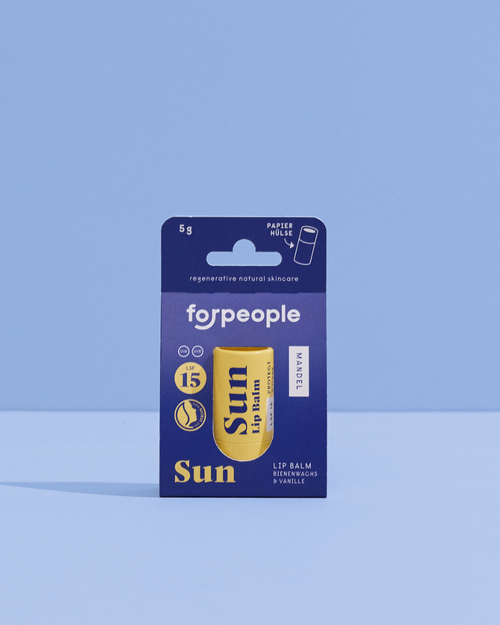
For dry, cracked lips, the AAD advises leaving out products with camphor, eucalyptus, menthol, fragrance and flavourings such as cinnamon, citrus or mint; if a product burns or stings, it is irritating the lips (AAD). For stressed corners of the mouth, a balm without essential oils is therefore the obvious choice. According to its ingredient list, the Lip Balm - SPF15 Almond & Vanilla contains beeswax, sunflower oil, shea butter, almond and hemp seed oil, aloe vera extract, vitamin E and vanilla extract, plus the mineral UV filters zinc oxide and titanium dioxide, but no essential oils. According to the product page, you apply it right to the edges and into the corners of the mouth.
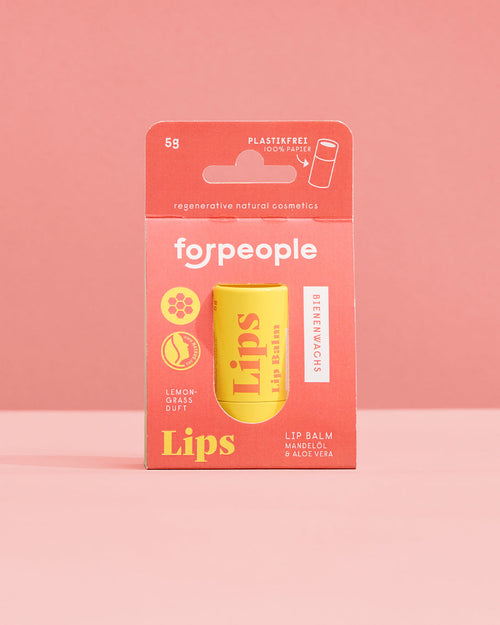
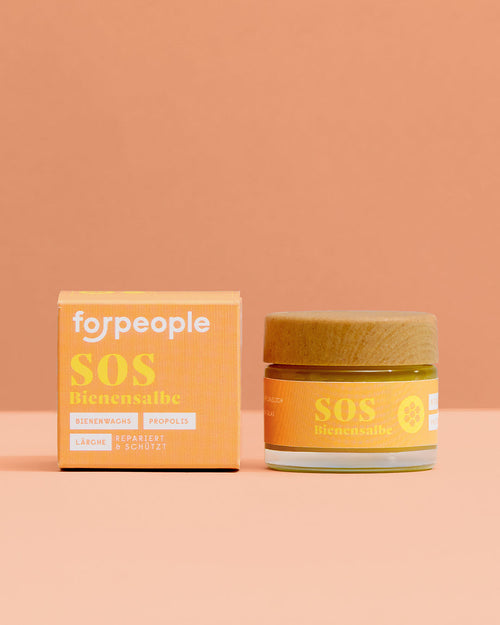
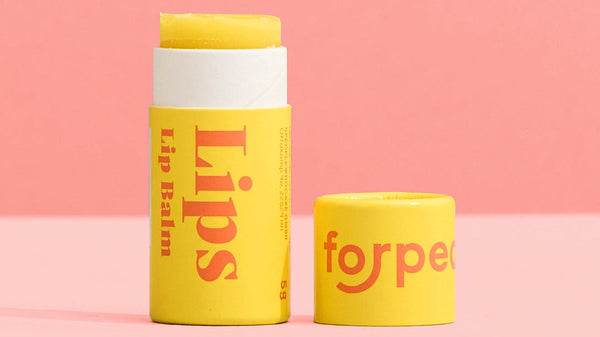
The Lip Balm - Lemongrass has the same base without UV filters, but contains essential lemongrass oil with the fragrance components citral, citronellol and geraniol. As long as the corners of your mouth are stressed, the variant without essential oil is the better choice. The Beeswax Salve – Larch & Mandarin in a Glass Jar is softer and, according to the product page, can be applied as a thin layer to dry lips overnight. However, it contains larch resin, propolis and essential oils of mandarin, rosemary and silver fir.
Care itself can also be the trigger. In a Swedish study of 95 people with complaints on the lips or face, 17 reacted to beeswax in the allergy test, 14 of them also to propolis (Nyman et al. 2019). If the corners of your mouth get worse with a new product, stop using it. More in Colophony allergy, propolis, beeswax: symptoms and advice and Essential Oils and Fragrance Allergens.
| Care | Composition | Form | For the corners of the mouth |
|---|---|---|---|
| Lip Balm - SPF15 Almond & Vanilla | beeswax, plant oils, shea butter, zinc oxide, titanium dioxide, vanilla extract; no essential oils | solid stick | on intact skin right into the corners |
| Lip Balm - Lemongrass | beeswax, plant oils, shea butter, essential lemongrass oil | solid stick | rather for healthy lips |
| Beeswax Salve – Larch & Mandarin | oils, beeswax, larch resin, propolis, essential oils | soft salve from a jar | not on irritated corners; test on a small area first |
| White petroleum jelly | purified hydrocarbons from crude oil | semi-solid, strongly occlusive | named by the AAD for very dry, cracked lips |
| Lip care with mint, camphor or cinnamon | waxes, oils, flavourings or essential oils | stick or jar | leave out while the lips are cracked |
We do not sell petroleum jelly; Petroleum jelly or beeswax salve: the difference compares the two. How lip care with and without beeswax differs is explained in Lip balm with beeswax or vegan: what is the difference?
When to seek medical advice?
Only an examination can clarify what is behind cracked corners of the mouth; treatment depends on the findings, often with ointments against fungi or bacteria (Lugović-Mihić et al. 2018). Have the corners of your mouth looked at by your GP, a dermatologist or a dentist if one of these points applies:
- The crack lasts longer than two to three weeks, even though you do not lick and you care for your lips. The AAD names this period for chapped lips; after that, a dermatologist should look for the cause, such as an allergy or a yeast infection (AAD).
- The corners are red, weeping or crusted, often on both sides. This is the typical picture of angular cheilitis; yeasts such as Candida albicans or bacteria such as Staphylococcus aureus are often involved in the cracks (Stoopler et al. 2013).
- Your mouth burns or your sense of taste changes. This can point to a fungal infection in the mouth that keeps re-infecting the corners (Stoopler et al. 2013).
- The lips are hot, painful and swollen, a possible sign of infection (NHS 2025).
- First it tingles, then blisters form, usually on one side. That suggests a cold sore, which is contagious and usually clears up after one to two weeks (IQWiG 2025); with one-sided symptoms, herpes is one of the causes that need to be ruled out (Lugović-Mihić et al. 2018).
- The corners keep cracking again, perhaps with tiredness, paleness or a smooth tongue. A deficiency of B vitamins, iron or zinc may be behind this, as may coeliac disease or a chronic inflammatory bowel disease (Lugović-Mihić et al. 2018). A blood test shows whether there is a deficiency; supplements taken on suspicion are no substitute for it.
- You have diabetes or a weakened immune system, take isotretinoin or have recently had antibiotics. Both papers name such illnesses and medicines as possible causes (Stoopler et al. 2013; Lugović-Mihić et al. 2018).
- Your dentures no longer fit well or you have lost teeth. Then the dentist is the right place to go (Stoopler et al. 2013).
- A child has cracked corners of the mouth that do not get better on their own. Children, especially those with atopic eczema, more often get an additional bacterial infection on damaged corners of the mouth (Lugović-Mihić et al. 2018).
- Your lips burn or turn red after a new care product and this persists after you stop using it. An allergy test at a dermatology practice clarifies what you react to (Nyman et al. 2019).
Until your appointment: no licking and no picking, do not try new products, do not put care into the open crack, and do not share lip balm, towels or glasses.
Frequently asked questions
What is the body lacking when the corners of the mouth crack?
Often nothing: saliva, licking and dry air are enough as triggers. But if the corners keep cracking, a deficiency of B vitamins, iron or zinc may be behind it. A blood test at your GP clarifies this.
Are cracked corners of the mouth contagious?
That depends on the cause. If bacteria are involved or it is a cold sore, germs can be passed on. So do not share lip balm, glasses or towels.
How long does it take for cracked corners of the mouth to go away?
There is no fixed time; it depends on the trigger. If it does not get clearly better within two to three weeks despite care and without licking, have it looked at.
Which ointment helps with cracked corners of the mouth?
If the crack is inflamed or open, the doctor chooses a suitable ointment after the examination, often one against fungi or bacteria. For intact lips and corners of the mouth, a balm of wax and oil without fragrance is enough.
Can I put beeswax salve on the corners of my mouth?
On intact, dry lips as a thin layer overnight, yes, after a test on a small area. Not on irritated or open corners. If you react to tree resin, propolis or fragrances, the product page advises checking with a dermatologist first; it is not intended for children under three.
My child has cracked corners of the mouth. What can I do?
Children often lick the corners of their mouth or drool in their sleep. Dab the corners dry and apply a thin layer of care without essential oils to intact skin. If it does not get better or crusts form, see a paediatrician.
At forpeople
Our lip care is water-free and intended for intact lips; according to the product page, do not use it on broken or irritated skin and stop if skin irritation occurs. All three contain beeswax and almond oil.
- Lip Balm - SPF15 Almond & Vanilla, 5 g, €7.90: no essential oils, with vanilla extract and mineral UV filters (non-nano according to the product information).
- Lip Balm - Lemongrass, 5 g, €4.90: the same base with essential lemongrass oil, no UV filters.
- Beeswax Salve – Larch & Mandarin in a Glass Jar, 50 g, €12.90: soft salve with larch resin, propolis and essential oils, for dry lips overnight and rough hands.
More on this: Honey, oil, quark: do home remedies help chapped lips? · Can you become dependent on lip balm? · Sore nose from blowing: what the skin needs now
From the blog: What goes into our lip balm – and why
Sources
- Brizuela M, Daley JO (2025): Angular Cheilitis. In: StatPearls. Treasure Island (FL): StatPearls Publishing, as of 30.11.2025. PMID 30725614. https://pubmed.ncbi.nlm.nih.gov/30725614/
- Stoopler ET, Nadeau C, Sollecito TP (2013): How do I manage a patient with angular cheilitis? Journal of the Canadian Dental Association 79: d68. https://jcda.ca/article/d68
- Lugović-Mihić L, Pilipović K, Crnarić I, Šitum M, Duvančić T (2018): Differential Diagnosis of Cheilitis – How to Classify Cheilitis? Acta Clinica Croatica 57(2): 342–351. https://doi.org/10.20471/acc.2018.57.02.16
- Oza N, Doshi JJ (2017): Angular cheilitis: A clinical and microbial study. Indian Journal of Dental Research 28(6): 661–665. https://doi.org/10.4103/ijdr.IJDR_668_16
- NHS (2025): Sore or dry lips. Last reviewed 13.02.2025, accessed 28.10.2026. https://www.nhs.uk/conditions/sore-or-dry-lips/
- American Academy of Dermatology (AAD) (n.d.): 7 dermatologists' tips for healing dry, chapped lips. Accessed 28.10.2026. https://www.aad.org/public/everyday-care/skin-care-basics/dry/heal-dry-chapped-lips
- Nyman GSA, Tang M, Inerot A, Osmancevic A, Malmberg P, Hagvall L (2019): Contact allergy to beeswax and propolis among patients with cheilitis or facial dermatitis. Contact Dermatitis 81(2): 110–116. https://doi.org/10.1111/cod.13306
- Institute for Quality and Efficiency in Health Care (IQWiG), gesundheitsinformation.de (2025): Lippenherpes [Cold sores]. Updated 08.01.2025, accessed 28.10.2026. https://www.gesundheitsinformation.de/lippenherpes.html