


What chapped lips are missing
Lips lose more water than the skin next to them. In a study of 303 women in winter, almost three times as much water evaporated through the red of the lips as through the cheek; surface moisture was about one third (Kobayashi & Tagami 2004). Lips produce hardly any oil of their own. More on this: Why do lips dry out so quickly?
The literature groups skincare ingredients by what they do (Sethi et al. 2016):
- Humectants attract water, including from deeper layers of the skin towards the surface, where it evaporates easily. That is why they are usually combined with a film.
- Emollients are mainly oils and fats. They make the surface soft, smooth and flexible.
- Occlusives lay a water-repellent layer on the skin and physically slow evaporation.
More on the three groups: Humectants, occlusives, emollients.
The home remedies at a glance
We do not know of any studies that tested these home remedies on chapped lips. Where a source is given further down, the measurements were made on other skin.
| Home remedy | What it does | The catch |
|---|---|---|
| Honey | Its sugars bind water. | It is sticky, tastes sweet and gets licked off. No lasting film forms. |
| Olive oil | Makes the surface supple. | Does not stay on for long without wax. In a trial on the forearm it did worse than sunflower oil. |
| Almond oil, sunflower oil | Make lips supple and spread thinly. | Liquid oil is gone again after eating and drinking. |
| Coconut oil | Melts on the lips and makes them supple. | Once melted, it stays on as briefly as an oil. |
| Quark, yoghurt, cucumber | Bring water to the lips; that feels cool. | The water evaporates, and nothing is left to slow evaporation. |
| Sugar, face cloth, toothbrush | Loosen flakes through friction. | Too much friction roughens the lips. |
| Toothpaste | Cleans teeth; it is not made for lips. | Abrasives, surfactants and flavourings can sting on chapped lips. |
| Petroleum jelly | Lays down a very dense film. | Consists of mineral oil components; whether you want that is up to you. |
| Drinking more | May slightly raise the moisture of the skin's outer layer. | The evidence is weak. |
| Humidifier, airing the room | Raise the humidity indoors. | They do not make a film on the lips unnecessary. |
Honey: binds water, but does not stay
Honey is a supersaturated solution made up mainly of fructose and glucose. In cosmetic formulations it serves as a humectant, among other things, including in lip ointments; according to a review, the amounts used are mostly between 1 and 10% (Burlando & Cornara 2013). There, honey is a small part of a formulation.
On its own on the lips, honey is sticky and tastes sweet; you lick it off without noticing. Licking dries the lips out, because the saliva evaporates. If you like honey, apply it for a few minutes, remove it with a damp cloth and then put a balm on your lips. Do not keep anything you have mixed with honey, sugar or oil: How long does homemade cream last?
Oils: supple, but nothing to hold them
Oils smooth the rough surface, and lips feel softer straight away. But a liquid oil does not stay where it is: talking, eating and drinking wear it off. That is everyday experience, not a measurement.
Besides, not all oils are alike. In one trial, adults applied six drops of olive oil to one forearm and sunflower oil to the other, twice a day for four weeks. Olive oil reduced the integrity of the skin's outer layer and led to mild redness; sunflower oil did not (Danby et al. 2013). The measurements were made on the forearm, not on the lips, and the study is small. It is still a reason not to make pure olive oil a permanent solution. More on this: Olive oil and sunflower oil on the skin.
Coconut oil is solid at cool room temperature, melts on the skin and then behaves like an oil. If you want to try a pure oil, take a few drops without added scent, almond oil for example, and put a balm on top.
Why it takes wax to make the difference
What chapped lips lack most is a film that stays. Occlusives slow evaporation by forming a water-repellent layer (Sethi et al. 2016). Petroleum jelly seals most densely; the comparison is on the page Petroleum jelly or beeswax salve: the difference.
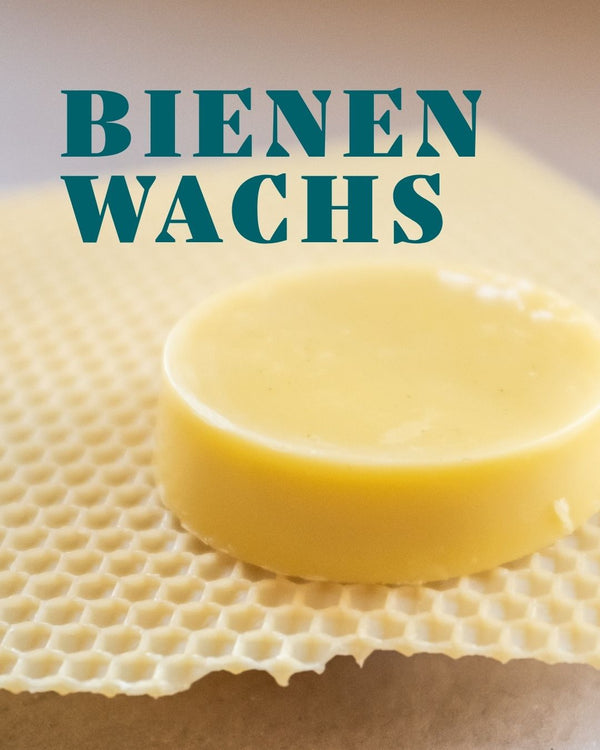
Wax gives the oil a framework. A liquid becomes a solid stick that stays on the lips. A lip balm is therefore not the opposite of home remedies but their lasting form: oil, often a plant butter, and wax.
How to go about it:
- Do not lick, do not pick. Both make lips rougher.
- Thinly and more often. Apply the balm when your lips feel tight, and again after eating and drinking.
- More generously at night. More on this: Dry lips in the morning: does lip balm overnight help?
- Leave flakes alone. When a scrub makes sense is covered in Lip scrub: is it worth it, how often and with what?
Drinking and humidity: what does the evidence show?
On the advice to “drink more”, a systematic review included only six studies and calls the evidence weak. Additional water slightly increased the moisture of the skin's outer layer, especially in people who had drunk little before. Whether drinking more actually improves dry skin needs further research (Akdeniz et al. 2018). The review concerns skin in general; its abstract gives no data on the lips.
According to a review, low humidity and low temperatures reduce the skin's barrier function (Engebretsen et al. 2016). Airing rooms instead of overheating them and using a humidifier are therefore plausible. Whether they improve chapped lips was not tested in that paper.
When to seek medical advice?
With care, chapped lips usually improve within a few days. Have it checked by a doctor if your lips stay cracked for weeks despite care, if they are very red or swollen, weep, bleed, or form crusts or blisters, if the corners of your mouth stay cracked, or if a spot changes and does not go away. Neither home remedies nor cosmetics belong on open areas. If you are allergic to honey, nuts or almonds, leave these remedies out. If your lips sting or swell after a home remedy or a lip balm, stop using it and seek advice.
Frequently asked questions
Does honey help chapped lips?
Honey binds water but does not form a film that stays. Because it tastes sweet, it gets licked off, and licking dries the lips out.
Can I put olive oil on my lips?
For the moment it makes lips supple, but without wax it does not stay on for long. In a trial on the forearm, pure olive oil did worse than sunflower oil; it is therefore less suited as a permanent solution.
Is coconut oil as good as a lip balm?
Coconut oil is a fat without wax: it melts on the lips and is quickly worn off. A balm also contains wax and stays on longer. We do not stock coconut oil.
Why does toothpaste not help chapped lips?
Toothpaste contains abrasives, surfactants and flavourings, but nothing that stays on the lips as a film. It can sting on chapped lips.
Do I get chapped lips because I drink too little?
That has not been shown. A systematic review found only weak indications that drinking more slightly raises the moisture of the skin's outer layer. Dry air, cold, wind and licking are more likely causes.
Does the forpeople lip balm contain honey?
No. According to the ingredient list, both sticks contain beeswax but no honey. Beeswax can naturally smell slightly of honey.
At forpeople
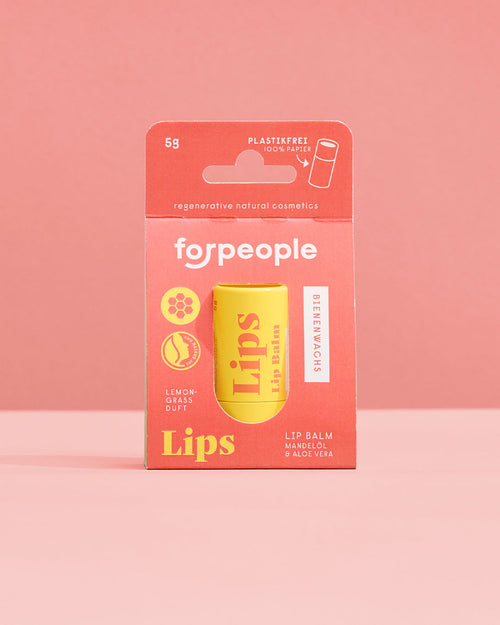
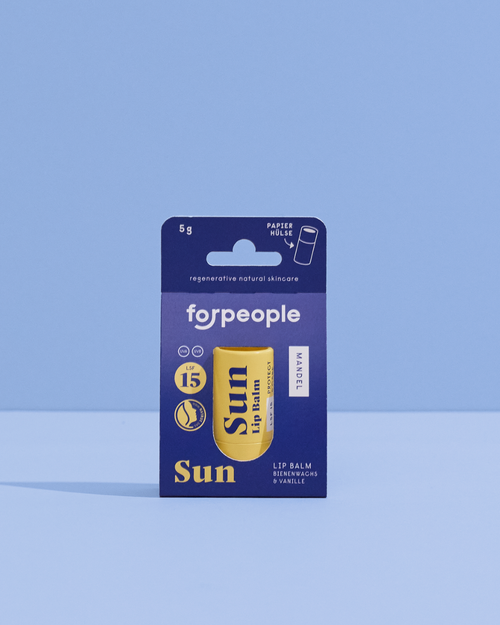
Our two lip balms are water-free sticks made of oil, plant butter and beeswax.
- Lip Balm - Lemongrass, 5 g, €4.90: according to the ingredient list, beeswax, sunflower oil, shea butter, almond oil, hemp seed oil, aloe vera extract and lemongrass essential oil. The essential oil brings the declared fragrance components citral, citronellol and geraniol.
- Lip Balm - SPF15 Almond & Vanilla, 5 g, €7.90: the same base without essential oil, with vanilla extract and the mineral UV filters zinc oxide and titanium dioxide, non-nano according to the product information.
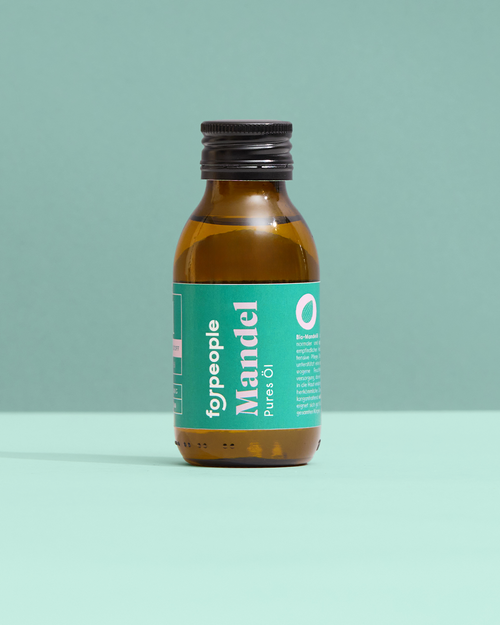
- Almond Oil - pure, 100 ml, €14.90: a single oil without added scent, if you want to try a pure oil first.
According to the product information, none of the three is to be used on injured or irritated skin. More on this: Can you become dependent on lip balm? · You swallow some of your lip balm: is that a problem? · Vinegar, baking soda, lemon: do home remedies work on calluses?
From the blog: Beeswax in Cosmetics: What It Does – and Why We Love It · Skincare for days in the snow: hands, lips, face
Sources
- Kobayashi H, Tagami H (2004): Functional properties of the surface of the vermilion border of the lips are distinct from those of the facial skin. British Journal of Dermatology 150(3): 563–567. https://doi.org/10.1046/j.1365-2133.2003.05741.x
- Sethi A, Kaur T, Malhotra SK, Gambhir ML (2016): Moisturizers: The Slippery Road. Indian Journal of Dermatology 61(3): 279–287. https://doi.org/10.4103/0019-5154.182427
- Burlando B, Cornara L (2013): Honey in dermatology and skin care: a review. Journal of Cosmetic Dermatology 12(4): 306–313. https://doi.org/10.1111/jocd.12058
- Danby SG, AlEnezi T, Sultan A, Lavender T, Chittock J, Brown K, Cork MJ (2013): Effect of olive and sunflower seed oil on the adult skin barrier: implications for neonatal skin care. Pediatric Dermatology 30(1): 42–50. https://doi.org/10.1111/j.1525-1470.2012.01865.x
- Akdeniz M, Tomova-Simitchieva T, Dobos G, Blume-Peytavi U, Kottner J (2018): Does dietary fluid intake affect skin hydration in healthy humans? A systematic literature review. Skin Research and Technology 24(3): 459–465. https://doi.org/10.1111/srt.12454
- Engebretsen KA, Johansen JD, Kezic S, Linneberg A, Thyssen JP (2016): The effect of environmental humidity and temperature on skin barrier function and dermatitis. Journal of the European Academy of Dermatology and Venereology 30(2): 223–249. https://doi.org/10.1111/jdv.13301