


Where the flakes come from
The surface of the red of the lips is built differently from the rest of the facial skin: its uppermost cells are not fully cornified, it loses a lot of water and holds little of it (Kobayashi & Tagami 2004). More on this under Why do lips dry out so quickly?
Two studies by cosmetics manufacturers show how dryness and flakes are connected. In 40 women, the drier the lips were, the more thick, overlapping clusters of horny cells were found on adhesive tape instead of thin, even layers. The authors conclude that dryness disturbs normal shedding (Kim et al. 2021). In a second study with 41 women, the roughness of the lips was related to the water content of the horny layer and to its ceramide profile (Tamura et al. 2016).
So flakes are a consequence of dryness, not an excess of skin. A scrub removes the consequence, not the cause. How the horny layer is built is explained on the page The skin barrier explained simply.
What a scrub can do – and what it cannot
We did not find any studies on lip scrubs. What can be said comes from general advice and from practice.
- It smooths for a short time: Loose flakes are gone, the surface feels more even, and lipstick sits more evenly. More on this under Lip balm under lipstick: does the colour still last?
- It does not make lips fuller: If they look redder and plumper for a moment after rubbing, that is due to the rubbing and does not last.
- It can remove too much: The horny layer of the lips is thin. If you rub hard, you also take off layers that are still firmly attached; the lip becomes rougher and burns.
The American professional association of skin doctors (AAD) writes about exfoliating in general that it is not for everyone and, if done improperly, can do more harm than good; for dry or easily irritated skin, a mechanical scrub may be too much (AAD 2026). Its advice on dry, chapped lips does not mention a scrub at all. It says that you should not pick at or bite your lips (AAD, lips).
Often you can do without. In a four-week study, lips looked less rough simply through a highly occlusive product made of oil and wax (Tamura et al. 2020). Applying balm and waiting is therefore the first step. A scrub fits when a few loose flakes sit on otherwise smooth, intact lips.
With what? Four methods compared
| Method | Pressure | What speaks for it | What speaks against it |
|---|---|---|---|
| Fine sugar with oil | very light, with the fingertip | sugar dissolves in water, the oil lets the grains glide; freshly mixed and without scent | coarse sugar or firm pressure roughens the lips |
| Damp washcloth | hardly any, just stroking | after a shower the flakes are softened; nothing to mix | stroking quickly turns into rubbing |
| Soft toothbrush | hard to control | it is already in the bathroom | bristles are made for teeth; you need a separate, clean brush |
| Ready-made lip scrub | as with sugar and oil | ready mixed, mostly sugar in oil, fat or wax | often with fragrance and flavour; read the ingredient list |
Nobody has compared these methods; the assessment is based on practice. The AAD names the washcloth as the milder choice for dry skin, though not specifically for the lips (AAD 2026). Salt burns in small cracks, and coffee grounds do not dissolve; neither belongs on the mouth. Scrubs with acids are a topic of their own and not what is meant here. Honey is covered on the page Honey, oil, quark: do home remedies help chapped lips?
Sugar and oil: how to do it
The steps follow the general advice of the AAD (AAD 2026); the amounts are based on practice.
- Moisten your lips with lukewarm water.
- In the palm of your hand, mix a pinch of fine sugar with two to three drops of almond or jojoba oil.
- Circle over your lips with a fingertip for 20 to 30 seconds without pressing.
- Rinse with lukewarm water until you can no longer feel any sugar. Do not lick the mixture off: the oils are cosmetics and not intended for eating.
- Pat your lips dry.
- Apply a balm straight away, because scrubbing can be drying.
Do not mix a supply in advance. Wet fingers bring water into the jar, and a mixture without preservation can then spoil; more on this under How long does homemade cream last? The same recipe in larger amounts is under Making a body scrub from oil and sugar, the version for the hands under Hand scrub for dry hands: a good idea or not?
How often?
There is no evidence-based number. The AAD only gives the principle: the more vigorous the scrub, the less often; if you scrub too often, your skin becomes red and irritated (AAD 2026). For the lips this means in practice: once a week at most, rather less in winter, and not at all while they are affected. Many lips never need a scrub.
If the flakes are back after a few days, what is missing is care, not another scrub. Then it is more useful to apply balm more often during the day and generously in the evening; how to do that is explained under Dry lips in the morning: does lip balm overnight help?
When to seek medical advice
A scrub does not belong on cracked, bleeding or weeping lips; the AAD advises in general not to exfoliate on open areas or after too much sun (AAD 2026). Have your lips looked at by a doctor if they are still flaking or cracked after two to three weeks despite care (AAD, lips), if blisters or crusts form, the corners of your mouth crack, your lips swell or a single spot stays rough and scaly. The same applies if burning or redness after a scrub has not subsided after one to two days.
Frequently asked questions
How often can I scrub my lips?
There is no evidence-based number. In practice: once a week at most and only on intact lips. The firmer the pressure, the less often.
Does a lip scrub make lips fuller?
No. After rubbing they look redder and plumper for a moment; that does not last. A scrub takes off loose flakes, nothing more.
Can I scrub when my lips are cracked?
No. The horny layer is already affected then, and grains remove even more. Leave your lips alone and care for them. Cosmetics do not belong on open areas.
Which oil do I use for a lip scrub?
A plant oil without added scent, for example almond or jojoba oil; a cooking oil from the kitchen is also suitable. If you react to almonds, do not use almond oil. How the oils differ: Argan, jojoba, almond or rosehip oil: how do they differ?
Can I mix the sugar scrub in advance?
Better not. When you take some out with wet fingers, water gets into the mixture, and it contains no preservation. The small amount is quickly mixed fresh in the palm of your hand.
What do I apply after the scrub?
A balm made of wax and oil that forms a film. If your lips tingle afterwards, use a product without essential oil.
At forpeople
You do not have to buy a lip scrub, and we do not have one. What we offer is the oil for it and the care afterwards. According to the product information, the products are not to be used on injured or irritated skin.
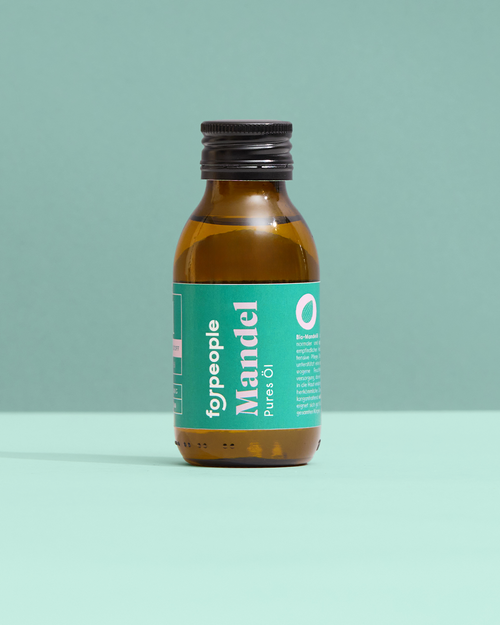
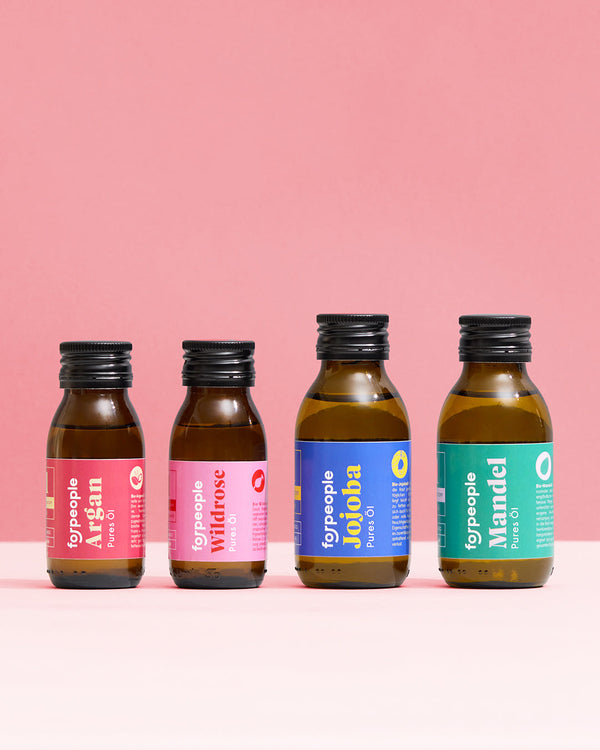
- Almond Oil - pure, 100 ml, €14.90: according to the ingredient list, pure almond oil without added scent. A few drops are enough for the scrub.
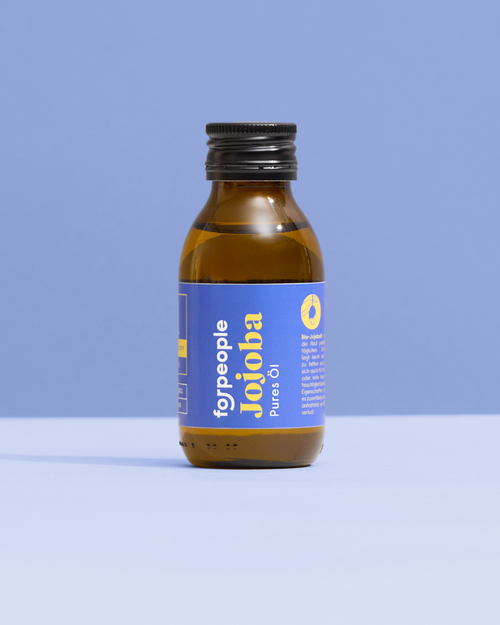
- Jojoba Oil - pure, 100 ml, €16.90: according to the ingredient list, pure jojoba oil without added scent, chemically a liquid wax.
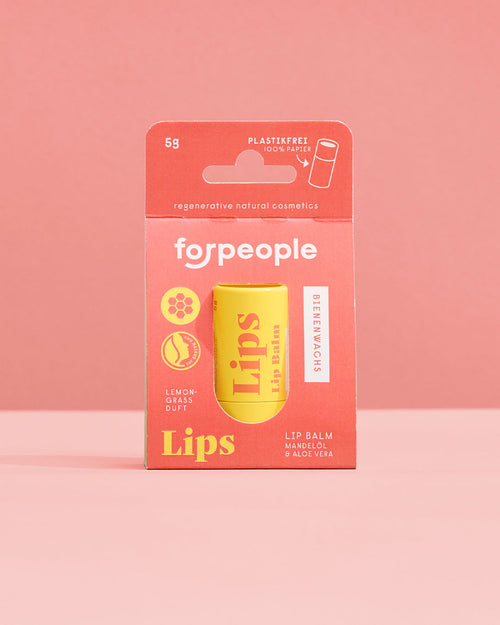
- Lip Balm - Lemongrass, 5 g, €4.90: the balm for afterwards, a solid stick made of beeswax, sunflower oil, shea butter, almond and hemp seed oil. It contains lemongrass essential oil.
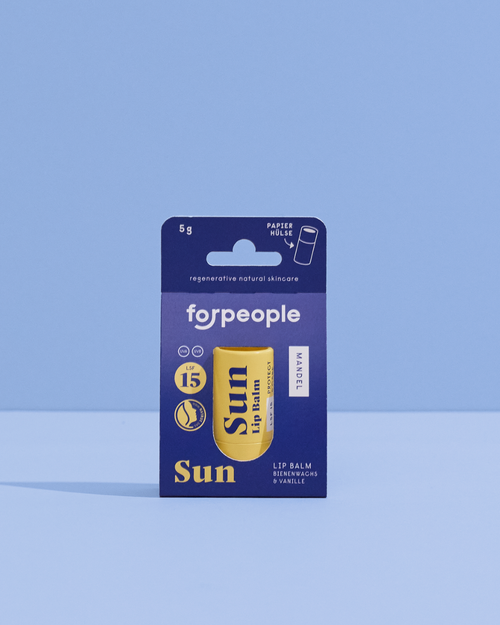
- Lip Balm - SPF15 Almond & Vanilla, 5 g, €7.90: the same base without essential oil, with vanilla extract and the mineral filters zinc oxide and titanium dioxide (non-nano).
If you notice a skin reaction, stop using the product. More on this: Why do lips dry out so quickly? · Can you become dependent on lip balm? · How long does homemade cream last?
From the blog: Face & Body Oils: Which Oil Suits Which Skin Type?
Sources
- Kobayashi H, Tagami H (2004): Functional properties of the surface of the vermilion border of the lips are distinct from those of the facial skin. British Journal of Dermatology 150(3): 563–567. https://doi.org/10.1046/j.1365-2133.2003.05741.x
- Kim J, Yeo H, Kim T, Jeong ET, Lim JM, Park SG (2021): Relationship between lip skin biophysical and biochemical characteristics with corneocyte unevenness ratio as a new parameter to assess the severity of lip scaling. International Journal of Cosmetic Science 43(3): 275–282. https://doi.org/10.1111/ics.12692
- Tamura E, Ishikawa J, Naoe A, Yamamoto T (2016): The roughness of lip skin is related to the ceramide profile in the stratum corneum. International Journal of Cosmetic Science 38(6): 615–621. https://doi.org/10.1111/ics.12335
- American Academy of Dermatology (2026): How to safely exfoliate at home. Zuletzt aktualisiert am 06.02.2026, abgerufen am 08.10.2026. https://www.aad.org/public/everyday-care/skin-care-secrets/routine/safely-exfoliate-at-home
- American Academy of Dermatology (o. J.): 7 dermatologists' tips for healing dry, chapped lips. Abgerufen am 08.10.2026. https://www.aad.org/public/everyday-care/skin-care-basics/dry/heal-dry-chapped-lips
- Tamura E, Yasumori H, Yamamoto T (2020): The efficacy of a highly occlusive formulation for dry lips. International Journal of Cosmetic Science 42(1): 46–52. https://doi.org/10.1111/ics.12583