


Why colour needs well-cared-for lips
Lips lose more water than the rest of your facial skin. In a study of 303 women, water loss through the lips was almost three times as high as on the cheek, and the surface of the lips held clearly less moisture (Kobayashi & Tagami 2004). Dry lips become rough and form fine flakes. Colour settles unevenly on them: it gathers at the edges of the flakes and highlights what you wanted to cover. That is everyday experience, not a measurement.
Regular care does more against roughness than a thick layer just before you put your make-up on. In a study with 20 women, lips looked less rough after four weeks with a highly occlusive blend of oil and wax than with a weakly occlusive one; with the highly occlusive blend, the measured moisture of the horny layer rose as well (Tamura et al. 2020). What was tested was an experimental formulation, not a product from the shops. How such a film works is explained in Occlusion and TEWL: how a wax film protects your skin; why lips dry out so quickly in the first place is covered in Why do lips dry out so quickly?
What a layer of fat under the colour changes
A classic lipstick is itself a mixture of waxes and oils in which pigments are dispersed; today's formulations often also contain polymers, silicones and fillers (Gautier et al. 2026). The oily part has a clear influence on how the colour spreads, how well it covers and how much it shines (Rafferty et al. 2018). In a laboratory comparison of three lipsticks, the one richest in fat did worst in the delamination test, which is meant to reflect how long a lipstick lasts; the test panel also rated it lowest (Richard et al. 2016).
From this follows an obvious rule that has not been measured in its own right: a thick, fresh layer of lip balm puts extra fat under the colour. The colour then sits on the balm rather than on the lip, smudges more easily and is more likely to run over the edge. We did not find a study that compares lipstick with and without lip balm underneath.
How to go about it
- Prepare your lips. Do not pick off loose flakes. When a scrub makes sense is covered in Lip scrub: is it worth it, how often and with what?
- Apply thinly. One stroke per lip is enough.
- Wait a few minutes. Apply the balm first and then do the rest of your face. There is no measured waiting time.
- Blot. Press your lips onto a tissue until nothing shines any more. A thin remainder stays on the lip.
- Apply the colour. With matte or long-wearing colour, read the directions on the product first. If they say that lips should be clean and dry, leave out the balm beforehand.
- During the day. If your lips feel tight, take the colour off, apply balm and put the colour on again. Balm on top of the colour starts to dissolve it.
Which lip colour tolerates how much balm underneath?
The table follows general formulation logic and experience. It has not been measured; if in doubt, the directions on your product apply.
| Type of lip colour | Balm directly underneath? | Tip |
|---|---|---|
| Creamy or glossy lipstick | yes, thin and blotted | The colour itself contains a lot of oil; a thin remainder of balm matters little. |
| Matte lipstick | very thin and early, otherwise only the evening before | Blot until nothing shines. Otherwise the colour looks patchy or less matte. |
| Liquid, long-wearing lip colour | rather not | These colours are meant to dry on the lip. Use balm the evening before and after taking the colour off. |
| Lip gloss | yes | Gloss is oily itself; balm underneath changes little. |
| Tint or lip stain | not before, yes after | Let the colour dry first, then put balm on top. |
Does matte lipstick dry out your lips?
Many people describe matte and long-wearing lip colours as dry. We did not find a study showing that they draw more water from the lip. The feeling can be explained by how they are built; that is general formulation logic, not a measured result. A matte look needs more pigment and powder and less glossy oil. Long-wearing colours often rely on oils that evaporate after application and on film formers that hold the colour in place. Little is left of the soft film of fat that a creamy stick or a balm leaves behind. The lip loses a lot of water anyway (Kobayashi & Tagami 2004); without a film of fat you notice that sooner.
That is no argument against matte colours. It is an argument for moving lip care to the time without colour: in the evening, overnight and on days without lipstick.
In the evening: take the colour off, then care
Wax, oil and pigment dissolve more easily in oil than in water. Put a few drops of a pure plant oil on a cotton pad, for example Jojoba Oil - pure, lay it on your lips briefly and wipe the colour off without rubbing. Then wash your face as usual. The steps and the choice of oil are described in Removing make-up with oil: how does it work, and which oil?
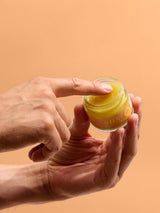
Balm goes onto the clean lip, a little thicker in the evening if you like. More on this: Dry lips in the morning: does lip balm overnight help?
When to seek medical advice?
If your lips burn, redden or swell after a new lipstick or a new lip balm, or if small blisters or flakes form, leave both out and seek medical advice. Unwanted reactions to lip cosmetics are described in the specialist literature; which ingredient is behind them can be clarified at a skin specialist's practice (Engasser 2000). The same goes for lips that stay cracked for weeks despite care. You can try new products on a small area first: Trying a new product: how do I test it on a small area?
Frequently asked questions
How long before lipstick do I apply lip balm?
A few minutes before. There is no measured figure. A practical order is: lip balm first, then the rest of your make-up, and finally blot and apply the colour.
Does lipstick last less well on lip balm?
On a thick, fresh layer, yes. That is experience, and it fits with the laboratory finding that the lipstick richest in fat adhered worst. If the balm is thin and blotted, little fat remains between lip and colour.
Can I put lip balm on top of lipstick?
On creamy colour that works; it then shines more and smudges more easily. On matte colour, balm takes away the matte look and starts to dissolve the colour.
Can I wear the SPF 15 lip balm under lipstick?
It contains zinc oxide and titanium dioxide, and both pigments are white. We have not checked whether that shows under your colour; try it at home. Sun protection depends on the amount applied. If you blot the balm, you cannot rely on SPF 15. More in Do I need lip balm with SPF?
Does lip balm replace a primer?
No. A balm cares for your lips. It is not a base that makes colour last longer, and we do not promise that either.
Which oil do I use to take off lipstick?
A pure plant oil without added scent, for example jojoba or almond oil. A few drops are enough. Wipe off what is left with a damp cloth before you apply balm.
At forpeople
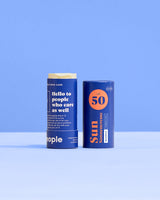
Our lip balms are water-free sticks in a paper tube, both with beeswax in first place on the ingredient list. A pure oil suits taking the colour off.
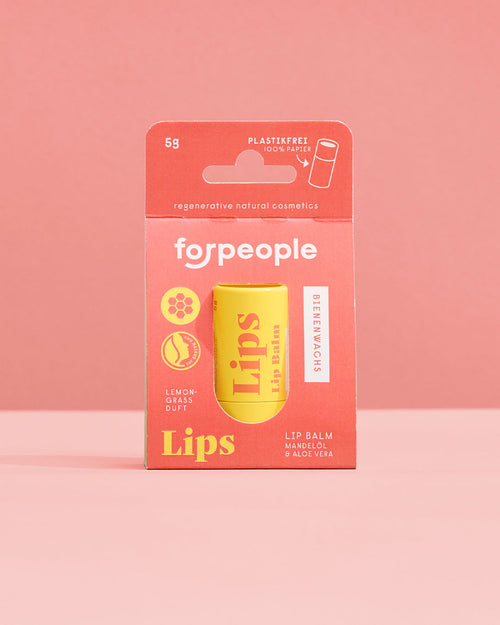
- Lip Balm - Lemongrass, 5 g, €4.90: a stick of wax and oil, without colour pigments according to the ingredient list; as a thin base and for the evening. It contains lemongrass essential oil and is scented.
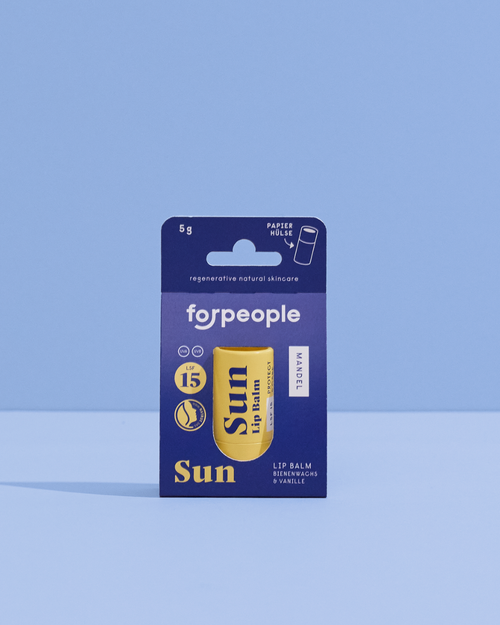
- Lip Balm - SPF15 Almond & Vanilla, 5 g, €7.90: with zinc oxide and titanium dioxide, non-nano according to the product information, and with vanilla extract. Whether the white pigments show under colour is best tried out for yourself.
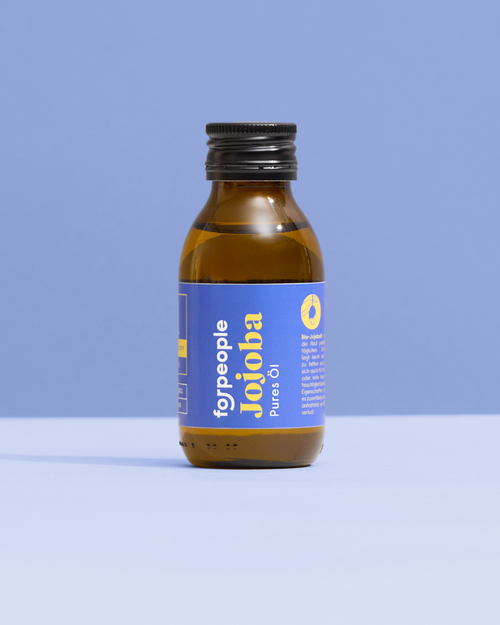
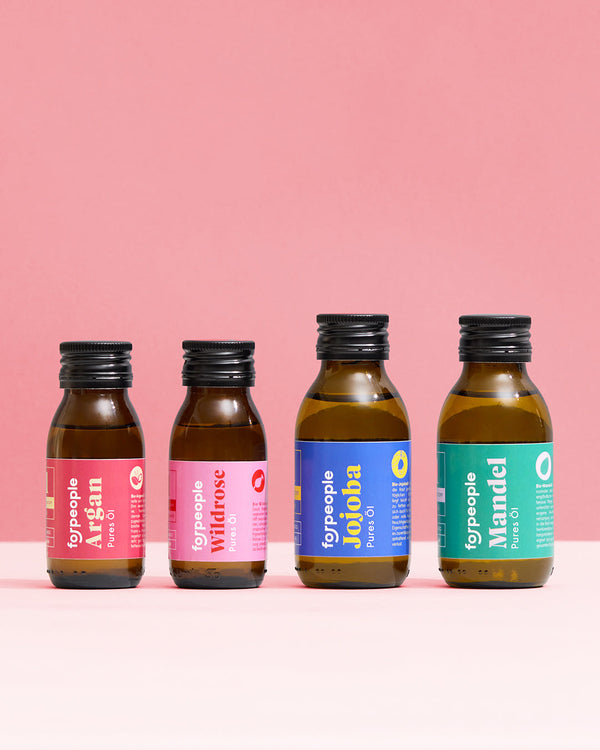
- Jojoba Oil - pure, 100 ml, €16.90: jojoba oil only according to the ingredient list, without added scent. A few drops take the colour off in the evening.
All three are cosmetic products. According to the product information, they are not to be used on injured or irritated skin. If you notice a skin reaction, stop using the product. More on this: Lip balm in a paper stick: how to use it properly · Can you become dependent on lip balm? · How long does a care film stay on the skin?
From the blog: Face & Body Oils: Which Oil Suits Which Skin Type?
Sources
- Kobayashi H, Tagami H (2004): Functional properties of the surface of the vermilion border of the lips are distinct from those of the facial skin. British Journal of Dermatology 150(3): 563–567. https://doi.org/10.1046/j.1365-2133.2003.05741.x
- Tamura E, Yasumori H, Yamamoto T (2020): The efficacy of a highly occlusive formulation for dry lips. International Journal of Cosmetic Science 42(1): 46–52. https://doi.org/10.1111/ics.12583
- Gautier M, To T, Botte AS, Dupire J, Rouxel T, Artzner F (2026): Lipstick structure revealed by multimodal strain- and time-dependent rheology. Soft Matter 22(8): 1739–1754. https://doi.org/10.1039/d5sm01032b
- Richard C, Tillé-Salmon B, Mofid Y (2016): Contribution to interplay between a delamination test and a sensory analysis of mid-range lipsticks. International Journal of Cosmetic Science 38(1): 100–108. https://doi.org/10.1111/ics.12242
- Rafferty DW, Dupin L, Zellia J, Giovannitti-Jensen A (2018): Predicting lipstick sensory properties with laboratory tests. International Journal of Cosmetic Science 40(5): 451–460. https://doi.org/10.1111/ics.12482
- Engasser PG (2000): Lip cosmetics. Dermatologic Clinics 18(4): 641–649. https://doi.org/10.1016/s0733-8635(05)70215-1