


How the stick is built
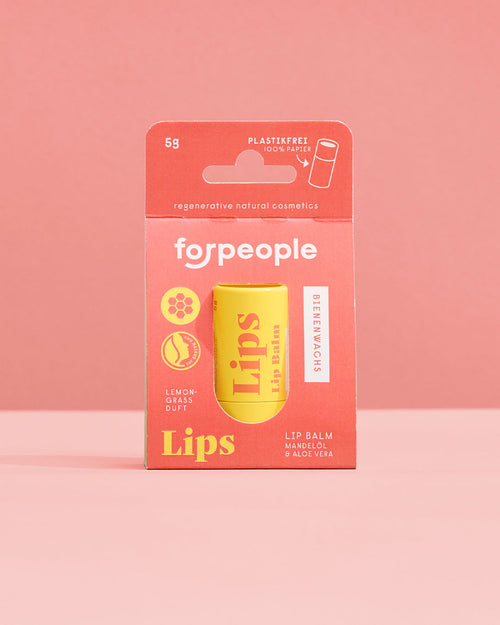
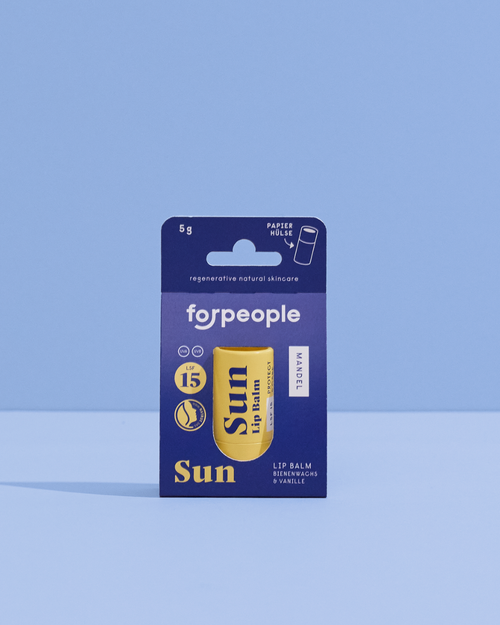
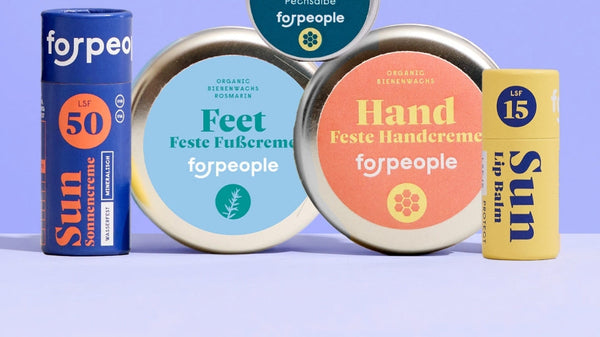
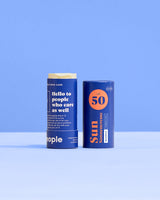
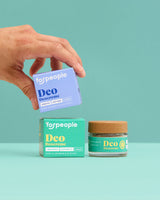
The product photos of the Lip Balm - Lemongrass and the Lip Balm - SPF15 Almond & Vanilla show three parts: a printed outer sleeve, a pale inner tube that rises a little above it, and a cap that slips on. The balm sits in the inner tube. It is moved from below. The directions on the product page read: press the stick carefully from the bottom upwards to push the balm out.
With a twist-up stick, a small wheel decides how far the balm comes out. With a paper stick, the pressure of your finger decides. So push in small steps.
Step by step
- Pull off the cap. Pull it straight up, without squeezing the tube.
- Push from below. Place a finger on the centre of the underside and press gently upwards until the balm sticks out a few millimetres.
- Apply. Hold the tip against your lips for a moment, then glide over them with light pressure. With an SPF lip balm, go over both lips several times; why is explained in Do I need lip balm with SPF?
- Push back. According to the directions, you can push the stick back slightly after applying.
- Put the cap on. This keeps the surface clean, and nothing rubs off in your bag.
Handle the tube with dry fingers. Paper can take up moisture and go soft.
Too hard, too soft, stuck: what helps?
The advice in the table is practical experience. The only thing that has been measured is that sticks made of wax and oil get softer when warm: in one study, lipsticks were softer at 45 °C than at 25 °C (Esposito & Kirilov 2021).
| What you notice | The usual reason | What helps |
|---|---|---|
| The stick is hard and hardly leaves anything on your lips | Cold; a lot of wax | Warm it briefly in your closed hand, hold the tip against your lips, then glide. No hairdryer, no radiator. |
| The stick is soft, smears or has lost its shape | Warmth: trouser pocket, car, sun | Stand it upright in a cool place and let it set. Only then push again. |
| It will not push up | The balm is cold and stiff, or you are pressing at an angle | Warm it, then press in the centre and evenly. No pointed tools, no force. |
| The balm crumbles, or a piece breaks off | Cold, pressure from the side, pushed out too far | Push out less, warm it, glide more gently. |
| The tube goes soft or wavy | Moisture: wet fingers, a bathroom shelf, rain | Handle it dry, store it dry, let a damp tube dry in the air. |
| At the end there is a remnant that will not push up any more | The balm is almost used up | Take it out with a clean, dry finger and apply. |
| The stick went through the washing machine | Wax and oil melt and settle in the fabric as a grease stain | Treat the stains before the next wash: Does deodorant cream stain? Prevent and remove. |
Why a stick is firmer than a salve
A salve lies in a jar and may be soft. A stick has to keep its shape while you glide it over your lips. The wax takes care of that: it forms the framework in which the oils sit. In a laboratory study with sticks made of beeswax, oils and cocoa butter, the melting point rose with the share of beeswax, and the sticks became harder. Depending on the blend, they melted between 51 and 69 °C (Kasparaviciene et al. 2016). Beeswax itself has a melting range of 62 to 65 °C according to the EU specification (Regulation (EU) No 231/2012).
As a requirement for lipsticks, the specialist literature gives a melting point of mostly 55 to 75 °C and, at the same time, softening at lip temperature, that is at about 32 °C (Esposito & Kirilov 2021). That is why the tip feels firm when it comes out of a cold jacket pocket and glides after a moment against your lips.
How much wax a stick needs compared with a salve is shown in the table in Making solid cream: how much wax to oil?
Pocket, car, winter: where the stick is well kept
The product page gives this note: store in a cool, dry place and protect from direct sunlight. In everyday life that means:
- Trouser pocket: Body warmth makes the balm softer. On hot days, a jacket or rucksack pocket is the better place.
- Car: In a series of measurements with a dark car on sunny days, the interior reached about 47 °C even at an outside temperature of around 22 °C (McLaren et al. 2005). Take the stick with you when you get out.
- Winter: Carry the stick close to your body in an inside pocket. Then it glides straight away.
If the balm was very soft or liquid, let it set upright. If it then smells as usual and looks as before, you can go on using it. With an SPF stick that has melted completely, you cannot tell from the outside whether the mineral filters are still as evenly distributed as before. More on this: Storing solid cosmetics: heat, summer and winter.
Hygiene and shelf life
A stick touches your lips directly. So use your own, apply it to clean lips and put the cap on afterwards. The balm contains no water; what matters is that none gets in either. The background is explained in Hygiene and Water-Free Cosmetics: What to Watch.
How long a cosmetic product keeps is stated on the pack: as a date of minimum durability or, where the minimum durability is more than 30 months, as a period after opening next to the open-jar symbol. Under the same provision, the list of ingredients only has to appear on the packaging (Regulation (EC) No 1223/2009, Article 19). So keep the box or take a photo of it. If the balm smells rancid or looks clearly different from how it looked at the start, dispose of it. More in Cosmetics Shelf Life and the PAO Symbol.
When to seek medical advice?
Lip balm is a cosmetic product. According to the product information, it is not to be used on injured or irritated skin. If your lips burn or redden after applying, if they swell or small blisters form, stop using the product and have it checked by a doctor. The same goes for lips that stay cracked for weeks despite care, or bleed.
Frequently asked questions
Does the paper stick have a twist mechanism?
No. You push the balm out from below. That is how the directions and the drawing on the product page describe it.
Do I have to push the stick back after applying?
According to the directions, you can push it back slightly. It is easier to push out only a few millimetres from the start.
Why is my stick so hard in winter?
Waxes and oils become firmer in the cold, and a stick contains more wax than a salve. Warm the tube briefly in your hand and hold the tip against your lips for a moment.
My stick was left in a hot car and is soft. Can I still use it?
Let it set upright in a cool place. If it smells as usual and looks as before, you can go on using it. If an SPF stick was completely liquid, ask us if in doubt before you rely on the protection.
Does the solid sunscreen in the paper tube work the same way?
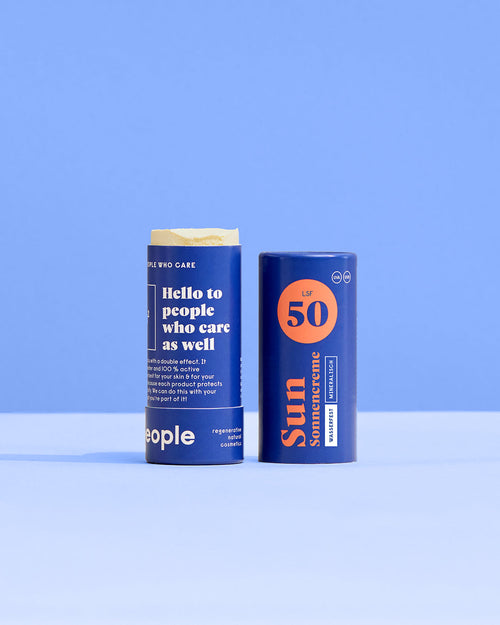
Yes. With the Solid Sunscreen SPF50, according to the product page, you press the cream gently out of the tube from below with one finger until it just sticks out. You do not have to press it back there; the note says there is enough room in the tube. On the amount: How much solid sunscreen do I need?
At forpeople
Our two lip balms are water-free sticks in a paper tube, both with beeswax in first place on the ingredient list. Our beeswax is unbleached, comes from northern Germany and is from organic beekeeping with Bioland certification.
- Lip Balm - Lemongrass, 5 g, €4.90: with lemongrass essential oil. It is scented; according to the ingredient list it contains citral, citronellol and geraniol.
- Lip Balm - SPF15 Almond & Vanilla, 5 g, €7.90: with the mineral UV filters zinc oxide and titanium dioxide, non-nano according to the product information, and with vanilla extract instead of essential oil.
- Solid Sunscreen SPF50, 40 g, €17.90: for face and body, also a push-up stick in a paper tube; mineral with zinc oxide and titanium dioxide, non-nano, tested as water-resistant.
All three are cosmetic products. If you notice a skin reaction, stop using the product. More on this: Why do lips dry out so quickly? · Lip balm under lipstick: does the colour still last? · Lip balm with beeswax or vegan: what is the difference?
From the blog: Switching to solid skincare: what is different in the first weeks · Skincare for days in the snow: hands, lips, face
Sources
- Europäische Kommission (2012): Verordnung (EU) Nr. 231/2012 vom 9. März 2012 mit Spezifikationen für die in den Anhängen II und III der Verordnung (EG) Nr. 1333/2008 aufgeführten Lebensmittelzusatzstoffe, Anhang, Eintrag E 901 Bienenwachs, weiß und gelb. ABl. L 83 vom 22.3.2012, S. 1. https://eur-lex.europa.eu/eli/reg/2012/231/oj
- Kasparaviciene G, Savickas A, Kalveniene Z, Velziene S, Kubiliene L, Bernatoniene J (2016): Evaluation of Beeswax Influence on Physical Properties of Lipstick Using Instrumental and Sensory Methods. Evidence-Based Complementary and Alternative Medicine 2016: 3816460. https://doi.org/10.1155/2016/3816460
- Esposito CL, Kirilov P (2021): Preparation, Characterization and Evaluation of Organogel-Based Lipstick Formulations: Application in Cosmetics. Gels 7(3): 97. https://doi.org/10.3390/gels7030097
- McLaren C, Null J, Quinn J (2005): Heat stress from enclosed vehicles: moderate ambient temperatures cause significant temperature rise in enclosed vehicles. Pediatrics 116(1): e109–e112. https://doi.org/10.1542/peds.2004-2368
- Europäisches Parlament und Rat (2009): Verordnung (EG) Nr. 1223/2009 vom 30. November 2009 über kosmetische Mittel, Artikel 19 Absatz 1 Buchstaben c und g. ABl. L 342 vom 22.12.2009, S. 59. https://eur-lex.europa.eu/eli/reg/2009/1223/oj