







The problem: how to recognise it
Fine flakes form under the eyes, the skin looks crinkly and feels tight when you smile. On the upper lid the crease flakes, eyeshadow settles into the fine lines and crumbles, and at the corners of the eyes the skin turns rough or cracks slightly. Sometimes it stings briefly when water or cream touches it. Typically it starts with the heating season, gets worse after a walk in a cold wind, or after long days at a screen when your eyes are dry and you rub them more often.
Dry skin around the eye can be simple dryness, but it can also be eczema on the eyelid or inflammation of the lid margins. The overview below helps you sort it out. It is based on the medical literature, but it does not replace an examination: only a medical examination brings clarity.
| What you see | What may be behind it | Who clarifies it |
|---|---|---|
| Fine, pale flakes, tightness, hardly any redness; better within a few days with protection from wind and less cleansing | simple dryness | usually yourself; if it doesn't improve, a doctor |
| Red, itchy, flaking, sometimes swollen eyelid skin; after a while thickened or cracked; often one to two days after contact with a product | eyelid eczema, often due to a contact allergy (Huang et al. 2021) | dermatologist, often with an allergy test |
| Red lid margins, crusts or flakes at the base of the lashes, burning, a feeling of something in the eye, especially in the morning | inflammation of the lid margins (blepharitis), also in connection with rosacea or seborrhoeic eczema (DermNet, Blepharitis) | ophthalmologist |
| Dry, itchy eyelids with known atopic eczema or with eczema in other places | atopic eczema on the eyelid (Borzova et al. 2024) | dermatologist or paediatrician |
Flakes in the eyebrows and on the forehead often have other causes; they are explained in Dry, flaky skin on the forehead, eyebrows and nose.
Why the skin around the eyes dries out in autumn and winter
The skin is particularly thin. In an ultrasound study of 45 adults, the skin of the upper eyelid was the thinnest on the whole face, at about 0.57 millimetres on average; at the tip of the nose it was more than three times as thick (Korzekwa et al. 2025). Thin skin has fewer reserves, and substances from outside get in more easily. Then there is the position: the eyelids are unprotected, and our hands touch them constantly (Huang et al. 2021).
Cold and dry air weaken the barrier. A review concludes that low humidity and low temperatures reduce the skin's barrier function overall. The skin then also reacts more strongly to irritants and allergens (Engebretsen et al. 2016). So in winter both come together: eyelid skin loses more water, and things that did not bother it before can now irritate it. Why heated air is so dry is explained in Humidity and skin.
Rubbing makes it worse. With eyelid eczema, itching and rubbing keep the symptoms going (Huang et al. 2021). At a screen, many people blink less often and less completely; this is considered one of the main reasons for dry, strained eyes during screen work (Wolffsohn et al. 2023). Rubbing your eyes then puts extra strain on the eyelid skin. Hot water also does harm: in one experiment it more than doubled the skin's water loss (Herrero-Fernandez et al. 2022).
Substances from everyday life. In an analysis by the University Hospital Erlangen and the Information Network of Departments of Dermatology (IVDK) in Germany, contact allergy was the most common cause of eczema around the eyes, followed by atopic eczema; irritation and airborne substances were less common. Typical triggers were face creams, eyeshadow and eye drops, and the allergens were mostly fragrances, preservatives and active drug substances (Feser and Mahler 2010). A clinic in the USA most often found allergies in eyelid eczema to metals such as nickel, for example from eyelash curlers and glasses frames, to shellac from mascara, to preservatives, fragrances, acrylates from artificial or gel nails, and surfactants. Acrylates reach the eyelid via the fingers (Huang et al. 2021). Because a contact allergy only peaks one to two days after contact, the trigger is often overlooked. What you apply near the eye also does not stay there: cosmetics can migrate over the lid margin into the tear film (Sullivan et al. 2023).
The solution step by step
| When | What you do | Why |
|---|---|---|
| Right away | Don't rub your eyes. If they itch or feel tight, briefly place a clean cloth moistened with cold water on them. | Rubbing keeps the symptoms going and strains the thin skin. |
| Right away | Leave out eye make-up, mascara, scented eye cream, metal eyelash curlers and any new products around the eyes for two weeks. | Contact allergies and irritation are the most common causes; without the trigger, the skin can recover. |
| Morning and evening | Rinse the eye area with lukewarm water only and pat dry. If you need to remove eye make-up, loosen it without rubbing, as described in Removing make-up with oil. | Hot water and cleansers dissolve lipids from the outer skin layer. |
| Every day | Apply a thin layer of a fragrance-free product without essential oils that the manufacturer intends for the eye area, and pat it on with your ring finger. Not right up to the lid margin. | A thin film of fat slows evaporation; whatever lands on the lid margin migrates into the eye. |
| Every day | If you wear gel nails or nail polish and often touch your eyes: keep your hands away from your eyes and let fresh polish dry completely. | Acrylates reach the eyelid via the fingers. |
| Outdoors | Wear glasses or sunglasses in wind and cold; pull your scarf up. | Wind and cold air dry out the unprotected eyelid skin even more. |
| At the screen | Take regular breaks, blink fully on purpose, air rooms and don't overheat them. | Breaks, deliberate blinking and a better work environment are considered sensible measures for dry eyes at the screen (Wolffsohn et al. 2023). |
| Prevention | Introduce new eye products one at a time and test them on a small area first, see Trying a new product. | That way a trigger can be identified. |
For the rest of your face, the routine from Facial skin feels tight in winter applies: a water-based layer and a little fat on top. Around the eye, less is enough, and what you leave out matters more.
What helps – and what rather does not
| Habit or home remedy | Assessment |
|---|---|
| Chamomile tea compresses or an eye bath with chamomile | rather not: chamomile belongs to the daisy family; the European Medicines Agency and ophthalmology guidelines warn of allergic reactions, and tea also carries a risk of germs (Rák and Csutak 2025) |
| Cucumber slices or chilled tea bags | cool briefly but do not care for the skin; tea bags are not germ-free |
| Quark or honey mask around the eye | rather not: unnecessary residue at the lid margin, no film of fat afterwards |
| Tea tree oil, lavender oil or other essential oils | not around the eye: fragrances are among the common triggers of eyelid eczema; more in Essential oils and fragrance allergens |
| A cold, damp cloth instead of rubbing | sensible: cools without rubbing the skin |
| A thin layer of fragrance-free care for the eye area | fits: few ingredients, no fragrance, small amount |
| Continuing an eye cream with retinol or acids | rather not while the skin is flaking or stinging; see Dry skin after retinol or a peel |
| Cortisone ointment from the cupboard | not on your own: eyelid skin is thin, treatment and duration belong in medical hands |
| Simply stopping eye drops because the eyelid reacts | not on your own: eye drops can be a trigger, but the practice decides on any change |
Typical mistakes
The most common mistake is putting your usual face cream on the flaky area. Face creams are among the common triggers of eczema around the eyes (Feser and Mahler 2010), and many contain fragrance. Second: covering the flakes with make-up. Concealer and powder settle into the flakes, and in the evening you have to cleanse more thoroughly; more on this in Make-up on dry skin. Third: trying several new products at once. Because an allergy appears with a delay, you then won't know which one it was. Fourth: only looking for the problem on your face. Nail polish, gel nails, shampoo, glasses frames or a scent on your pillow can just as well be behind it. Fifth: carrying on with skincare for weeks although the eyelid stays red and itchy. Eczema needs a diagnosis, not a thicker cream.
When to seek medical advice
With simple dryness, dry skin around the eyes improves within a few days if you stop rubbing and leave out irritants. Have it checked by a doctor if one of these points applies:
- The eyelid is red, itches, flakes, swells or weeps, or the skin becomes thicker and cracked. Eyelid eczema belongs with a dermatologist. There, an allergy test (patch test) can show whether a contact allergy is behind it (Huang et al. 2021).
- The lid margins are red and crusted, flakes cling to the lashes, your eyes burn or you feel something in your eye. This points to inflammation of the lid margins, which belongs with an ophthalmologist (DermNet, Blepharitis).
- Your cheeks and nose are also often red and your eyes burn; rosacea can also affect the lid margins and eyes (DermNet, Blepharitis).
- You use eye drops, and the skin has been reacting since then. Don't stop them on your own; talk to the practice that prescribed them.
- You have atopic eczema or eczema in other places. In just over a quarter of people with eyelid eczema who were tested at allergy centres, atopic eczema was present (Borzova et al. 2024); see Dry skin or atopic eczema?
- For children with dry, red eyelids, the paediatrician is the first port of call.
- After two weeks without make-up, without new products and with simple care, it is not better.
A red, painful eye, problems with your vision, strong sensitivity to light, a severely swollen, warm eyelid or fever need an ophthalmologist or the out-of-hours eye service straight away. How to proceed after a reaction to a product is described in Reacting to a cosmetic: what to do.
Frequently asked questions
Why is the skin under my eyes so dry?
The skin around the eye is the thinnest on the face and has few reserves. In winter, cold, wind and heated air dry it out, and rubbing, hot water or cosmetic residue strain it further.
What helps quickly with dry skin on the eyelid?
Don't rub, clean the eye area with lukewarm water only, leave out eye make-up and new products, and apply a thin layer of fragrance-free care for the eye area. If the eyelid is red and itchy, have it looked at.
Can I use my usual face cream under my eyes?
Better not if the skin there is already reacting. Face creams are among the common triggers of eczema around the eyes, and many contain fragrance. Use a product that the manufacturer intends for the eye area.
Can nail polish dry out the skin around the eyes?
Nail polish and especially artificial or gel nails contain acrylates, which can reach the eyelid via the fingers and trigger an allergy there. The nails themselves often look normal.
Why does the dry skin on my eyelid itch?
Slight tightness is normal with dryness. Clear itching with redness or swelling points more towards eyelid eczema, often due to a contact allergy. That belongs with a dermatologist.
Do home remedies such as chamomile or cucumber help?
Cucumber cools briefly but does not care for the skin. Chamomile compresses on the eyes are advised against because they can trigger allergic reactions and tea is not germ-free.
I have dry skin and dry eyes at the same time. Are they connected?
Often, yes: heated air and screen work dry out both, and rubbing dry eyes irritates the eyelid skin. If dry eyes, a dry mouth and dry skin occur together and persist, mention it to your GP.
Can I use face oil around the eyes?
Our oils are not intended for this; their product pages say: avoid contact with the eyes. Oils containing essential oils do not belong near the eyes at all.
At forpeople
We don't have a product for the eye area. Our product pages state clearly: avoid contact with the eyes. For the eyelids, a fragrance-free product without essential oils from the pharmacy, intended by the manufacturer for the eye area, is therefore the right choice.
For the rest of your facial skin, meaning cheeks, forehead and chin at a distance from the eye, these two products fit; according to their product pages they are intended for the face:
- Aloe Vera Serum 99.6%, 50 ml, €9.90: aloe vera juice with citric acid, potassium sorbate and sodium benzoate; without alcohol, perfume or essential oils.
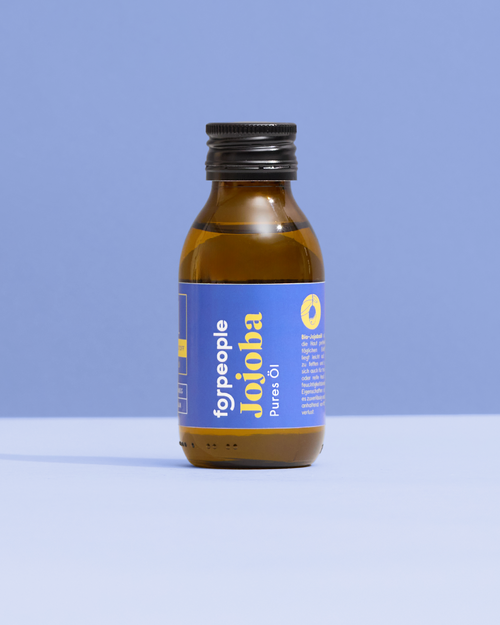
- Jojoba Oil - pure, 100 ml, €16.90: pure jojoba oil without fragrance; a few drops on skin that is still damp.
Do not use either on irritated or broken skin. More on this: Facial skin feels tight in winter · Removing make-up with oil · Dry skin on the forehead and eyebrows · Fragrance allergens: the list
From the blog: Face and lips through winter: a routine for every day
Sources
- Korzekwa S, Matusz K, Kukulski M, Wawrzaszek P, Górna N, Rosiński W, Włosiański J, Przystańska A (2025): Quantitative Analysis of the Human Face Skin Thickness – A High-Frequency Ultrasound Study. Journal of Clinical Medicine 14(23): 8401. https://doi.org/10.3390/jcm14238401
- Huang CX, Yiannias JA, Killian JM, Shen JF (2021): Seven Common Allergen Groups Causing Eyelid Dermatitis: Education and Avoidance Strategies. Clinical Ophthalmology 15: 1477–1490. https://doi.org/10.2147/OPTH.S297754
- Feser A, Mahler V (2010): Periorbital dermatitis: causes, differential diagnoses and therapy. Journal der Deutschen Dermatologischen Gesellschaft 8(3): 159–166. https://doi.org/10.1111/j.1610-0387.2009.07216.x
- Engebretsen KA, Johansen JD, Kezic S, Linneberg A, Thyssen JP (2016): The effect of environmental humidity and temperature on skin barrier function and dermatitis. Journal of the European Academy of Dermatology and Venereology 30(2): 223–249. https://doi.org/10.1111/jdv.13301
- Herrero-Fernandez M, Montero-Vilchez T, Diaz-Calvillo P, Romera-Vilchez M, Buendia-Eisman A, Arias-Santiago S (2022): Impact of Water Exposure and Temperature Changes on Skin Barrier Function. Journal of Clinical Medicine 11(2): 298. https://doi.org/10.3390/jcm11020298
- Sullivan DA, da Costa AX, Del Duca E, Doll T, Grupcheva CN, Lazreg S et al. (2023): TFOS Lifestyle: Impact of cosmetics on the ocular surface. The Ocular Surface 29: 77–130. https://doi.org/10.1016/j.jtos.2023.04.005
- Wolffsohn JS, Lingham G, Downie LE, Huntjens B, Inomata T, Jivraj S et al. (2023): TFOS Lifestyle: Impact of the digital environment on the ocular surface. The Ocular Surface 28: 213–252. https://doi.org/10.1016/j.jtos.2023.04.004
- Rák T, Csutak A (2025): Reevaluating the safety of chamomile poultices in ophthalmic care. Frontiers in Pharmacology 16: 1580586. https://doi.org/10.3389/fphar.2025.1580586
- Borzova E, Snarskaya E, Bratkovskaya A (2024): Eyelid dermatitis in patch-tested adult patients: a systematic review with a meta-analysis. Scientific Reports 14(1): 18791. https://doi.org/10.1038/s41598-024-69612-z
- DermNet: Blepharitis. Wong K (2009). Accessed 29 October 2026. dermnetnz.org/topics/blepharitis