The problem: how to recognise it
In the morning the foundation still looks even; by midday it has settled into fine flakes on the cheeks, next to the nose and around the mouth. The dry patches look grey or chalky, powder sits on them unevenly, and eyeshadow crumbles in the eyelid crease and at the corners of the eyes. After removing make-up your skin feels tight, and the next morning it is worse. This is typical from autumn onwards, once the heating is on: in one study, just six hours in a heated room were enough for facial skin to become rougher and redder (Park et al. 2023).
It is often the same areas: cheeks, the sides of the nose, the fold between nose and mouth, the chin and the skin around the eyes. Where the flakes on the eyebrows and in the nasal folds are yellowish and greasy and the skin underneath is red, it is often not simple dryness; more on this in Dry, flaky skin on the forehead, eyebrows and nose.
Why make-up flakes on dry skin in winter
The outer skin layer no longer sheds invisibly. The outermost layer of skin consists of dead, flat cells held together by protein connections, a little like rivets. On normal skin, enzymes break down these connections, and the cells fall off individually or in tiny groups without anyone noticing. These enzymes need water. If the outer layer is too dry, they work less well, the connections remain, and the cells come off as visible, powdery flakes (Harding et al. 2000). Stress from outside, such as cold and dry air, disturbs these processes, and the skin becomes dry and flaky (Rawlings and Harding 2004).
In winter, facial skin becomes measurably drier. In 16 women, the skin next to the nose was redder and flakier in winter than in autumn, it lost more water, and the film of fat on its surface had a less favourable composition (De Paepe et al. 2009). Low humidity and cold weaken the skin's barrier function overall (Engebretsen et al. 2016).
What this means for make-up. Foundation comes as a liquid or cream emulsion, as a water-free compact, as a stick and as pressed or loose powder; it contains pigments such as titanium dioxide, iron oxides or kaolin (Sullivan et al. 2023). A smooth, well-hydrated outer layer takes on a thin, even layer. If flakes stick up, the pigments collect at their edges and the unevenness is emphasised. Mattifying powder is meant to absorb shine; on dry patches it finds none and clings to the flakes. This is an explanation based on how skin is built; as far as we know, nobody has measured it for make-up.
Removing make-up contributes. Cleansing dissolves not only make-up but also lipids and water-binding substances from the outer skin layer; possible consequences are dryness, roughness, flaking and tightness after washing (Mijaljica et al. 2022). Water temperature matters too: in a study of 52 adults who removed their make-up with a cleansing balm for ten days, the skin's water loss rose with warm water but not with cool water. The make-up came off equally well at both temperatures (Long et al. 2026).
The solution step by step
| When | What you do | Why |
|---|---|---|
| Evening | Loosen make-up without rubbing, remove it with lukewarm to cool water, pat dry. How to do this with oil is described in Removing make-up with oil. | Warm water increases the skin's water loss without removing make-up any better. |
| Evening | Apply a water-based layer to the still damp skin and a little more oil on top than in the morning. | Overnight the outer skin layer has time to take up water again; in the morning the flakes lie flatter. |
| Morning | Rinse your face with lukewarm water only; in the morning you usually don't need a cleanser. | Every wash with surfactants removes lipids from the outer skin layer. |
| Morning | Pat a thin layer of Aloe Vera Serum 99.6% onto the damp skin, with one or two drops of Jojoba Oil - pure or Face Oil - Lavender on top. | Water plus a thin film of fat makes the outer skin layer supple; the order is explained in Combining aloe vera serum with oil or solid cream. |
| Before make-up | Wait five to ten minutes; if your skin still shines, blot off excess oil with a tissue. | Foundation slides on too much oil and settles into lines. |
| While applying | Apply foundation thinly and dab rather than stroke on dry patches; use powder only on forehead, nose and chin if they shine. | Stroking lifts flakes; powder on dry cheeks emphasises them. |
| During the day | Don't re-powder when your skin feels tight; instead air the office briefly and don't overheat it. | More powder makes dry patches more visible; dry room air draws out water. |
| Every week | Wash brushes and sponges and let them dry completely. | Otherwise old make-up residue and skin oil clog the tools. |
The Face Oil contains essential lavender oil and therefore does not belong near the eyes or on irritated skin; there, an oil without fragrance such as jojoba oil is the simpler choice. Why the skin around the eyes has its own rules is explained in Dry skin around the eyes and on the eyelids.
What helps – and what rather does not
| Habit | Assessment |
|---|---|
| A water-based layer and a little oil under make-up | helps: the outer skin layer is hydrated and smoother, and the oil slows evaporation |
| A scrub in the morning to get rid of the flakes | rather not with dry or irritated skin: the flakes are a sign of dryness, rubbing strains the skin further, and the next day there are new ones |
| A lot of oil right before foundation | rather not: foundation slides and settles into fine lines; a few drops and some waiting time are enough |
| Mattifying powder over the whole face | rather not with dry skin: only where it shines |
| Primer | can make the surface look smoother, but does not replace care underneath |
| Water spray over make-up during the day | feels fresh for a moment but evaporates quickly in heated air; without a film of fat, little of it remains |
| Hot water or rubbing when removing make-up | rather not: increases water loss without cleansing any better |
| Leaving make-up on overnight | rather not: residue, pigments and fat stay on the skin, and your evening care is skipped |
People often ask whether an oil on the face clogs pores. What the old scales are worth is explained in Comedogenic oils: where the scale comes from and what it is worth.
Typical mistakes
The most common mistake is covering dry patches with more powder; it makes them more visible. The second is rubbing off the flakes in the morning with a scrub or a rough washcloth. It looks smoother for an hour, but the skin becomes more irritated and drier. Third: applying care and foundation straight after one another without giving the care time. Fourth: rubbing quickly with hot water and make-up wipes in the evening because it is late. Fifth: reaching for toner with alcohol or exfoliating acids because the skin feels "congested", although it is actually dry; how dry and blemished skin come together is explained in Spots in winter. And sixth: constantly trying new products. Test new things one at a time, see Trying a new product.
When to seek medical advice
Dry patches under make-up are common in winter and usually improve with layered care and less cleansing. Have your skin looked at by a doctor if it turns red, stings, itches, develops hives or swells after a make-up product; stop using the product, as described in Reacting to a cosmetic: what to do. The same applies if yellowish, greasy flakes form on red skin on the eyebrows and in the nasal folds, if small red bumps appear around the mouth and nose (see Dry skin around the mouth and on the chin), if the eyelids are red and swollen or your eyes sting and stay red after applying make-up, or if your skin stays dry and flaky despite two to three weeks of simple care. Then there may be more behind it than dryness, and that needs a diagnosis, not a thicker layer of make-up.
Frequently asked questions
Why does my make-up flake on dry skin?
On dry skin the outermost skin cells no longer come off individually but in small flakes. Foundation and powder collect at their edges and make them visible. The drier the air, the stronger the effect.
What helps with dry patches under make-up?
In the evening and in the morning, a water-based layer and a little oil on damp skin, wait a few minutes, dab foundation on thinly and leave powder off dry patches.
Why is my skin so dry after removing make-up?
Cleansing also dissolves lipids and water-binding substances from the outer skin layer, and warm water increases water loss. Remove your make-up with lukewarm to cool water, don't rub, and apply care straight away to the damp skin.
Can I use face oil under make-up?
Yes, in small amounts: one or two drops on damp skin, let it absorb for a few minutes, blot off any excess. Oils with essential oils should not go near the eyes.
Liquid foundation or powder for dry skin?
That is a matter of taste. Many people find creamy or liquid textures more comfortable on dry skin because powder clings to flakes. What matters is the preparation underneath.
Should I use a scrub before applying make-up?
Not if your skin is dry or irritated. The flakes come from dryness; with layered care they lie flatter. A scrub puts extra strain on the skin.
How long should I wait after applying care?
Five to ten minutes is usually enough. Your skin should no longer feel wet or oily, but should not feel tight again either.
Does make-up make skin drier?
There are hardly any reliable studies on this. What is documented is that cleansing and warm water can dry out the skin. With good preparation and careful make-up removal, make-up is possible with dry skin too.
At forpeople
We don't sell make-up. For the preparation underneath and the care after removing it, these products fit; according to their product pages they are intended for the face:
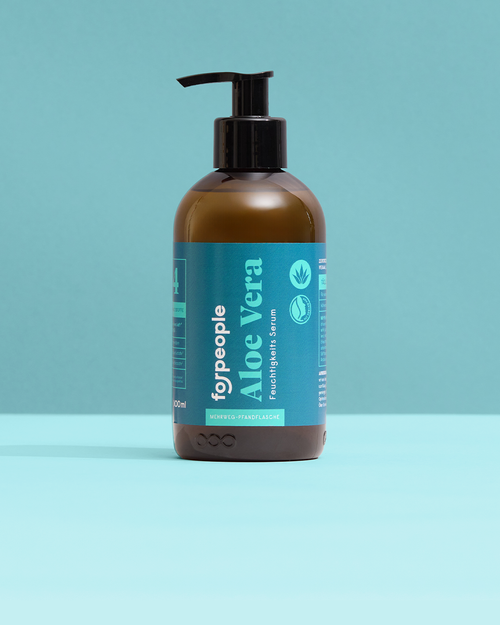
- Aloe Vera Serum 99.6%, 50 ml, €9.90: aloe vera juice with citric acid, potassium sorbate and sodium benzoate; without alcohol, perfume or essential oils; the water-based first layer. Also available as Aloe Vera Serum 99.6% - Pump Bottle, 300 ml, €27.90.
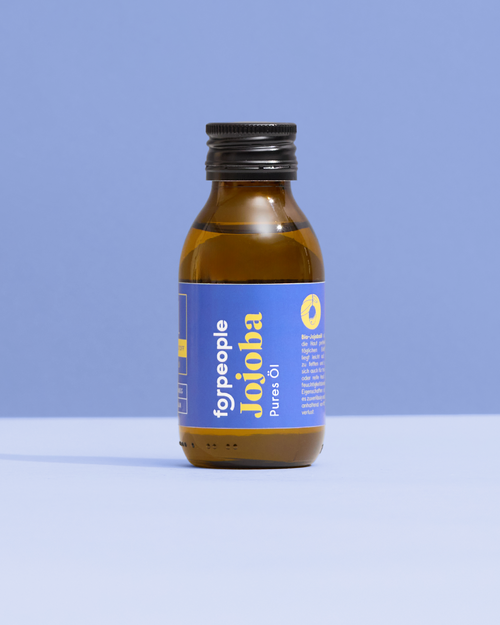
- Jojoba Oil - pure, 100 ml, €16.90: pure jojoba oil without fragrance; one or two drops on damp skin, also for removing make-up from the face.
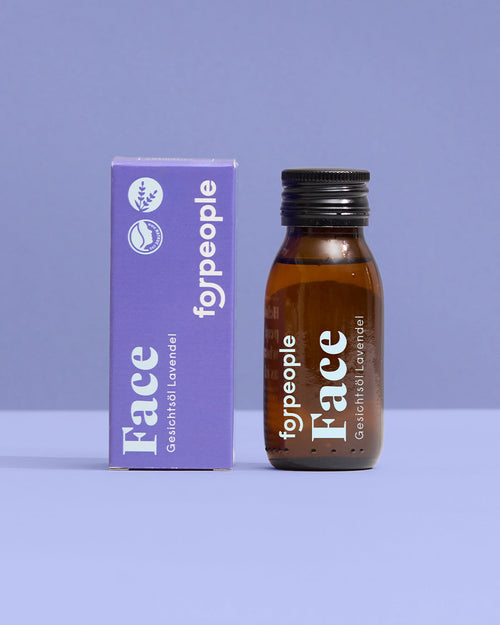
- Face Oil - Lavender, 50 ml, €21.90: argan, rosehip, jojoba, borage and hemp oil with essential lavender oil; not near the eyes and not on irritated skin.
According to their product pages, none of the three should be used on broken or irritated skin. More on this: Facial skin feels tight in winter · Can a face oil replace face cream? · Humidity and skin · Removing make-up with oil
From the blog: Face and lips through winter: a routine for every day
Sources
- Harding CR, Watkinson A, Rawlings AV, Scott IR (2000): Dry skin, moisturization and corneodesmolysis. International Journal of Cosmetic Science 22(1): 21–52. https://doi.org/10.1046/j.1467-2494.2000.00001.x
- Rawlings AV, Harding CR (2004): Moisturization and skin barrier function. Dermatologic Therapy 17 Suppl 1: 43–48. https://doi.org/10.1111/j.1396-0296.2004.04s1005.x
- De Paepe K, Houben E, Adam R, Hachem JP, Roseeuw D, Rogiers V (2009): Seasonal effects on the nasolabial skin condition. Skin Pharmacology and Physiology 22(1): 8–14. https://doi.org/10.1159/000159772
- Park EH, Jo DJ, Jeon HW, Na SJ (2023): Effects of winter indoor environment on the skin: Unveiling skin condition changes in Korea. Skin Research and Technology 29(6): e13397. https://doi.org/10.1111/srt.13397
- Engebretsen KA, Johansen JD, Kezic S, Linneberg A, Thyssen JP (2016): The effect of environmental humidity and temperature on skin barrier function and dermatitis. Journal of the European Academy of Dermatology and Venereology 30(2): 223–249. https://doi.org/10.1111/jdv.13301
- Sullivan DA, da Costa AX, Del Duca E, Doll T, Grupcheva CN, Lazreg S et al. (2023): TFOS Lifestyle: Impact of cosmetics on the ocular surface. The Ocular Surface 29: 77–130. https://doi.org/10.1016/j.jtos.2023.04.005
- Mijaljica D, Spada F, Harrison IP (2022): Skin Cleansing without or with Compromise: Soaps and Syndets. Molecules 27(6): 2010. https://doi.org/10.3390/molecules27062010
- Long S, Fenn K, Harvey K, Ward P, O'Brien C (2026): Cool versus warm water for facial cleansing: A randomized controlled clinical study of skin barrier, skin physiology, cleansing efficacy and water consumption. International Journal of Cosmetic Science, online ahead of print. https://doi.org/10.1111/ics.70120