The problem: dry and blemished at the same time
After washing, your skin feels tight, your cheeks flake slightly, and yet blackheads and spots appear on your forehead and chin. If you tackle them with exfoliants and toner, you have red, stinging patches a few days later. If you use a thick winter cream instead, you feel as if your pores are clogging up. The area where your scarf sits is typical too: chin, jaw and around the mouth, where wool rubs and warm breath makes the fabric damp.
Whether acne really becomes more common in winter is not clear. At a dermatology clinic in Tehran, people with acne came to appointments more often in winter than in other seasons (Khodaei et al. 2021). In a study in Delhi, in a tropical climate, by contrast, 40 percent of respondents reported their acne getting worse in summer and only just over 6 percent in winter (Narang et al. 2019). The direction apparently depends on the climate; we have not found reliable figures for Central Europe. What is common in winter, though, is the combination of dryness and blemishes.
Why it happens in autumn and winter
Cold and dry air weaken the barrier. A review concludes that low humidity and low temperatures generally reduce the skin's barrier function, make it more susceptible to mechanical stress and make it react more strongly to irritants (Engebretsen et al. 2016). What dry heated air does to the outer skin layer is covered in Humidity and skin: what dry heated air does and what helps.
People often do too much about spots. The American Academy of Dermatology advises washing the face at most twice a day and after sweating, carefully with the fingertips, because washcloths, sponges and brushes can irritate the skin, and avoiding irritating products such as astringents, toners and exfoliants (AAD 2022). Many acne treatments dry out and irritate the skin as well; that is exactly when daily care can help the skin cope with them (AAD: Moisturizer). A review describes how little is known about the skin barrier in acne and under acne treatments; it nevertheless considers suitable skin care part of the treatment (Thiboutot & Del Rosso 2013).
Scarves and hats rub and hold in warmth. When pressure, friction, warmth and trapped moisture trigger or worsen spots, this is called acne mechanica. During the pandemic it was described as "maskne" under face masks: friction and pressure from the fabric and a warm, moist climate under it work together, and the length of time worn matters (Teo 2021). A scarf is not a mask, but the mechanics of friction, warmth and damp breath are similar. That is our own assessment, not a measured finding.
The solution step by step
| Step | What you do | Why |
|---|---|---|
| Right away | Leave out exfoliants, brushes, washcloths and alcohol-based toners | they irritate skin whose barrier is already weakened in winter |
| Morning and evening | wash with lukewarm water and a cleanser without abrasive particles, using your fingertips, and also after exercise; remove make-up in the evening | careful washing removes sebum and dirt without rubbing |
| After washing | if your skin feels tight: first something watery, then a little fat, for example one or two drops of oil in the evening | care after washing keeps water in the skin; a little fat burdens blemish-prone areas less than a thick layer |
| Every day | do not squeeze spots, touch your face as little as possible, keep oily hair away from your face | squeezing can leave scars and dark marks; touching can make acne flare |
| Prevention | do not wear your scarf tight over chin and mouth, wash it regularly, keep hat brims and pillowcases clean | less friction and damp warmth on the skin |
Sources for the table: AAD 2022, AAD: Moisturizer, NHS 2026, Teo 2021. The amount of "one or two drops" and the handling of scarves and pillowcases are based on practice.
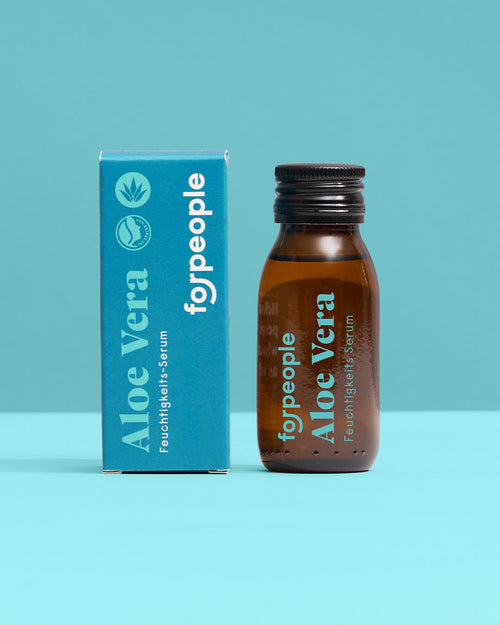
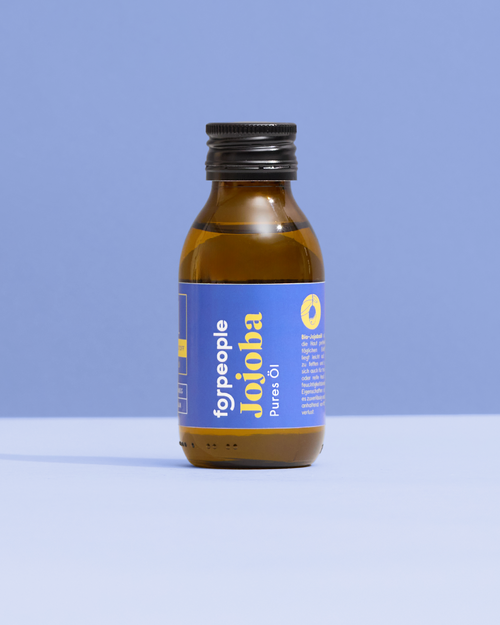
For the watery step, the Aloe Vera Serum 99.6% fits: according to the product page it is light care for face, body and hair, absorbs quickly and leaves no greasy film; it contains no perfume and no essential oils, but does contain citric acid and two preservatives. On top, if your skin still feels tight, add a little fat: according to its product page, the Jojoba Oil - pure is also meant for the face, a few drops on still slightly damp skin. How to combine the two layers is covered in Combining aloe vera serum with oil or solid cream. Whether an oil encourages blackheads in your case cannot be predicted reliably; what the well-known comedogenicity lists are worth is explained in Comedogenic oils: where the scale comes from and what it is worth, and how much oil makes sense on oily skin in Face oil for oily skin: does it work? Try anything new on a small area first, see Trying new skin care: how to test on a small area.
What helps, and what does not really
| Measure | Assessment |
|---|---|
| Careful cleansing with the fingertips, at most twice a day | fits: this is what the dermatology society and the NHS advise |
| Exfoliant, brush, scrubbing | better not: scrubbing irritates the skin and can make acne worse |
| Toners with alcohol | better not: named as irritating products; look for "alcohol-free" |
| Stopping moisturising altogether so nothing gets clogged | better not: dermatologists advise daily care when the skin is dry, especially with drying acne treatments |
| Very rich cream all over the face | careful: better a little fat and only where it feels tight; products labelled "non-comedogenic" are a guide |
| Squeezing spots | better not: can leave scars and dark marks |
| Sun or sunbeds to "dry out" spots | better not: dermatologists advise avoiding tanning |
| Toothpaste or lemon juice on spots | better not: no proven benefit, both can irritate the skin |
Sources: AAD 2022, AAD: Moisturizer, NHS 2026. The assessment of toothpaste and lemon juice is based on practice. Whether bar soap on the face suits your skin is covered in Can I use bar soap on my face?
Common mistakes
- "Fighting" dryness and spots at the same time with exfoliant, toner and acne treatment in one evening. In winter, the barrier has little in reserve.
- Hot water on the face. Lukewarm is enough; hot water strips more fat.
- A thick layer of winter cream on forehead, nose and chin, where the skin tends to get blackheads. Fat belongs rather on the areas that feel tight.
- A new acne treatment and new skin care in the same week. Then you do not know what is irritating your skin. Give a treatment time; the dermatology society points out that it needs time to work before you judge it (AAD 2022).
- Not removing make-up in the evening. Make-up should be removed at the end of the day (NHS 2026); how to do this with oil is covered in Removing make-up with oil: how it works and which oil fits.
When to see a doctor
Our products are care, not acne treatments; according to their safety notes, they do not belong on irritated or broken skin. Get medical advice if
- the spots do not improve despite self-care, there are many of them, or they are deep, painful or lumpy (NHS 2026),
- scars or dark marks remain (NHS 2026),
- your skin is getting you down; according to the NHS, that is also a reason to see a doctor (NHS 2026),
- signs of a skin infection appear, such as increasing redness, warmth, swelling or pus beyond a single spot (NHS 2026),
- small red bumps and flaking form around the mouth, nose or eyes, your face is permanently red, burns or shows visible small veins, or the skin itches and flakes a lot; other skin conditions that resemble spots can be behind this and can get worse under friction and covering (Teo 2021),
- acne appears suddenly and severely in adulthood.
Which active ingredients against acne are an option is for a dermatologist to decide. If you already use an acne treatment and notice it drying out your skin, discuss your skin care there.
Frequently asked questions
Why is my skin dry and blemished at the same time in winter?
Cold and heated air weaken the skin barrier, and people often cleanse too vigorously or apply too much. The skin feels tight, and blackheads and spots still form on the forehead and chin.
Do you get more spots in winter?
That is not clearly proven. At a clinic in Tehran, acne patients came more often in winter; in a study in tropical Delhi, acne tended to get worse in summer. Reliable figures for Central Europe are lacking.
Which care suits dry and blemish-prone skin?
Cleanse carefully, then something watery and only a little fat, for example one or two drops of oil in the evening, where it feels tight. Products labelled "non-comedogenic" are a guide, not a guarantee.
Should I moisturise less when I have spots in winter?
Do not leave it out completely. Dermatologists advise daily care when the skin is dry, especially with drying acne treatments. Less fat, applied more selectively, is often the better way.
Can a scarf cause spots?
Friction, warmth and moisture under fabric can encourage spots; with face masks this was described as "maskne". Wear your scarf loosely, do not pull it over your mouth and chin, and wash it regularly.
Does face oil help with dry, blemish-prone skin?
An oil slows evaporation and can keep dry areas supple; it does nothing about the spots. Use a little, preferably in the evening, and leave it off areas prone to blackheads if you notice it does not suit you.
What can I do myself about spots in winter?
Cleanse carefully, do not scrub, do not squeeze, use light care, keep scarves and pillowcases clean. If it does not improve or the spots are deep and painful, see a dermatologist.
At forpeople
We do not have acne treatments. For dry facial skin in winter, our light care products for the face fit, applied sparingly.
Aloe Vera Serum 99.6%, 50 ml, €9.90: organic aloe vera juice with citric acid, potassium sorbate and sodium benzoate; no perfume and no essential oils; light, watery care for face, body and hair.
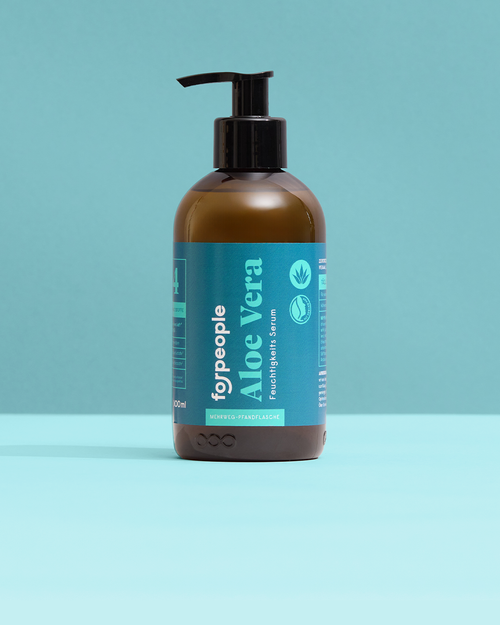
Aloe Vera Serum 99.6% - Pump Bottle, 300 ml, €27.90: the same serum in a pump bottle.
Jojoba Oil - pure, 100 ml, €16.90: jojoba oil only; according to the product page for the face, hair ends and cuticles, a few drops on slightly damp skin.
More on this: Tight facial skin in winter: causes and what helps · Fat and moisture: what belongs in which layer of the skin barrier · The skin microbiome and skin care: what research knows
Sources
- Engebretsen KA, Johansen JD, Kezic S, Linneberg A, Thyssen JP (2016): The effect of environmental humidity and temperature on skin barrier function and dermatitis. J Eur Acad Dermatol Venereol 30(2): 223–249. https://doi.org/10.1111/jdv.13301
- Khodaei B, Seyedpour S, Gholami B, Garmarudi G, Nasimi M (2021): Seasonal and gender variation in skin disease: A cross-sectional study of 3120 patients at Razi hospital. Int J Womens Dermatol 7(5 Part B): 799–802. https://doi.org/10.1016/j.ijwd.2021.09.014
- Narang I, Sardana K, Bajpai R, Garg VK (2019): Seasonal aggravation of acne in summers and the effect of temperature and humidity in a study in a tropical setting. J Cosmet Dermatol 18(4): 1098–1104. https://doi.org/10.1111/jocd.12777
- Thiboutot D, Del Rosso JQ (2013): Acne Vulgaris and the Epidermal Barrier: Is Acne Vulgaris Associated with Inherent Epidermal Abnormalities that Cause Impairment of Barrier Functions? Do Any Topical Acne Therapies Alter the Structural and/or Functional Integrity of the Epidermal Barrier? J Clin Aesthet Dermatol 6(2): 18–24. https://pubmed.ncbi.nlm.nih.gov/23441236/
- American Academy of Dermatology (AAD) (2022): Acne: Tips for managing. Last updated 16.11.2022, accessed 29.10.2026. https://www.aad.org/public/diseases/acne/skin-care/tips
- American Academy of Dermatology (AAD) (n.d.): Moisturizer: Why you may need it if you have acne. Accessed 29.10.2026. https://www.aad.org/public/diseases/acne/skin-care/moisturizer
- Teo WL (2021): The "Maskne" microbiome – pathophysiology and therapeutics. Int J Dermatol 60(7): 799–809. https://doi.org/10.1111/ijd.15425
- NHS (2026): Acne. Last reviewed 22.09.2026, accessed 29.10.2026. https://www.nhs.uk/conditions/acne/