







The problem: how to recognise it
The flakes are often noticed when putting on make-up or shaving: under and between the eyebrows, at the sides of the nose, in the fold between nose and corner of the mouth or at the hairline, where they lie like powder on dark clothing. The skin can feel oily and dry at the same time. Typically it starts with the heating season, gets worse under hats and headbands and eases off again in spring. The following table helps you get your bearings; it does not replace a diagnosis.
| Feature | More likely dryness | More likely seborrhoeic dermatitis |
|---|---|---|
| Flakes | Fine, white, dry | Yellowish, greasy-looking, sometimes stuck on |
| Skin underneath | Hardly red, rough, feels tight | Well-defined, often salmon-coloured redness |
| Location | Wherever the skin is dry, including the cheeks | Eyebrows, centre of the forehead, folds beside the nose, hairline, behind the ears, scalp, usually on both sides |
| Course | Improves with skincare within days | Keeps coming back, flares in winter, often better in summer |
Features according to Borda and Wikramanayake 2015 and DermNet. Seborrhoeic dermatitis is not contagious: it does not pass to other people (Borda and Wikramanayake 2015).
Why the forehead, eyebrows and nose in winter
The forehead, nose and scalp are among the areas with the highest sebum production (Borda and Wikramanayake 2015). That does not automatically protect them from dryness. In a series of measurements over autumn and winter, the skin next to the nose was redder and flakier in winter, lost more water, and the fats on its surface were composed differently (De Paepe et al. 2009). Low humidity and cold weaken the skin's barrier function overall (Engebretsen et al. 2016), and hot water clearly increases the skin's water loss (Herrero-Fernandez et al. 2022). At the hairline, residues of shampoo and styling products add to this, under hats and headbands friction and sweat.
Seborrhoeic dermatitis occurs precisely where there are many oil glands. It affects about 3 to 12 percent of the population; flares in winter and improvement in summer are part of the typical picture (DermNet). The yeast Malassezia, which lives on every skin, is thought to contribute: its enzymes split fatty acids off the fats in sebum, which can trigger inflammation. Differences in the skin barrier probably explain why it affects some people and not others (DermNet). Stress and lack of sleep have been linked to flare-ups (Borda and Wikramanayake 2015).
The solution step by step
| When | What you do | Why |
|---|---|---|
| Straight away | Do not scratch or rub off the flakes; wash your face with lukewarm water and pat it dry. | Rubbing irritates skin that is already weakened; hot water increases water loss. |
| Straight away | Pat a thin layer of Aloe Vera Serum 99.6% onto the still damp skin and spread one or two drops of Jojoba Oil - pure on top; on the eyebrows only a very thin film, keeping away from the eye. | Water plus a thin film of fat keeps the outer layer supple; the flakes then come away by themselves. |
| Every day | Use cleanser only once a day; in the morning, water is enough. | Surfactants and alkaline cleansers wash fats and moisture-binding substances out of the skin (Mijaljica et al. 2022). |
| Every day | When washing your hair, rinse shampoo and conditioner thoroughly off the hairline and out of the eyebrows. | Residues at the hairline are a common, easily avoided source of irritation. |
| Prevention | Choose hats and headbands made of smooth materials and wash them regularly; do not overheat rooms. | Friction, sweat and dry indoor air increase flaking. |
| If it does not improve | After about two weeks without improvement, or with redness and yellowish scales: have it checked by a doctor. | Seborrhoeic dermatitis needs a diagnosis; skincare alone changes little about it. |
How a water-based layer and a film of oil work together is explained in Combining aloe vera serum with oil or solid cream. Whether additional plant oils tend to get in the way in confirmed seborrhoeic dermatitis, because they too consist of fats, has not been well studied; in that case ask your dermatologist which skincare suits you.
What helps – and what rather does not
| Habit or home remedy | Assessment |
|---|---|
| Scratching off flakes, exfoliating forehead and eyebrows | Rather not: irritates and often leaves more redness |
| Water-based product and a little oil on damp skin | Helps with dryness: the outer layer stays supple |
| Thick fatty cream or plenty of oil on red, greasy-flaky areas | Rather not without a medical assessment, because seborrhoeic dermatitis may be behind it |
| Anti-dandruff shampoo on the face too | Only after talking to a doctor: effective treatments for seborrhoeic dermatitis belong in medical hands, and facial skin is thinner than the scalp |
| Tea tree oil or other essential oils undiluted | Rather not: concentrated scented oils can irritate the skin and cause allergies, see Essential oils and fragrance allergens |
| Hot water and long showers | Rather not: increase water loss |
| Washing hats more often | Sensible: fewer sweat and sebum residues on the forehead |
Typical mistakes
The most common mistake is treating flakes as plain dryness and applying more and more cream, although the skin stays red and the flakes are yellowish and greasy. Conversely, many people wash the "oily" forehead more often and with stronger products, which makes the dryness at the edges worse. A third mistake is taking skincare oil or cream right up to the edge of the eyelid; the skin around the eye is thin, and oil in the eye stings. Fourth: applying make-up, powder or brow pencil thickly to flaky areas to cover them; this tends to accentuate the flakes and can only be removed with more cleansing. Fifth: trying several new products at once. Test new products one at a time on a small area, see Trying new skincare: how do I test it on a small area?
When to seek medical advice
Have your skin looked at by a dermatologist if yellowish, greasy-looking scales appear on reddened skin on the eyebrows, the folds beside the nose, the hairline or behind the ears, if the edges of your eyelids are red and flaky, if sharply defined areas with thick, silvery scales develop that may point to psoriasis (Borda and Wikramanayake 2015), if the skin weeps, itches badly or forms blisters, for example after a new hair dye or shampoo, or if hair falls out in the area. An appointment also makes sense if nothing improves after two weeks of consistent, simple skincare. For babies with yellowish scales on the scalp, the paediatrician is the right place to go. When a skin reaction after a product should be checked is covered in Reacted to a cosmetic: what to do, who to report it to, can you return it?
Frequently asked questions
Why is the skin on my forehead dry and flaky in winter?
Cold outside, dry heated air and frequent washing draw water and fats from the outer layer. On the forehead, hats, hair products and sweat add to this. If the flakes are yellowish and the skin is red, seborrhoeic dermatitis may also be behind it.
Why do my eyebrows flake?
The eyebrows lie in an oil-rich zone where seborrhoeic dermatitis is particularly common. Fine flakes without redness can also be simple dryness. If it persists despite simple skincare or the skin is red, have it looked at by a doctor.
What helps with dry skin at the hairline?
Rinse out shampoo and conditioner thoroughly, use lukewarm water, give the area a water-based product and a little oil after washing, and wash hats regularly. If flaky redness spreads from the scalp onto the forehead, it belongs in a dermatology practice.
Why is the skin on my nose dry even though it is shiny?
Sebum and moisture are two different things: the skin can produce a lot of sebum and still hold too little water in its outer layer. In winter, the skin next to the nose becomes measurably drier and flakier. If your nose is sore from blowing it, Sore nose from blowing it will help.
What skincare suits dry skin on the forehead and eyebrows?
A water-based product with a thin film of oil on top, both with few ingredients and without fragrance if the skin is irritated. Near the eyes, use only very little and keep away from the eyelid edge.
Is seborrhoeic dermatitis contagious?
No. It does not pass to other people and is not a question of poor hygiene.
Does it have to do with stress or diet?
With seborrhoeic dermatitis, stress and lack of sleep have been linked to flare-ups, and a high fruit intake has been associated with fewer symptoms in observations (DermNet). For simple dryness, indoor air, water temperature and cleansing play the bigger role. Food supplements do not replace a medical assessment.
Can I put oil on my eyebrows?
With simple dryness, a trace of oil on your fingertips is enough, keeping away from the eye. With red, yellowish flaking skin, first have a doctor clarify what is behind it.
At forpeople
These products suit dry, flaky areas on the face; according to their product pages, all are intended for the face:
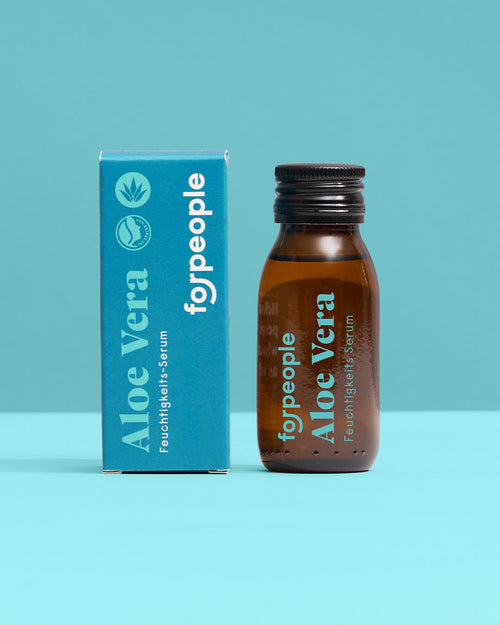
- Aloe Vera Serum 99.6%, 50 ml, €9.90: aloe vera juice with citric acid, potassium sorbate and sodium benzoate; no alcohol, perfume or essential oils.
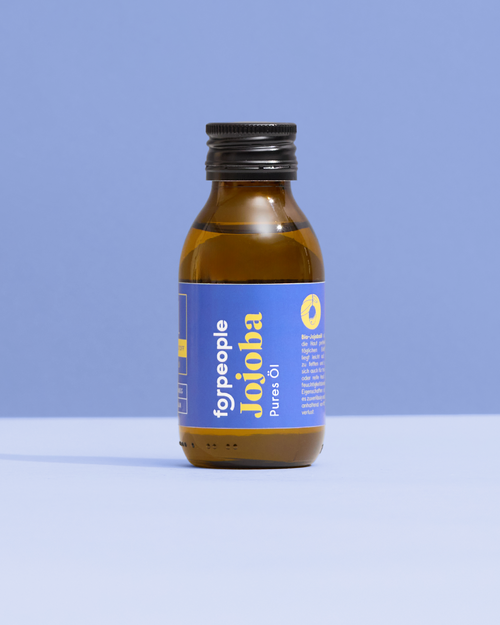
- Jojoba Oil - pure, 100 ml, €16.90: pure, unscented jojoba oil, a few drops on damp skin.
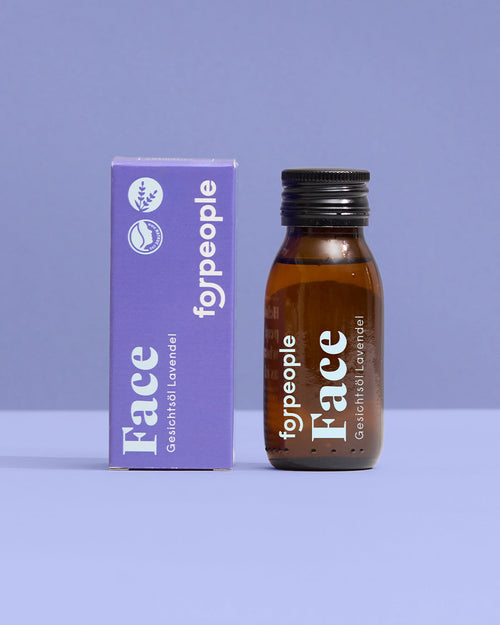
- Face Oil - Lavender, 50 ml, €21.90: oil blend with lavender essential oil; not near the eyes and not on irritated areas.
More on this: Facial skin feels tight in winter: causes and what helps · Dry skin in winter: what helps against cold and heated air · Humidity and skin: what dry heated air does and what helps · The skin barrier explained simply
From the blog: Face and lips through the winter: a routine for every day
Sources
- Borda LJ, Wikramanayake TC (2015): Seborrheic Dermatitis and Dandruff: A Comprehensive Review. Journal of Clinical and Investigative Dermatology 3(2). https://doi.org/10.13188/2373-1044.1000019
- DermNet: Seborrhoeic dermatitis. Gaffoor Bholah N, Oakley A (March 2022), minor update July 2024. Accessed 29 October 2026. dermnetnz.org/topics/seborrhoeic-dermatitis
- De Paepe K, Houben E, Adam R, Hachem JP, Roseeuw D, Rogiers V (2009): Seasonal effects on the nasolabial skin condition. Skin Pharmacology and Physiology 22(1): 8–14. https://doi.org/10.1159/000159772
- Engebretsen KA, Johansen JD, Kezic S, Linneberg A, Thyssen JP (2016): The effect of environmental humidity and temperature on skin barrier function and dermatitis. Journal of the European Academy of Dermatology and Venereology 30(2): 223–249. https://doi.org/10.1111/jdv.13301
- Herrero-Fernandez M, Montero-Vilchez T, Diaz-Calvillo P, Romera-Vilchez M, Buendia-Eisman A, Arias-Santiago S (2022): Impact of Water Exposure and Temperature Changes on Skin Barrier Function. Journal of Clinical Medicine 11(2): 298. https://doi.org/10.3390/jcm11020298
- Mijaljica D, Spada F, Harrison IP (2022): Skin Cleansing without or with Compromise: Soaps and Syndets. Molecules 27(6): 2010. https://doi.org/10.3390/molecules27062010