If you compare skincare products, you see wide price ranges: small bottles of argan oil, solid hand creams in 30 g tins, aloe serums that cost more than a large aloe gel. This page explains what lies behind the raw materials: harvest, yield, manual work, testing and certification. We do not state our own costs or margins; we describe the steps and quantities documented in specialist sources.
Argan oil: 50 kilos of fruit for one litre
Argan oil comes from the kernels of the argan tree (Argania spinosa), which grows mainly in south-western Morocco; origin and ingredients are described in Argan oil for skin, hair and nails. There are many steps on the way to the oil. A review describes the traditional method as follows (Gharby & Charrouf 2022):
- Collecting: from May to August, the ripe fruits are collected by hand in the argan forest and dried in the sun for a few weeks; two weeks are considered optimal.
- Peeling: the dried fruit pulp is removed by hand, leaving the argan nut.
- Cracking: the very hard nut is broken open and the kernels are picked out.
- Pressing: for cosmetic oil, the kernels are pressed unroasted; for edible oil, they are roasted for a few minutes first.
In the purely traditional method, one person needed 24 hours to obtain one litre of oil from about 50 kg of fruit; the residue still contained up to 25 % oil. Today the oil is mainly produced semi-industrially by women’s cooperatives: the fruits are peeled by machine and the kernels pressed mechanically, which has improved quality and yield. The authors explicitly attribute the high price to the multi-stage production process (Gharby & Charrouf 2022).
Demand adds to this. A study in the journal PNAS called argan oil the most expensive edible oil in the world in 2011 and described how the boom has changed prices and the interest in the fruit; households in the region now guard their fruit on the tree (Lybbert et al. 2011). A high price invites dilution. Laboratories detect added cheaper oils, among other things, by the share of linolenic acid, which is below 0.3 % in genuine argan oil, and by the very low campesterol content (Gharby & Charrouf 2022). Such analyses are another part of the cost.
Beeswax: little wax from a lot of honey
Wax is made inside the bee’s body. Young worker bees, full of honey, hang together in a cluster for about 24 hours; during this time eight wax glands on the underside of the abdomen secrete small wax scales. The bees chew them soft with saliva and build the combs from them. A 20 g comb carries 1,000 g of honey (Krell 1996). For the bees, wax is a building material they pay for with honey, not a surplus.
Accordingly, little of it is harvested. In frame-hive beekeeping, as is usual in Central Europe, the wax harvest is only 1 to 2 % of the weight of the honey; in traditional hives and top-bar hives, from which whole combs are usually harvested, it is 10 to 15 % (Krell 1996). The lightest, highest-quality wax comes from the cappings with which the bees seal ripe honey cells and which are cut off when the honey is extracted. Old, dark brood combs yield less wax of lower quality (Krell 1996).
Much of the wax stays within beekeeping, because new comb foundation for the bees is pressed from it. That makes the material vulnerable to adulteration. In a Belgian sample, 9 of 98 wax samples from beekeepers and 3 of 9 samples from trade had been stretched with paraffin or stearin (El Agrebi et al. 2021). Anyone who wants to be sure of pure wax has to have it tested.
Additional rules apply to organic wax. Under the EU organic rules, wax for new comb foundation must come from organic beekeeping, and when a business converts to organic, all of its wax is replaced within twelve months. Within a radius of 3 km around the hives, the forage should consist essentially of wild plants or organically farmed land, and only certain treatments against the varroa mite, such as organic acids and thymol, are permitted (ÖkoP 2023). Our beeswax comes from northern Germany and from organic beekeeping with Bioland certification. Why it smells of honey is explained in Why does beeswax smell of honey?; what it does on the skin in Is beeswax good for your skin?
Aloe vera: lots of water, lots of manual work
The gel inside the aloe leaf consists of about 99.5 % water; the remaining 0.5 to 1 % are polysaccharides, minerals, organic acids and other substances. The polysaccharides are delicate: heat, acid and the leaf’s own enzymes break them down, and their content varies with season and cultivar (Hamman 2008). That is why a cut leaf has to be processed immediately or chilled, otherwise enzymes and bacteria decompose the gel (Ramachandra & Rao 2008).
For pure inner-leaf gel, the leaf is traditionally filleted by hand: with a sharp knife, the leaf base, the tip and the marginal spines are cut off, then the upper and lower green rind are lifted off without getting the yellow sap under the rind into the gel. The method is very labour-intensive. According to the same review, machines that imitate it usually deliver material with more anthraquinones, that is, more of the substances from the yellow sap (Ramachandra & Rao 2008). What the yellow sap contains and how whole-leaf material is filtered is covered in Aloe inner leaf or whole leaf: what is aloin?
Because the gel is almost entirely water, it can be dried into a powder and later diluted back with water. A product with a lot of fresh aloe juice is therefore something different from a water-based gel with a few percent aloe or with reconstituted powder. How to recognise the difference in the ingredients list is explained in How to spot a good aloe vera product.
| Raw material | Starting material | Yield or ratio | Manual work | Quality risk |
|---|---|---|---|---|
| Argan oil | fruit of the argan tree | traditionally about 50 kg of fruit for 1 l of oil | collecting; in the traditional method also peeling and cracking | dilution with cheaper oils |
| Beeswax | combs, mainly honey cappings | 1–2 % of the honey weight (frame-hive beekeeping) | uncapping, rendering, cleaning | paraffin or stearin, residues |
| Aloe gel | fresh leaves | gel with about 99.5 % water | hand filleting for inner-leaf material | breakdown through heat and time, reconstitution, sap from the rind |
Sources: argan oil (Gharby & Charrouf 2022), beeswax (Krell 1996) (El Agrebi et al. 2021), aloe (Hamman 2008) (Ramachandra & Rao 2008).
Organic, origin and testing: what comes on top
In cosmetics, “organic” refers to the raw materials: the argan oil, the beeswax or the aloe juice can be organically certified, not the finished cream as such. How to recognise the organic share in the ingredients list is explained in Organic hand cream: what does organic mean in cosmetics?; private labels are put into context in Natural cosmetics: the law and the standards.
The requirements cost time and money without being visible in the product. Taking beekeeping as an example: businesses are inspected regularly by a state-approved control body, the wax seller must present an organic certificate, and the beekeeper pays for inspections of contract processors. In Bavaria, a wax sample is additionally tested for residues of varroa and wax moth treatments after the wax exchange; according to the control body, such an analysis cost around €150 in 2023 (ÖkoP 2023). It is similar with oils: whether an argan oil is genuine and fresh is shown by its fatty acid pattern, sterols and indicators such as the peroxide value (Gharby & Charrouf 2022), in other words laboratory values.
The process matters too: cold-pressed oil is obtained purely mechanically and retains more accompanying substances than refined oil. What happens during refining is described in Cold-pressed or refined.
Why solid hand cream and deodorant cream seem more expensive per gram
Solid creams add a second reason: they contain no water. According to the consumer advice centre of North Rhine-Westphalia, body lotion usually consists of more than half water, and liquid shampoos and shower gels of about 70 to 90 %. Solid body butter and oils go further because they contain no water; water-free deodorant sticks, body butter and soaps are used sparingly and can therefore usually compete on price (Verbraucherzentrale NRW 2026).
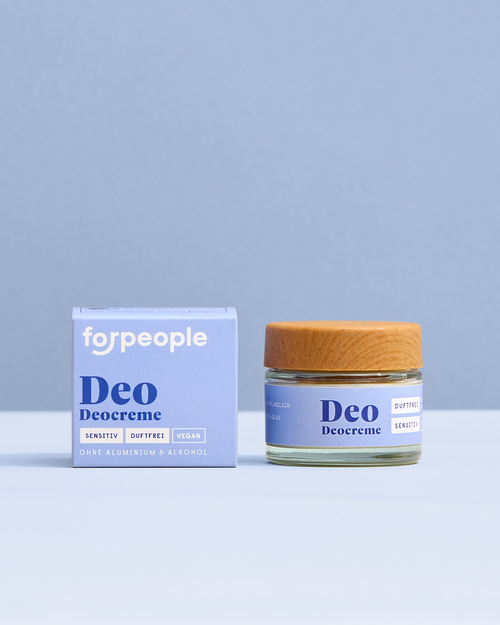
A 30 g tin of solid hand cream therefore consists entirely of wax, oils and plant butters. Per gram it looks expensive, because the comparison with a water-based cream sets grams of water against grams of fat. How far a solid cream goes in practice and why that is hard to convert into applications is covered in Why does solid cream last so long?; an honest weighing of advantages and disadvantages in Solid cosmetics: the pros and cons, honestly explained. The same applies to deodorant cream: according to its ingredients list, our Sensitive Deodorant Cream consists of potato starch, shea butter, sodium bicarbonate, sunflower oil, corn starch and candelilla wax, without water; how it works is explained in How do aluminium-free deodorants work?
How to tell what you are paying for
A high price is no proof of quality. The following points help when comparing; they come from practice and are based on the mandatory information on the packaging:
- Order of ingredients: what comes first is present in the largest amount. If “Aqua” comes before “Aloe Barbadensis Leaf Juice” in an aloe product, water is the main ingredient. More in How to read an INCI list.
- Percentage: is the share of the expensive raw material stated, and what does it refer to?
- Organic labelling: asterisks and footnotes show which ingredients come from organic farming.
- Process: “cold-pressed” for oils, “juice” rather than “from powder” for aloe, if the manufacturer states it.
- Smell: cosmetic argan oil from unroasted kernels has no roasted aroma, beeswax smells of honey; a rancid smell indicates spoiled oil, see How to tell if a skin oil is rancid.
Frequently asked questions
Why is argan oil so expensive?
Because a lot of fruit yields little oil and several steps are manual: collecting and, in the traditional method, also peeling and cracking the very hard nuts. Traditionally, one person needed 24 hours for one litre from about 50 kg of fruit. On top of that come high demand and checks against diluted oil.
Is expensive argan oil automatically good?
No. Look for the INCI name “Argania Spinosa Kernel Oil” without other oils, for the statement “cold-pressed” and for a fresh smell without a rancid note. In the end, only a laboratory analysis shows whether an oil is genuine.
Why does beeswax cost more than paraffin?
Paraffin is a petroleum product and is produced in large quantities. Bees make beeswax from honey, and in the usual beekeeping only about 1 to 2 % as much wax as honey is obtained. That is precisely why beeswax is sometimes stretched with paraffin.
What makes organic beeswax more demanding?
Organic beekeepers have to replace all their wax when converting, make new comb foundation only from organic wax, choose their sites according to the forage within a 3 km radius and be inspected. We have not found reliable figures on how much organic wax is available on the market.
Why does an aloe vera serum cost more than an aloe gel from the drugstore?
They often contain different things. A serum that is almost pure aloe juice consists of the expensive raw material itself; a gel may consist mainly of water and thickener with a smaller aloe share. The ingredients list shows what comes first.
Why does solid hand cream seem more expensive than hand cream from a tube?
Because it contains no water. You pay only for wax, oil and butter. How long a tin lasts depends on the amount and frequency; more in Why does solid cream last so long?
Why is the aloe juice in the serum preserved?
Because aloe juice is almost entirely water and germs can grow in it without preservation. Our serum contains potassium sorbate and sodium benzoate for this, plus citric acid for a slightly acidic pH. Background: Preservation and water in cosmetics.
At forpeople
These products contain the three raw materials as a main ingredient; the full ingredients list is on each product page.
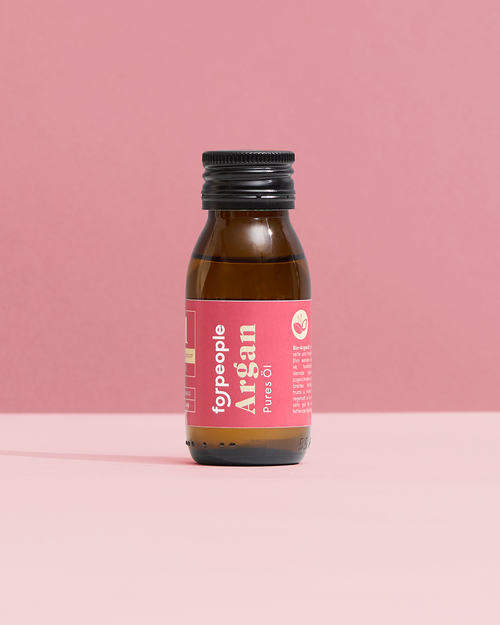
- Argan Oil - pure, 50 ml, €19.90: according to the ingredients list, pure cold-pressed organic argan oil, for skin and hair.
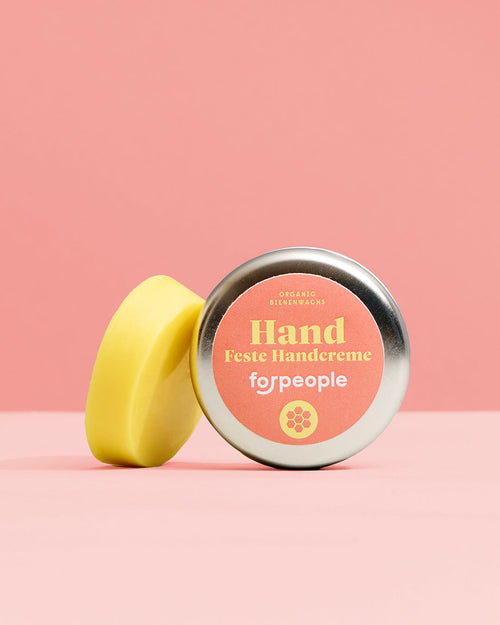
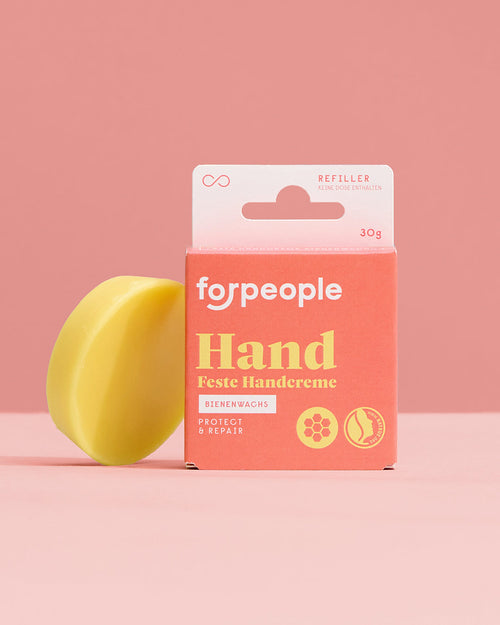
- Solid Hand Cream - Beeswax, 30 g, €9.90: beeswax, olive and sunflower oil, St. John’s wort and aloe extract, without water; as a refill for the tin 30 g, €7.90.
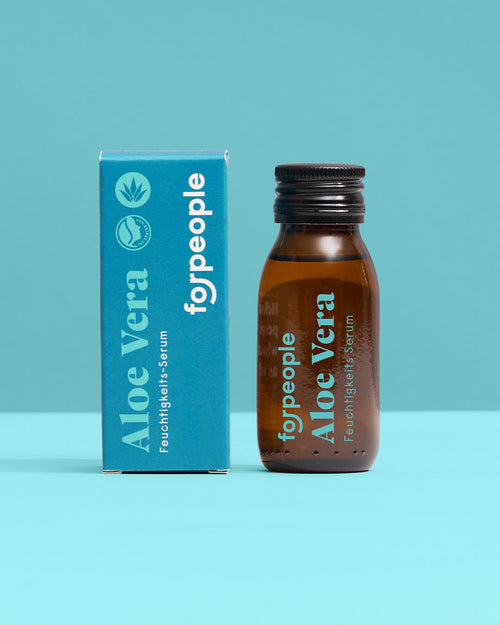
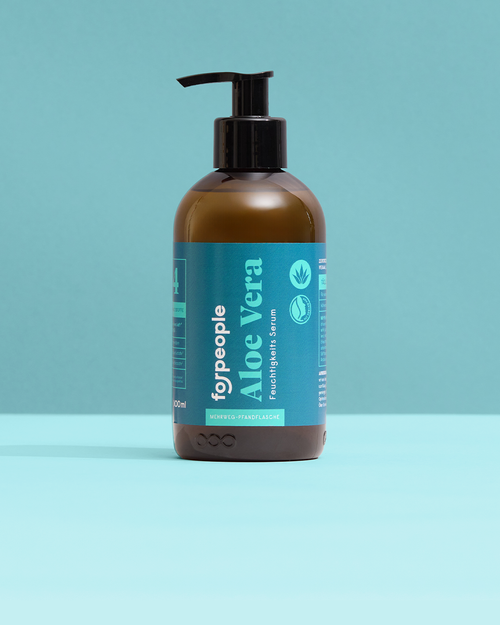
- Aloe Vera Serum 99.6%, 50 ml, €9.90: 99.6 % organic aloe juice from Andalusia, according to the product description not made from powder, with citric acid, potassium sorbate and sodium benzoate; also as a 300 ml pump bottle for €27.90.
- Sensitive Deodorant Cream, 50 g, €8.90: water-free deodorant cream with starch, shea butter, sodium bicarbonate and candelilla wax.
Do not use on broken or irritated skin, and stop using if your skin reacts.
More on this: Argan, jojoba, almond or rosehip oil · Aloe Vera Serum 99.6%: what is inside?
Sources
- Gharby S, Charrouf Z (2022): Argan Oil: Chemical Composition, Extraction Process, and Quality Control. Frontiers in Nutrition 8: 804587. https://doi.org/10.3389/fnut.2021.804587
- Lybbert TJ, Aboudrare A, Chaloud D, Magnan N, Nash M (2011): Booming markets for Moroccan argan oil appear to benefit some rural households while threatening the endemic argan forest. Proceedings of the National Academy of Sciences 108(34): 13963–13968. https://doi.org/10.1073/pnas.1106382108
- Krell R (1996): Value-added products from beekeeping. FAO Agricultural Services Bulletin 124, Chapter 4: Wax. Food and Agriculture Organization of the United Nations, Rome. https://www.fao.org/4/w0076e/w0076e12.htm
- El Agrebi N, Svečnjak L, Horvatinec J, Renault V, Rortais A, Cravedi JP, Saegerman C (2021): Adulteration of beeswax: A first nationwide survey from Belgium. PLoS One 16(9): e0252806. https://doi.org/10.1371/journal.pone.0252806
- ÖkoP Zertifizierungs GmbH (2023): Bienenhaltung und Imkereierzeugnisse nach der EU-Öko-Verordnung 2018/848 und 2021/1691 [Beekeeping and apiculture products under EU organic regulations 2018/848 and 2021/1691]. Information collection, as of 28 March 2023. State-approved control body DE-ÖKO-037. oekop.de
- Hamman JH (2008): Composition and applications of Aloe vera leaf gel. Molecules 13(8): 1599–1616. https://doi.org/10.3390/molecules13081599
- Ramachandra CT, Rao PS (2008): Processing of Aloe Vera Leaf Gel: A Review. American Journal of Agricultural and Biological Sciences 3(2): 502–510. https://doi.org/10.3844/ajabssp.2008.502.510
- Verbraucherzentrale NRW [Consumer advice centre North Rhine-Westphalia] (as of 22 July 2026): Plastikmüll im Bad vermeiden mit Shampoobar & Co: Fest statt flüssig [Avoiding plastic waste in the bathroom with shampoo bars and co: solid instead of liquid]. verbraucherzentrale.nrw