







The problem: dry skin despite drinking plenty
The water bottle sits on your desk, two litres a day is routine, and still your shins feel tight in autumn, your hands turn rough and the skin flakes beside your nose. The obvious question is what your body is missing: more water, different foods, omega-3? The other way round, many people who drink little in winter wonder whether that is why their skin is dry.
Both questions make sense, because the body consists largely of water, and the skin is part of that cycle. In its water balance for adults, the German Nutrition Society (DGE) assumes that around 550 millilitres a day leave the body through the skin (DGE: Water). Water constantly moves from the inside outwards through the skin and evaporates. Dry skin does not mean this supply is missing. It means the outermost layer, the stratum corneum, does not hold on to the water passing through well enough.
Why skin dries out in winter despite water
How much water the stratum corneum holds depends mainly on two things: the skin's own moisture-binding substances inside the horny cells, known collectively as natural moisturising factor, and ordered layers of fat between the cells, which slow evaporation. When water loss increases, the enzymes that normally shed single horny cells invisibly work less well; the cells then come off in flakes, and the skin looks dry and rough (Verdier-Sévrain & Bonté 2007). How fat and moisture work together in the stratum corneum is explained in Fat and moisture: what belongs in which layer of the skin barrier.
In autumn and winter, the surroundings act on exactly this point. Cold outdoor air and heated rooms are dry, and the stratum corneum gives off water faster; more on this in Humidity and skin: what dry heated air does and what helps and Dry skin in winter: what helps with cold and indoor heating. An extra glass of water changes little about this dry air or the layer of fat.
Drinking still plays a role in winter, just not the one people often think. The DGE explicitly names dry, cold air as a situation in which the need for water rises (DGE: Water). At the same time, thirst is weaker in the cold: in laboratory tests with men at 4 °C, the sensation of thirst was up to 40 per cent lower than at 27 °C, even when they were already short of fluid (Kenefick et al. 2004). So if you drink less in winter, you will not necessarily notice.
The table summarises what studies on drinking and diet have shown so far:
| Question | What was studied | Result and assessment |
|---|---|---|
| Does drinking more make skin moister? | systematic review; of 216 records, only six studies with healthy adults met the criteria | slightly higher stratum corneum hydration after additional drinking, especially in people who previously drank little; weak evidence, mechanism unknown, unclear for older people (Akdeniz et al. 2018) |
| Is diet linked to dry skin? | questions about the previous day's food and a skin examination in 4,025 women aged 40 to 74 in the USA | women who took in more linoleic acid less often had dry skin in older age; an association, not proof of a cause (Cosgrove et al. 2007) |
| Do flaxseed oil or other fats in capsules help? | twelve weeks of flaxseed oil or safflower oil capsules, two groups of 13 women each, without a placebo group | with flaxseed oil, less water loss through the skin and less roughness; a very small study (Neukam et al. 2011) |
| What do the studies show overall? | meta-analysis of 61 nutrition studies on skin ageing, eleven of them on fats and fatty acids | on average higher skin hydration; the studies differ widely in dose, duration and participants, and for water loss there were signs of publication bias (Ng et al. 2025) |
For context: the skin makes the fats that seal the stratum corneum partly itself and partly takes building blocks for them from the blood (Feingold & Elias 2014). Diet supplies raw materials, but it is not the only lever. A real deficiency in essential fatty acids is rare and shows its own signs; you will find this in Dry skin and vitamin deficiency: causes and what you can do, along with everything on vitamins, zinc and iron.
The solution step by step
| Step | What you do | Why |
|---|---|---|
| Right away | after showering, only pat dry and apply an oil or a solid butter to the still slightly damp skin; on the face, first something water-based, then a few drops of oil | the stratum corneum only holds water with a film of fat on top; plain water evaporates again |
| Every day | drink according to thirst, around 1.5 litres as a guide, ideally water or unsweetened tea; in winter, plan drinks deliberately | this is what the DGE recommends; cold dampens thirst, dry air increases the need |
| Every day | eat a varied diet, use plant oils such as rapeseed, flaxseed or walnut oil, and have fish once or twice a week | supplies the body with essential fatty acids; this is a general dietary recommendation, not a promise for the skin |
| Prevention | shower briefly and lukewarm, do not overheat rooms, protect your hands outdoors | in winter, these outside factors matter more for the stratum corneum than how much you drink |
| Watch | look out for signs that do not fit ordinary dryness (see when to seek medical advice below) | lack of fluid and deficiencies show up differently from dry winter skin |
Sources for the table: DGE: Eating and drinking well, DGE: Water, Kenefick et al. 2004, Verdier-Sévrain & Bonté 2007. The order of the steps is based on practice.
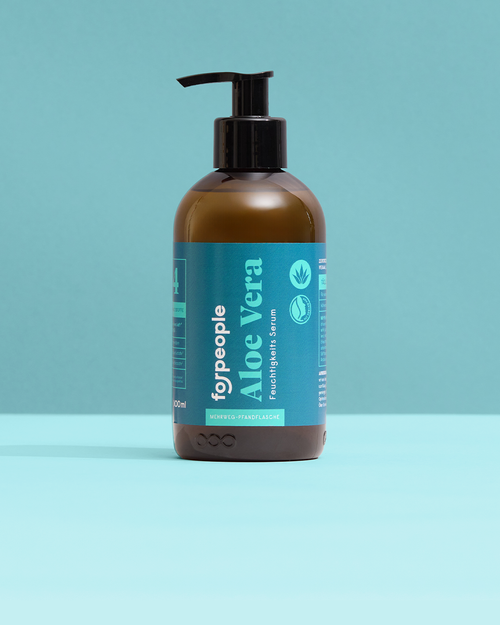
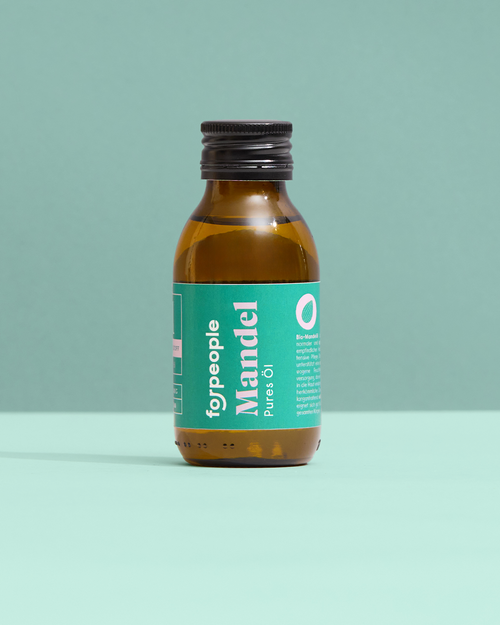
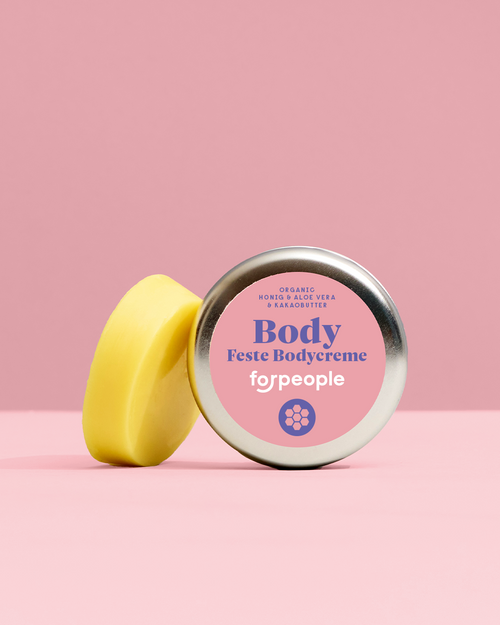
For the water-based step, the Aloe Vera Serum 99.6% - Pump Bottle fits: according to its product page, it is light, water-based care for face, body and hair that leaves no greasy film. That is why something with fat goes on top, for example the Almond Oil - pure, which spreads easily on still-damp skin, or, on dry areas such as shins and elbows, the Solid Body Butter - Beeswax & Aloe Vera. How the layers fit together is described in Combining aloe vera serum with oil or solid cream, and why the timing after a shower matters in How soon should you moisturise after a shower? The 3-minute rule.
What helps – and what tends not to
| Measure | Assessment |
|---|---|
| Drinking three litres instead of two so the skin gets moist | tends not to: with adequate intake, no clear effect has been shown; the review found signs mainly in people who previously drank little |
| Thinking about drinks deliberately in winter | makes sense: cold dampens the feeling of thirst, and warm drinks such as herbal tea count too |
| Avoiding coffee and black tea | not necessary: the DGE names three to four cups as a moderate amount |
| Omega-3 or flaxseed oil capsules for dry skin | open: the studies are small, short and inconsistent. We do not recommend food supplements; whether you need something is a question for your doctor or pharmacy, especially if you take medication |
| Plant oils and fish in your diet | sensible for a general supply of fatty acids; a measurable effect on dry winter skin from normal eating has not been shown |
| Water spray on the face | on its own, tends not to: the water evaporates quickly in dry air unless a film of fat follows |
| Oil or butter after washing | fits the most common cause: the film slows evaporation from the stratum corneum; more in Occlusion and TEWL: how a wax film protects your skin |
Sources: Akdeniz et al. 2018, Kenefick et al. 2004, DGE: Water, Neukam et al. 2011, Ng et al. 2025, DGE: Eating and drinking well. Whether omega-3 fatty acids do anything when applied directly to the skin is a different question; more on that in Linoleic or oleic acid? Fatty acids in plant oils explained.
Common mistakes
- Drinking more and more while the skin dries in heated air after showering without any care. In that case the lever is on the outside.
- Only drinking in winter when thirst comes, although in the cold it sets in later and more weakly.
- Taking capsules on suspicion instead of having unusual signs checked. That can mask a real finding.
- Cutting fat out of your diet, for example on a strict diet. The body has to get essential fatty acids from food.
- Using only water-based care, such as a gel or spray without fat. Why the skin sometimes feels even drier afterwards is explained in Does aloe vera dry out the skin? Causes and what helps.
- Showering hot and long because the skin itches. Hot water is harder on the stratum corneum than lukewarm water; see Itchy skin in winter: showering, care and when to see a doctor.
When to seek medical advice?
Dry skin on its own is not a typical sign of a lack of fluid. The UK National Health Service lists thirst, dark and strong-smelling urine, peeing less often, dizziness, tiredness, a dry mouth, dry lips and tongue, and sunken eyes; older people, children and people with fever, diarrhoea or diuretic medicines are affected more often (NHS: Dehydration). Seek medical advice if
- you feel dizzy when you stand up and it does not go away, you are unusually tired or you are hardly peeing,
- you are confused, breathing fast or have a racing heart, or your skin turns pale, blotchy and cold: this is an emergency (NHS: Dehydration),
- you have unusually strong thirst that does not ease despite drinking,
- the skin all over your body suddenly becomes dry or stays dry for weeks despite care; more in Suddenly dry skin all over the body: causes and when to have it checked,
- a rash, hair loss, cracked corners of the mouth or nail changes appear as well,
- you eat very little, have an eating disorder or follow a very low-fat diet.
Whether a blood test makes sense is for the doctor to decide. If you take food supplements, mention it there, especially if you also take medication.
Frequently asked questions
Why do I have dry skin even though I drink a lot?
Because dry skin usually develops in the stratum corneum. It only holds water with enough fat and moisture-binding substances; dry heated air, hot water and soap take both away. Drinking more changes little about that.
Can drinking too little cause dry skin?
A review found slightly higher skin hydration after additional drinking in people who drank little. The evidence is weak. Typical signs of a lack of fluid are rather thirst, dark urine, dizziness and a dry mouth.
How much should I drink in winter?
The DGE recommends around 1.5 litres a day for adults, ideally water or unsweetened tea. Dry, cold air increases the need, and cold dampens thirst, so plan your drinks deliberately.
Does omega-3 help with dry skin?
Small studies with flaxseed or other oil capsules found slight changes in skin hydration and water loss. The studies are short and very different from each other. No recommendation can be derived from them; fish and plant oils belong in a balanced diet anyway.
Which foods are good for dry skin?
No single food has been shown to work. In a large US survey, women who ate more linoleic acid less often had dry skin; linoleic acid is found, for example, in sunflower, rapeseed and walnut oil. That is an association, not proof.
What is the body missing with very dry skin?
Usually nothing. Very dry skin often has outside causes but can also be linked to illnesses or medicines. Signs of a nutrient deficiency are described on the page about vitamin deficiency; have them checked by your GP.
Can dry skin be treated from the inside?
A balanced diet and enough fluid are the foundation, but not a promise for the skin. Against the most common cause, drying out from the outside, care from the outside helps.
At forpeople
We sell care for the skin from the outside, not food supplements. Our products keep dry, intact skin supple; according to their safety notes, they do not belong on irritated or injured skin.
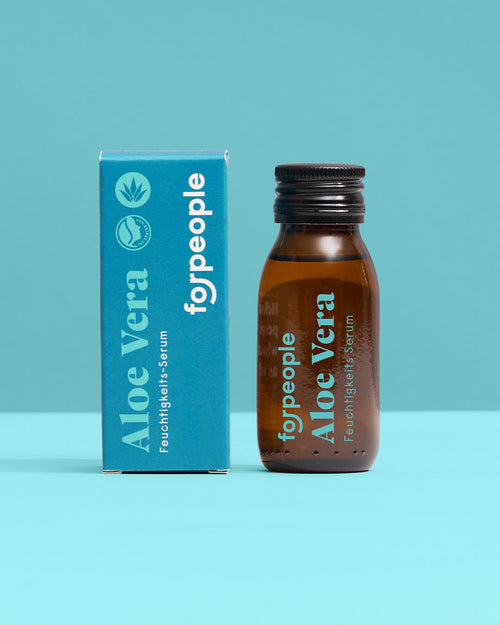
Aloe Vera Serum 99.6% - Pump Bottle, 300 ml, €27.90: water-based care made from aloe vera juice with citric acid, potassium sorbate and sodium benzoate, without alcohol and without essential oils; as a first step before oil or butter. A smaller size is the Aloe Vera Serum 99.6% with 50 ml for €9.90.
Almond Oil - pure, 100 ml, €14.90: pure almond oil for skin, hair and lips, on still-damp skin.
Solid Body Butter - Beeswax & Aloe Vera, 40 g, €9.90: water-free, made from cocoa butter, olive oil, beeswax, sunflower oil, shea butter and aloe vera extract, for dry areas on the body.
More: Dry skin on a plane: causes and what helps · The skin barrier explained simply · Dry skin in old age: causes, winter care and applying oil safely · Dry skin from stress: what is behind it and what helps
Sources
- Deutsche Gesellschaft für Ernährung (DGE): Referenzwerte für die Nährstoffzufuhr: Wasser. Stand der Ableitung 2000, accessed 29.10.2026. https://www.dge.de/wissenschaft/referenzwerte/wasser/
- Verdier-Sévrain S, Bonté F (2007): Skin hydration: a review on its molecular mechanisms. J Cosmet Dermatol 6(2): 75–82. https://doi.org/10.1111/j.1473-2165.2007.00300.x
- Kenefick RW, Hazzard MP, Mahood NV, Castellani JW (2004): Thirst sensations and AVP responses at rest and during exercise-cold exposure. Med Sci Sports Exerc 36(9): 1528–1534. https://doi.org/10.1249/01.mss.0000139901.63911.75
- Akdeniz M, Tomova-Simitchieva T, Dobos G, Blume-Peytavi U, Kottner J (2018): Does dietary fluid intake affect skin hydration in healthy humans? A systematic literature review. Skin Res Technol 24(3): 459–465. https://doi.org/10.1111/srt.12454
- Cosgrove MC, Franco OH, Granger SP, Murray PG, Mayes AE (2007): Dietary nutrient intakes and skin-aging appearance among middle-aged American women. Am J Clin Nutr 86(4): 1225–1231. https://doi.org/10.1093/ajcn/86.4.1225
- Neukam K, De Spirt S, Stahl W, Bejot M, Maurette JM, Tronnier H, Heinrich U (2011): Supplementation of flaxseed oil diminishes skin sensitivity and improves skin barrier function and condition. Skin Pharmacol Physiol 24(2): 67–74. https://doi.org/10.1159/000321442
- Ng JY, Yan Ng XMG, Wong QYA, Chew FT (2025): Dietary interventions in skin ageing: a systematic review and meta-analysis. J Physiol Anthropol 44(1): 26. https://doi.org/10.1186/s40101-025-00408-4
- Feingold KR, Elias PM (2014): Role of lipids in the formation and maintenance of the cutaneous permeability barrier. Biochim Biophys Acta 1841(3): 280–294. https://doi.org/10.1016/j.bbalip.2013.11.007
- Deutsche Gesellschaft für Ernährung (DGE): Gut essen und trinken – die DGE-Empfehlungen. Accessed 29.10.2026. https://www.dge.de/gesunde-ernaehrung/gut-essen-und-trinken/dge-empfehlungen/
- NHS: Dehydration. Page last reviewed 01.05.2026, accessed 29.10.2026. https://www.nhs.uk/conditions/dehydration/