







The problem: when your skin tips over in stressful weeks
Exam time, the end of the year at work, a move, caring for a relative: in weeks like these, many people notice that their skin feels tight, flakes on the hands and shins, or itches. Often two things happen at once. Your own skincare slips down the list because you have no energy left in the evening, and the skin becomes more sensitive to what strains it in winter anyway: a hot shower to unwind, heated air, frequent hand washing.
Then there is scratching. When you are tense, you scratch more often, often without noticing, at your desk or at night in half-sleep. Itchy, dry areas quickly turn red and rough. So the question of whether "the mind" makes the skin dry is a fair one. The answer from research is more nuanced than advice columns often suggest.
Why stress and winter strain the skin together
Most studies on this topic use the same method: part of the stratum corneum is removed with adhesive tape, and then researchers measure how quickly water loss through the skin falls back to its starting level. This shows how well the barrier recovers. The table shows what they found:
| Study | Who and what kind of strain | Result |
|---|---|---|
| Garg et al. 2001 | 27 medical, dental and pharmacy students without skin disease, measured after the winter break, during exams and during the spring break | during exams the barrier recovered more slowly, afterwards as before; most strongly in those whose stress increased most |
| Altemus et al. 2001 | 25 women with a stressful interview in the laboratory, 11 women after a night without sleep, 10 women with three days of exercise | interview stress and sleep deprivation delayed barrier recovery, exercise did not |
| Muizzuddin et al. 2003 | 28 women going through a separation, compared with women without this strain | the barrier's resistance was the same, recovery was slower with high stress |
| Oyetakin-White et al. 2015 | 60 women who slept poorly and briefly or well and long enough over a long period | poor sleepers already had higher water loss through the skin at the start; 72 hours after tape stripping, the barrier of good sleepers had recovered 30 per cent more |
Experiments in mice show how this may be connected: under stress, stress hormones rise, the skin makes fewer of its own barrier fats, and the horny cells hold together less well (Choi et al. 2005). Whether the same happens in humans has not been clarified in detail. An important point for context: the studies are small, and they measure recovery after an artificial disruption, not directly whether the skin becomes visibly drier. So what has been shown is that stress and lack of sleep slow the barrier down, not that stress alone dries out healthy skin.
In winter, this slower recovery meets a barrier that is already under more pressure. A review concludes that low humidity and cold generally weaken barrier function and make the skin more sensitive to irritants; skin cells themselves release pro-inflammatory messengers and cortisol in the process (Engebretsen et al. 2016). More about these winter influences in Dry skin in winter: what helps with cold and indoor heating and Humidity and skin: what dry heated air does and what helps.
The third building block is the cycle of itching and scratching. A weakened barrier loses more water and activates nerve fibres that transmit itch; scratching damages the barrier further and keeps the cycle going (Yosipovitch et al. 2019). Psychological stress intensifies itch, and even thinking about it can trigger it (Schut et al. 2016). How the stratum corneum and the barrier are built is explained in The skin barrier explained simply.
The solution step by step
| Step | What you do | Why |
|---|---|---|
| Right away | file your nails short; when it itches, take your hand away deliberately, press the area instead of scratching, and care for intact, dry skin with a little fat | scratching damages the barrier and keeps the itch-scratch cycle going |
| Every day | tie your skincare to a fixed moment: oil straight after showering, hand cream after the last hand wash in the evening, the tin visible next to the sink | otherwise skincare gets dropped in busy weeks, just when the barrier recovers more slowly |
| Every day | shower briefly and lukewarm, even if a hot shower to unwind is tempting | hot water puts extra strain on the stratum corneum |
| In the evening | keep regular sleeping times; do not overheat the bedroom | sleep deprivation delayed barrier recovery, and poor sleep went along with higher water loss |
| Prevention | in stressful phases, stick with products you know and try new ones later | irritated skin reacts more strongly, and causes are harder to tell apart |
| Relief | if stress, sleep problems or itching last for weeks, talk to your GP practice | skincare does not replace help with lasting strain |
Sources for the table: Yosipovitch et al. 2019, Altemus et al. 2001, Oyetakin-White et al. 2015. The order of the steps, pressing instead of scratching and the visibly placed tin are based on practice.
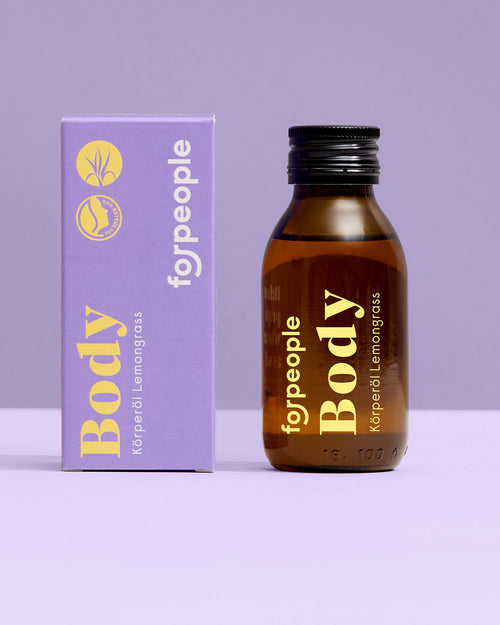
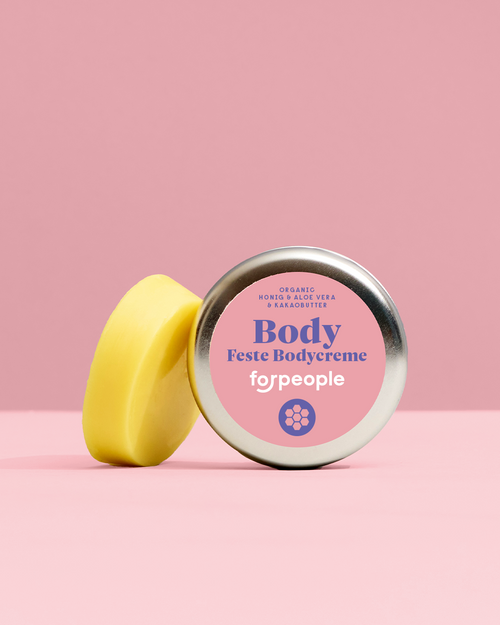
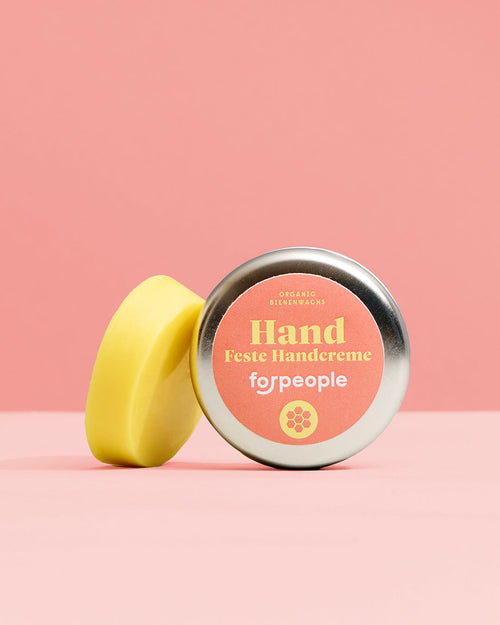
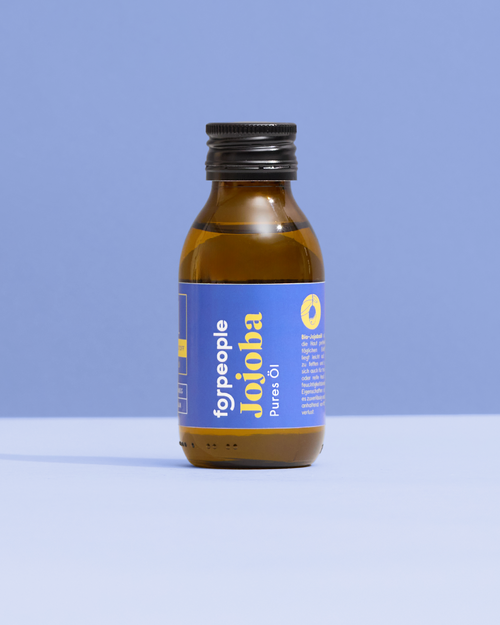
Which care suits which area depends on what the product is intended for. After showering, the Body Oil - Lemongrass made from sesame, safflower, sea buckthorn seed and sunflower oil can be spread on still-damp skin; it contains lemongrass essential oil. The Solid Body Butter - Beeswax & Aloe Vera contains no essential oils and suits individual dry areas on the shins or elbows. For your hands at the desk or in the evening there is the Solid Hand Cream - Beeswax, and for the face a few drops of Jojoba Oil - pure on slightly damp skin. Whether oil or butter suits you better is explained in Body Oil or Body Butter – Which One When?. None of these products belong on scratched, open or inflamed areas; their safety notes say so too.
What helps – and what tends not to
| Habit | Assessment |
|---|---|
| Skincare as a fixed habit, for example straight after showering | makes sense: when you moisturise matters less than doing it regularly; more in Moisturising your body: morning or evening? |
| Scratching "just for a moment" | tends not to: every scratch damages the barrier and keeps the itch going |
| Showering hot and long to unwind | tends not to for the skin; what matters when showering in winter is in Itchy skin in winter: showering, care and when to see a doctor |
| Sleeping enough and regularly | makes sense: in studies, good sleep went along with better barrier recovery |
| Sport and exercise | no disadvantage for the barrier: three days of exercise did not delay recovery in the study; rinse off briefly and apply care afterwards |
| Testing lots of new products in a stressful phase | tends not to; how to test something new on a small area is in Trying a new product: how do I test it on a small area? |
| "Anti-stress" cosmetics | not supported as a promise: skincare can keep the skin supple, it does not reduce stress |
Sources: Yosipovitch et al. 2019, Oyetakin-White et al. 2015, Altemus et al. 2001.
Common mistakes
- Dropping your skincare exactly when things get stressful. That is when the barrier recovers more slowly.
- Scratching at night with long nails. Short nails and cared-for skin before bed make scratching less damaging.
- Applying thick layers to scratched areas. Open or inflamed skin does not belong under cosmetics but, if needed, in a doctor's practice.
- Blaming every skin change on stress. Dry, itchy areas can also have another cause, for example a reaction to a product or a skin condition; see Dry hands or hand eczema? How to tell the difference and Reacting to a cosmetic: what to do, where to report, returns.
- Forgetting the room air. If you work for long hours in overheated rooms in winter, you lose more water through the skin, regardless of stress.
When to seek medical advice?
In the European guideline, itch that lasts six weeks or longer counts as chronic and should be examined; possible causes include skin diseases but also internal diseases and medicines, and psychological strain can intensify it (Weisshaar et al. 2025). Seek medical advice if
- the itch lasts longer than six weeks or keeps you from sleeping,
- you itch all over your body without seeing anything on your skin,
- areas weep, crust, become inflamed or form blisters,
- known atopic eczema or psoriasis flares up in a stressful phase; that stress can worsen such skin conditions has long been described (Garg et al. 2001); more in Dry skin or atopic eczema? How to tell the difference,
- weight loss, fever, night sweats or severe tiredness come along with the dry skin,
- tension, sleep problems or low mood last for weeks. Your GP practice is a good first point of contact; it can also refer you for further help.
Frequently asked questions
Can stress cause dry skin?
Studies show that the skin barrier recovers more slowly under exam or emotional stress. That stress alone visibly dries out healthy skin has not been shown. Together with winter air, hot showers and scratching, though, it can contribute.
Why does my skin itch when I am stressed?
Psychological stress can intensify itch, and scratching damages the barrier further. That creates a cycle. If the itch lasts longer than six weeks, have it checked by a doctor.
Will my skin go back to normal when the stress eases?
In the study with students, the barrier recovered as quickly as before once exams were over. Whether it is the same for you also depends on winter air, care and possible skin conditions.
What does sleep have to do with dry skin?
After a night without sleep, the barrier recovered more slowly in one study. Women who slept poorly over a long period lost more water through the skin even at rest. These are small studies and associations.
What care suits stressful weeks?
Care you can use every day without effort: an oil straight after showering, a solid butter for dry areas, a hand cream for the evening. New products are better tried in calmer times.
Is dry skin from stress a sign of atopic eczema?
Not necessarily. Dry skin is very common. Severely itchy, red or weeping areas, for example in the crooks of the elbows and the backs of the knees, should be seen by a doctor.
Does a scent help you relax?
Whether you find a scent pleasant is a personal matter. For the skin, what counts is the film of fat, not the scent. If you tend to react, choose care without essential oils.
At forpeople
Our products are care for dry, intact skin. They do not reduce stress and, according to their safety notes, do not belong on irritated or injured skin.
Body Oil - Lemongrass, 100 ml, €16.90: sesame, safflower, sea buckthorn seed and sunflower oil with lemongrass essential oil; apply to still-damp skin after showering.
Solid Body Butter - Beeswax & Aloe Vera, 40 g, €9.90: water-free, without essential oils, for dry areas on the body.
Solid Hand Cream - Beeswax, 30 g, €9.90: beeswax, olive and sunflower oil, St John's wort and aloe vera extract; for dry, rough hands.
Jojoba Oil - pure, 100 ml, €16.90: pure jojoba oil for face, body and hair, without fragrances.
More: How soon should you moisturise after a shower? The 3-minute rule · Dry skin despite drinking plenty: what water, diet and omega-3 can do · Dry skin before your period or after stopping the pill: hormonal causes and care
Sources
- Garg A, Chren MM, Sands LP, Matsui MS, Marenus KD, Feingold KR, Elias PM (2001): Psychological stress perturbs epidermal permeability barrier homeostasis: implications for the pathogenesis of stress-associated skin disorders. Arch Dermatol 137(1): 53–59. https://doi.org/10.1001/archderm.137.1.53
- Altemus M, Rao B, Dhabhar FS, Ding W, Granstein RD (2001): Stress-induced changes in skin barrier function in healthy women. J Invest Dermatol 117(2): 309–317. https://doi.org/10.1046/j.1523-1747.2001.01373.x
- Muizzuddin N, Matsui MS, Marenus KD, Maes DH (2003): Impact of stress of marital dissolution on skin barrier recovery: tape stripping and measurement of trans-epidermal water loss (TEWL). Skin Res Technol 9(1): 34–38. https://doi.org/10.1034/j.1600-0846.2003.00354.x
- Oyetakin-White P, Suggs A, Koo B, Matsui MS, Yarosh D, Cooper KD, Baron ED (2015): Does poor sleep quality affect skin ageing? Clin Exp Dermatol 40(1): 17–22. https://doi.org/10.1111/ced.12455
- Choi EH, Brown BE, Crumrine D, Chang S, Man MQ, Elias PM, Feingold KR (2005): Mechanisms by which psychologic stress alters cutaneous permeability barrier homeostasis and stratum corneum integrity. J Invest Dermatol 124(3): 587–595. https://doi.org/10.1111/j.0022-202X.2005.23589.x
- Engebretsen KA, Johansen JD, Kezic S, Linneberg A, Thyssen JP (2016): The effect of environmental humidity and temperature on skin barrier function and dermatitis. J Eur Acad Dermatol Venereol 30(2): 223–249. https://doi.org/10.1111/jdv.13301
- Yosipovitch G, Misery L, Proksch E, Metz M, Ständer S, Schmelz M (2019): Skin Barrier Damage and Itch: Review of Mechanisms, Topical Management and Future Directions. Acta Derm Venereol 99(13): 1201–1209. https://doi.org/10.2340/00015555-3296
- Schut C, Mollanazar NK, Kupfer J, Gieler U, Yosipovitch G (2016): Psychological Interventions in the Treatment of Chronic Itch. Acta Derm Venereol 96(2): 157–161. https://doi.org/10.2340/00015555-2177
- Weisshaar E, Müller S, Szepietowski JC, Dalgard F, Garcovich S, Kupfer J, Gimenez-Arnau A, Lambert J, Mettang T, Misery L, Savk E, Tschachler E, Wallengren J, Ständer S (2025): European S2k Guideline on Chronic Pruritus. Acta Derm Venereol 105: adv44220. https://doi.org/10.2340/actadv.v105.44220