The problem: your skin changes with your cycle
A few days before your period, your face feels tight after washing, your shins flake, and at the same time spots appear on your chin. Two weeks later everything is calmer again, until it starts over the next month. Others notice the change after stopping the pill: the skin is suddenly oilier or more blemished, but in some places also drier than in the years before.
In autumn and winter this is often more noticeable, because heated air and cold dry out the skin anyway. Then it is hard to say what is due to the cycle, what to the weather and what to your skincare. Still, the question of whether hormones are behind it is a fair one.
Why the cycle, the pill and winter affect the skin
The skin has numerous binding sites for oestrogen in the epidermis and dermis, and fewer for progesterone. The fluctuating levels of both hormones over the cycle influence sebum production, skin thickness, skin hydration and barrier function, among other things (Farage et al. 2009). In research, oestrogen is associated with thicker skin, more water in the dermis and a better barrier (Raghunath et al. 2015). Oestrogen levels rise until ovulation, after that progesterone dominates, and shortly before the period both fall.
A few small studies have looked at how far this can be measured in the skin:
| Study | What was measured | Result |
|---|---|---|
| Harvell et al. 1992 | water loss through the skin on the back and forearm on three days of the cycle | higher on the day of low oestrogen and progesterone, just before the period, than on the day of highest oestrogen before ovulation; the barrier is then a little less tight |
| Muizzuddin et al. 2005 | barrier, dryness, skin surface lipids and other values, weekly over two to three months in women with a 26- to 29-day cycle | barrier weakest on cycle days 22 to 26, skin driest on days 1 to 6, skin surface lipids highest on days 16 to 20 |
| Agner et al. 1991 | reaction to an irritant found in cleansing products in 29 women with regular cycles, on the first day of the period and on days 9 to 11 | on the first day of the period the skin reacted more strongly |
The picture is consistent, but the evidence is thin: the studies are small and some are more than 30 years old, the cycle days were partly estimated, and the differences were measured with instruments and are not necessarily noticeable. The women studied had natural cycles; if you use hormonal contraception, your hormone pattern is different.
The pill acts on the skin mainly through sebum. Oestrogens lower sebum production because they slow the production of male hormones and increase the protein that binds these hormones in the blood; how a pill affects the skin depends on the balance between its oestrogen and the progestogen it contains (del Marmol et al. 2004). A review of hormonal contraception notes that combined pills and vaginal rings can be used for acne, while progestogen-only methods such as the implant or hormonal coil tend to trigger or worsen acne (Williams et al. 2021). When the pill stops, so does its effect on sebum. We did not find a study that specifically examines dry skin after stopping. Our assessment: more often than dryness, the skin is likely to become oilier or more blemished; it often looks dry when people tackle the spots with harsh cleansers and exfoliants.
In winter, cold and dry air are added to this. Both weaken the barrier in general and make the skin more reactive to irritants (Engebretsen et al. 2016). A phase of the cycle in which the barrier is already a little more permeable is then more noticeable. What changes in the skin during menopause is covered in Dry skin during menopause: what changes?.
The solution step by step
| Step | What you do | Why |
|---|---|---|
| Observe | for two to three cycles, briefly note the cycle day, how your skin feels, whether the heating was on and what was new | this way you can tell the cycle, the weather and products apart |
| Before your period | cleanse with lukewarm water, no exfoliants, acids or new products; on the face, first something water-based, then a few drops of oil | the barrier is a little more permeable in this phase, and the skin reacts more strongly to irritants |
| First days of your period | use richer care on the body, for example a solid butter after showering | in one study the skin was driest on days 1 to 6 |
| After stopping the pill | watch your skin for a few cycles, do not fight spots with drying products, use light care on the face and richer care on the body | the pill acts on sebum; without it, the skin readjusts |
| Prevention in winter | shower briefly and lukewarm, do not overheat rooms | cold and dry air weaken the barrier further |
Sources for the table: Harvell et al. 1992, Muizzuddin et al. 2005, Agner et al. 1991, del Marmol et al. 2004, Engebretsen et al. 2016. The steps themselves are based on practice; whether care adapted to the cycle changes anything measurable has not been studied.
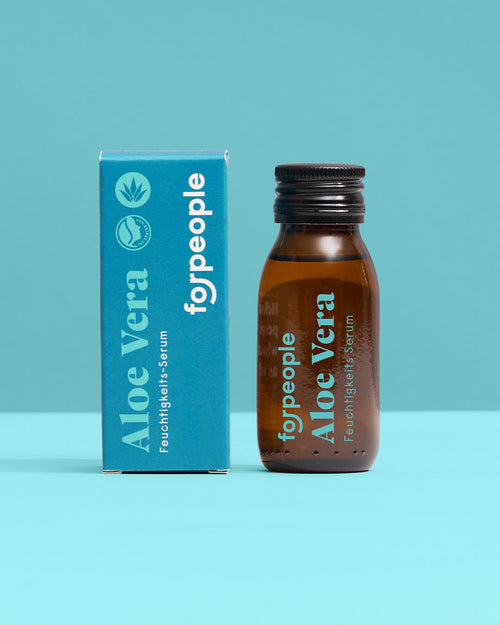
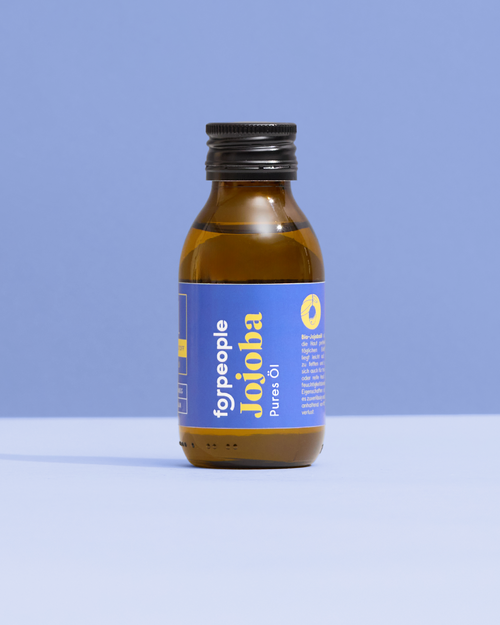
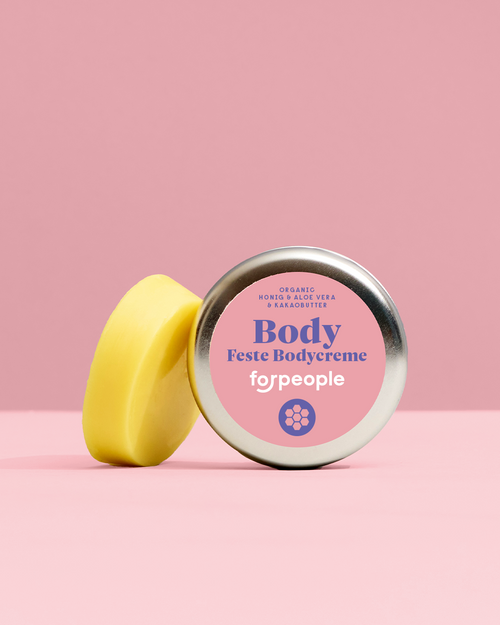
For the face, the Aloe Vera Serum 99.6% fits as the water-based step; according to its product page it contains no alcohol, no perfume and no essential oils. On top go a few drops of Jojoba Oil - pure, which according to its product page is intended for the face and contains no fragrances. How the two layers work together is explained in Combining aloe vera serum with oil or solid cream. For the body, the Solid Body Butter - Beeswax & Aloe Vera is suitable, also without essential oils. If you tend to get spots in the week before your period, Face oil on oily skin: does that work? explains how much oil makes sense on the face.
What helps – and what tends not to
| Measure | Assessment |
|---|---|
| Sticking with products you know in the more sensitive phase | makes sense: on the first day of the period, the skin reacted more strongly to irritants in one study; how to test something new is in Trying a new product: how do I test it on a small area? |
| An exfoliant or acid just before your period | tends not to: the barrier is a little more permeable at that time |
| A separate product for each phase of the cycle | not necessary: the measured differences are small; slightly richer or lighter care is enough |
| Taking or stopping the pill because of your skin | this is a medical decision about a medicine; we do not recommend hormones |
| Supplements meant to "balance" hormones | not on your own initiative; talk to your gynaecologist or pharmacy |
| Drying out spots after stopping the pill with alcohol or scrubbing | tends not to: it makes the skin dry and irritated; more in Spots in winter: when skin is dry and blemished at the same time |
| Drinking more against dryness before your period | with adequate intake, hardly any effect has been shown; see Dry skin despite drinking plenty: what water, diet and omega-3 can do |
Sources: Agner et al. 1991, Harvell et al. 1992, Muizzuddin et al. 2005.
Common mistakes
- Blaming everything on hormones. In winter, heated air, hot showers and new products are often bigger factors; see Facial skin feels tight in winter: causes and what helps.
- Trying something new right before your period. If the skin reacts, it is unclear whether the product or the cycle phase was the reason.
- Reaching for harsh products immediately after stopping the pill. The skin needs time; otherwise drying cleansers become a second problem.
- Applying thick cream to the face because the legs are flaking. Face and body often need different amounts of fat.
- Ignoring heavy bleeding and tiredness. Iron deficiency from heavy periods shows up differently from dry skin; more in Dry skin and vitamin deficiency: causes and what you can do.
When to seek medical advice?
Only a medical examination can show whether changes in the skin or cycle need treatment. A gynaecology practice is responsible for hormones, a dermatology practice for the skin. Seek medical advice if
- you miss your period three times in a row or your cycle becomes irregular, including after stopping the pill (NHS: Stopped or missed periods); a possible pregnancy should always be considered,
- your periods are very heavy or painful, or you feel tired, pale and short of breath,
- a rash appears every month at the same phase of the cycle; such cycle-related skin reactions have been described and belong in a dermatology practice (Raghunath et al. 2015),
- known acne, atopic eczema or psoriasis regularly gets worse before your period; this has been described as well (Raghunath et al. 2015),
- severe acne, hair loss or increased facial hair appear after stopping the pill; hormonal contraception affects skin and hair (Williams et al. 2021),
- your skin stays dry for weeks despite care, itches badly or cracks.
Do not take, switch or stop hormone products or contraceptives on your own because of your skin; discuss it with your doctor.
Frequently asked questions
Why is my skin dry before my period?
In small studies, the skin let a little more water through shortly before the period, when oestrogen and progesterone are low, than before ovulation. In winter, heated air and cold add to this. The differences are small and not noticeable for everyone.
Is skin drier during your period?
In one study, the skin was driest in the first six days of the cycle, and in another study it reacted more strongly to irritants on the first day. Richer care and skipping exfoliants make sense at this time.
Why does skin change after ovulation?
After ovulation, progesterone rises. In one study, skin surface lipids were highest around days 16 to 20 and the barrier was weakest around days 22 to 26. That is why skin can seem oilier and more sensitive at the same time in the second half of the cycle.
Can stopping the pill cause dry skin?
This has hardly been studied. What is known is that combined pills can lower sebum production; when that stops, the skin tends to become oilier or more blemished. It often looks dry when people tackle it with harsh products.
How long does it take for skin to settle after the pill?
There are no reliable figures on this. Watch your skin over a few cycles. If you miss your period three times in a row or your skin becomes very blemished, have it checked by a doctor.
Should I go back on the pill because of my skin?
That is a medical decision involving contraception, risks and your health, not just your skin. Talk about it with your gynaecologist.
What care suits the week before my period?
Products you know, no experiments: cleanse with lukewarm water, on the face something water-based and a few drops of oil on top, on the body a solid butter. Leave out exfoliants and acids during this time.
At forpeople
We sell care for dry, intact skin, not products that act on hormones. The three products contain no essential oils; according to their safety notes, they still do not belong on irritated or injured skin.
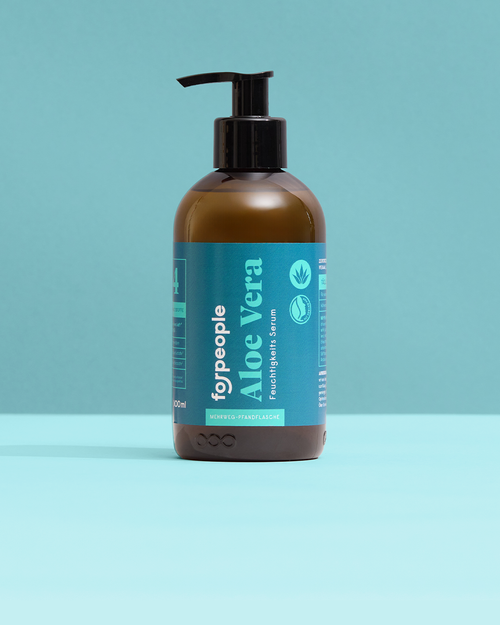
Aloe Vera Serum 99.6%, 50 ml, €9.90: aloe vera juice with citric acid, potassium sorbate and sodium benzoate; as the first, water-based step for the face. For the body there is the 300 ml pump bottle for €27.90.
Jojoba Oil - pure, 100 ml, €16.90: pure jojoba oil for face, body and hair, without fragrances.
Solid Body Butter - Beeswax & Aloe Vera, 40 g, €9.90: water-free, made from cocoa butter, olive oil, beeswax, sunflower oil, shea butter and aloe vera extract, for dry areas on the body.
More: The skin barrier explained simply · Dry skin from stress: what is behind it and what helps · Reacting to a cosmetic: what to do, where to report, returns
Sources
- Farage MA, Neill S, MacLean AB (2009): Physiological changes associated with the menstrual cycle: a review. Obstet Gynecol Surv 64(1): 58–72. https://doi.org/10.1097/OGX.0b013e3181932a37
- Raghunath RS, Venables ZC, Millington GW (2015): The menstrual cycle and the skin. Clin Exp Dermatol 40(2): 111–115. https://doi.org/10.1111/ced.12588
- Harvell J, Hussona-Saeed I, Maibach HI (1992): Changes in transepidermal water loss and cutaneous blood flow during the menstrual cycle. Contact Dermatitis 27(5): 294–301. https://doi.org/10.1111/j.1600-0536.1992.tb03283.x
- Muizzuddin N, Marenus KD, Schnittger SF, Sullivan M, Maes DH (2005): Effect of systemic hormonal cyclicity on skin. J Cosmet Sci 56(5): 311–321. PubMed: https://pubmed.ncbi.nlm.nih.gov/16258697/
- Agner T, Damm P, Skouby SO (1991): Menstrual cycle and skin reactivity. J Am Acad Dermatol 24(4): 566–570. https://doi.org/10.1016/0190-9622(91)70084-f
- del Marmol V, Teichmann A, Gertsen K (2004): The role of combined oral contraceptives in the management of acne and seborrhea. Eur J Contracept Reprod Health Care 9(2): 107–124. https://doi.org/10.1080/1362518042000221508
- Williams NM, Randolph M, Rajabi-Estarabadi A, Keri J, Tosti A (2021): Hormonal Contraceptives and Dermatology. Am J Clin Dermatol 22(1): 69–80. https://doi.org/10.1007/s40257-020-00557-5
- Engebretsen KA, Johansen JD, Kezic S, Linneberg A, Thyssen JP (2016): The effect of environmental humidity and temperature on skin barrier function and dermatitis. J Eur Acad Dermatol Venereol 30(2): 223–249. https://doi.org/10.1111/jdv.13301
- NHS: Stopped or missed periods. Page last reviewed 12.06.2026, accessed 29.10.2026. https://www.nhs.uk/conditions/stopped-or-missed-periods/