The problem: the skin tips over in autumn
In summer a light gel or lotion was enough, and sometimes nothing at all. From the end of September this often changes within a few weeks: after showering the skin on the legs and arms feels tight, fine flakes appear on the shins, the cheeks feel taut after a walk in the wind, and the lips get rough. At the same time many people notice that forehead and nose still look shiny while the cheeks feel tight. Autumn is also typical for the first itch under a woollen jumper and for hands that no longer feel soft again quickly after washing. Your skin has not suddenly changed; the conditions around it have.
Why this happens in autumn
The skin follows the seasons. In a series of measurements with 72 young women examined in all four seasons, stratum corneum hydration and sebum on the cheek were highest in summer and lowest in winter; the skin's water loss behaved the other way round (Yang et al. 2020). The measurements were taken in Kunming, China, where the climate is different, but the direction is the same as in a study on the lower legs of 25 women: in summer the skin was more hydrated, less dry, contained more ceramides, fatty acids and cholesterol and more of a natural moisturising factor than in winter (Wei et al. 2016). Autumn is the transition in between; that is why the changes become noticeable now.
The air gets drier. Cold outdoor air holds little water vapour, and as soon as it is heated indoors its relative humidity drops. According to a review, low humidity and low temperatures reduce the skin's barrier function and make it more susceptible to mechanical stress and more reactive to irritants (Engebretsen et al. 2016). The first days of heating are therefore often the days when the skin feels tight for the first time. How dry heated air really is and what a humidifier does is explained in Humidity and skin: what dry heated air does and what helps.
Summer care works less well now. Light gels and lotions rely mainly on humectants. These draw water from deeper skin layers into the epidermis and only in humid air also from the surroundings (Sethi et al. 2016). In humid summer air that is often enough; in dry heated air the water evaporates again quickly without a film on top.
Showers get warmer. When it is cold outside, many people shower hotter and longer. In one trial, the skin's water loss after a soap solution rose much more at 40 °C than at 20 °C, while plain water did no measurable harm at either temperature (Ohlenschlaeger et al. 1996). So it is the combination of heat and cleanser that puts strain on the skin.
Then there are clothes and wind. Friction from rough clothing, direct heat from fan heaters and frequent bathing are among the known causes of dry skin (DermNet: Dry skin). Outdoors, wind dries the surface further, and switching between cold air and warm rooms challenges the skin all day. Why wool itches right now is explained in Wool itches on the skin: why, and what helps.
The solution step by step
| When | What you do | Why |
|---|---|---|
| Straight away | Shower briefly in lukewarm water, use shower gel only where needed, pat dry instead of rubbing | Heat and surfactants together increase the skin's water loss |
| Straight away | Apply care with fat to still slightly damp skin: body butter, body oil, a solid cream on the hands | The film slows evaporation when the air no longer supplies water |
| Every day | Keep the light care on your face and add a few drops of oil on top: watery first, then oily | Humectants need a film on top in dry air |
| Every day | Care for lips and hands before going out, take gloves and a scarf | Wind and cold dry out unprotected skin first |
| Prevention | Measure indoor humidity, do not overheat, air rooms briefly and fully | Low humidity weakens the barrier |
| Prevention | Wear a thin cotton layer under coarse wool | Friction dries the skin out further |
Sources for the table: Engebretsen et al. 2016, Sethi et al. 2016, Ohlenschlaeger et al. 1996, DermNet; the routines themselves are common practice.
Switching does not mean replacing everything. It is usually enough to make your care one step richer and put it where it works:
| Area | Summer | Autumn | Winter |
|---|---|---|---|
| Face | light, watery care | watery care plus a few drops of oil | watery care plus oil, applied earlier in the morning |
| Body | a light lotion if needed, or nothing | body oil or body butter after showering | butter or oil every day, do not forget the shins |
| Hands | as needed | a small amount of solid cream after washing | after every wash, more in the evening, gloves outdoors |
| Lips | lip care with sun protection in the sun | lip care before going out | several times a day, thicker in the evening |
| Showering | cool to lukewarm | lukewarm, short | lukewarm, short, not shower gel all over every day |
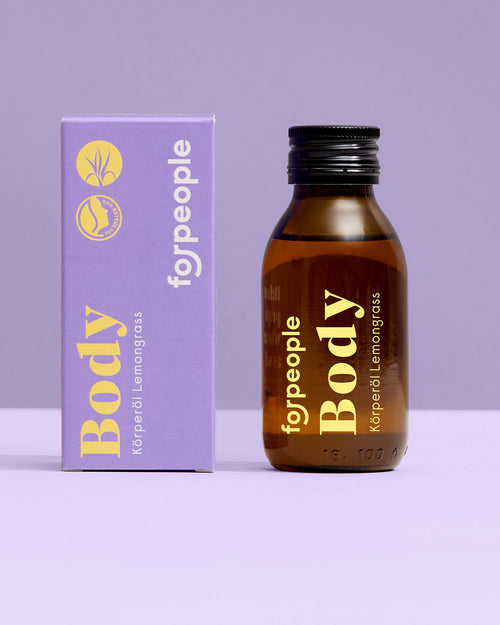
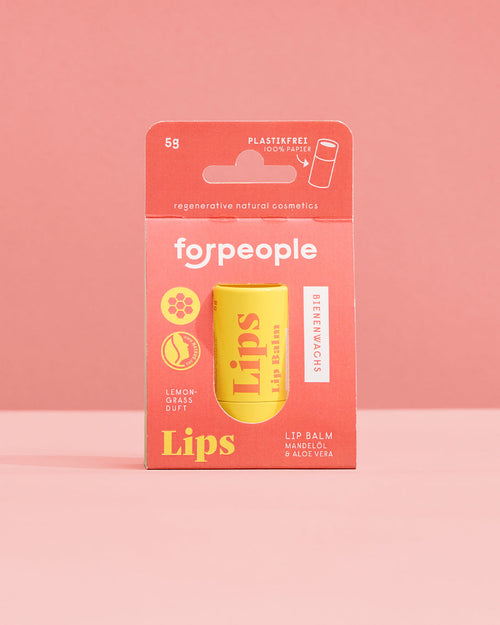
The table is a guide from practice, not a fixed rule. For the face, the combination of the Aloe Vera Serum 99.6%, which according to its product page is meant for face, body and hair, and the Face Oil - Lavender, whose product page explicitly recommends it after the serum on slightly damp skin, works well; the oil contains lavender essential oil with the fragrance components linalool and limonene. For the body there are the Solid Body Butter - Beeswax & Aloe Vera and the Body Oil - Lemongrass, for the hands the Solid Hand Cream - Beeswax and for the lips the Lip Balm - Lemongrass. What distinguishes oil and butter on the body is explained in Body oil or body butter – which one when?; how the layers fit together on the face in Rich cream or moisturiser? What dry skin needs.
What helps – and what does not
| Measure or assumption | Assessment |
|---|---|
| Care one step richer | helps; a film of fat holds the water when the air gets dry |
| Lukewarm instead of hot showers | helps; heat increases the effect of cleansers on the skin |
| Humidifier | can improve the indoor air, but must be cleaned carefully |
| "Drink more and your skin will be hydrated" | weakly supported; extra drinking increased skin hydration only slightly in studies |
| A hot bath to warm up | pleasant, but rather unfavourable for dry skin, especially with bath additives |
| Scrubbing away flakes | possible with little pressure and rarely; not on irritated or cracked skin |
| "Oily forehead, so only light care" | often both at once: light care on the forehead, a little more fat on the cheeks |
Sources: Sethi et al. 2016, Ohlenschlaeger et al. 1996, Akdeniz et al. 2018. On humidifiers see Humidity and skin, on scrubs Making a body scrub from oil and sugar. On drinking: a systematic review found only six suitable studies and describes the evidence as weak; whether drinking more improves dry skin is open (Akdeniz et al. 2018). If your skin becomes dry and blemished at the same time in autumn, see Spots in winter: when skin is dry and blemished at the same time; whether an oil suits your face then is explained in Face oil on oily skin: does that work?
Common mistakes
- Using the summer gel until December. Without fat on top, the water evaporates quickly in dry air.
- Only reacting when the skin cracks. Brittle skin and cracks take longer than a timely switch; for cracked hands see Cracked hands in winter: home remedies, causes, what helps.
- Showering hot and long to warm up. It is exactly the combination of hot water and shower gel that dries the skin out.
- Turning up the heating and leaving the window tilted open. Airing briefly and fully exchanges the air without cooling the rooms down.
- Licking your lips. Saliva evaporates and takes moisture with it; more in Why do lips dry out so quickly?
- Only getting out the scarf and hat when it freezes. Wind dries the face and ears even on mild days; see Dry, flaky skin on the ears.
When to get medical advice
Dry skin in autumn is common and can usually be managed well with care. People with atopic dermatitis often notice the change particularly: according to the research, cold, dry weather increases the risk of flare-ups (Engebretsen et al. 2016). Have your skin looked at by a doctor if
- it itches badly, especially at night, or you scratch it until it bleeds,
- red, weeping, scaly or sharply defined patches form that do not go away,
- cracks are deep, bleed or become inflamed,
- the dryness appears for no obvious reason and affects large parts of the body; causes can include an underactive thyroid, kidney disease or medicines (DermNet: Dry skin),
- known atopic dermatitis or psoriasis gets markedly worse in autumn.
More on itching in the cold season in Itchy skin in winter: showering, care and when to see a doctor. A skincare cream keeps dry skin supple; it does not treat a disease.
Frequently asked questions
Why does my skin get dry in autumn?
The outdoor air holds less water, the heating lowers indoor humidity, and people shower hotter. Measurements show that the stratum corneum contains less moisture and fewer lipids in winter than in summer; autumn is the transition.
When should I switch my skincare?
When your skin feels tight after showering for the first time or the heating comes on. Then it is usually enough to make your care one step richer.
Is my summer skincare still enough in autumn?
Light gels and lotions work with humectants, which draw little water from the surroundings in dry air. Add a film of oil or butter on top or switch to richer care.
Why does my skin itch in autumn?
Dry skin itches more easily, and in autumn wool, heated air and hot showers come together. Shower in lukewarm water, moisturise afterwards and wear a base layer under coarse wool. If it itches badly or at night, have it looked at by a doctor.
Why is my skin dry and blemished at the same time in autumn?
Forehead and nose keep producing sebum while cheeks and chin dry out. Light care where it shines and a little more fat where it feels tight often works better than one product for the whole face.
Should I shower less in autumn?
Not necessarily less, but shorter and lukewarm. Use shower gel only where needed and then moisturise the still slightly damp skin.
Does a humidifier help with dry skin in autumn?
It can make the indoor air more humid, but it does not replace the film of fat on the skin and must be cleaned thoroughly and regularly.
At forpeople
For the switch into the cold season, a watery product and a film of oil, butter or wax work together. For dry skin, not for irritated or broken skin.
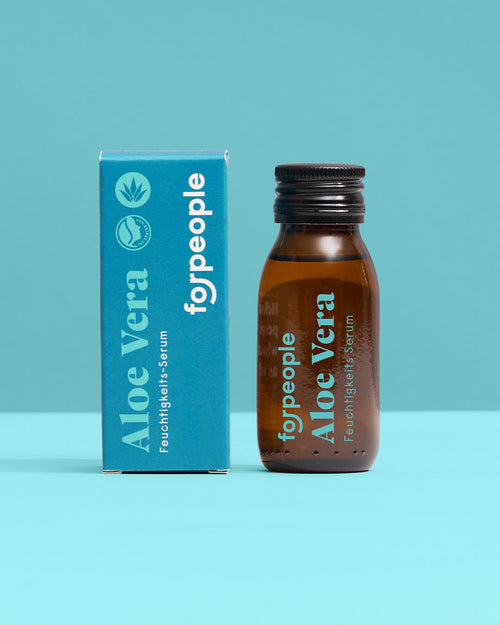
Aloe Vera Serum 99.6%, 50 ml, €9.90: aloe juice with citric acid, potassium sorbate and sodium benzoate, the watery first layer for face and body.
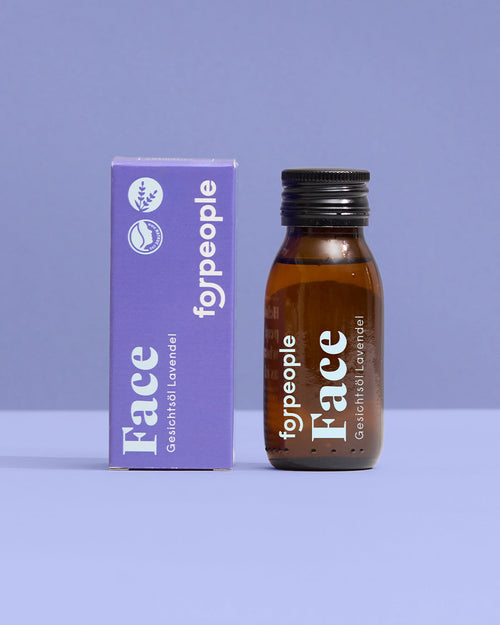
Face Oil - Lavender, 50 ml, €21.90: argan, rosehip, jojoba, borage and hemp seed oil with lavender oil, a few drops over the serum.
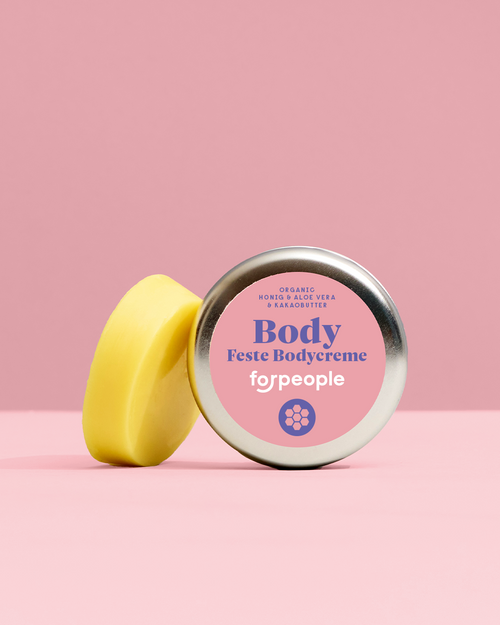
Solid Body Butter - Beeswax & Aloe Vera, 40 g, €9.90: cocoa butter, shea butter, beeswax and plant oils, after showering on damp skin.
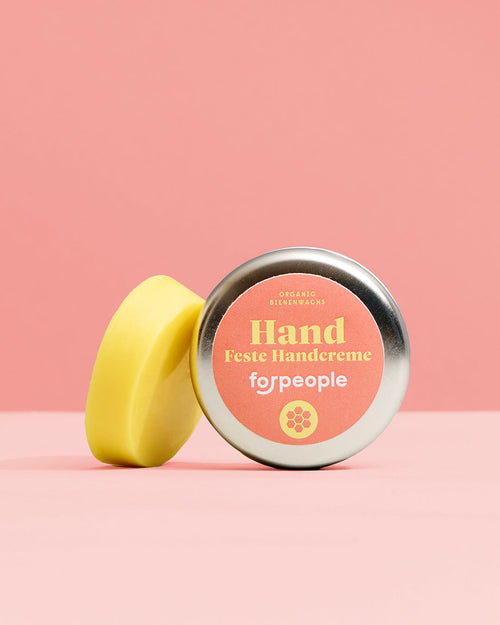
Solid Hand Cream - Beeswax, 30 g, €9.90: beeswax, olive and sunflower oil, no essential oils.
More on this: Dry skin in winter: what helps with cold and indoor heating · Why does skin feel tight after a shower? · Why are shins dry and flaky in winter?
From the blog: Face and lips through winter: a routine for every day · Hands and feet through winter: a routine for morning and evening
Sources
- Engebretsen KA, Johansen JD, Kezic S, Linneberg A, Thyssen JP (2016): The effect of environmental humidity and temperature on skin barrier function and dermatitis. J Eur Acad Dermatol Venereol 30(2): 223–249. https://doi.org/10.1111/jdv.13301
- Yang J, Tu Y, Man MQ, Zhang Y, Cha Y, Fan X et al. (2020): Seasonal variations of epidermal biophysical properties in Kunming, China: A self-controlled cohort study. Skin Res Technol 26(5): 702–707. https://doi.org/10.1111/srt.12857
- Wei KS, Stella C, Wehmeyer KR, Christman J, Altemeier A, Spruell R et al. (2016): Effects of season stratum corneum barrier function and skin biomarkers. J Cosmet Sci 67(3): 185–203. PubMed: https://pubmed.ncbi.nlm.nih.gov/29394019/
- Sethi A, Kaur T, Malhotra SK, Gambhir ML (2016): Moisturizers: The Slippery Road. Indian J Dermatol 61(3): 279–287. https://doi.org/10.4103/0019-5154.182427
- Ohlenschlaeger J, Friberg J, Ramsing D, Agner T (1996): Temperature dependency of skin susceptibility to water and detergents. Acta Derm Venereol 76(4): 274–276. https://doi.org/10.2340/0001555576274276
- DermNet: Dry skin. Oakley A (1997), updated March 2022, accessed 29.10.2026. https://dermnetnz.org/topics/dry-skin
- Akdeniz M, Tomova-Simitchieva T, Dobos G, Blume-Peytavi U, Kottner J (2018): Does dietary fluid intake affect skin hydration in healthy humans? A systematic literature review. Skin Res Technol 24(3): 459–465. https://doi.org/10.1111/srt.12454