







The problem: dry, cracked skin on the toes and ankles
On the big toe, the skin on the inner side and at the tip becomes hard and cracks, and flakes of skin stick out at the edge of the nail. The little toe has a rough, thickened area on its outer side, sometimes with a painful corn. On the tops of the toes, where the joints press against the upper of the shoe, the skin becomes rough and red. At the ankle, where the boot shaft and the cuff of the sock rub, it flakes finely. This is typical from autumn: the winter boots come out of the cellar, thick socks make shoes tighter, and feet sweat in the shoe and dry out again in the heated air.
The skin between the toes is a special case. If it is white, softened, flaky or cracked, it is often not dry skin but athlete's foot; more on this below and in Dry feet or athlete's foot? Signs and when to see a doctor.
Why the toes crack in winter
Pressure and friction in the shoe. Hard skin is a normal reaction of the skin to ongoing pressure or friction; corns and calluses are caused mainly by poorly fitting shoes, foot deformities and high levels of activity (Freeman 2002). This includes uncomfortable shoes, shoes in the wrong size, high heels and shoes without socks (NHS: Corns and calluses). In winter, stiff boots and thick socks also reduce the room in the shoe; this is an observation from practice. On the big toe, rolling off with each step presses on the skin, on the little toe the side wall of the shoe. Why thickened hard skin cracks instead of stretching is explained in Why heel skin gets so thick and cracks; the same principle applies to the toes.
First damp, then dry. In closed winter shoes the feet sweat, and in the evening they dry out in the heated air. For a skin condition that mainly affects children and is also called "atopic winter feet", a dermatology reference describes exactly this sequence: sweat in closed, often synthetic shoes, followed by rapid drying, which leads to cracks, especially on the ball of the big toe and the forefoot (DermNet: Juvenile plantar dermatosis). How the climate inside the shoe affects the feet in winter in general is covered in Dry feet in winter: what causes it, what helps?
Cold and heated air. According to a review, low temperatures and low humidity reduce the skin's barrier function and make it more susceptible to mechanical stress (Engebretsen et al. 2016), which includes the pressure inside the shoe.
Thin skin on the toes and ankles. Unlike on the heel and ball of the foot, the skin on the tops of the toes, on the back of the foot and at the ankle is thin and resembles the skin on the back of the hand; more on this in Hand cream on your feet, foot cream on your hands: does it work? At the ankle, boot shafts, sock cuffs and, for some people, compression stockings rub; for the latter there is Dry skin under compression stockings: causes and what helps.
Nail care. If you cut the skin at the edge of the big toenail, cut the nails round or very short, or pull off flakes of skin, you easily injure the skin there. The International Working Group on the Diabetic Foot advises cutting toenails straight across (Schaper et al. 2024); that is a good rule even without diabetes.
The solution step by step
| Step | What you do | Why |
|---|---|---|
| Straight away | Find the pressure point: shoe, seam, sock; if the winter boot pinches, wear it with thinner socks or change it | Hard skin and cracks come back as long as the pressure remains |
| Straight away | Do not cut or tear off hard skin, corns or flakes of skin | Blades and scissors easily injure the living skin underneath |
| Every day | Wash your feet with lukewarm water and dry them thoroughly, especially between the toes | Thorough drying between the toes is one of the first preventive measures against athlete's foot |
| Every day | Change your socks every day, alternate your shoes and let them dry completely in between | Constantly damp, closed shoes strain the skin |
| Every evening | Apply a rich foot cream to the big toe, the tops of the toes, the toe tips, the back of the foot and the ankles, not between the toes; loose cotton socks over it | The film of fat keeps the skin supple; between the toes the skin should stay dry |
| Prevention | Try on winter shoes with socks, cut toenails straight across, smooth hard areas only carefully with a file | Enough room reduces the pressure; straight nails leave the nail edge alone |
| Prevention | For pressure points, soft pads or insoles from the pharmacy; for foot deformities, advice from a podiatrist | Pads spread the pressure |
Sources for the table: Freeman 2002, NHS: Corns and calluses, DermNet: Tinea pedis, Schaper et al. 2024; the order is common practice. How to smooth hard skin without a blade is covered in Pumice Stone Wet or Dry? How to Remove Calluses Properly, and why socks overnight make sense in Foot cream overnight with socks: does it help?
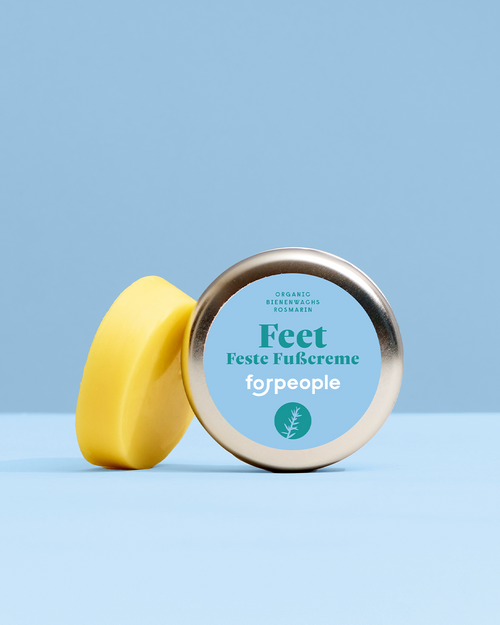
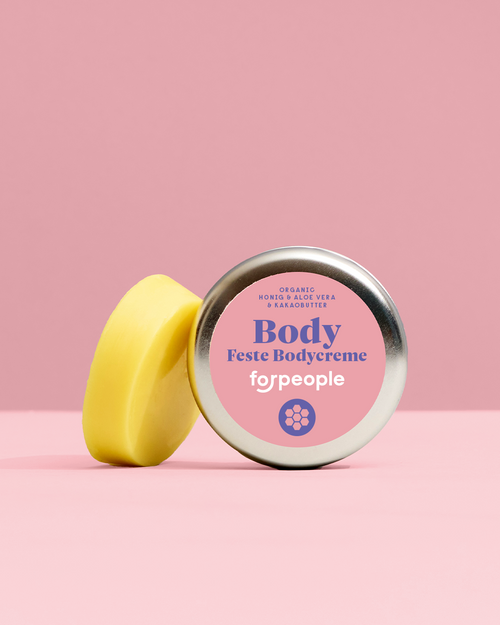
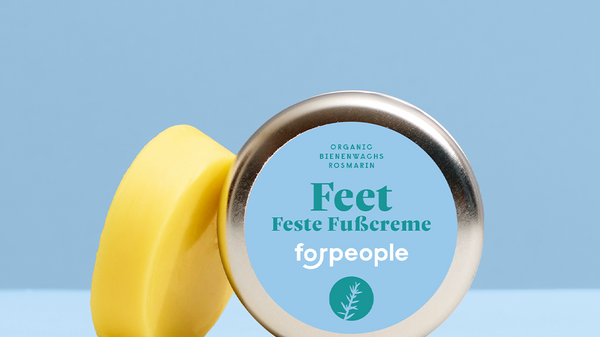
For the toes, use the same care as for the rest of the foot, just in a small amount. According to its product page, the Solid Foot Cream – Rosemary & Sage is meant for dry, rough feet and heels with superficial cracks. It consists of sunflower and olive oil, beeswax and shea butter, plus St. John's wort and aloe extract and essential oils of rosemary, eucalyptus and clary sage. For the toes, warm the bar briefly in your hand and apply the cream with your fingers instead of rubbing it over the skin. The product page gives three notes: not on injured skin, not for children under 7 because the cream contains eucalyptol and camphor, and with diabetes or reduced sensation in the feet, have skin changes checked by a professional early on. If you do not want essential oils on your feet, use the Solid Body Butter - Beeswax & Aloe Vera, which according to its product page is for dry or stressed areas of skin; more on this in Can I use body butter on hands, feet and face?
What helps – and what tends not to
| Measure or assumption | Assessment |
|---|---|
| A rich foot cream in the evening, socks over it | helps dry, rough skin on the toes and ankles |
| Cream between the toes | no; the skin there should stay dry |
| Removing hard skin on the toe with a blade, plane or scissors | no; risk of injury, especially with diabetes |
| Corn plasters or solutions containing acid | not with diabetes, circulation problems or reduced sensation; otherwise ask at the pharmacy first |
| A long, hot foot bath | better not; it softens the skin; with diabetes, water always below 37 °C |
| A hot-water bottle or heating pad on cold feet | not with diabetes or reduced sensation, because burns can go unnoticed |
| Foot powder for sweaty feet | can help keep the spaces between the toes dry |
Sources: NHS: Corns and calluses, DermNet: Tinea pedis, Schaper et al. 2024. The other entries are our assessment. What a foot bath before moisturising does is covered in Foot soak before moisturising: how long, how warm, is it worth it?
Common mistakes
- Moisturising between the toes. The skin there stays damp and soft; care belongs on the tops of the toes, the tips and the ankles.
- Cutting off hard skin on the big or little toe. It comes back as long as the pressure remains, and the blade easily hits living skin.
- Cutting the nails round and very short. The nail edge gets irritated, and nails can grow in.
- Wearing last year's winter boots with thicker socks. The shoe becomes too tight, and the toes rub.
- Keeping wet socks on after snow and rain. Wetness followed by drying out takes its toll on the skin.
- Taking white, cracked skin between the toes for dry skin. That is a typical picture of athlete's foot.
When to seek medical advice
A foot cream cares for dry, rough skin; it does not treat fungus, corns or wounds. Have your feet looked at by a podiatrist or doctor if
- you have diabetes, circulation problems, a weakened immune system or reduced sensation in your feet; then do not treat hard skin and corns yourself (NHS: Corns and calluses), check your feet every day, including between the toes, and have them examined regularly by a professional (Schaper et al. 2024); more in Dry skin with diabetes: why it develops and how to care for your feet and legs,
- the skin between the toes itches or is white and softened, flaky or sore, often between the fourth and fifth toe; this can be athlete's foot (DermNet: Tinea pedis),
- a corn or a hard area hurts badly, bleeds, discharges pus or fluid, or has not improved after three weeks of self-care (NHS: Corns and calluses),
- toes swell red or purple, itch or burn a few hours after damp cold and this lasts longer than a day; these can be chilblains (DermNet: Chilblains), see Red hands and cheeks in the cold: what is normal and what helps,
- toes turn white or blue in the cold, stay numb or hurt badly after warming up,
- in a child, the skin on the balls of the feet, especially the ball of the big toe, becomes red, shiny and cracked while the spaces between the toes stay clear (DermNet: Juvenile plantar dermatosis); that belongs in the paediatrician's practice, and according to its product page our foot cream is only meant for ages 7 and up,
- the nail fold is red, swollen, warm or contains pus, or a nail is growing in,
- cracks are deep, bleed or hurt when you walk; see Cracked heels: when to see a podiatrist or doctor.
Frequently asked questions
Why is the skin on my big toe dry and cracked?
When you walk, you roll off over the big toe, and inside the shoe it presses and rubs there. The skin forms hard skin, which is less elastic and cracks. More room in the shoe, moisturising in the evening and not cutting the hard skin help.
Why is the skin on the tops of my toes dry?
The skin there is thin, and the toe joints rub against the upper of the shoe. In tight winter shoes with thick socks, the friction increases.
What helps dry skin on the ankle?
Check the boot shaft and sock cuffs, apply a thin layer of a rich cream in the evening and, if needed, wear softer socks without a tight cuff.
Can I moisturise between my toes?
No. The skin there should stay dry. Drying thoroughly between the toes is enough; experts explicitly advise not to apply care between the toes.
Dry skin between the toes, but no itching: can it be fungus?
You often cannot tell for sure with the naked eye. If the skin between your toes stays flaky, white or cracked despite thorough drying, have a skin sample taken.
Which cream is good for cracked toes?
A rich foot or body care product, applied in a small amount to the dry areas in the evening. Deep, bleeding or painful cracks do not belong under cream but in a podiatrist's hands.
Can I cut off hard skin on my little toe?
No. At most, smooth it carefully with a file and take away the pressure. With diabetes or circulation problems, leave this to a podiatrist.
Is the solid foot cream suitable for children?
According to its product page, not for children under 7, because it contains eucalyptol and camphor. Cracked children's feet belong in the paediatrician's practice.
At forpeople
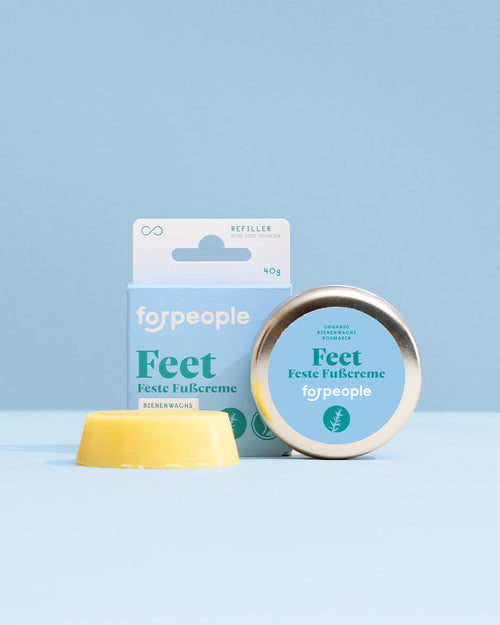
For the feet we have a solid, water-free foot cream in a refillable metal tin.
Solid Foot Cream – Rosemary & Sage, 40 g, €9.90: sunflower and olive oil, beeswax, shea butter and essential oils; not for children under 7.
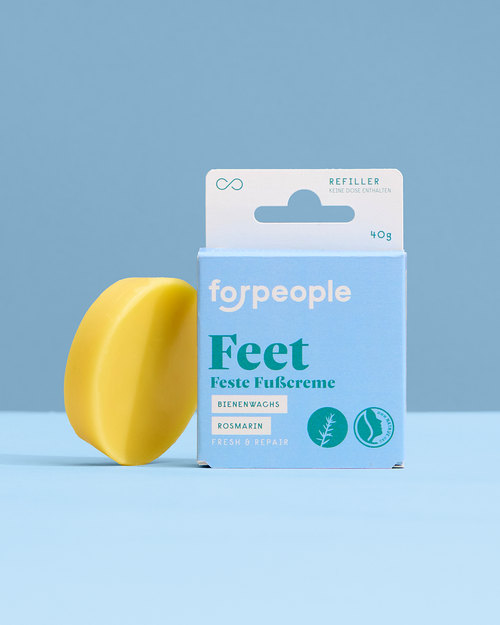
Solid Foot Cream Refill - Rosemary & Sage, 40 g, €7.90: the same formula for refilling the tin.
Foot Care Set – For Dry, Rough Feet (2× Rosemary Cream), 80 g in total, €16.90.
Solid Body Butter - Beeswax & Aloe Vera, 40 g, €9.90: without essential oils, for anyone who does not want a herbal scent on their feet.
More on this: Calluses keep coming back: why they regrow and what helps · Sweating in winter: causes and what you can do · Foot care before and after hiking · Urea or water-free cream? Rough heels and dry hands
From the blog: What goes into the solid foot cream – and why
Sources
- Engebretsen KA, Johansen JD, Kezic S, Linneberg A, Thyssen JP (2016): The effect of environmental humidity and temperature on skin barrier function and dermatitis. J Eur Acad Dermatol Venereol 30(2): 223–249. https://doi.org/10.1111/jdv.13301
- Freeman DB (2002): Corns and calluses resulting from mechanical hyperkeratosis. Am Fam Physician 65(11): 2277–2280. PubMed: https://pubmed.ncbi.nlm.nih.gov/12074526/
- NHS: Corns and calluses. Last reviewed 28.07.2026, accessed 29.10.2026. https://www.nhs.uk/conditions/corns-and-calluses/
- DermNet: Juvenile plantar dermatosis. Oakley A (1997), updated by Eshraghi A and Oakley A, March 2018, revised September 2020, accessed 29.10.2026. https://dermnetnz.org/topics/juvenile-plantar-dermatosis
- DermNet: Tinea pedis. Created 2003, updated by Stewart T, April 2018, accessed 29.10.2026. https://dermnetnz.org/topics/tinea-pedis
- Schaper NC, van Netten JJ, Apelqvist J, Bus SA, Fitridge R, Game F et al. (2024): Practical guidelines on the prevention and management of diabetes-related foot disease (IWGDF 2023 update). Diabetes Metab Res Rev 40(3): e3657. https://doi.org/10.1002/dmrr.3657
- DermNet: Chilblains. Oakley A (1999), updated by Tang GT and Nixon R, February 2021, accessed 29.10.2026. https://dermnetnz.org/topics/chilblains