The problem: dry, itchy legs under the stocking
The day starts with the stocking, before breakfast. In the evening it comes off again, and that is when you notice your shins: dull, finely flaking, a red line where the top band sat, and a tight feeling. During the heating season, when indoor air is dry, it usually gets more noticeable. The obvious idea, putting on a thick layer of cream in the morning, is exactly what patient leaflets advise against.
This is not unusual. In a survey at Bochum University Hospital, 58.5 percent of the 110 respondents named dry skin as a side effect, 32.7 percent itching, 29.1 percent slipping and 24.5 percent constriction of the stocking. The authors conclude that dry skin in particular needs improving, for example through skin care (Reich-Schupke et al. 2009). It has also been measured: in a study from Greifswald, 33 people, mostly from the care professions, wore conventional compression stockings for one week. Afterwards the outer skin layer of their legs held less water, water loss through the skin was higher and the surface was rougher than before (Mayer-Yousif et al. 2021). In 50 people with chronic venous insufficiency, skin moisture also fell under conventional stockings and roughness increased (Westphal et al. 2019).
Why it happens under the stocking, and more so in winter
Why this happens is not fully understood. An international consensus statement names three reasons:
- The stocking sits closely on the skin. According to this statement, most inflammatory skin reactions under compression are caused by drying out and irritation from the sealing effect of the material, not by an allergy (Rabe et al. 2020).
- The fabric rubs. Over joints and at the top band, red lines or patches often remain after taking the stocking off. They fade, but they show where the fabric has worked against the skin (Rabe et al. 2020).
- The skin is often already under strain. People who wear compression because of a vein condition often already have skin on their lower legs that has changed due to blood pooling (Rabe et al. 2020).
In winter, add the things that dry out legs anyway: little natural skin oil on the lower leg, dry heated air, hot showers. This is covered in detail in Why are shins dry and flaky in winter? The German guideline on compression therapy states that sensitive skin can itch, scale and become inflamed under compression, and therefore explicitly recommends regular skin care (Rabe et al. 2021).
The solution step by step
Patient leaflets from Germany and the UK agree that skin care belongs in the evening. The leaflet from Heidelberg University Hospital advises putting the stockings on straight after getting up, while the legs are not yet swollen, over washed but dry skin, and not using creams in the morning (Heidelberg University Hospital 2022). A British NHS hospital gives the reason: cream in the morning makes the garment harder to put on and moisturises less well than in the evening, after taking it off (DCHFT 2025).
| Step | What you do | Why |
|---|---|---|
| Right away: in the evening after taking it off | Wash your legs briefly in lukewarm water, pat dry, apply an oil-based product to the still slightly damp skin, on the feet not between the toes | The care has the night to work; a film of fat slows evaporation |
| Every morning | Put the stocking on straight after getting up over clean, dry skin; no cream, no oil; take a quick look at your skin | Legs are not swollen yet; grease makes donning hard and can loosen the silicone band |
| Every evening: the stocking | Wash the stocking, no fabric softener, do not dry it on the radiator | Sweat and dirt wear out the material |
| Prevention: silicone band | Keep the band clean, apply only a thin layer or nothing to the area underneath, move the band slightly from time to time | Cream reduces the grip; moving the band helps prevent irritation |
| Prevention: winter | shower briefly and lukewarm, do not overheat rooms | hot water and dry air draw extra water from the skin |
| Prevention: the stocking | have the fit checked if it slips or digs in; have it replaced after about six months | a worn-out stocking no longer holds the pressure and rubs |
Sources for the table: Heidelberg University Hospital 2022, DCHFT 2025, Rabe et al. 2021, Instructions for use 2024. Why it pays to apply care to slightly damp skin is explained in Occlusion and TEWL: how a wax film protects your skin. A compression bandage that also stays on at night is a different situation; then your doctor or nurse will tell you when and where to apply care.
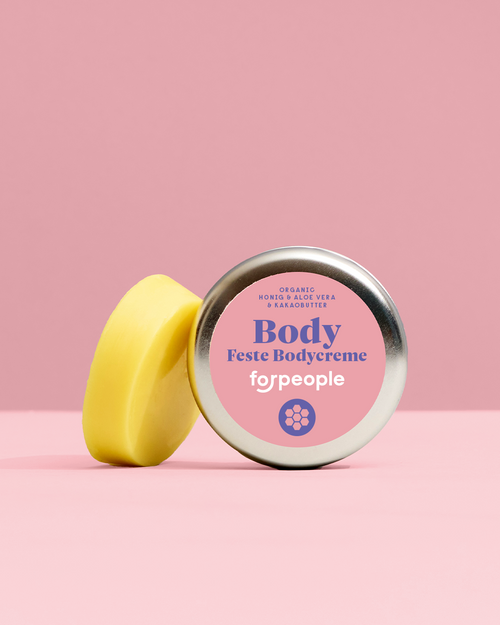
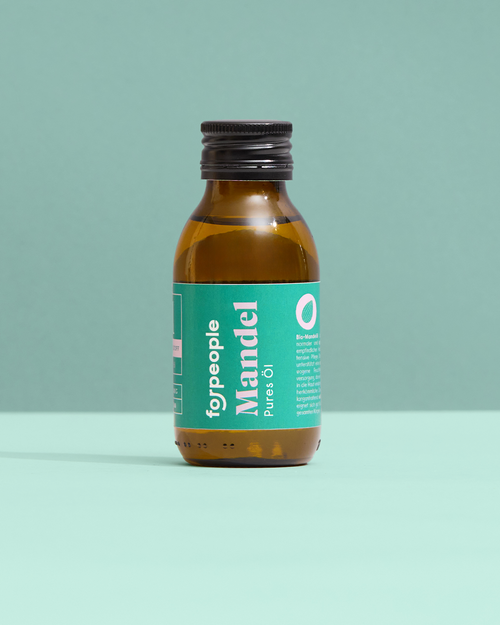
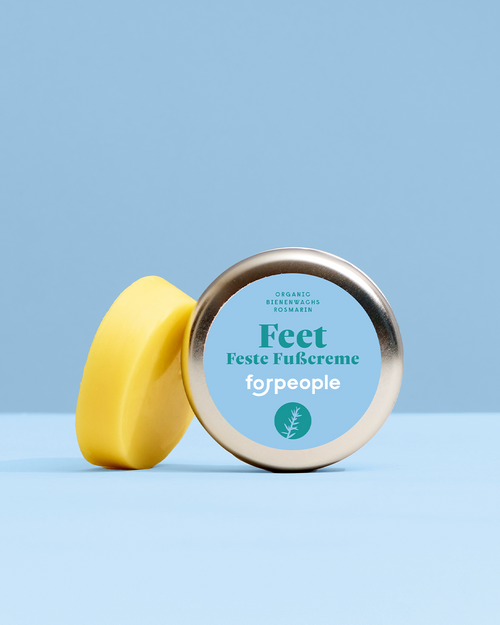
For the shins, the Solid Body Butter - Beeswax & Aloe Vera is a good fit: it melts on warm skin and spreads thinly; according to the product page it keeps dry areas such as elbows and shins supple, and according to the ingredient list it contains no essential oils. Over the whole leg, the Almond Oil - pure spreads quickly; according to its ingredient list it consists of almond oil only. For heels and balls of the feet, the Solid Foot Cream – Rosemary & Sage is, according to its product page, meant for exactly this routine: in the evening on slightly damp skin, followed by loose cotton socks. It contains essential oils and, according to the product page, is not suitable for children under 7. What happens under the sock is explained in Foot cream overnight with socks: what does it do?
The Heidelberg patient leaflet also advises keeping toenails and fingernails trimmed and filed and taking off rings before putting the stockings on (Heidelberg University Hospital 2022); this protects both skin and fabric. Why foot skin suffers in winter in particular is covered in Dry feet in winter: what causes it and what helps?
What helps, and what does not really
| Measure | Assessment |
|---|---|
| An oil-based product in the evening, for example a water-free body butter or a plant oil | fits: the guideline recommends regular skin care, patient leaflets place it in the evening |
| Moisturising in the morning before putting the stocking on | better not: it makes donning harder and can loosen the silicone band |
| Lotion with water and urea | possible in the evening; urea can sting on irritated or scratched skin |
| Stocking with a care emulsion worked into the fabric | in two studies, skin moisture was largely preserved; whether it is an option for you is for your doctor or medical supply shop to decide |
| Long, hot showers to stop the itching | better not: hot water dries the skin out further |
| Leaving the stockings off because the skin is dry | not on your own initiative: skin irritation can usually be managed without interrupting compression |
Sources: Rabe et al. 2021, Rabe et al. 2020, Westphal et al. 2019, Mayer-Yousif et al. 2021, Heidelberg University Hospital 2022, DCHFT 2025. The Greifswald studies tested stockings, not moisturising in the evening; we found no comparative studies on that. On urea, see Urea or water-free cream? Rough heels and dry hands; on the difference between oil-based and water-rich care, Rich cream or moisturiser? What dry skin needs.
On the material: medical compression stockings today are mostly made of polyamide and elastane, often with cotton. The guideline describes elastane as resistant to oil and grease, natural rubber as not resistant to grease; natural rubber and latex are hardly used in modern stockings any more, at most in the top band (Rabe et al. 2021). The silicone band of many thigh-length stockings is the more delicate part. The instructions for use from a German manufacturer say not to let such stockings come into contact with solvents, ointments, creams or re-oiling body washes, because the grip can be permanently impaired (Instructions for use 2024). What applies to your stocking is in its instructions for use; they take precedence over general rules.
Common mistakes
- Applying a thick layer in the morning so that the skin does not feel tight during the day. The stocking is then hard to put on, and the silicone band slips.
- Greasy fingers on the stocking. Wash it before you moisturise, or wash your hands afterwards.
- Drying the stocking on the radiator or washing it with fabric softener. The Heidelberg leaflet advises against both (Heidelberg University Hospital 2022).
- Cream on open or weeping areas. That belongs with a doctor; according to their safety notes, our products are not for irritated or broken skin.
- Prescribing compression for yourself or stopping it on your own. Whether it is right for you, at what strength and length, depends on the diagnosis. The guideline lists situations in which compression is not appropriate or only after weighing up the risks, such as advanced arterial circulation problems in the legs, uncompensated heart failure, marked weeping skin changes or severe loss of sensation, for example with diabetes (Rabe et al. 2021). Stockings bought or borrowed without measuring and a prescription do not replace this.
- Carrying on with a worn-out stocking. According to the guideline, a stocking keeps its prescribed pressure for about six months if cared for properly (Rabe et al. 2021).
When to see a doctor
Take the stocking off immediately and have your leg checked if your toes turn bluish or white, go numb or tingle, if pain increases or if you become short of breath (Rabe et al. 2021), (DCHFT 2025). Also have your skin looked at by a doctor if
- red, scaly, itchy or weeping patches appear on your lower leg or the skin turns brownish. This can be stasis dermatitis, which is considered a consequence of venous insufficiency and is easily confused with an infection or a contact allergy (Yosipovitch et al. 2023),
- an open area, a wound or an ulcer appears on your leg; no skin care cream belongs on it,
- red pressure marks or blisters do not fade within a short time, or the stocking digs in or slips (Heidelberg University Hospital 2022),
- the swelling increases despite compression, or just one leg suddenly becomes swollen, warm and painful,
- you have diabetes or reduced sensation in your feet and notice skin changes.
What to do if a product does not agree with you is covered in Reacted to a cosmetic product: what to do, whom to tell, can you return it?
Frequently asked questions
Can I moisturise before putting on compression stockings?
Preferably not. Patient leaflets advise putting the stockings on in the morning over washed, dry skin without cream. Cream makes donning harder and can loosen a silicone band. Moisturise in the evening after taking them off.
Why do my legs get so dry under the stockings?
The stocking sits closely and rubs, and with vein conditions the skin on the lower legs has often already changed. In measurements, skin moisture fell after one week with conventional stockings and the skin became rougher.
Does cream damage compression stockings?
According to the guideline, elastane is resistant to oil and grease, natural rubber is not. The silicone band is the delicate part: manufacturers' instructions advise keeping creams and ointments away from it, because otherwise it grips less well.
Which cream works for legs under compression?
For the evening, an oil-based product, for example a water-free body butter or a plant oil, applied thinly to still slightly damp skin. If the skin is irritated, weeping or open, your doctor decides on the care.
What can I do if my legs itch under the stockings?
Itching under compression is often linked to dry skin. The usual first steps are moisturising in the evening, showering lukewarm rather than hot and having the fit of the stocking checked. If it persists, or red, scaly or weeping patches appear, see a doctor.
Can I stop wearing compression stockings if my skin is dry?
That is not a decision to make alone. According to the consensus statement, skin irritation under compression can usually be managed without interrupting treatment. Talk to the practice that prescribed the stockings.
At forpeople
Our care is meant for dry, intact skin in the evening, after you take off your stockings. It replaces neither compression nor medical treatment.
Solid Body Butter - Beeswax & Aloe Vera, 40 g, €9.90: water-free, made of cocoa butter, olive oil, beeswax, sunflower oil, shea butter and aloe vera extract; for shins and other dry areas.
Body Care Set – For Dry, Tight Skin (2× Body Butter), 80 g, €16.90: one tin and one refill of the body butter.
Almond Oil - pure, 100 ml, €14.90: almond oil only, for large areas such as your whole legs.
Solid Foot Cream – Rosemary & Sage, 40 g, €9.90: water-free, for heels and balls of the feet in the evening; contains essential oils of rosemary, eucalyptus and clary sage.
More on this: Moisturising your body: morning or evening? · Why does body skin get drier with age? · Itchy skin in winter: showering, care and when to see a doctor
Sources
- Rabe E, Földi E, Gerlach H, Jünger M, Lulay G, Miller A et al. (2021): Medical compression therapy of the extremities with medical compression stockings (MCS), phlebological compression bandages (PCB), and medical adaptive compression systems (MAC). S2k guideline of the German Phlebology Society (DGP). Hautarzt 72(Suppl 2): 37–50. https://doi.org/10.1007/s00105-020-04706-z
- Rabe E, Partsch H, Morrison N, Meissner MH, Mosti G, Lattimer CR et al. (2020): Risks and contraindications of medical compression treatment – A critical reappraisal. An international consensus statement. Phlebology 35(7): 447–460. https://doi.org/10.1177/0268355520909066
- Reich-Schupke S, Murmann F, Altmeyer P, Stücker M (2009): Quality of life and patients' view of compression therapy. Int Angiol 28(5): 385–393. https://pubmed.ncbi.nlm.nih.gov/19935593/
- Westphal T, Konschake W, Haase H, Vollmer M, Jünger M, Riebe H (2019): Medical compression stockings on the skin moisture in patients with chronic venous disease. Vasa 48(6): 502–508. https://doi.org/10.1024/0301-1526/a000812
- Mayer-Yousif M, Konschake W, Haase H, Jünger M, Riebe H (2021): Influence of Medical Compression Stockings on Skin Hydration in Mainly Health Care Givers with Occupational Leg Symptoms and Edema. Skin Pharmacol Physiol 34(2): 57–73. https://doi.org/10.1159/000512642
- Universitätsklinikum Heidelberg, Abteilung Allgemeinmedizin und Versorgungsforschung (2022): Informationen für Patientinnen und Patienten: Umgang mit Kompressionsmitteln. Projekt UlcusCrurisCare, Innovationsfonds des Gemeinsamen Bundesausschusses, accessed 29.10.2026. https://innovationsfonds.g-ba.de/downloads/projekt-dokumente/332/UlcusCrurisCare_Patienteninformation_Umgang_mit_Kompressionsmitteln.pdf
- Dorset County Hospital NHS Foundation Trust (DCHFT) (2025): Advice for Applying and Wearing Compression Garments. Updated December 2025, accessed 29.10.2026. https://dchft.nhs.uk/leaflets/advice-for-applying-and-wearing-compression-garments/
- Instructions for use for medical compression stockings from a German manufacturer, revision 08/2024, sections on care and on preventing skin irritation, read on 29.10.2026.
- Yosipovitch G, Nedorost ST, Silverberg JI, Friedman AJ, Canosa JM, Cha A (2023): Stasis Dermatitis: An Overview of Its Clinical Presentation, Pathogenesis, and Management. Am J Clin Dermatol 24(2): 275–286. https://doi.org/10.1007/s40257-022-00753-5