The problem: what you see and what may be behind it
After shovelling snow, cycling without gloves or sledging with children, many people know it: at first the hands are pale and stiff, indoors they turn bright red, burn and tingle. The cheeks keep glowing for a while. Usually this is harmless and over within minutes to a few hours. Sometimes, though, there is more behind it. The table helps you get your bearings but does not replace a diagnosis.
| What you see | What it often is | What to do |
|---|---|---|
| Red, warm skin when warming up, fading within minutes to hours | Normal vascular reaction | Protect, warm up gradually, care for the skin |
| Redness with tightness, roughness, fine cracks | Dry, stressed skin | Skincare with a film of fat, gloves |
| Itchy or burning, swollen, reddish-purple areas on fingers or toes, a few hours after damp cold, lasting more than 24 hours | Possibly chilblains (pernio) (DermNet, Chilblains) | Have it checked by a doctor |
| Hives like nettle rash, a few minutes after contact with cold air, cold water or cold objects | Possibly cold urticaria (DermNet, Cold urticaria) | Have it checked by a doctor; do not swim in cold water until then |
| Fingers turn white and numb in episodes, then blue, then red | Possibly Raynaud phenomenon (DermNet, Raynaud) | Have it checked by a doctor |
| Skin white, numb, hard, later blisters | Frostbite (DermNet, Frostbite) | Get medical help immediately |
Why hands and cheeks turn red in the cold
When it gets cold, the body narrows the blood vessels of the skin so that more heat stays inside. With continued cold, the vessels briefly widen in between and then narrow again (DermNet, Frostbite). At the fingertips, this cold-induced vasodilation usually starts five to ten minutes after the cold begins. It runs through special shunt vessels, the arteriovenous anastomoses, which can carry a lot of blood and therefore heat through the skin; it probably lowers the risk of local cold injury (Daanen 2003). When you come into the warmth, the vessels widen, the skin is flooded with blood, turns red and warm, and the reawakening nerves report this as tingling or burning.
This reaction can hardly be trained: a review concludes that repeated cold does not reliably change the blood flow in hands and feet, and that people remain at risk of cold injury even after long stays in the cold (Cheung and Daanen 2012). Then there is the skin itself: low temperatures and dry air weaken its barrier (Engebretsen et al. 2016), and hot water further increases redness and water loss (Herrero-Fernandez et al. 2022). Wind intensifies the cold: frostbite is rare in healthy people in still air above minus 10 °C, but possible at higher temperatures in strong wind; fingers, toes, ears, nose and cheeks are most at risk (DermNet, Frostbite).
The solution step by step
| When | What you do | Why |
|---|---|---|
| Straight away | Go somewhere warm, change wet gloves and socks, warm your hands in lukewarm water or in your armpits. | Wetness draws heat from the skin faster; water that is too hot and direct heat can burn numb skin (DermNet, Frostbite). |
| Straight away | Do not rub, do not rub with snow. | Rubbing further damages cold skin with reduced sensation (DermNet, Frostbite). |
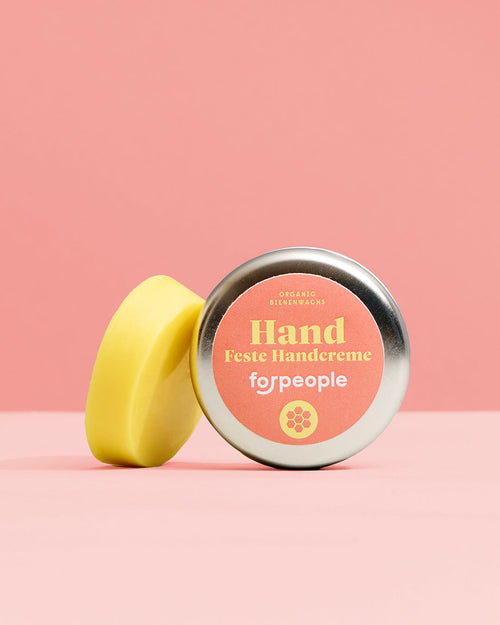
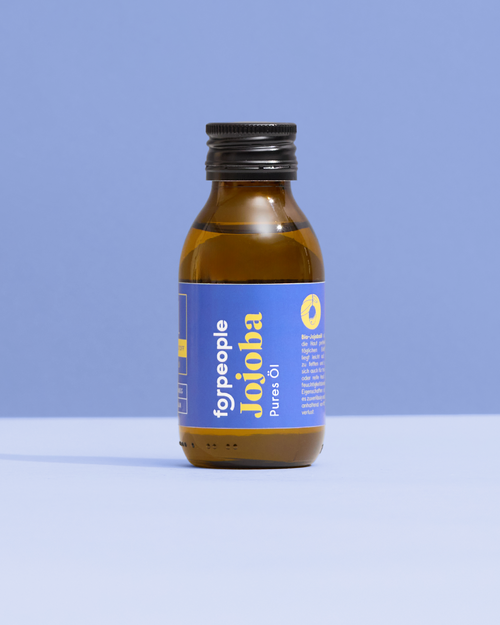
| After warming up | Dry your hands and apply a water-free product, such as the Solid Hand Cream - Beeswax; for the cheeks, a few drops of Jojoba Oil - pure. | The film of fat reduces evaporation from the stressed skin. |
| Every day | Wear gloves, mittens in severe cold; a scarf or collar over the cheeks; keep clothing dry. | Warm, dry clothing helps prevent cold injury and chilblains (DermNet, Chilblains). |
| Every day | Apply hand care straight after washing, before you go out again. | Dry, cracked skin reacts more sensitively to cold and wind. |
| Prevention | Keep moving, do not smoke, plan breaks in the warmth, think of sun protection in snow and in the mountains. | Movement keeps you warm; nicotine narrows the vessels (DermNet, Chilblains). |
A cream before going out protects against drying out, but not against frostbite; in studies, people who used cold protection ointment even had frostbite of the face more often. Details are in Cold protection cream: water-free, but no frost protection. What else helps very dry hands in winter is covered in Dry skin in winter: what helps against cold and heated air.
What helps – and what rather does not
| Habit or home remedy | Assessment |
|---|---|
| Rubbing cold hands with snow | No: further damages the skin |
| Hands on the radiator, under the hair dryer or in hot water | No: numb skin barely feels heat and can burn |
| Lukewarm water, warm drinks, movement | Helps with warming up |
| Mittens instead of fingered gloves in severe cold | Helps: the fingers warm each other |
| Thick fatty cream as "cold protection" | Protects against drying out, not against frostbite; hat, scarf and gloves are still needed |
| Water-free care after warming up | Sensible for dry, stressed skin |
| "Toughening up" through lots of cold | Does not reliably protect the hands from cold injury |
Typical mistakes
Many people warm ice-cold hands straight under hot water or on the radiator; because the skin is still numb, you do not notice when it gets too hot. A second mistake is keeping wet gloves on, for example after a snowball fight; damp cold is the classic trigger of chilblains. Third: taking redness, swelling and itching on fingers or toes that last for days for dry skin and only applying cream. Fourth: going into cold water with cold urticaria; swimming in cold water is considered particularly dangerous because the whole body can react (DermNet, Cold urticaria). Fifth: waiting too long with children; they often keep playing even though their hands and cheeks are already white and numb. More about children's hands is in Dry children's hands in winter: what helps; for children, the age information on the product pages applies.
When to seek medical advice
You need medical help immediately if skin is white or grey, hard and without feeling after cold, if blisters form after warming up, or if someone is severely hypothermic. Have it checked promptly if itchy, burning, reddish-purple swellings appear on fingers, toes or ears and last longer than a day; chilblains usually settle on their own within one to three weeks, but can come back (DermNet, Chilblains). The same applies if hives appear after cold, especially with shortness of breath, dizziness or a racing heart, if fingers turn white and numb in episodes, if the symptoms are new or appear on one side only, and if you have diabetes or circulatory problems.
Frequently asked questions
Why do my hands turn red in the cold?
The blood vessels of the skin narrow in the cold and widen again in between and when you warm up. Then a lot of blood flows through the skin, which turns red and warm. This is a normal protective reaction.
Why do children get such red cheeks in the cold?
The cheeks are exposed to the cold without protection, and the vessels widen strongly when warming up. This is usually harmless. If cheeks, nose or ears turn white, hard and numb instead, that is a warning sign of frostbite.
My hands itch after the cold: why?
Often it is dry skin that feels tight and itches as it warms up. If hives appear, cold urticaria may be behind it; itchy, swollen bumps hours later point more towards chilblains. Both should be checked by a doctor.
Red, swollen fingers after cold: are these chilblains?
Possibly, if the areas appear a few hours after damp cold, itch or burn and last more than 24 hours. A doctor makes the diagnosis; you can help prevent them with warm, dry clothing.
Where do red patches on the face after cold come from?
Usually from the vascular reaction when warming up. If the redness persists or you flush often, rosacea may be behind it, for which temperature change is a known trigger; that belongs in a dermatology practice.
Does cream before going out help against red cheeks?
A film of fat protects the skin against drying out in cold, dry air, but not against cold injury and not against the vascular reaction. A scarf, a hat and breaks in the warmth matter more.
How do I warm up cold hands properly?
Somewhere warm, with dry clothing, in lukewarm water or in your armpits. Do not rub and avoid direct heat. Burning and tingling while warming up are normal as long as they fade after a short time.
At forpeople
These products suit hands and face in winter, each for the purpose its product page states:
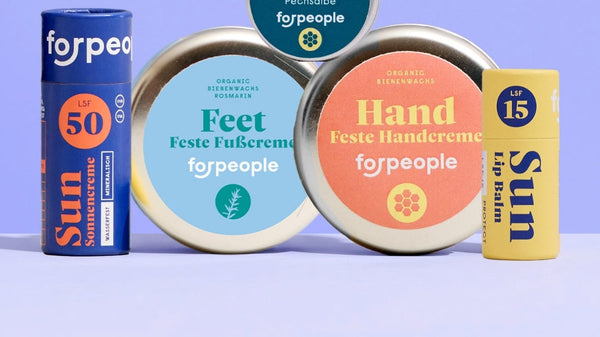
- Solid Hand Cream - Beeswax, 30 g, €9.90: water-free with beeswax, olive and sunflower oil; for dry, rough hands.
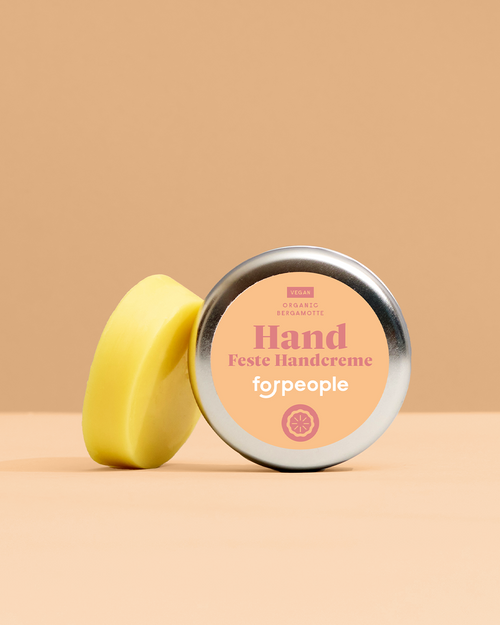
- Solid Vegan Hand Cream - Bergamot, 30 g, €9.90: vegan with candelilla wax, jojoba, olive and hemp oil plus lemon and bergamot oil; for dry hands.
- Jojoba Oil - pure, 100 ml, €16.90: pure, unscented jojoba oil for face, body and hair.
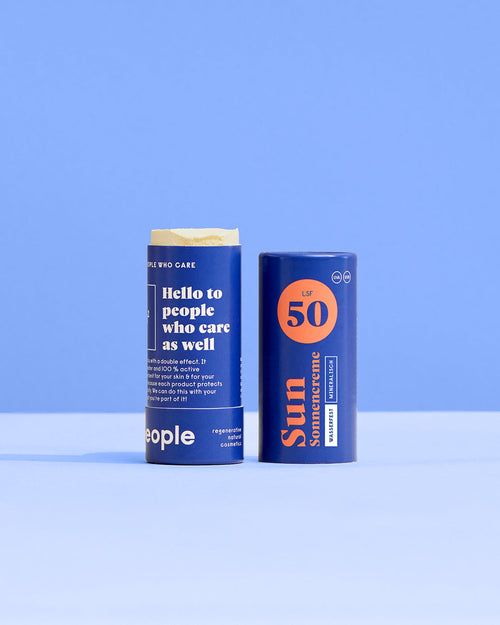
- Solid Sunscreen SPF50, 40 g, €17.90: mineral sun protection for face and body, for example in snow; according to the product page suitable for children from 10 months.
More on this: Facial skin feels tight in winter: causes and what helps · Sun protection in the mountains and on snow · Cracked, split fingertips: causes and what helps
From the blog: Care for days in the snow: hands, lips, face
Sources
- DermNet: Chilblains. Oakley A (1999), updated by Tang GT, Nixon R (February 2021). Accessed 29 October 2026. dermnetnz.org/topics/chilblains
- DermNet: Cold urticaria. Ngan V (2006), minor amendment Coulson I (July 2024). Accessed 29 October 2026. dermnetnz.org/topics/cold-urticaria
- DermNet: Raynaud phenomenon. Maurice P (2004), revised July 2021. Accessed 29 October 2026. dermnetnz.org/topics/raynaud-phenomenon
- DermNet: Frostbite. Ngan V (2005). Accessed 29 October 2026. dermnetnz.org/topics/frostbite
- Daanen HA (2003): Finger cold-induced vasodilation: a review. European Journal of Applied Physiology 89(5): 411–426. https://doi.org/10.1007/s00421-003-0818-2
- Cheung SS, Daanen HA (2012): Dynamic adaptation of the peripheral circulation to cold exposure. Microcirculation 19(1): 65–77. https://doi.org/10.1111/j.1549-8719.2011.00126.x
- Engebretsen KA, Johansen JD, Kezic S, Linneberg A, Thyssen JP (2016): The effect of environmental humidity and temperature on skin barrier function and dermatitis. Journal of the European Academy of Dermatology and Venereology 30(2): 223–249. https://doi.org/10.1111/jdv.13301
- Herrero-Fernandez M, Montero-Vilchez T, Diaz-Calvillo P, Romera-Vilchez M, Buendia-Eisman A, Arias-Santiago S (2022): Impact of Water Exposure and Temperature Changes on Skin Barrier Function. Journal of Clinical Medicine 11(2): 298. https://doi.org/10.3390/jcm11020298