The problem: flakes, itching and tightness on the scalp
It usually shows first on dark clothing: small white flakes on the shoulders. The scalp itches at the hairline or the back of the head, especially after a day under a hat, and feels tight after washing. This is very common: according to a review, dandruff affects about half of all adults worldwide; it begins at puberty, peaks around the age of 20 and becomes less common from about 50 (Borda & Wikramanayake 2015). Dandruff is not contagious and not a matter of poor hygiene, but it is more noticeable if you wash your hair rarely (NHS).
Specialists distinguish simple, dry dandruff from greasy dandruff; the transition to seborrhoeic dermatitis of the scalp is gradual (Trüeb 2008). Dandruff without redness is regarded as a mild form of this dermatitis (DermNet: Seborrhoeic dermatitis). Scalp psoriasis and, especially in children, a fungal scalp infection can look similar. The table helps with orientation. It does not replace a diagnosis; only a medical examination gives certainty.
| Feature | more likely dry scalp | more likely dandruff to seborrhoeic dermatitis | more likely psoriasis | more likely fungal infection |
|---|---|---|---|---|
| Flakes | fine, white, dry, bran-like | white to yellowish, often greasy, firmly attached in dermatitis | thick, silvery white, on thickened patches | fine scaling on defined patches |
| Skin underneath | hardly red, feels tight | no redness in dandruff, red in dermatitis | sharply defined red patches | red, broken hairs, bald patches |
| Where | spread out; skin on arms and legs is often dry too | scalp; in dermatitis also eyebrows, nasal folds, behind the ears | often back of the head, beyond the front hairline, ears, neck | individual patches on the head |
| Itch | moderate | none or mild, more common in dermatitis | can be very itchy | common |
| Typical in | people prone to dry skin or atopic eczema, older age, after frequent washing | teenagers and younger adults, flares in winter | people with psoriasis elsewhere | children aged 3 to 7, contact with pets; contagious |
Features based on Trüeb 2008, Borda & Wikramanayake 2015, DermNet: Scalp psoriasis and DermNet: Tinea capitis. The hairline, forehead and eyebrows are often affected together; these areas are covered in Dry, flaky skin on the forehead, eyebrows and nose: what's behind it.
Why it happens in autumn and winter
The scalp naturally sheds a lot of skin: its many hair follicles enlarge its surface, and even on a healthy scalp, flakes become visible after one to two weeks without washing (Trüeb 2008).
The yeast Malassezia plays a part. It lives on every scalp and feeds on the fats in sebum. On a healthy scalp it makes up about 45 per cent of the natural colonisation, in simple dandruff about 75 per cent and in seborrhoeic dermatitis 83 per cent; its enzymes release fatty acids from sebum that can irritate (Trüeb 2008). The yeast alone does not explain dandruff, however, because it is also found on healthy scalps. In dandruff, the horny layer is disturbed as well: its lipids are reduced and disorganised, the scalp loses more water and reacts more sensitively to irritants (Turner et al. 2012).
Winter puts exactly this barrier under pressure. Low humidity and cold weaken the skin's barrier function and make it more reactive (Engebretsen et al. 2016). Cold weather and stress can make dandruff worse (NHS), and seborrhoeic dermatitis typically flares in winter and improves in summer (DermNet: Seborrhoeic dermatitis). Then come the habits of the cold season: hot showers, a hairdryer on a high heat setting, hats that trap warmth and sweat, and heated air at home. What indoor air does to the skin is explained in Humidity and skin: what dry heated air does and what helps.
For a dry scalp, the specialist literature names two routes: skin that produces little sebum, for example with atopic eczema or in older age, and washing too often with degreasing shampoos (Trüeb 2008). Colouring, bleaching and perms can irritate the scalp further; hair dyes, sprays and gels can also cause contact dermatitis (NHS).
The solution step by step
| Step | What you do | Why |
|---|---|---|
| Now: don't scratch | do not scratch off flakes with your nails or a hard comb; massage the scalp with your fingertips when washing, not with your nails | scratching injures the scalp and makes it more reactive |
| Now: wash lukewarm | lukewarm water, a mild shampoo, rinse thoroughly; use the hairdryer on a warm setting and at a distance | shampoo residue irritates; hot water and hot air dry the scalp out further |
| Every week: adjust how often you wash | with fine, dry flakes, wash less often and avoid degreasing shampoos; with greasy dandruff, wash more often, up to daily | this is what the dermatological literature recommends for the two forms (Trüeb 2008) |
| With dandruff: anti-dandruff shampoo | ask at the chemist or pharmacy for a shampoo with ingredients against the yeast Malassezia or with salicylic acid; use it regularly for up to four weeks as described on the pack, and try another type if needed | this is the usual first step for dandruff; whether it helps shows within four weeks (NHS) |
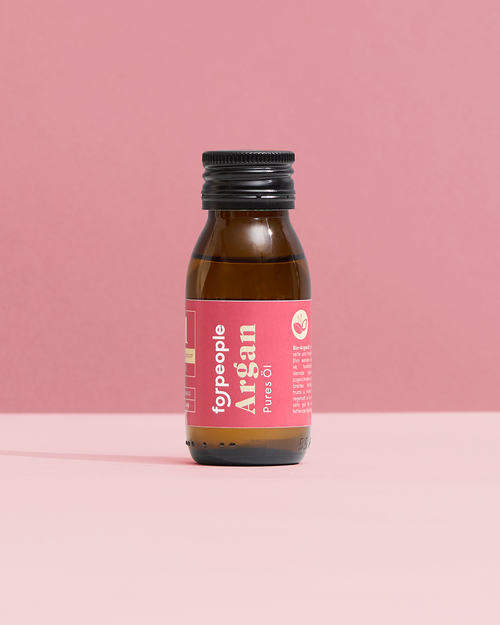
| Every day: care for the lengths | one or two drops of oil only in the lengths and ends, for example Argan Oil - pure, which according to its product page is meant as a leave-in treatment for lengths and ends | hair gets dry and static in winter; the oil does not belong on a flaky scalp |
| Prevent: hats and indoor air | wash hats and headbands regularly, wear a smooth lining under wool, do not overheat rooms and air them briefly but thoroughly | less sweat, sebum and friction on the head; dry air weakens the barrier (Engebretsen et al. 2016) |
| After four weeks | no improvement, redness or spreading: have it checked by a doctor | dermatitis, psoriasis and fungal infection need a diagnosis (NHS) |
In a study of adults in Asia without scalp disease, hair and scalp were in better condition with daily washing than with washing once a week, and no disadvantages of frequent washing were found; the study comes mainly from researchers at a shampoo manufacturer (Punyani et al. 2021). For most people with dandruff, washing less often is therefore unlikely to help. A genuinely dry scalp that feels tight after washing is different: here a milder shampoo helps more than washing more often. If you wash your hair with soap, the particulars are in Washing hair with soap: hard water, acid rinse and the switch; hard water is covered in Hard water and dry skin: what limescale does when you wash.
What helps – and what doesn't really
| Measure | What's behind it | Assessment |
|---|---|---|
| Mild shampoo, lukewarm, rinse thoroughly | less irritation, less residue | useful for every form |
| Anti-dandruff shampoo over several weeks | targets Malassezia or loosens flakes | useful for dandruff (NHS); for a purely dry scalp a mild shampoo is the better choice |
| Washing less often | less degreasing | helps with a dry scalp; with greasy dandruff, rather not (Trüeb 2008) |
| Oil on the scalp against dandruff | Malassezia lives on fats | rather not; whether plant oils make dandruff worse has not been well studied. In the lengths, yes |
| Tea tree oil or other essential oils neat | concentrated fragrance substances | rather not: they can irritate and trigger allergies, see Essential Oils and Fragrance Allergens |
| Vinegar or lemon rinse | acid on the scalp | rather not on an irritated or scratched scalp |
| Brushing out or scratching off flakes firmly | mechanical irritation | no; it irritates and injures the scalp |
| Hot blow-drying, hot showers | heat dries out | rather not; lukewarm and at a distance |
| Washing hats more often | less sweat and sebum in the fabric | useful |
Common mistakes
- Fighting a dry scalp by washing even more. If you wash fine, dry flakes every day with a strongly cleansing shampoo, you degrease the scalp further.
- Fighting greasy dandruff by washing less. Here it is the other way round; regular washing tends to keep the flakes in check.
- Stopping the anti-dandruff shampoo after two washes. Whether it works only shows after a few weeks; after that it often needs regular use.
- Putting oil or hair masks generously on a flaky scalp. Oil belongs in the lengths, not on a scalp with greasy flaking.
- Colouring an irritated scalp. Dyes irritate red or scratched skin more; wait until the scalp has calmed down.
- Mistaking a fungal scalp infection in a child for dandruff. A fungal infection is contagious and cannot be cleared with shampoo alone (DermNet: Tinea capitis).
When to seek medical advice?
Dandruff is usually harmless. Have your scalp checked by your GP or a dermatologist if
- the flakes have not improved after four weeks with an anti-dandruff shampoo, are very heavy or the scalp is very itchy (NHS),
- the scalp is red or swollen (NHS),
- flaky, itchy patches also appear on the face or body, for example on the eyebrows, nasal folds or behind the ears (NHS),
- sharply defined patches with thick, silvery scales appear that extend beyond the hairline; psoriasis also affects the scalp in about 80 per cent of people with psoriasis and can be associated with joint problems (DermNet: Scalp psoriasis),
- hair falls out or breaks off on flaky patches, a painful, soft swelling forms or lymph nodes in the neck swell; in children this points to a fungal scalp infection that needs medical treatment (DermNet: Tinea capitis); seborrhoeic dermatitis, by contrast, is not associated with hair loss (Borda & Wikramanayake 2015),
- the scalp burns, weeps or blisters after a hair dye, a new shampoo or a styling product; stop using the product, see Reacting to a cosmetic: what to do, where to report, returns,
- a baby has yellowish, greasy crusts on the head; this is usually harmless and often clears by the first birthday (DermNet: Seborrhoeic dermatitis), but it belongs with the paediatrician, as do itchy, weeping patches,
- a rough, scaly patch on hairless scalp persists, bleeds or grows; more on such patches in Dry patches on the skin: when harmless, when to see a doctor?
Until your appointment: don't try new products, don't scratch, don't colour. Anti-dandruff shampoos for children only after talking to the paediatrician or pharmacy. When dry skin is more likely atopic eczema is explained in Dry skin or atopic eczema? How to tell the difference.
Frequently asked questions
How can I tell whether my scalp is dry or whether I have dandruff?
A dry scalp feels tight after washing and sheds fine, white, dry flakes, often together with dry skin elsewhere. Dandruff is white to yellowish and often greasy; in seborrhoeic dermatitis there is also redness. The transitions are gradual; only an examination gives certainty.
Why do I have more dandruff in winter?
Cold outdoor air and dry heated air weaken the skin barrier, and cold and stress can make dandruff worse. Seborrhoeic dermatitis typically flares in winter and improves in summer.
Is dandruff contagious or a sign of poor hygiene?
No. Dandruff is not contagious and is not caused by poor hygiene; it is just more noticeable if you wash rarely. A fungal scalp infection, which mainly occurs in children, is contagious.
How often should I wash my hair if I have dandruff?
With greasy dandruff, rather more often, up to daily, with a mild or an anti-dandruff shampoo. With a dry, tight scalp, rather less often and without strongly degreasing shampoos.
Does oil help a dry scalp?
This has hardly been studied. Because the yeast Malassezia lives on fats, we don't put oil on the scalp when there is dandruff, only one or two drops in the lengths. If a scalp without dandruff feels tight, a milder shampoo is the first thing to try.
How long should I try an anti-dandruff shampoo?
Up to four weeks, regularly and as described on the pack. If nothing improves, you can try another type; if the symptoms persist or the scalp is red, have it checked by a doctor.
My child has dry patches on the scalp. What should I do?
Individual flaky patches, especially with broken hairs or bald spots, should be seen by the paediatrician, because fungal scalp infection is most common in children aged 3 to 7 and is contagious. In babies, yellowish crusts are usually harmless but also belong with the doctor.
Can hats cause dandruff?
Not cause it, but warmth, sweat and sebum build up under a hat, and the scalp rubs against the fabric. Wash hats and headbands regularly and wear a smooth lining under scratchy wool, see Wool itches on the skin: why, and what helps.
At forpeople
We don't sell a shampoo or a dedicated scalp care product, so we don't name a product for the scalp itself. For the lengths of your hair, which get dry and static under hats and in heated air in winter, these are suitable according to their product pages:
- Argan Oil - pure, 50 ml, €19.90: pure argan oil; according to its product page for skin and hair, for hair as a leave-in treatment on lengths and ends.
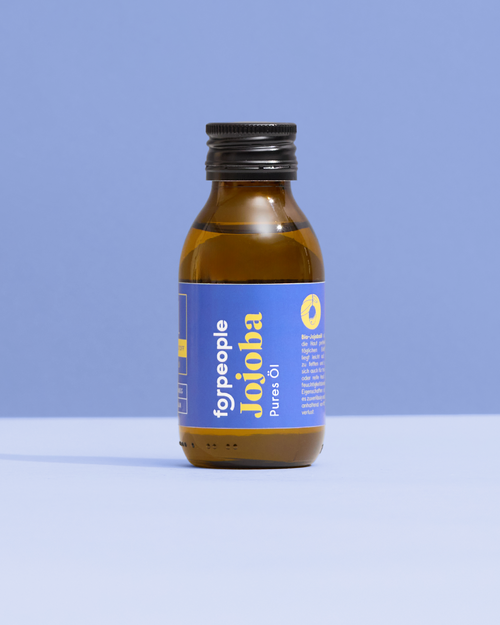
- Jojoba Oil - pure, 100 ml, €16.90: pure jojoba oil without added fragrance; according to its product page for dry ends or, before washing your hair, sparingly on lengths and ends and then washed out.
Neither belongs on a red, irritated or injured scalp; the product pages say so too. How much oil suits which hair is explained in Oil for hair ends: which one, how much?
Read more: Flyaway hair in winter: causes and what helps against static · Caring for a shaved head: what does the scalp need? · Dry, flaky skin on the ears: causes and care · Argan oil for skin, hair and nails: how to use it
Sources
- Trüeb RM (2008): Kopfschuppen richtig therapieren. Pharmazeutische Zeitung, issue 01/2008, online 8 January 2008, accessed 29 October 2026. https://www.pharmazeutische-zeitung.de/ausgabe-01022008/kopfschuppen-richtig-therapieren/
- Borda LJ, Wikramanayake TC (2015): Seborrheic Dermatitis and Dandruff: A Comprehensive Review. Journal of Clinical and Investigative Dermatology 3(2). https://doi.org/10.13188/2373-1044.1000019
- DermNet: Seborrhoeic dermatitis. Gaffoor Bholah N (2022), Oakley A (1997), minor update July 2024, accessed 29 October 2026. https://dermnetnz.org/topics/seborrhoeic-dermatitis
- NHS: Dandruff. Accessed 29 October 2026. https://www.nhs.uk/conditions/dandruff/
- Turner GA, Hoptroff M, Harding CR (2012): Stratum corneum dysfunction in dandruff. International Journal of Cosmetic Science 34(4): 298–306. https://doi.org/10.1111/j.1468-2494.2012.00723.x
- DermNet: Scalp psoriasis. Elghblawi E (2022), Stanway A (2004), November 2022, accessed 29 October 2026. https://dermnetnz.org/topics/scalp-psoriasis
- DermNet: Tinea capitis. Oakley A (2003), updated by Bell H, September 2020, accessed 29 October 2026. https://dermnetnz.org/topics/tinea-capitis
- Punyani S, Tosti A, Hordinsky M, Yeomans D, Schwartz J (2021): The Impact of Shampoo Wash Frequency on Scalp and Hair Conditions. Skin Appendage Disorders 7(3): 183–193. https://doi.org/10.1159/000512786
- Engebretsen KA, Johansen JD, Kezic S, Linneberg A, Thyssen JP (2016): The effect of environmental humidity and temperature on skin barrier function and dermatitis. Journal of the European Academy of Dermatology and Venereology 30(2): 223–249. https://doi.org/10.1111/jdv.13301