







The problem: hair that flies and clings
You pull off your hat and your hair stands up in all directions. Taking off a jumper makes it crackle, individual strands follow the brush, and at the office hair clings to your cheek and scarf. Sometimes there is a small electric shock at the door handle as well. All of this has the same cause: static charge.
It is typical from October to March, as soon as the heating is on, and especially in weeks of bitter cold. Fine and freshly washed hair is often more affected than hair washed a day or two ago, and dry, stressed hair more than healthy hair. Flyaway hair is not a skin problem or an illness, but it is annoying and makes hair harder to style.
Why this happens in autumn and winter
Friction creates charge. When two materials touch and separate again, electrical charges pass from one to the other. How much, and with which sign, depends on the pair of materials and varies with surface, pressure, temperature and humidity (Zou et al. 2019). Hats, scarves, collars, pillows and brushes rub over the hair constantly in winter. Each hair then carries a charge of the same sign, and hairs with the same charge repel each other.
Dry air does not let the charge drain away. Humid air lays a wafer-thin film of water on surfaces through which charge can leak away. In an experiment at the Max Planck Institute in Göttingen, plastic beads became strongly charged below 30 % relative humidity and hardly charged at all above 80 % (Schella et al. 2017). Hair is not plastic, but it too takes up more water the more humid the air (Breakspear et al. 2022). In winter, heated air is often very dry because cold outdoor air brings in little water vapour; the German Environment Agency recommends 40 to 60 % relative humidity for living spaces (Umweltbundesamt 2024). Why heated air becomes so dry is explained in Humidity and skin.
Washing can increase the charge. Strongly cleansing shampoos remove the fats from the hair surface and leave small amounts of negatively charged surfactants behind; this makes the hair charge more easily (Gavazzoni Dias 2015). In the usual pH range the hair surface carries a net negative charge anyway, more so in damaged hair than in healthy hair (Fernandes et al. 2023).
Why conditioner and oil help. Conditioners contain positively charged substances that balance the negative charge of the hair, and substances that smooth the surface: polymers, oils, waxes, silicones. A smoother surface rubs less, and less friction means less charge (Gavazzoni Dias 2015) (Fernandes et al. 2023).
The solution step by step
| Step | What you do | Why |
|---|---|---|
| Immediately | Dampen your hands slightly and smooth your hair from top to bottom. | A little moisture lets the charge drain away (Schella et al. 2017). |
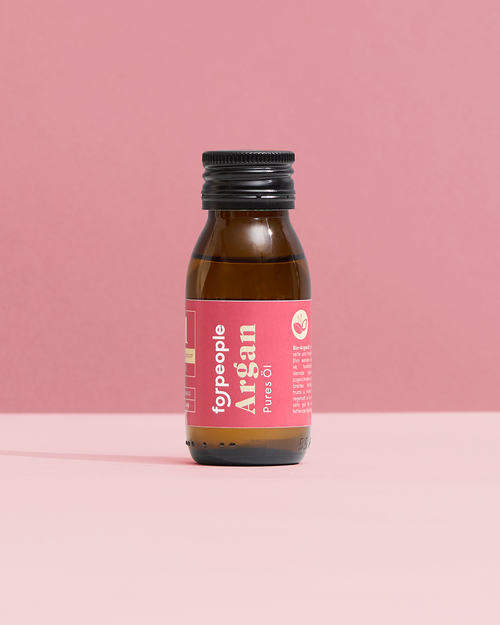
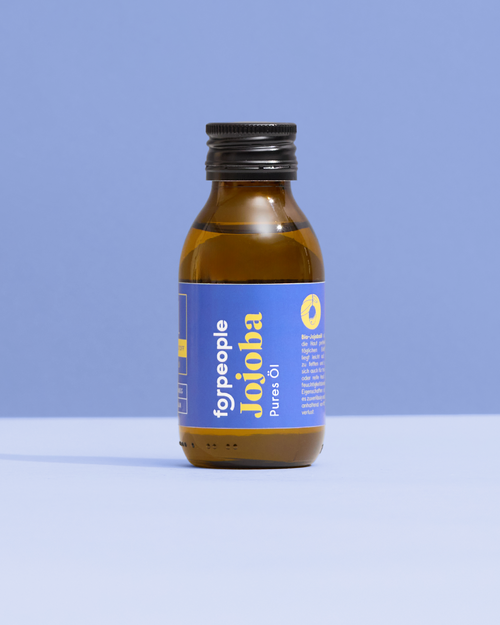
| Immediately | Rub a drop of oil between your palms and smooth it over the lengths and ends, not the roots. Choose an oil whose product page mentions hair, for example Argan Oil - pure or Jojoba Oil - pure. | Oil smooths the surface; less friction, less charge (Gavazzoni Dias 2015). |
| After every wash | Apply conditioner to the lengths and rinse; after drying, one to two drops of oil in the ends. Amounts and technique are in Oil for hair ends. | Positively charged care substances balance the negative charge of the hair (Fernandes et al. 2023). |
| Every day | Check indoor humidity with a hygrometer; aim for 40 to 60 %. Air rooms briefly and fully instead of leaving windows tilted, and do not overheat. | Recommendation of the German Environment Agency (Umweltbundesamt 2024); surfaces charge more strongly in dry air (Schella et al. 2017). |
| Every day | Brush little and carefully, detangle with a wide-toothed comb instead; take your hat off slowly rather than pulling it off. | Every bit of friction creates charge; fewer contacts, less charge. |
| Prevention | Do not wash more often or more harshly than necessary; choose a less strongly cleansing shampoo. If you wash with soap, the acid rinse is described in Washing hair with soap. | Strongly cleansing shampoos make hair charge more easily (Gavazzoni Dias 2015). |
| Prevention | For hats and scarves, look for a smooth lining; many people find cotton or silk against the hair calmer than coarse wool or fleece. | Practical experience; hardly studied for hair. Charging depends on the pair of materials (Zou et al. 2019). |
Which oil suits your hair depends mainly on its thickness: fine hair tolerates only very little, thick and curly hair more. The oils are compared in Argan, jojoba, almond or rosehip oil, and using argan oil in hair is covered in Argan oil for skin, hair and nails.
What helps – and what rather does not
| Measure | Assessment |
|---|---|
| One to two drops of oil in the lengths | Helps: smooths the surface, the hair is easier to comb. |
| Lots of oil, including at the roots | Rather not: the hair quickly looks stringy and heavy. |
| Conditioner after washing | Helps: balances charge and smooths (Fernandes et al. 2023). |
| Leave-in care | Can help: many contain silicones or other polymers that form a thin film and reduce charging (Fernandes et al. 2023). |
| Humidifier | Helps when indoor air is very dry, but must be cleaned regularly. |
| Dampening the hair slightly | Helps in the short term, as long as the hair is damp. |
| Wiping a dryer sheet over the hair | Rather not: dryer sheets are laundry products and are not intended for skin and hair. |
| Anti-static spray for clothes in the hair | No: not a cosmetic product. |
| Washing more often | Rather not: strongly cleansing washes make hair charge more easily (Gavazzoni Dias 2015). |
Typical mistakes
- Brushing dry hair vigorously: many brush strokes on dry hair create a lot of charge.
- Blow-drying hot until completely dry: hair blow-dried bone-dry in dry indoor air is more likely to fly; better blow-dry lukewarm and let the rest air-dry.
- Oil on the roots: oil belongs in the lengths and ends; at the roots the hair quickly looks greasy.
- Too much product at once: you can always add another drop, but too much can only be washed out.
- Ignoring indoor air: without suitable humidity, the flyaways soon return, however well cared for the hair is.
Dry air affects not only the hair but also the skin; what helps there is covered in Dry skin in winter.
When to seek medical advice
Flyaway hair in itself is harmless. See a dermatologist if
- hair breaks off noticeably or falls out much more than usual,
- bald or thinning patches appear,
- the scalp itches, flakes, is red or weeps,
- the hair texture suddenly changes for no apparent reason.
Oils are meant for the lengths and ends, not for an irritated scalp. Try a new oil on a small area first, see Trying a new product: how do I test it on a small area?
Frequently asked questions
Why does my hair stand up in winter?
Because it becomes electrically charged through friction against hats, scarves and brushes, and the charge can hardly drain away in dry heated air. Hairs with the same charge repel each other.
What helps quickly against flyaway hair?
Dampen your hands slightly and smooth your hair, or rub a drop of oil between your palms and smooth it over the lengths.
Which oil is suitable for flyaway hair?
A pure plant oil whose product page mentions hair, for example argan oil, jojoba oil or almond oil. For fine hair one drop is enough, for thick hair two. The small amount matters more than the type of oil.
Why does hair fly most right after washing?
Freshly washed hair has less fat on its surface, and residues of strongly cleansing shampoos make it charge more easily. A conditioner afterwards balances this out.
Does a humidifier help against flyaway hair?
It can help if indoor air is well below 40 %. In more humid air, charge drains away more easily. A humidifier must be cleaned regularly, though; a hygrometer shows whether you need one.
Is flyaway hair a sign of damaged hair?
Not necessarily; it happens to any hair when the air is dry. Damaged hair does carry more negative charge on its surface and rubs more, so it often flies more.
Which hat charges the hair least?
We have not found reliable comparisons for hats. How strongly two materials charge depends on the pair of materials and on humidity. A smooth lining and taking the hat off slowly help in practice.
Does aloe vera help against flyaway hair?
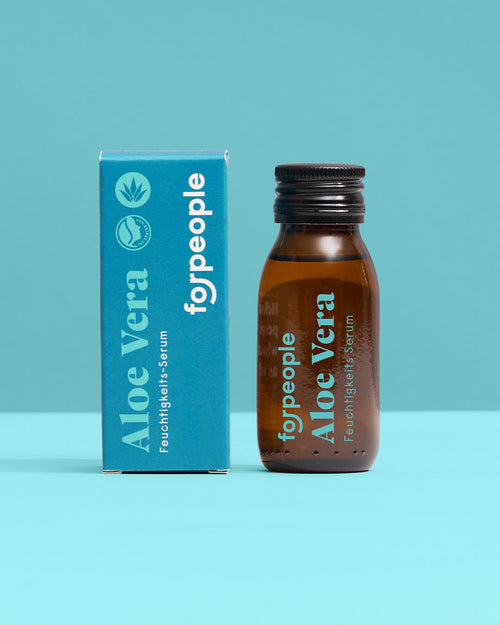
A few drops of a water-based product dampen the hair briefly, much like water. According to its product page, our Aloe Vera Serum 99.6% is also intended for hair, with only a few drops in the hair. A drop of oil on top lasts longer.
At forpeople
These pure oils also mention hair on their product page; the full ingredients list is there too.
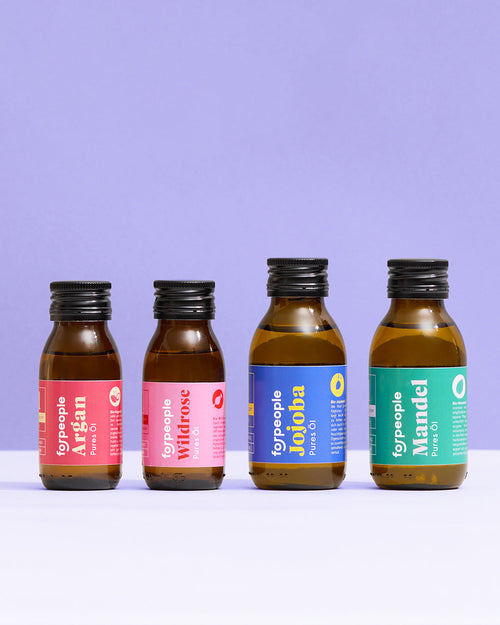
- Argan Oil - pure, 50 ml, €19.90: pure organic argan oil; according to the product page, one to two drops in the ends add shine and make hair easier to comb.
- Jojoba Oil - pure, 100 ml, €16.90: pure jojoba oil, chemically a liquid wax, for face, body and hair.
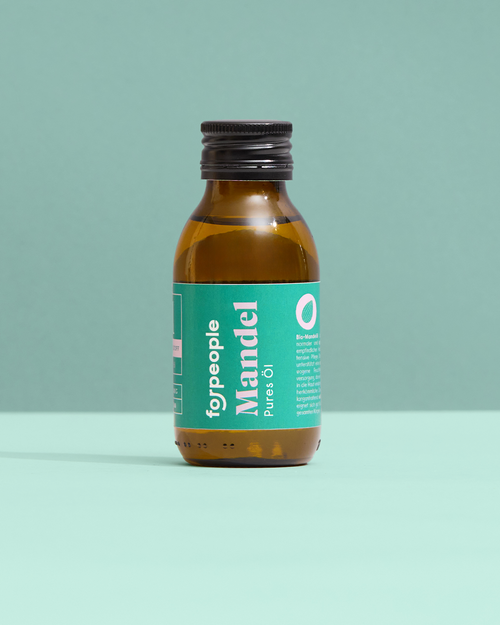
- Almond Oil - pure, 100 ml, €14.90: pure almond oil for skin, hair and lips.
- Care Oil Set – 4 Organic Oils for Face, Body & Hair, €69.90: argan, jojoba, almond and rosehip seed oil.
Keep away from the eyes and do not use on an irritated scalp. Oil can leave marks on fabrics; apply it when you are not about to put on a hat.
More on this: Can jojoba oil go off? · How to tell if a skin oil is rancid
Sources
- Zou H, Zhang Y, Guo L, Wang P, He X, Dai G et al. (2019): Quantifying the triboelectric series. Nature Communications 10: 1427. https://doi.org/10.1038/s41467-019-09461-x
- Schella A, Herminghaus S, Schröter M (2017): Influence of humidity on tribo-electric charging and segregation in shaken granular media. Soft Matter 13(2): 394–401. https://doi.org/10.1039/c6sm02041k
- Breakspear S, Frueh P, Neu A, Noecker B, Popescu C, Uellner Q (2022): Learning from hair moisture sorption and hysteresis. International Journal of Cosmetic Science 44(5): 555–568. https://doi.org/10.1111/ics.12806
- Umweltbundesamt [German Environment Agency] (last updated 13 December 2024): Wie lüfte ich richtig? Tipps und Tricks zur Schimmelvermeidung [How to ventilate correctly: tips to prevent mould]. Accessed 29 October 2026. umweltbundesamt.de
- Gavazzoni Dias MFR (2015): Hair cosmetics: an overview. International Journal of Trichology 7(1): 2–15. https://doi.org/10.4103/0974-7753.153450
- Fernandes C, Medronho B, Alves L, Rasteiro MG (2023): On Hair Care Physicochemistry: From Structure and Degradation to Novel Biobased Conditioning Agents. Polymers 15(3): 608. https://doi.org/10.3390/polym15030608