The problem: spots, bumps and rough skin on the bottom
Many people first notice it in autumn: small red spots, sometimes with a white head, plus rough patches that feel like sandpaper. They itch under tights, press when sitting and come back as soon as they have settled. On the bottom, such spots often have a different cause than on the face. Folliculitis, an inflammation of the hair follicles, is common; it occurs on the buttocks quite often in both women and men (DermNet, Folliculitis) and can look like acne (AAD, Folliculitis).
The overview helps you sort it out. It is based on specialist sources and does not replace a diagnosis: only a medical examination brings clarity.
| What you see | What may be behind it | What fits now |
|---|---|---|
| Small red, often tender spots, some with a pus head, each around a hair | folliculitis; triggered among other things by friction from tight clothing, skin rubbing on skin, shaving or a hot tub (AAD) | reduce friction and moisture, do not squeeze |
| Many small, hard, rough bumps, not inflamed, often also on the upper arms and thighs, more noticeable in winter | keratosis pilaris (DermNet, Keratosis pilaris) | care as under Keratosis pilaris in winter |
| Itchy spots on the bottom, trunk and flanks, one to two days after a hot tub or spa visit, where the swimwear was | hot tub folliculitis caused by Pseudomonas bacteria (Jacob & Tschen 2020) | watch it; see a doctor if there is fever or no improvement |
| A hard, painful lump with a yellowish centre that grows | boil (NHS, Boils) | do not squeeze; see "When to see a doctor" |
| Pain and swelling at the top of the buttock cleft, often when sitting, sometimes with pus or blood | pilonidal sinus (NHS, Pilonidal sinus) | see a doctor soon |
| Deep, painful lumps that keep coming back on the bottom, in the groin, under the arms or the breasts, sometimes with scars | hidradenitis suppurativa (acne inversa) (DermNet, Hidradenitis suppurativa) | dermatologist |
Why this happens in autumn and winter
Friction and pressure. Hair follicles become irritated when the skin is rubbed again and again, by tight clothing or skin on skin; damp, hot skin makes damage and inflammation more likely (AAD). In winter we sit for longer, in the office, the car, the lecture hall or on the sofa, and wear tights, leggings or thermal trousers underneath. Sitting for long periods is also considered a risk factor for pilonidal sinus (NHS).
Sweating under layers. Warm clothing outside, heating inside: heat builds up under several layers, and the skin on the bottom stays damp. Why we often sweat more in winter than expected and which fabrics hold moisture is explained under Sweating in winter.
Sauna, spa, hot tub. Popular in the cold season, but a challenge for the skin on the bottom: Pseudomonas folliculitis develops on skin that is continuously wet and covered, typically after a hot tub or swimming pool under swimwear. It appears within 48 hours as itchy bumps and pustules, often on the flanks, armpits and buttocks (Jacob & Tschen 2020).
Dry air. Keratosis pilaris is more noticeable in winter, probably because of lower humidity (DermNet). The rough, flaky skin then rubs even more under the fabric. Wool directly on the skin scratches; what is behind that is explained under Wool scratches the skin.
Shaving and grease. Hairs regrowing after shaving, waxing or plucking can irritate hair follicles (DermNet) or grow in (NHS, Ingrown hairs). And thick paraffin-based ointments or occlusive plasters can cause a non-infectious folliculitis (DermNet).
The solution step by step
| When | What you do | Why |
|---|---|---|
| Straight away | Do not squeeze, pierce or scratch spots. | Squeezing and scratching can damage the skin and encourage infection (NHS), (NHS). |
| For single inflamed spots | Apply a clean, warm compress several times a day for 15 to 20 minutes. | This is what the American Academy of Dermatology advises for folliculitis (AAD). |
| Every day | Loose underwear and trousers made of breathable fabric; take off tight sports or thermal clothing straight after wearing it. | Tight clothing rubs on the hair follicles (AAD). |
| After sport, sauna and spa | Shower, pat dry well, do not keep wet swimwear on; wash swimwear after every use and let it dry completely. | Pseudomonas thrives in warm water and on wet, covered skin (DermNet), (AAD). |
| When washing | Lukewarm, with little soap, without scrubbing; then pat dry instead of rubbing. | Hot water and rubbing put extra strain on the skin. |
| When sitting | Get up roughly every hour and take a few steps; do not stay seated in thick, damp clothing on the office chair. | That way pressure, warmth and moisture do not act without a break. |
| If you shave your bottom | Take a break of about 30 days; do not shave the buttock cleft. | Shaving, plucking and waxing irritate hair follicles (AAD); the NHS advises against shaving the cleft unless a doctor recommends it (NHS). |
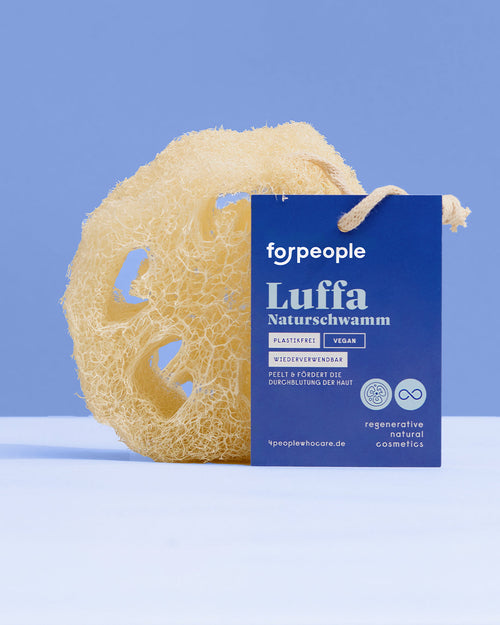
| On rough skin without spots | Exfoliate once or twice a week with light pressure, for example with the Luffa Shower Sponge - Cleansing & Exfoliation; then apply a care product containing fat. | Loose flakes come off; exfoliating is off limits on inflamed, irritated or freshly shaved skin, as the product page also says. |
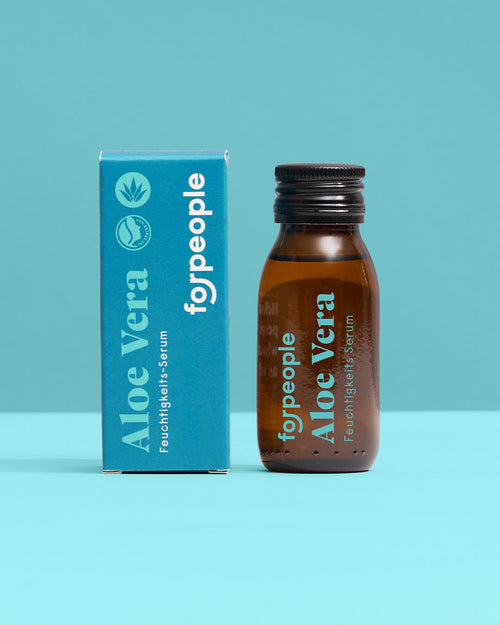
| On areas with spots | No thick ointments or butter; if the skin feels tight, a light, water-based care such as the Aloe Vera Serum 99.6%, tried on a small area first. | Occlusive fats can block hair follicles; an oil-free care is the more cautious choice there (DermNet). |
How often a loofah sponge should be replaced and how to clean it is explained under Loofah sponge: how often to replace it, how to clean and boil it; where it comes from under Loofah: from gourd to shower sponge.
What helps – and what rather doesn't
| Remedy or habit | Assessment |
|---|---|
| Loose clothing, changing after sport | useful; recommended for preventing folliculitis (AAD) |
| Squeezing spots or opening them with a needle | no: can damage the skin and encourage infection (NHS) |
| Exfoliating inflamed spots | no: it rubs the inflammation open further; exfoliate only rough, unbroken skin |
| Thick greasy cream, petroleum jelly or udder balm on spots | rather not: can block hair follicles (DermNet); on dry skin without spots, however, it makes sense |
| Neat tea tree oil or other essential oils | rather not: concentrated fragrance oils irritate, see Essential oils and fragrance allergens |
| Acne creams from the chemist or pharmacy | not on your own initiative: for persistent folliculitis on the buttocks, dermatologists use, among other things, products from acne treatment, but not always successfully (DermNet); discuss this at the pharmacy or practice |
| Vitamins or supplements against spots on the bottom | no evidence; what is known about vitamin deficiency and skin is under Dry skin and vitamin deficiency |
| Shaving the buttock cleft "to keep it clean" | rather not: explicitly not recommended for pilonidal sinus unless a doctor advises it (NHS) |
Common mistakes
The most common mistake is treating spots on the bottom like facial acne: squeezing, drying out, scrubbing. That irritates skin even further in a place that is rubbed all day anyway. The second mistake is staying seated in damp trousers after training or the spa. Third: spreading thick ointments over spots because the skin is rough; fat belongs on dry areas without spots. Fourth: shaving the buttock cleft. And fifth: taking recurring, painful lumps for "spots" for years. Hidradenitis suppurativa is neither contagious nor a result of poor hygiene (DermNet), and it should be seen by a dermatologist early.
When to see a doctor
Urgently, the same day:
- A small, painful lump at the top of the buttock cleft is bleeding or leaking pus; these signs of infection often develop within a few days (NHS).
- The skin around a boil is hot, painful and swollen, you feel hot, cold or shivery, or your immune system is weakened, for example by steroids or diabetes (NHS).
- You have a high temperature or feel unwell.
See your GP or a dermatologist soon:
- A boil has not improved after two weeks, you keep getting boils, or several have joined together (NHS).
- Deep, painful lumps keep coming back on the bottom, in the groin, under the arms or under the breasts; hidradenitis suppurativa usually begins after puberty (DermNet).
- Spots after a hot tub do not settle or come with a fever.
- The rash itches badly, spreads into the buttock cleft or has a scaly edge.
- The spots persist for weeks despite loose clothing and a break from shaving.
- For children: spots on the bottom should be seen by the paediatrician, especially with fever or pain. In babies and children, tight clothing is a common trigger of folliculitis on the buttocks and thighs (AAD, Bumps on child's skin).
Frequently asked questions
What causes spots on the bottom?
Usually irritated hair follicles: friction from tight clothing, sweating under warm layers, long periods of sitting, shaving or a hot tub. Rough bumps that are not inflamed are often keratosis pilaris.
Are spots on the bottom acne?
Not necessarily. Folliculitis, which can look like acne, is common. Which one it is can be clarified at a dermatology practice.
What can I do about spots on my bottom?
Wear loose clothing, shower and change after sport and the sauna, do not squeeze, put warm compresses on single inflamed spots and take a break from shaving. Exfoliate only where the skin is rough but not inflamed.
Why am I suddenly getting spots on my bottom as a woman?
Common reasons are new clothing such as leggings or tights, more sitting, sport in tight clothing, shaving or waxing. If deep, painful lumps keep coming back, also in the groin or under the arms, have hidradenitis suppurativa ruled out; in Western countries it affects women about three times as often as men (DermNet).
Can a vitamin deficiency cause spots on the bottom?
There is no good evidence for that. The common causes are external: friction, moisture, shaving. Taking supplements on suspicion is not a good idea.
Why do my tights itch on my bottom?
Synthetic fibres hold warmth and moisture, wool can scratch, and the seam rubs when you sit. Cotton underwear under the tights and dry, cared-for skin help. More under Wool scratches the skin.
What to do about ingrown hairs on the bottom?
Do not dig with tweezers, take a break from shaving and carefully exfoliate the skin on days without shaving if it is not inflamed. How shaving technique and exfoliation fit together is explained under Ingrown hairs on legs and underarms.
My child has spots on their bottom. What should I do?
Make sure clothing is loose, take wet swimwear off straight away and do not squeeze the spots. Have them checked by the paediatrician, especially if they hurt, weep or a fever develops.
At forpeople
We have no product for the spots themselves. For rough, dry skin on the bottom and thighs that is not inflamed, these products fit, each for the purpose stated on its product page. Do not use on broken, irritated or freshly shaved skin; we do not recommend a product for children here.
- Luffa Shower Sponge - Cleansing & Exfoliation, €4.90: the dried fibre structure of the sponge gourd for mechanical exfoliation in the shower; it softens in water.
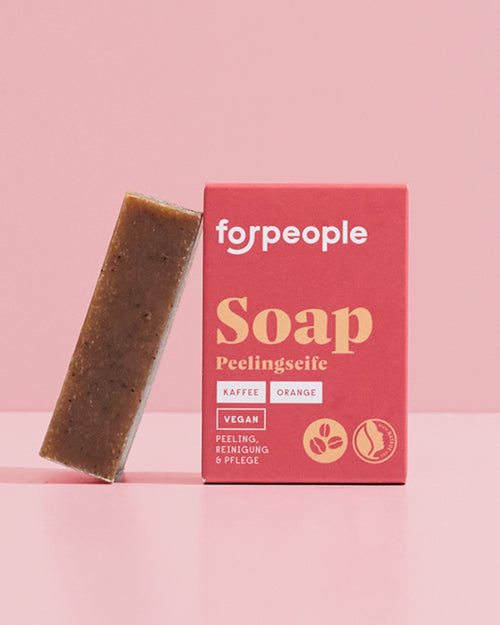
- Solid Soap with Scrub – Coffee & Orange, 75 g, €8.90: soap with ground coffee for hands and body; according to the ingredient list it contains essential oils of orange and bitter orange.
- Aloe Vera Serum 99.6%, 50 ml, €9.90: light, water-based care without a greasy film, without perfume and without essential oils.
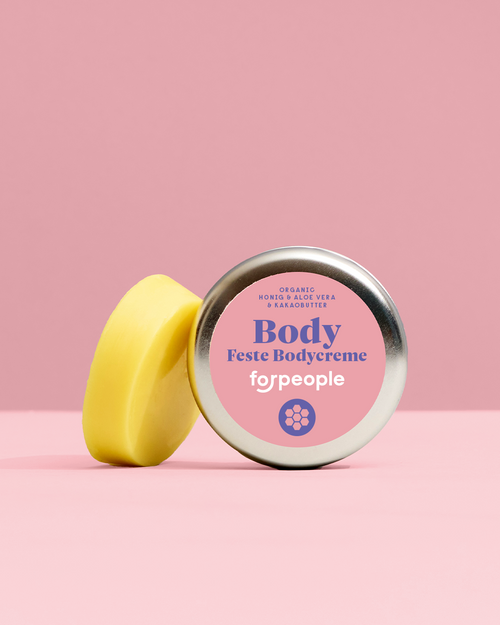
- Solid Body Butter – Beeswax & Aloe Vera, 40 g, €9.90: water-free care made of cocoa butter, olive oil, beeswax, sunflower oil, shea butter and aloe extract for dry, rough areas without spots.
Read more: Keratosis pilaris in winter · Preventing chafing when running and cycling · Moisturising after sport · Sore skin in skin folds (intertrigo) · Spots in winter
Sources
- DermNet: Folliculitis. Oakley A, updated by Oakley A and Morrison C (April 2014). Accessed 29 Oct 2026. dermnetnz.org/topics/folliculitis
- American Academy of Dermatology (AAD): Folliculitis. Undated. Accessed 29 Oct 2026. aad.org/public/diseases/a-z/folliculitis
- DermNet: Keratosis pilaris. Winter S, Motley R (March 2022). Accessed 29 Oct 2026. dermnetnz.org/topics/keratosis-pilaris
- NHS: Pilonidal sinus. Last reviewed 16 Nov 2023. Accessed 29 Oct 2026. nhs.uk/conditions/pilonidal-sinus
- NHS: Boils. Last reviewed 20 June 2023. Accessed 29 Oct 2026. nhs.uk/conditions/boils
- Jacob JS, Tschen J (2020): Hot tub-associated Pseudomonas folliculitis: a case report and review of host risk factors. Cureus 12(9): e10623. https://doi.org/10.7759/cureus.10623
- DermNet: Hidradenitis suppurativa. Chadha M, Savage L (2025), last reviewed August 2025. Accessed 29 Oct 2026. dermnetnz.org/topics/hidradenitis-suppurativa
- NHS: Ingrown hairs. Last reviewed 1 Sep 2026. Accessed 29 Oct 2026. nhs.uk/conditions/ingrown-hairs
- American Academy of Dermatology (AAD): What are those bumps on my child's skin? Undated. Accessed 29 Oct 2026. aad.org