







The problem: rough bumps on arms and legs
Keratosis pilaris feels like fine sandpaper. On the outside of the upper arms, on the thighs or on the buttocks there are many small, hard bumps, each at a hair opening. They can be skin-coloured, reddish on light skin and darker on dark skin; the skin also looks dry and sometimes itches (NHS). In a survey of people with the condition, the bumps were on the arms in 92 per cent, on the legs in 59 per cent, on the face in 41 per cent and on the buttocks in 30 per cent (Poskitt & Wilkinson 1994).
It is very common: according to a dermatology reference site, it affects 50 to 70 per cent of teenagers and around 40 per cent of adults (DermNet 2022). It is harmless and not contagious (NHS). It usually starts early: in the survey it first appeared in the first decade of life in 51 per cent and in the second in 35 per cent (Poskitt & Wilkinson 1994). It is not the same as dry skin alone: dry skin is rough and flaky over an area, while keratosis pilaris sits in dots at the hair openings, often also where the skin is otherwise well cared for. In autumn many people notice it again: the jumper rubs, the skin feels tight after a hot shower, and the bumps suddenly feel more pronounced. Of 49 people surveyed, 80 per cent noticed seasonal changes; just under half of them improved in summer, and as many got worse in winter (Poskitt & Wilkinson 1994).
Why this happens in autumn and winter
In keratosis pilaris, the upper part of the hair follicle opening produces too much keratin. The horny cells do not flake off but fill the opening as a small plug (DermNet 2022). The tendency is probably inherited and is linked to changes in the gene for filaggrin, a protein that helps form the skin barrier (DermNet 2022). In a microscopic study of 20 people with the condition, 35 per cent carried such a filaggrin change; the sebaceous glands were missing in the bumps, and the barrier of the outer skin layer was disturbed there (Gruber et al. 2015).
It is precisely this disturbed, dry outer layer that reacts to winter. According to a review, low humidity and cold weaken the skin's barrier function and make it more reactive to irritants (Engebretsen et al. 2016). The reference site attributes the stronger appearance in winter to the drier air (DermNet 2022). Add to that the habits of the cold season: longer, hotter showers, rubbing clothing, dry indoor heating. What indoor air does to the skin is explained in Humidity and skin: what dry heated air does and what helps.
The solution step by step
| Step | What you do | Why |
|---|---|---|
| Right away: change how you shower | shower or bathe briefly and lukewarm instead of hot | Hot water dries the skin out further (NHS) |
| Right away: wash without scrubbing | unperfumed washing products; wash the areas gently with a washcloth | Harsh scrubs can make keratosis pilaris worse (NHS) |
| Every day: moisturise | straight after drying off, apply a rich care product to still slightly damp skin, such as the Solid Body Butter - Beeswax & Aloe Vera or Almond Oil - pure | Regular moisturising is one of the basic recommendations (NHS); the fat film slows evaporation; the bumps do not disappear as a result |
| After a few weeks: active cream | ask at the pharmacy for a cream with urea, lactic acid or salicylic acid and use it regularly | These substances loosen the keratin plugs; they are considered first choice, but the studies are small (Dampa 2025) |
| Prevention: clothing | wear a smooth layer under wool, avoid tight, rubbing sleeves | Friction irritates the skin further |
| Prevention: indoor air | do not overheat rooms, air them regularly with short bursts | Dry air adds to the dryness of the skin (Engebretsen et al. 2016) |
What is realistic: with this routine the skin becomes more supple, and with an active cream the bumps often get flatter. They rarely disappear completely, and they can come back once you stop. A review of the studies on urea and acids criticises small groups, short follow-up and hardly any data on use over months (Dampa 2025). So plan your care as a habit for the cold season, not as a cure. How soon to moisturise after a shower is covered in How soon should you moisturise after a shower? The 3-minute rule; whether oil or butter suits you better in Body Oil or Body Butter – Which One When? If wool feels scratchy on your skin, see Wool feels scratchy on your skin: why, and what helps.
What helps – and what doesn't
| Measure | What is behind it | Assessment |
|---|---|---|
| Rich care product | slows evaporation, makes the skin between the bumps supple | helps with dryness; the bumps remain |
| Cream with urea, lactic acid, glycolic acid or salicylic acid | dissolve keratin plugs and loosen the cohesion of horny cells | reasonable first choice, studies small and short (Dampa 2025); lactic and glycolic acid have been studied most often (Beyron 2025) |
| Washcloth, used gently | removes loose flakes | fine (NHS) |
| Harsh scrubs, brushes, sponges with pressure | rub the skin raw, the plugs sit deeper | better not; can make it worse (NHS) |
| Scratching, squeezing | injures the hair openings | no (NHS) |
| Hot baths or showers | dissolve skin lipids, dry the skin out | no (NHS) |
| Laser and light treatment | mainly for redness | medical treatment, not cosmetics (Beyron 2025) |
A word on butter: solid body butter contains a lot of cocoa butter, which ranks high in the old comedogenicity tables. Whether that matters for keratosis pilaris has not been studied; how to read the tables is explained in Comedogenic oils: where the scale comes from and what it is worth. If you tend to get spots in these areas, a light oil is the better choice. A homemade sugar scrub is rather too coarse for keratosis pilaris; if at all, use it rarely and without pressure, see Making a body scrub from oil and sugar.
Typical mistakes
- Scrubbing until the skin is smooth. Afterwards it is red, and the bumps are back the next day.
- Only caring for the skin in summer. It is during the heating season that the skin needs daily care.
- Giving up too soon. Creams with urea or acids take weeks; after that, only regular use keeps the result.
- Several acid products at once. That tends to irritate rather than help more. One product, used regularly, is enough.
- Squeezing the bumps. It injures the hair openings and leaves redness.
- Perfumed shower gels and bath products. They can dry out the skin further (NHS).
When to seek medical advice
Whether it is keratosis pilaris is for your GP or dermatologist to decide; inflamed hair follicles after shaving, for example, can look similar. Have your skin checked if
- the bumps are very red, contain pus or are painful,
- the skin itches badly or looks inflamed even though you care for it (NHS),
- redness, small scars or hair loss appear on the face or eyebrows; there are rare subtypes in which scars can remain (DermNet 2022), (Wang & Orlow 2018),
- the bumps appear suddenly and widely in adulthood or began with a new medicine; medicines can also trigger such skin changes (Wang & Orlow 2018),
- you also have atopic eczema or very dry, flaky skin all over your body.
Prescription creams, light therapy and laser are medical treatments. For children, discuss creams with acids or high-strength urea with the paediatrician or pharmacy first.
Frequently asked questions
Is keratosis pilaris contagious?
No. Keratosis pilaris is a harmless keratinisation disorder of the hair openings and cannot be passed on.
Why is keratosis pilaris worse in winter?
The air is cold and dry, the skin barrier weakens, and hot showers dry the skin out further. In a survey, 80 per cent noticed seasonal changes, just under half of them a deterioration in winter.
Does keratosis pilaris go away?
It cannot be removed for good, but it often fades in adulthood. In the survey it had improved with age in 35 per cent, stayed the same in 43 per cent and got worse in 22 per cent.
Does a scrub help with keratosis pilaris?
Washing gently with a washcloth is fine; harsh scrubs can make it worse. Creams that loosen the keratin plugs chemically, for example with urea or lactic acid, are more effective.
Which cream helps with keratosis pilaris?
For the dryness, a rich care product every day after showering. For the bumps, creams with urea, lactic, glycolic or salicylic acid from the pharmacy; the studies are small, and regular use over weeks is what counts.
Is keratosis pilaris hereditary?
Often, yes. In the survey, 39 per cent had family members with keratosis pilaris, and it is linked to changes in the filaggrin gene, which helps form the skin barrier.
Can I squeeze the bumps?
Better not. It injures the hair openings and leaves redness.
At forpeople
We have no products with urea or acids that dissolve keratin plugs. For daily care of the dry skin around them, these are suitable:
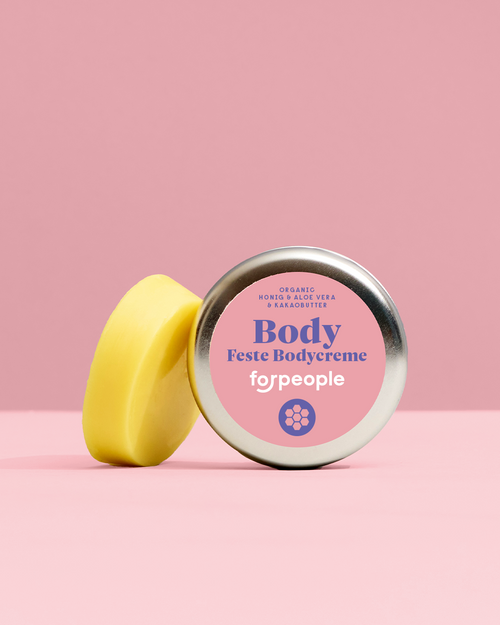
- Solid Body Butter - Beeswax & Aloe Vera, 40 g, €9.90: cocoa butter, olive oil, beeswax, sunflower oil, shea butter and aloe vera extract; water-free, no added fragrance, according to the product page applied after showering to still damp skin.
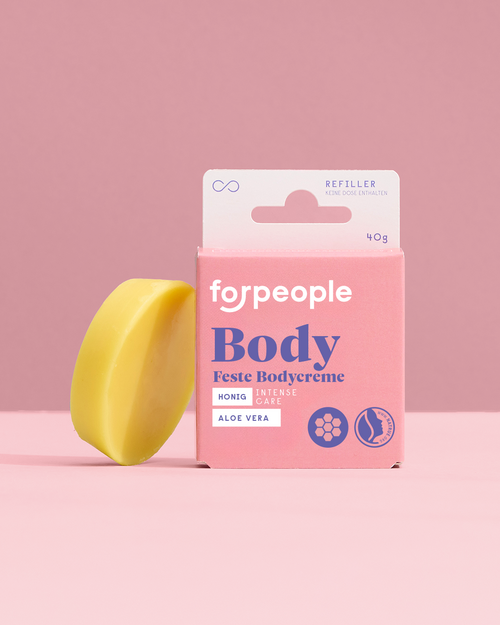
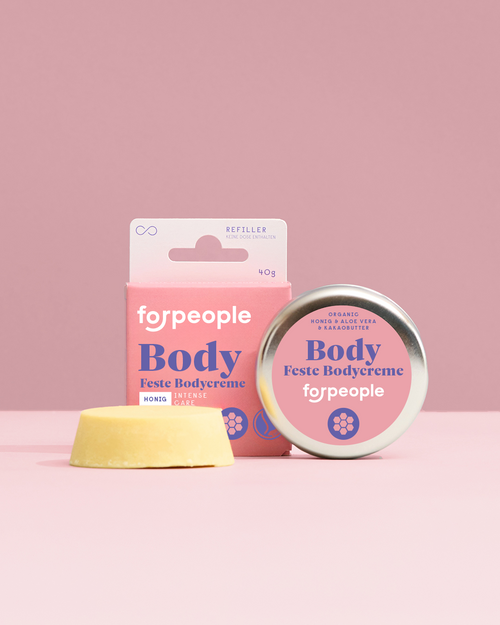
- Solid Body Butter Refill - Beeswax & Aloe Vera, 40 g, €7.90, or the Body Care Set – For Dry, Tight Skin (2× Body Butter), 80 g, €16.90: tin and refill for the winter.
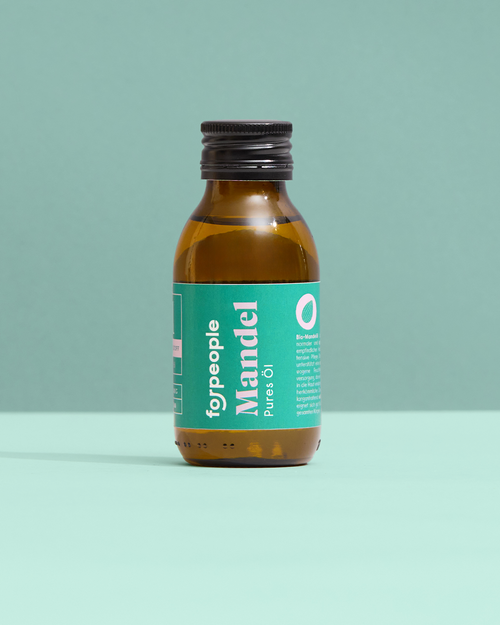
- Almond Oil - pure, 100 ml, €14.90: a single oil without added fragrance, lighter than the butter; for skin, hair and lips.
These products care for dry skin; they do not change the bumps. Test anything new on a small area first: Trying a new product: how do I test it on a small area?
Read more: Dry, rough elbows and knees: causes and what helps · Itchy skin in winter: showering, care and when to see a doctor · Dry skin in winter: what helps with cold and indoor heating · The skin barrier explained simply
Sources
- Winter S, Motley R (2022): Keratosis pilaris. DermNet, March 2022, accessed 29 October 2026. https://dermnetnz.org/topics/keratosis-pilaris
- NHS: Keratosis pilaris. Last reviewed 4 July 2024, accessed 29 October 2026. https://www.nhs.uk/conditions/keratosis-pilaris/
- Poskitt L, Wilkinson JD (1994): Natural history of keratosis pilaris. British Journal of Dermatology 130(6): 711–713. https://doi.org/10.1111/j.1365-2133.1994.tb03406.x
- Gruber R, Sugarman JL, Crumrine D, Hupe M, Mauro TM, Mauldin EA et al. (2015): Sebaceous gland, hair shaft, and epidermal barrier abnormalities in keratosis pilaris with and without filaggrin deficiency. American Journal of Pathology 185(4): 1012–1021. https://doi.org/10.1016/j.ajpath.2014.12.012
- Engebretsen KA, Johansen JD, Kezic S, Linneberg A, Thyssen JP (2016): The effect of environmental humidity and temperature on skin barrier function and dermatitis. Journal of the European Academy of Dermatology and Venereology 30(2): 223–249. https://doi.org/10.1111/jdv.13301
- Dampa E (2025): The Effectiveness of Topical Keratolytics (Alpha Hydroxy Acids/Beta Hydroxy Acids/Urea) in Treating Keratosis Pilaris: A Review of the Literature. Cureus 17(12): e100507. https://doi.org/10.7759/cureus.100507
- Beyron A (2025): Keratosis pilaris: a systematic review of the literature and strategies for optimal treatment. European Journal of Dermatology 35(5): 387–393. https://doi.org/10.1684/ejd.2025.4951
- Wang JF, Orlow SJ (2018): Keratosis Pilaris and its Subtypes: Associations, New Molecular and Pharmacologic Etiologies, and Therapeutic Options. American Journal of Clinical Dermatology 19(5): 733–757. https://doi.org/10.1007/s40257-018-0368-3