In the shop a luffa sponge lies hard and light between soaps and brushes; you would never guess that it grew on a vine like a courgette. This page explains the plant, how it is grown and processed, and how it differs from other sponges. How to clean a luffa sponge and when to replace it is covered in Loofah sponge: how often to replace it, how to clean and boil it?; we do not repeat that here.
The plant: a cucumber that climbs
Luffa is a genus of the gourd family, related to cucumber, courgette and pumpkin. Two species are mainly grown: the smooth sponge gourd Luffa aegyptiaca, which many texts list as Luffa cylindrica, and the angled sponge gourd Luffa acutangula with sharp ridges running along the fruit (Stephens 2003). The name goes back to the Egyptian Arabic word “lūf”, meaning a plant sponge (Hörlezeder 2024).
The annual vine is monoecious, with separate male and female flowers: male flowers grow in clusters of 5 to 20, female flowers singly, recognisable by a 20 to 40 mm long ovary behind the yellow flower (Hörlezeder 2024). Bees pollinate it, and there are far more male flowers than female ones (Stephens 2003). Where the crop originally comes from is not entirely clear. A University of Florida fact sheet names India (Stephens 2003); an Austrian growing guide considers the place of domestication not reliably established (Hörlezeder 2024).
| Feature | Smooth sponge gourd | Angled sponge gourd |
|---|---|---|
| Botanical name | Luffa aegyptiaca (also L. cylindrica) | Luffa acutangula |
| Fruit | smooth, cucumber-like, green, often with lengthwise lines | with sharp, raised lengthwise ridges |
| Flower | opens earlier in the day | opens later in the day and stays open overnight |
| Young fruit, raw | reminiscent of courgette, considered the sweeter type | tastes of Brazil nut or green hazelnut |
| Seeds | black, narrower, slightly pitted | black, flat |
Sources: (Stephens 2003), (Hörlezeder 2024). Depending on the variety, fruits of the smooth type grow roughly 30 to 80 cm long; in a US trial with seed from 20 sources, average lengths ranged from 48 to 79 cm and diameters from 7 to 11 cm (Davis & DeCourley 1993).
From vegetable to sponge: what happens inside the fruit
A young luffa is tender and juicy inside, like a cucumber. Even then, a dense network of vascular bundles runs through its flesh, the channels that carry water and nutrients. If the fruit stays on the plant, its skin turns brown and papery. By then the thin-walled cells of the flesh have broken down, leaving a framework of vascular bundles surrounded by supporting tissue (Hörlezeder 2024). The sponge is therefore the fruit’s plumbing.
Chemically, the fibre consists mainly of cell-wall material. An analysis of mature luffa fibres found 82.4 % holocellulose, meaning cellulose and hemicelluloses together, 11.2 % lignin and 0.63 % ash (NagarajaGanesh et al. 2025). Lignin is the substance that also makes wood stiff. Under the microscope there is a peculiarity: inside the fibre bundles, part of the conducting tissue has broken down into cavities. This makes the bundles very light at 385 to 469 kg per cubic metre, far lighter than jute at around 1,360 kg (Chen et al. 2017).
This structure explains what you notice in the shower. Dry, the lignified fibres are stiff and rough. In water they take up a lot of liquid and become flexible: compressed luffa pieces absorbed 2 to 3.5 times their own weight in water in a trial and released 77 to 91 % of it again within 13 hours (Chen et al. 2018). That is exactly why drying after the shower matters so much, as described on the page about cleaning a luffa sponge.
Growing luffa: what the plant needs in Central Europe
Luffa is a warmth-loving plant of tropical origin and needs a longer growing season than most gourds grown in Central Europe (Davis & DeCourley 1993). A growing guide from FiBL Austria recommends warm, sunny, sheltered sites such as wine-growing areas, and for Central Europe ideally a polytunnel or greenhouse. In cool, shady places it produces only small fruits and is more prone to diseases such as mildew (Hörlezeder 2024).
| Step | Guide value | Source |
|---|---|---|
| Sowing indoors | early April, one seed per pot of about 8 cm diameter, 0.5 cm deep | Hörlezeder 2024 |
| Germination | 23–25 °C, 10–20 days; nick the seed coat lightly or soak for 24 hours | Hörlezeder 2024 |
| Planting out | outdoors in mid-May after the frosts, in a polytunnel from early May; four- to five-week-old seedlings | Hörlezeder 2024; Davis & DeCourley 1993 |
| Soil | rich in humus, loose, no waterlogging, slightly acidic to neutral; keep evenly moist | Hörlezeder 2024 |
| Support | trellis at least 2 m high; fruits should hang freely and not touch the ground | Hörlezeder 2024; Stephens 2003 |
| Pruning | not essential; removing the first four side shoots increased yield in a trial | Davis & DeCourley 1993 |
| Ripening | 53–88 days from fruit set to maturity; harvest four to five months after sowing | Davis & DeCourley 1993; Hörlezeder 2024 |
| Fruits per plant | for sponges, let no more than five fruits ripen | Hörlezeder 2024 |
A trial in North Carolina showed how much raising seedlings indoors matters: seedlings planted out early gave the highest yields, matured earliest and produced the largest sponges, while direct-sown plants and later dates did worse. Fruits hanging from a trellis grew straighter and with fewer blemishes (Davis & DeCourley 1993). On a support, a plant can reach a total length of 12 to 15 m under good conditions (Hörlezeder 2024).
Harvesting and processing: from brown gourd to sponge
Processing is simple, but it is manual work:
- Harvest: for sponges, wait until the skin is yellowish-brown and brittle (Hörlezeder 2024). Recommendations differ here: the Florida fact sheet names mature but still green fruits as the starting material for the best sponges, while dry fruits can also be used (Stephens 2003).
- Dry further: for a few days in a warm, sunny spot (Hörlezeder 2024).
- Soak and peel: cut off the stem and flower ends and soak the fruits in water for several days until skin and pulp come away (Stephens 2003) (Hörlezeder 2024). The skin comes off most easily from ripe fruits that are just starting to dry (Davis & DeCourley 1993).
- Remove the seeds: shake and rinse them out. In the US trial, shaking them out by hand worked but was labour-intensive and time-consuming (Davis & DeCourley 1993).
- Lighten, if wanted: for a paler sponge, it is dipped briefly in a 10 % bleach solution (Davis & DeCourley 1993) or bleached with hydrogen peroxide (Hörlezeder 2024). This step is purely cosmetic.
- Dry: again somewhere warm and airy, in Florida in the sun (Stephens 2003) (Hörlezeder 2024).
Then it is cut to size: as a whole tube, as a piece for the shower or as a slice, like our Luffa Soap Dish – Natural. For traders, fibre density, texture and appearance are what count; according to the US trial there was no uniform grading system, and the largest market in the USA was the cosmetics industry (Davis & DeCourley 1993). According to the product description, the sponges for our Luffa Shower Sponge - Cleansing & Exfoliation come from Egypt; whether they were lightened is not stated in our product data.
Luffa, sisal, konjac, plastic: the difference
In the bathroom, “sponge” is a catch-all term for very different materials.
| Material | What it is made of | Dry | Wet |
|---|---|---|---|
| Luffa | vascular framework of a gourd fruit, mainly cellulose and lignin | hard, rough, very light | flexible, coarse-pored, grippy |
| Sisal | leaf fibres of the sisal agave, usually woven or made into a pouch | rough, firm | stays sturdy |
| Konjac | glucomannan, a dietary fibre from the tuber of the konjac plant | shrunken, hard | very soft and smooth |
| Plastic mesh (shower puff) | synthetic netting | soft | soft, lathers a lot |
| Sea sponge | skeleton of a marine animal | firm, porous | soft |
Luffa as referenced in the text; how the materials feel dry and wet is practical experience, not measured values.
In the shower, luffa works as a mechanical exfoliant: the fibres take loose skin cells with them; the sponge has no chemical effect. How strongly it rubs depends on fibre density and pressure. If you prefer it finer, use less pressure or a home-made body scrub from oil and sugar. How often exfoliating makes sense and which areas to leave out is covered in the luffa care guide and in Hand scrub for dry hands: a good idea or not? For rough patches see Dry, rough elbows and knees: causes and what helps. For hard skin on the feet: Pumice stone wet or dry? How to remove calluses properly.
Exfoliating removes loose flakes; it does not put fat back. After the shower, an oil or a butter therefore belongs on the still slightly damp skin, for example the Solid Body Butter - Beeswax & Aloe Vera. Why timing matters is explained in How soon should you moisturise after a shower? The 3-minute rule.
Eating luffa: young fruits yes, bitter ones never
In South and East Asia luffa is an everyday vegetable; in Europe it is hardly known as such (Hörlezeder 2024). Only young fruits are eaten: according to the Florida fact sheet, those under about 15 cm long, according to the Austrian guide, fruits of 150 to 200 g. They are cooked like courgette or squash or eaten raw like cucumber (Stephens 2003) (Hörlezeder 2024). Regular picking encourages the plant to set new fruit. If you grow for the kitchen, you can pick up to 25 fruits per plant; if you want sponges, let only a few ripen (Hörlezeder 2024). Ripe fruits are fibrous inside and no longer suitable as a vegetable.
One rule has no exceptions: if a luffa tastes bitter, do not eat it. The Florida fact sheet explicitly warns against bitter types (Stephens 2003). The reason is cucurbitacins, bitter substances produced by various plants of the gourd family. In courgettes and edible pumpkins, the ability to form them has been bred out of cultivated varieties; their content can still vary widely from plant to plant, with the stage of ripeness and with growing conditions. The German Federal Institute for Risk Assessment advises tasting raw vegetables from this family before cooking and not using them if they taste bitter (BfR 2015).
When to seek medical advice
Eating bitter gourds usually causes gastrointestinal complaints such as vomiting, diarrhoea or stomach pain, which occasionally last several days (BfR 2015). In that case, contact a poison information centre or a doctor. If red, itchy or pus-filled spots appear after showering with a sponge, especially on freshly shaved skin, have them looked at by a doctor; background information is on the page about cleaning a luffa sponge.
Frequently asked questions
Is luffa a sea sponge?
No. Sea sponges are animals. Luffa is the dried fibre skeleton of a fruit from the gourd family and therefore a purely plant-based material.
What can luffa be used for?
Mainly as a bath sponge. It is also used as a pot scrubber, filter, packing material and for crafts (Davis & DeCourley 1993). At the end of the 19th century, luffa sponges were exported from Japan and used in the USA, among other things, as filters in ships’ steam engines (Hörlezeder 2024).
Can I grow luffa in a pot on the balcony?
The growing sources describe open ground in warm areas and, for cooler regions, a greenhouse or polytunnel. A large container against a very sunny, sheltered wall with a tall trellis is worth a try; whether the fruits ripen by autumn depends heavily on the summer. That is our assessment, not a tested figure.
How can I tell that a luffa is ready for a sponge?
The skin turns yellowish-brown, dry and brittle, and the fruit feels light. When you shake it, the seeds often rattle. It can then be harvested, dried further and soaked.
Can I save my own luffa seeds?
Yes. The seeds come out during processing and can be dried and stored for the following year (Hörlezeder 2024). Because luffa cross-pollinates easily, seed lots in the US trial differed greatly in ripening time, size and fibre quality (Davis & DeCourley 1993); the offspring do not always resemble the parent fruit.
How long does a luffa sponge last?
That depends mainly on how often it is used and how well it dries in between. Rules of thumb and the signs of a worn-out sponge are in Loofah sponge: how often to replace it, how to clean and boil it?
At forpeople
We carry luffa and sisal as accessories for bar soap and the shower.
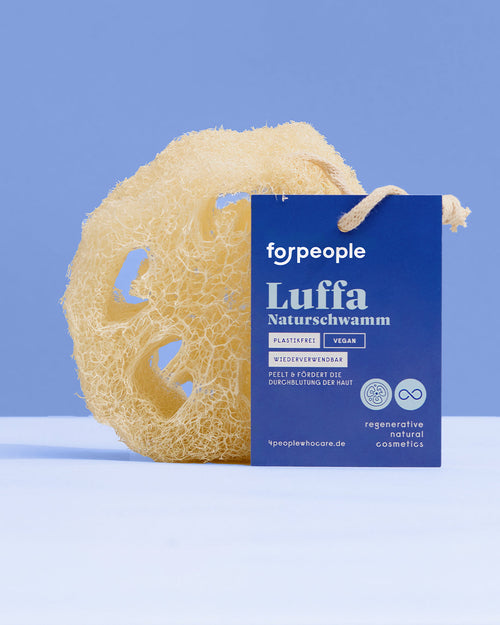
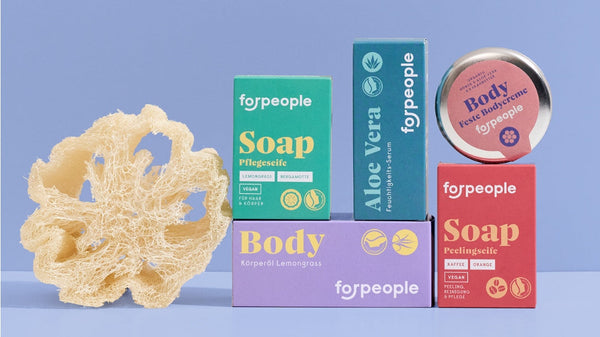
- Luffa Shower Sponge - Cleansing & Exfoliation, 1 piece €4.90, also as a set of 3 for €13.90: dried luffa framework for the body, from Egypt according to the product description; used with soap as a mechanical exfoliant.
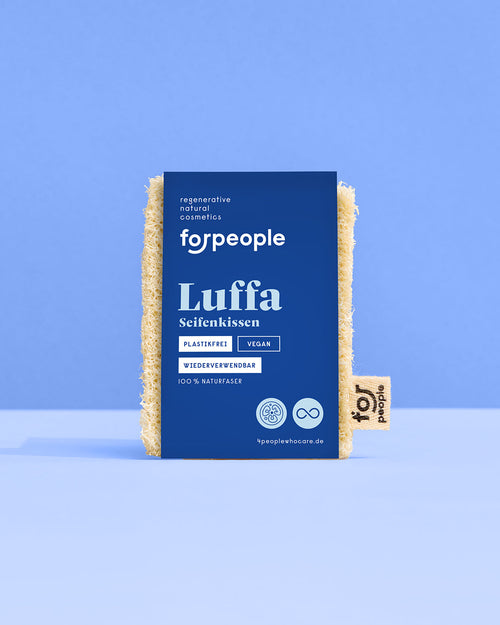
- Luffa Soap Dish – Natural, €3.90: a slice of luffa fibre on which bar soap can dry between uses.
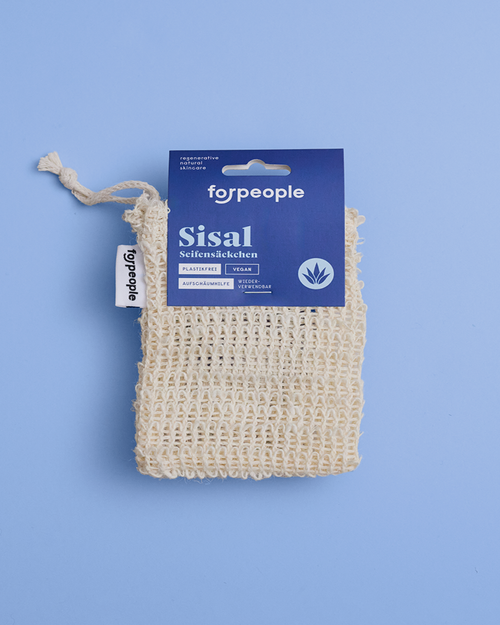
- Sisal Soap Pouch, 1 piece €3.90: a pouch of sisal fibres in which you lather bar soap, for example the Aloe Vera Soap - Lemongrass (75 g, €8.90).
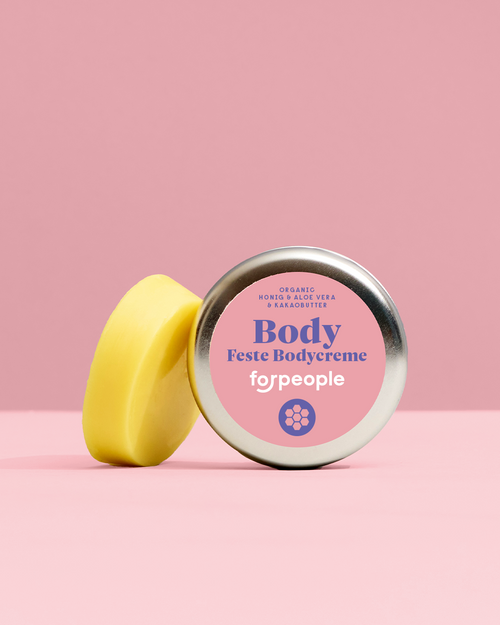
- Solid Body Butter - Beeswax & Aloe Vera, 40 g, €9.90: water-free care made from cocoa butter, olive oil, beeswax, sunflower oil, shea butter and aloe extract for the skin after showering.
Do not use the sponge or pouch on broken or irritated skin, and not on the face.
More on this: Bar soap or shower gel · Mushy bar soap · Body oil or body butter
From the blog: Less in the bathroom: a skincare routine with three products
Sources
- Stephens JM (2003): Gourd, Luffa – Luffa cylindrica (L.) Roem., Luffa aegyptica Mill., and Luffa acutangula (L.) Roxb. HS604, Horticultural Sciences Department, University of Florida/IFAS Extension (first published 1994, reviewed 2003). EDIS. https://doi.org/10.32473/edis-mv071-1994
- Hörlezeder C (2024): Anbauratgeber: Gurkenraritäten. Informationen zu Kulturführung, Herkunft, Botanik und Verarbeitung verschiedener Sorten [Growing guide: rare cucumbers]. Chapter Schwammgurke, pp. 5–9. Ländliches Fortbildungsinstitut Österreich / FiBL Austria, Vienna. https://fibl.org/fileadmin/documents/shop/1773-anbauratgeber-gurken.pdf
- Davis JM, DeCourley CD (1993): Luffa sponge gourds: A potential crop for small farms. In: Janick J, Simon JE (eds.): New crops. Wiley, New York, pp. 560–561. https://hort.purdue.edu/newcrop/proceedings1993/V2-560.html
- Chen Y, Su N, Zhang K, Zhu S, Zhao L, Fang F et al. (2017): In-Depth Analysis of the Structure and Properties of Two Varieties of Natural Luffa Sponge Fibers. Materials 10(5): 479. https://doi.org/10.3390/ma10050479
- Chen Y, Zhang K, Yuan F, Zhang T, Weng B, Wu S et al. (2018): Properties of Two-Variety Natural Luffa Sponge Columns as Potential Mattress Filling Materials. Materials 11(4): 541. https://doi.org/10.3390/ma11040541
- NagarajaGanesh B, Rekha B, Krishna MG, Ferozdheen SISM (2025): Ascertaining the Anatomical Parameters and Chemical Composition of Luffa cylindrica Cellulosic Fibers for Their Plausibility in Pulp and Paper Production. Polymers 17(19): 2643. https://doi.org/10.3390/polym17192643
- Bundesinstitut für Risikobewertung [German Federal Institute for Risk Assessment] (2015): Vorsicht beim Verzehr von bitteren Zucchini [Caution when eating bitter courgettes]. Communication No. 027/2015 of 4 September 2015. https://www.bfr.bund.de/cm/343/vorsicht-beim-verzehr-von-bitteren-zucchini.pdf