







The problem: quiet during the day, itchy at night
During the day you hardly notice anything. Then you lie in bed, the duvet is warm, and it starts on your shins, your back, your feet or everywhere. Falling asleep takes ages, and you wake up with scratch marks. Itch at night is common: people with chronic itch often report night-time symptoms, and scratching happens mainly in the light stages of sleep (Lavery et al. 2016).
Night-time itch is a sign, not a diagnosis. Usually dry skin is behind it, which increases in winter. Sometimes, though, it is a skin disease, a parasite or an internal cause. The table helps you get your bearings. It does not replace a diagnosis; only a medical examination gives certainty.
| What you notice | What may be behind it | What you do |
|---|---|---|
| itch on dry, rough areas such as the shins and back, especially in winter, better after moisturising | dry skin; winter itch in older people often comes with asteatotic eczema (Weisshaar et al. 2025) | change your care and habits (see below) |
| red, scaly or weeping patches, for example in the inner elbows and backs of the knees or on elbows and knees | a skin disease such as atopic eczema or psoriasis, two common causes of night-time itch (Lavery et al. 2016) | GP or dermatologist |
| intense itch that gets worse at night, fine winding lines in the skin, often between the fingers; several people in the household affected | scabies (RKI 2025) | dermatologist; close contacts are treated at the same time if possible |
| new, itchy bumps and scratch marks in the morning | bites from bed bugs, which move at night, attracted by warmth and exhaled air (Lavery et al. 2016) | search the bed frame, cracks and sockets near the bed; have a professional pest controller deal with them |
| raised, itchy welts that come and go | hives (urticaria) (NHS: Hives) | see a doctor if it doesn't improve after two days or keeps coming back; emergency signs below |
| itch all over the body without a visible rash, for weeks; sometimes starting on the palms and soles | internal causes, for example diseases of the kidneys, liver and bile ducts or thyroid, iron deficiency, diabetes, blood disorders, medicines (Weisshaar et al. 2025) | GP |
| tingling, throbbing or itching in the legs at rest, with an urge to move them | restless legs syndrome; symptoms are usually worse at night when resting (NHS: Restless legs syndrome) | GP |
| burning, tingling or numbness in the feet | nerve damage; the most common cause is diabetes (NHS: Peripheral neuropathy) | GP; more in Dry skin with diabetes: causes and care for feet and legs |
| itch during pregnancy, especially on the palms and soles | intrahepatic cholestasis of pregnancy, a liver disorder (Weisshaar et al. 2025) | contact your gynaecologist or the maternity unit the same day; see Itchy skin in pregnancy: belly, hands, feet – what helps and when to see a doctor |
Why it gets worse in the evening and at night
Why skin itches more at night has not been fully explained; circadian rhythms of messenger substances and changes in skin temperature and the skin barrier are suspected (Patel et al. 2007). Four mechanisms are discussed in particular (Lavery et al. 2016):
- The skin gets warmer. During sleep the body lowers its core temperature. To do this, the blood vessels in the skin widen and give off heat. Warmer skin itches more readily.
- The barrier is more permeable at night. In measurements on healthy volunteers, the skin lost more water in the evening and at night than in the morning (Yosipovitch et al. 1998). Irritants then get in more easily.
- The body's own brake is missing. Cortisol, which dampens inflammation, is at its lowest in the evening and at night.
- Nothing distracts you. During the day the brain is busy. At night this distraction is missing, and scratching partly runs like a reflex.
In winter, more comes together. The skin is drier anyway from heated air and hot showers; how much indoor air dries out is shown in Humidity and skin: what dry heated air does and what helps. Thick duvets, flannel and wool blankets keep warmth on the skin, and wool irritates dry skin further; more in Wool itches on the skin: why, and what helps. And scratching injures the skin and keeps the itch going. The guideline explicitly names this itch-scratch cycle and recommends learning how to deal with it (Weisshaar et al. 2025).
The solution step by step
| Step | What you do | Why |
|---|---|---|
| Tonight: a cool bedroom | turn the bedroom heating down, use a lighter duvet, rather take off a layer | a low room temperature at night is one of the general measures in the guideline (Weisshaar et al. 2025); warmth increases itch |
| Tonight: lukewarm washing | shower or bathe in lukewarm water for 20 minutes at most, unperfumed wash products, pat dry | as set out in the guideline (Weisshaar et al. 2025); hot water dries the skin out |
| Tonight: moisturising | apply a rich, fat-based product to dry areas straight after washing; not on scratched skin | the guideline recommends daily care, especially after washing, and care particularly for the night (Weisshaar et al. 2025) |
| Every night: fabrics | pyjamas and bed linen made of cotton, no wool directly on the skin | soft, breathable clothing such as cotton is named in the guideline (Weisshaar et al. 2025) |
| When it itches | don't scratch; place a cool, damp cloth on it, press or tap the area; keep your fingernails short | cool, damp wraps and short nails are in the guideline (Weisshaar et al. 2025); scratching injures the skin |
| Avoid in the evening | very spicy food, lots of hot drinks and alcohol | the guideline lists them among the things to avoid with itch (Weisshaar et al. 2025) |
| Prevention | reduce stress, wind down in the evening; learn a relaxation technique | relaxation techniques are among the general measures in the guideline (Weisshaar et al. 2025) |
| After two to six weeks | if these steps don't help, have it checked by a doctor | from six weeks, itch counts as chronic and its cause should be investigated (Weisshaar et al. 2025) |
Whether you moisturise in the morning or evening matters less; what measurements show is covered in Moisturising your body: morning or evening?
What helps – and what tends not to
| Measure | Assessment |
|---|---|
| A cool bedroom, a light duvet | helps; one of the general measures in the guideline |
| A cold shower before bed | many people report relief, but it has not been studied (Weisshaar et al. 2025); worth a try |
| A hot shower because it brings brief relief | tends not to help; in experiments heat dampened itch only briefly (Weisshaar et al. 2025), and hot water dries the skin out further |
| Creams with urea, menthol or polidocanol | the guideline names such additives in care creams, especially for the night (Weisshaar et al. 2025); ask a pharmacy or your practice which one suits you |
| Compresses with chamomile or tea tree oil | tends not to help; the guideline advises avoiding such irritants (Weisshaar et al. 2025) |
| A glass of wine to fall asleep | tends not to help; alcohol is on the list of things to avoid with itch |
| Tablets that make you drowsy and are meant to dampen the itch | only after talking to a doctor; they mask the cause instead of clarifying it |
| Changing and washing bed linen more often | does no harm; with scabies, however, transmission via bed linen is rare, and what matters is treating all close contacts (RKI 2025) |
Common mistakes
- Fighting the chill with a hot-water bottle and a thick duvet. The warmth on the skin makes the itching worse.
- Applying a thick layer just before bed and getting straight in. The product rubs off on the sheets and pyjamas; better straight after washing, a little earlier in the evening.
- Scratching until it bleeds. It brings brief relief but injures the skin and keeps the itch going.
- Trying many new creams at once, some of them perfumed. This is more likely to irritate and makes it unclear what helps.
- Waiting for weeks although no rash is visible. Itch without visible skin changes in particular should be checked.
- Treating yourself alone when your partner or children are scratching too. Then scabies is a possibility, and all close contacts are treated together.
When to get medical advice?
Have night-time itch checked by your GP or a dermatologist if
- it lasts longer than six weeks or regularly keeps you from sleeping (Weisshaar et al. 2025),
- it itches all over without a visible rash; internal causes and medicines are then possible (Weisshaar et al. 2025); more in Suddenly dry skin all over the body: causes and when to have it checked,
- it starts mainly in the evening and at night on the palms and soles; this is typical of itch in diseases of the liver and bile ducts (Weisshaar et al. 2025), especially with yellowish skin or yellowish eyes,
- several people in the household itch at the same time (Weisshaar et al. 2025); with scabies, close contacts are treated at the same time if possible, even without symptoms (RKI 2025),
- the skin is red, scaly, weeping or scratched open,
- a child has been scratching at night for weeks; in children it is mainly skin diseases such as atopic eczema (Weisshaar et al. 2025); see Dry skin or atopic eczema? How to tell the difference,
- your legs tingle at rest in the evening and you have to move them, or your feet burn and go numb (NHS: Restless legs) (NHS: Peripheral neuropathy),
- you are taking a new medicine; don't stop it on your own, talk to your practice.
Promptly, within a few days, see your practice if you itch all over at night and also notice fever, night sweats, unintended weight loss or great tiredness. The guideline names this combination as a possible sign of a more serious illness, for example of the lymphatic system (Weisshaar et al. 2025). On the same day, during pregnancy, get in touch if your palms or soles itch or if the itch keeps you awake at night.
Call the emergency number 112 if, along with welts or itching, your lips, mouth, tongue or throat suddenly swell, you struggle to breathe or swallow, or dizziness, confusion or pale, bluish skin develop (NHS: Hives). Welts after cold exposure are covered in Cold urticaria: hives from cold – what to do?
Frequently asked questions
Why does my skin itch more at night in bed?
During sleep the skin gets warmer, it loses more water in the evening, the body's own cortisol is low, and nothing distracts you. In winter, dry heated air, warm duvets and dry skin make it worse.
What does itching at night without a rash mean?
Often very dry skin is behind it, which is hard to see. But if the itch lasts for weeks or affects the whole body, internal causes, medicines or nerves may be responsible. Your GP will clarify this, with a blood test if needed.
Can the liver cause itching at night?
Yes. In diseases of the liver and bile ducts, itch is often strongest in the evening and at night, frequently without a rash and at first on the palms and soles. Only your practice can tell whether this applies.
Can itching at night be psychological?
Stress and emotional strain can intensify itch, and people with chronic itch are more often under strain (Lavery et al. 2016). But itch is only considered psychological once the skin, internal organs and medicines have been checked as causes. More on stress and skin in Dry skin from stress: what is behind it and what helps.
Why do my legs itch in the evening?
Often because the skin on the shins dries out in winter and tights or trousers rub. If it is more of a tingling in the legs, together with an urge to move them, restless legs syndrome is a possibility.
Why do my feet itch at night, even on top?
Often because of dry skin and the warmth under the duvet. Burning, tingling or numbness point more towards the nerves, often with diabetes; this should be checked by a doctor.
Does skin itch more at night during menopause?
Many women notice drier skin during menopause; what changes is covered in Dry skin during menopause: what changes? Severe night-time itch should still be checked like any other.
What kind of care suits the night?
A rich, fat-based product without fragrance on the dry areas, straight after washing in the evening. Red, weeping or scratched skin needs a doctor's eye, not a care product.
At forpeople
Our care is intended for dry skin that is not irritated; according to the product page it does not belong on injured or irritated skin. For the evening, these are suitable:
- Solid Body Butter - Beeswax & Aloe Vera, 40 g, €9.90: cocoa butter, olive oil, beeswax, sunflower oil, shea butter and aloe vera extract; according to the ingredient list without essential oils, the light scent comes from the beeswax. According to the product page, apply after showering to still damp skin, also as overnight care.
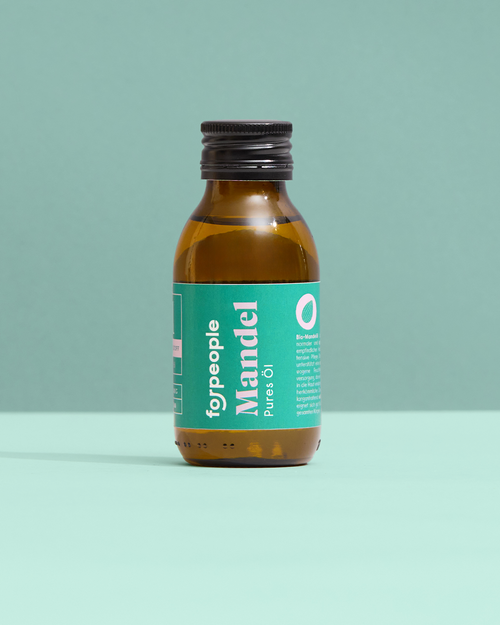
- Almond Oil - pure, 100 ml, €14.90: according to the ingredient list only almond oil, without added fragrance; spreads easily over legs and back. Don't use it if you are allergic to almonds or nuts.
A care product does not treat the cause of itch. If your skin keeps itching at night despite care, the next step is your practice, not the next cream.
Read more: Itchy skin in winter: showering, care and when to see a doctor · Asteatotic eczema (winter eczema): when dry skin turns into eczema
Sources
- Weisshaar E, Müller S, Szepietowski JC, Dalgard F, Garcovich S, Kupfer J et al. (2025): European S2k Guideline on Chronic Pruritus. Acta Dermato-Venereologica 105: adv44220. https://doi.org/10.2340/actadv.v105.44220
- Patel T, Ishiuji Y, Yosipovitch G (2007): Nocturnal itch: why do we itch at night? Acta Dermato-Venereologica 87(4): 295–298. https://doi.org/10.2340/00015555-0280
- Lavery MJ, Stull C, Kinney MO, Yosipovitch G (2016): Nocturnal Pruritus: The Battle for a Peaceful Night's Sleep. International Journal of Molecular Sciences 17(3): 425. https://doi.org/10.3390/ijms17030425
- Yosipovitch G, Xiong GL, Haus E, Sackett-Lundeen L, Ashkenazi I, Maibach HI (1998): Time-dependent variations of the skin barrier function in humans: transepidermal water loss, stratum corneum hydration, skin surface pH, and skin temperature. Journal of Investigative Dermatology 110(1): 20–23. https://doi.org/10.1046/j.1523-1747.1998.00069.x
- Robert Koch Institute (2025): Skabies (Krätze) [Scabies]. RKI guide, as of 27 May 2025, accessed 29 Oct 2026. https://www.rki.de/DE/Aktuelles/Publikationen/RKI-Ratgeber/Ratgeber/Ratgeber_Skabies.html
- NHS: Restless legs syndrome. Last reviewed 22 Sep 2025, accessed 29 Oct 2026. https://www.nhs.uk/conditions/restless-legs-syndrome/
- NHS: Hives. Last reviewed 26 Apr 2024, accessed 29 Oct 2026. https://www.nhs.uk/conditions/hives/
- NHS: Peripheral neuropathy. Last reviewed 10 Oct 2022, accessed 29 Oct 2026. https://www.nhs.uk/conditions/peripheral-neuropathy/