The problem: recognising hives from the cold
After a bike ride without gloves, the backs of your hands are covered in raised, itchy patches. After a walk in an icy wind, your cheeks and ears swell up as soon as you come indoors. After a sip of iced tea, your lips tingle and your tongue feels thick. Or after the first swim of autumn in the lake, your whole body is covered in wheals and you feel dizzy. As different as these sound, all of these situations fit cold urticaria.
Medically, cold urticaria is a form of chronic inducible urticaria. Wheals, swelling of the deeper skin (angioedema) or both develop in response to cold (Maltseva et al. 2021). The wheals appear two to five minutes after contact with the cold and last about one to two hours (DermNet: Cold urticaria); typically they appear on rewarming (Maltseva et al. 2021). There are triggers all year round: wind, rain and frost in autumn and winter, and in summer jumping into a lake, air conditioning or an ice lolly.
Cold urticaria is rare. One medical reference estimates that it affects about 0.05% of the population, mostly young and middle-aged adults, with women twice as often affected as men (DermNet: Cold urticaria). An allergist at LMU Munich estimates the number in Germany at around 50,000 (Stiftung ECARF 2020). Children are affected too: in a Boston case series of 30 children, cold urticaria began at an average age of about seven (Alangari et al. 2004).
Not every skin reaction after cold is urticaria. The table helps you sort things out; it does not replace a diagnosis, only a medical examination can give you certainty.
| What you see | When it appears | What it may be |
|---|---|---|
| Itchy, raised wheals or swelling on the areas that got cold | Minutes after cold, often on rewarming; gone after one to two hours | Cold urticaria (DermNet: Cold urticaria) |
| Itchy or burning, red to purple swellings on the toes or fingers | A few hours after damp cold, lasting more than 24 hours | Chilblains (DermNet: Chilblains) |
| Fingers suddenly turn white and blue, then red on rewarming; no wheals | Minutes after cold or stress | Raynaud's phenomenon (Maverakis et al. 2014) |
| Skin white and numb, later hard; blisters after rewarming | In frost, especially with wind | Frostbite (DermNet: Frostbite) |
What sets harmless redness on rewarming apart from these conditions is explained in Red hands and cheeks in the cold: what is normal and what helps. Chilblains and white fingers have their own pages: Chilblains on toes and fingers: how to spot them, prevent them and what helps and White fingers in the cold: recognising Raynaud's and protecting your hands.
Why cold triggers wheals – and when it becomes dangerous
Not an allergy in the classic sense. Cold contains no allergen against which the body could form antibodies; that is how an allergist at Berlin's Charité explains it (Stiftung ECARF 2020). Every form of urticaria is driven by mast cells in the skin (Zuberbier et al. 2022). In cold urticaria, it is thought that cold changes the body's own substances in the skin in such a way that the immune system forms IgE antibodies against them; the mast cells then release pro-inflammatory messenger substances (Maltseva et al. 2021). The result looks like an allergic reaction, which is why the name cold allergy has stuck.
The threshold is individual. There is no temperature at which everyone affected reacts. Some only get wheals with very cold stimuli of around 4 °C; for others it is enough for the skin to cool to 20 or 30 °C (Stiftung ECARF 2020). That explains why some people react even in a cool swimming pool or in an autumn wind.
Usually without an identifiable cause. In most cases no trigger is found in the body. Less often, cold urticaria occurs in connection with infections or blood disorders (DermNet: Cold urticaria). Further tests, for example for infections, are only needed if your history points in that direction (Maltseva et al. 2021).
It becomes dangerous with widespread cold. In an international study at 32 specialist urticaria centres, 37% of people with a positive cold test had at some point had a reaction involving the whole body, that is with circulation problems, breathing difficulties or gastrointestinal symptoms. It was most often triggered by complete immersion in cold water. Signs of a more severe form were wheals all over the body, swelling, swollen hands and feet, symptoms in the mouth and throat, and itchy earlobes (Bizjak et al. 2022). Swimming in cold water is considered the most common cause of severe reactions (DermNet: Cold urticaria). Children can react severely too: in the Boston case series, a third had a severe allergic reaction (Alangari et al. 2004). Cold food and drinks can also make the lining of the mouth and the tongue swell (Stiftung ECARF 2020).
The solution step by step
| Step | What you do | Why |
|---|---|---|
| Straight away | If wheals appear, get out of the cold and out of the water, take off wet clothes and dress warmly; do not leave anyone alone who feels unwell | Further cold can make the reaction stronger |
| Straight away | Call 112 if there is shortness of breath, swelling of the lips, tongue or throat, dizziness or a racing heart | These are signs of a reaction of the whole body (DermNet: Cold urticaria); the German anaphylaxis guideline names 112 as the emergency number (Ring et al. 2021) |
| Get it checked | Make an appointment with a dermatologist or allergist; take photos of the wheals and note the situations in which they appeared | The diagnosis is based on your history and a cold test (Maltseva et al. 2021) |
| Until it is checked | Do not jump into cold water, do not ice bathe, do not swim alone | Widespread cold is the most common trigger of severe reactions (Bizjak et al. 2022) |
| Every day in winter | Cover your face, ears and hands: a scarf or neck gaiter over your mouth and nose, a hat, gloves or mittens | Warm clothing that includes the face and hands is one of the most important protective measures (Stiftung ECARF 2020) |
| Every day | No ice-cold drinks, no ice cream, touch cold objects only with gloves | Cold in the mouth can make the lining and tongue swell (Stiftung ECARF 2020) |
| With your doctor | Discuss medicines and, if needed, an emergency kit, and use them exactly as prescribed | Non-drowsy antihistamines are usual (Maltseva et al. 2021); people at high risk need training and an emergency kit (Bizjak et al. 2022) |
| Prevention | Inform school, nursery, sports club and companions; before an operation, tell the medical team about the cold urticaria | Severe reactions have also been described in cold rooms and during operations under general anaesthesia (DermNet: Cold urticaria) |
The cold test at the practice is simple: an ice cube is placed on the forearm for one to five minutes; if a wheal then develops, this points to cold urticaria (DermNet: Cold urticaria). A device that produces different temperatures can also determine your personal threshold temperature (Stiftung ECARF 2020). This shows which situations are risky for you.
And skincare? It plays hardly any role in cold urticaria. No cream prevents wheals, and no film of fat protects against cold; why that is so is explained in Cold cream: water-free, but no protection from frost. What matters is clothing, avoiding widespread cold and medical treatment.
What helps – and what tends not to
| Habit or home remedy | Assessment |
|---|---|
| Scarf over mouth and nose, hat, mittens | helps: covered skin cools down less |
| Warm instead of ice-cold drinks | helps: cold in the mouth can lead to swelling |
| Cooling wheals with ice or a cold pack | no: cold is the trigger here |
| Ice bathing, jumping into a lake, winter swimming | no, not until a doctor has assessed how strongly you react; more in Skin after ice bathing: red, burning, dry |
| Thick greasy cream as "cold protection" | does not protect against cold or against wheals |
| "Hardening" yourself with cold showers on your own | no: gradual cold exposure is described (DermNet: Cold urticaria), but it carries the risk of severe reactions and should only be done with medical supervision |
| Increasing the dose of pharmacy antihistamines yourself | no: whether and how the dose is adjusted is up to your doctor (Stiftung ECARF 2020) |
| Special diet | The medical sources we read do not include a diet; what matters is cold food and drinks |
Common mistakes
Many people mistake the first wheals for dry, irritated winter skin and simply apply cream. A second mistake is not making an appointment after a single reaction because the wheals are gone after an hour; that is exactly when the assessment of how dangerous water and widespread cold are for you is missing. Third: going swimming alone or joining in with ice bathing without knowing the diagnosis. Fourth: recreating the cold test at home on a large area of skin; that belongs in the practice. Fifth: not informing the nursery, school or swimming course about a child's condition. And finally: leaving prescribed emergency medication at home instead of taking it on trips to the water or into the snow.
When to seek medical advice
Emergency, call 112: shortness of breath, wheezing, hoarseness or a lump in the throat, swelling of the lips, tongue or throat, dizziness, racing heart, light-headedness or loss of consciousness, severe abdominal pain or vomiting after cold (DermNet: Cold urticaria), (Bizjak et al. 2022). The German anaphylaxis guideline names 112 as the emergency number for Germany and Austria (Ring et al. 2021). Anyone who develops symptoms in the water must be brought ashore immediately.
See a dermatologist or allergist soon for:
- any first wheal reaction after cold, even if it disappeared quickly,
- wheals over large areas of skin, swelling of the hands, feet or face, symptoms in the mouth after cold drinks or itchy earlobes in the cold; these signs are considered an indication of a more severe form (Bizjak et al. 2022),
- a previous severe reaction to an insect sting; in the study it was a risk factor for circulatory involvement (Bizjak et al. 2022),
- fever, exhaustion or other new symptoms together with the wheals,
- children with wheals after cold: first to the paediatrician, who will refer to a paediatric allergist if needed; children can react severely too (Alangari et al. 2004).
For difficult cases there are specialist urticaria centres at dermatology clinics. Medicines and their dose are always set by the treating practice.
Frequently asked questions
What is a cold allergy?
In everyday language, cold urticaria: after cold, itchy wheals or swelling develop. Behind this are mast cells in the skin that release messenger substances in the cold. It is not an allergy in the classic sense, because cold contains no allergen.
Is a cold allergy dangerous?
The wheals themselves are a nuisance but usually harmless. Widespread cold is dangerous, especially cold water: then the whole body can react, up to circulatory collapse. That is why every case of cold urticaria should be assessed by a doctor.
Which doctor is responsible, and how is it tested?
A dermatologist or allergist, for children the paediatrician. It is tested with cold on the skin, for example an ice cube on the forearm or a device that produces different temperatures.
What helps with a cold allergy on the face and hands?
Covering up: a scarf or neck gaiter over your mouth and nose, a hat over your ears, gloves or mittens, before the skin gets cold. A cream does not protect against cold. For the wheals themselves, there are medicines your doctor can prescribe.
Can children have cold urticaria?
Yes. In one case series it began at an average age of about seven, and a third of the children had already had a severe reaction. Parents should inform the swimming course, nursery or school and discuss what to do in an emergency with a doctor.
Does cold urticaria go away?
Often, yes, but only after years. A Charité source frequently mentions five to seven years; another medical reference reports that about 30% become symptom-free within five to ten years. That is why it is worth having the test repeated from time to time.
Is cold urticaria an autoimmune disease?
Researchers suspect that the immune system forms antibodies against the body's own substances that have been altered by cold. This mechanism is not fully understood; the literature describes it as an open research question.
Can I go skiing or to the swimming pool with cold urticaria?
That depends on how sensitive you are. Because some people react at skin temperatures as high as 20 to 30 °C, even a cool pool can be risky. Clarify this with your practice beforehand; when skiing, close-fitting clothing, face protection and breaks in the warm help protect you.
At forpeople
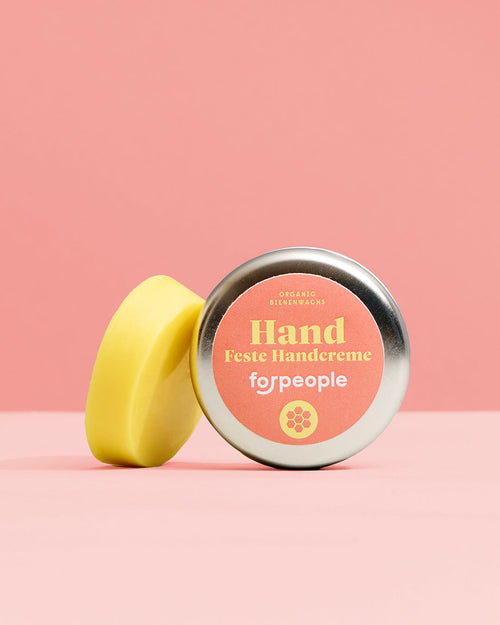
We have no product for cold urticaria, and we do not want to recommend one: skincare does not prevent wheals, and our products do not belong on wheals or irritated skin. If your hands are dry and rough in winter regardless of this, the Solid Hand Cream - Beeswax (30 g, €9.90) is suitable. According to its ingredient list it consists of beeswax, olive and sunflower oil, St. John's wort and aloe extract, without fragrance, without essential oils and without water. Apply it to unbroken skin, not to wheals, and stop using it if your skin reacts.
More on this: Windburn on the face: red, burning skin after skiing and winter hiking · Dry skin in winter: what helps with cold and indoor heating · Reacting to a cosmetic: what to do, where to report, returns
Sources
- DermNet: Cold urticaria. Ngan V (2006), minor amendment by Coulson I, July 2024, accessed 29.10.2026. https://dermnetnz.org/topics/cold-urticaria
- Maltseva N, Borzova E, Fomina D, Bizjak M, Terhorst-Molawi D, Košnik M et al. (2021): Cold urticaria – What we know and what we do not know. Allergy 76(4): 1077–1094. https://doi.org/10.1111/all.14674
- Bizjak M, Košnik M, Dinevski D, Thomsen SF, Fomina D, Borzova E et al. (2022): Risk factors for systemic reactions in typical cold urticaria: Results from the COLD-CE study. Allergy 77(7): 2185–2199. https://doi.org/10.1111/all.15194
- Alangari AA, Twarog FJ, Shih MC, Schneider LC (2004): Clinical features and anaphylaxis in children with cold urticaria. Pediatrics 113(4): e313–e317. https://doi.org/10.1542/peds.113.4.e313
- Stiftung ECARF (04.03.2020): Die Kälte-Allergie ist gar keine [Cold allergy is not an allergy] (with Markus Magerl and Marcus Maurer, Charité Berlin). Accessed 29.10.2026. https://www.ecarf.org/die-kaelte-allergie-ist-gar-keine/
- Zuberbier T, Abdul Latiff AH, Abuzakouk M, Aquilina S, Asero R, Baker D et al. (2022): The international EAACI/GA²LEN/EuroGuiDerm/APAAACI guideline for the definition, classification, diagnosis, and management of urticaria. Allergy 77(3): 734–766. https://doi.org/10.1111/all.15090
- Ring J, Beyer K, Biedermann T, Bircher A, Fischer M, Fuchs T et al. (2021): Guideline (S2k) on acute therapy and management of anaphylaxis: 2021 update. Allergo Journal International 30(1): 1–25. https://doi.org/10.1007/s40629-020-00158-y
- DermNet: Chilblains. Oakley A (1999), updated by Tang GT and Nixon R, February 2021, accessed 29.10.2026. https://dermnetnz.org/topics/chilblains
- Maverakis E, Patel F, Kronenberg DG, Chung L, Fiorentino D, Allanore Y et al. (2014): International consensus criteria for the diagnosis of Raynaud's phenomenon. Journal of Autoimmunity 48–49: 60–65. https://doi.org/10.1016/j.jaut.2014.01.020
- DermNet: Frostbite. Ngan V (2005), accessed 29.10.2026. https://dermnetnz.org/topics/frostbite