The problem: red, burning skin after a day in the snow
In the afternoon on the slopes, your face just feels cold. In the evening in the hut, your cheeks, nose and forehead are glowing, the skin feels tight and burns, and every cream stings. The next morning your face is red, sometimes slightly swollen, your lips are rough and cracked, and the pale outline of your ski goggles shows around your eyes. A few days later the skin on your nose and cheeks peels. The same can happen after a winter hike in sun and wind or a long chairlift ride.
"Windburn" is an everyday word. The medical sources we read do not describe a separate condition of this name. The red skin is usually caused by two things at once: sunburn that you do not feel in the cold, and an outer skin layer that wind and cold have dried out and irritated. Less often it is something else. The table helps you sort things out; it does not replace a diagnosis, only a medical examination can give you certainty.
| What you see | When it appears | What it often is |
|---|---|---|
| Red, warm, sore, sharply bordered on the uncovered areas; peeling after a few days | Hours after the day in the sun | Sunburn (NHS: Sunburn) |
| Rough, tight, finely flaking, burns when cream is applied; lips chapped and cracked | After wind, cold and dry air in the hut | dried-out, irritated skin (Engebretsen et al. 2016) |
| Itchy wheals or swelling that appear on rewarming | Minutes after the cold, gone after one to two hours | Cold urticaria (DermNet: Cold urticaria) |
| White, numb areas on the nose, cheeks or ears, later hard; blisters after rewarming | In frost, especially with wind | Frostbite (DermNet: Frostbite) |
Red cheeks that appear on rewarming and fade again after minutes to hours are usually a normal vascular reaction; more in Red hands and cheeks in the cold: what is normal and what helps. If you react to cold with wheals, read on in Cold allergy (cold urticaria): hives from the cold – what to do?
Why wind, cold and snow sun take a toll on your face
Cold and dry air weaken the skin barrier. A review concludes that low humidity and low temperatures reduce the skin's barrier function, make it more susceptible to mechanical stress and make it react more strongly to irritants (Engebretsen et al. 2016). Everything comes together on the face: it is often the only area left uncovered, and in the evening it meets the dry, warm air of the hut or hotel.
Wind intensifies the cold. Frostbite is rare in still air above minus 10 °C, but in strong wind it is possible at higher temperatures too; the nose, cheeks, ears, fingers and toes are most at risk (DermNet: Frostbite). Skiing adds a headwind of its own. In a study of Finnish conscripts, being transported outdoors or in open vehicles in windy conditions was linked to more frostbite on the cheeks, and wearing a scarf to less (Lehmuskallio et al. 1995). On the slopes, the closest equivalent is the chairlift. That moving air also carries moisture away from the skin's surface faster is a physical consideration, not a measurement on skiers.
More UV reaches you on snow than you can feel. Germany's Federal Office for Radiation Protection points out that UV exposure can be higher than the stated UV index because of reflection from snow, and recommends sunscreen with SPF 50+ for high altitudes and snow (BfS: Tipps zum UV-Schutz). How much altitude and snow increase the radiation, and why you do not feel it in the cold, is explained in detail in Sun protection in the mountains and on snow.
Wind and UV together. In animal experiments with mice that received UV radiation daily for four weeks while exposed to wind of about 11 km/h, the skin was more damaged and recovered more slowly than in animals without wind (Owens and Knox 1978). This cannot be transferred one to one to humans, but it fits the experience that faces are particularly red after a windy, sunny day of skiing.
What a cream cannot do. A thick layer of fat does not protect against cold injury; in the Finnish data, people who used cold-protection ointment even had frostbite on the face more often (Lehmuskallio et al. 1995). The details are in Cold cream: water-free, but no protection from frost. A film of skincare helps against drying out, but it does not replace sun protection.
The solution step by step
| Step | What you do | Why |
|---|---|---|
| Beforehand | Apply a mineral sunscreen generously half an hour before you set off, including under the nose, on the chin, ears and neck | This is what the BfS recommends (BfS: Tipps zum UV-Schutz); because snow reflects the radiation, the undersides also get a lot |
| Beforehand | Protect your lips with a lip balm with SPF | Lips have little protection of their own; details in Do I need lip balm with SPF? |
| Out and about | Neck gaiter, scarf or balaclava over chin and cheeks, on the chairlift up over the nose; ski goggles or sunglasses, a hat over the ears | Clothing is the simplest UV protection (BfS: Tipps zum UV-Schutz); a scarf was linked to less frostbite on the cheeks (Lehmuskallio et al. 1995) |
| Out and about | Reapply after sweating and blowing your nose, take breaks in the warm, check each other's faces for white patches | Reapplying maintains protection but does not extend it (BfS: Tipps zum UV-Schutz); white, numb skin is a warning sign (DermNet: Frostbite) |
| Afterwards, straight away | Indoors, clean your face with lukewarm water and a little mild cleanser, pat dry; cool burning skin with a cool, damp cloth, no ice | The NHS recommends cooling with a damp cloth for sunburn and advises against ice (NHS: Sunburn) |
| Afterwards, straight away | On freshly burnt skin, use an unperfumed, light moisturiser or an after-sun, not a thick greasy ointment; drink plenty, avoid alcohol | For sunburn, the NHS recommends after-sun or unperfumed moisturiser and advises against petroleum jelly (NHS: Sunburn) |
| The days after | No scrubs, no acids, no retinol, no fragrances; do not pull off peeling skin; protect the skin from the sun until the redness has faded | Skin exposed to cold and dry air reacts more strongly to irritants (Engebretsen et al. 2016); the NHS advises against pulling off skin and against sun (NHS: Sunburn) |
| Once nothing burns any more | Care for the skin, which now only feels tight, in layers again: a water-based product, then a few drops of oil on top | A thin film of fat protects the skin from drying out; the technique is described in Facial skin feels tight in winter: causes and what helps |
Whether you also need sun protection on grey winter days in the lowlands is explained in Sunscreen in winter: when it makes sense in everyday life.
What helps – and what tends not to
| Habit or home remedy | Assessment |
|---|---|
| Thick cold-protection cream instead of sunscreen | no: protects neither against UV nor against frostbite |
| Neck gaiter, balaclava, ski goggles | helps: keeps out the headwind and part of the radiation |
| Sunscreen only once in the morning | tends not to: reapply after sweating, wiping and blowing your nose |
| Ice or snow on burning skin | no: the NHS advises against it (NHS: Sunburn), and cold puts extra strain on the skin |
| Petroleum jelly or thick greasy ointment on fresh sunburn | tends not to (NHS: Sunburn); rich care only once the skin no longer burns |
| Cool, damp cloth, lukewarm water | helps to cool down (NHS: Sunburn) |
| A scrub to remove the flakes | no, as long as the skin is red; the flakes come off on their own |
Common mistakes
The most common mistake is skipping sun protection because it is cold or cloudy; in the cold you do not feel UV radiation. The second: applying sunscreen only once in the morning and forgetting about it for the rest of the day, even though scarf, tissue and sweat rub the film off. Third, the lips are left without sun protection. Fourth, the red face is washed with hot water in the evening, scrubbed or covered with everything in the toiletry bag; fragrances, acids and retinol in particular sting then, more on this in Cream burns on the face: why, and what you can apply now. Fifth, white, numb patches on the nose or cheeks are overlooked or rubbed with snow; rubbing and direct heat harm freezing skin (DermNet: Frostbite).
When to seek medical advice
You need medical help straight away for white, hard or numb areas that do not recover in the warm and for blisters after rewarming; that suggests frostbite (DermNet: Frostbite). If there is shortness of breath, swelling of the lips, tongue or throat, or circulation problems after cold, call the emergency number 112.
See a doctor soon for the following, based on the NHS criteria for sunburn (NHS: Sunburn):
- blisters or clearly swollen skin,
- fever, feeling cold or shivery,
- severe tiredness, dizziness, nausea, headache or muscle cramps,
- sunburn in babies and young children.
Also have it looked at if wheals appear after cold, if your eyes hurt, water or feel gritty after a day in the snow (then see an eye doctor), or if the redness on your face stays for weeks and small visible blood vessels or bumps appear; rosacea may be behind it, more in Rosacea in winter: avoiding triggers and mild skincare. A rough or crusted spot on the lip that does not go away on its own should also be seen by a dermatologist.
Frequently asked questions
What is windburn in humans?
An everyday word for red, burning, tight skin after wind and cold. When skiing, sunburn is usually part of it, because snow reflects UV radiation, together with skin that wind and dry air have dried out.
Windburn or sunburn: how can I tell the difference?
Sunburn shows a few hours after the day outdoors as sharply bordered redness exactly on the uncovered areas, often with the pale outline of the ski goggles, and peels after a few days. Dried-out skin tends to be rough, feels tight and burns when cream is applied. Often both come together.
Why is my face swollen after skiing?
Stronger sunburn can make the skin swell. Swelling that appears in the warm together with itchy wheals can also point to cold urticaria. If the swelling is marked, especially on the lips or eyes, have it looked at by a doctor.
Red patches or a rash on the face after skiing: what is it?
Often uneven sunburn or irritated, dry skin. Wheals, small blisters or patches that do not fade after a few days should be seen by a dermatologist.
What helps with windburn on the lips?
Prevent it with a lip balm with SPF and a cloth over your mouth. Afterwards, do not lick your lips or pull at flakes of skin, and apply lip balm in the evening. Do not cover cracked or bleeding areas with skincare products; more in Why do lips dry out so quickly?
How long does windburn last?
According to the NHS, sunburn usually gets better within seven days. Dried-out skin usually feels normal again after a few days with mild cleansing and care; that is practical experience, not a study finding.
Can I get sunburnt in the snow even though it is cold?
Yes. You do not feel UV radiation as warmth, and snow reflects part of it, so exposure can be higher than the UV index in the weather forecast. That is why a high SPF belongs on your face on snow and in the mountains, even in winter.
What helps with windburn in babies?
You protect babies and toddlers mainly with clothing, a hat, a wind cover on the pram and short times outdoors in wind and frost; they do not belong in direct sun. Use sunscreen only from the age stated on the product page. If the skin is sore or weeping, ask your paediatrician. More in Cold protection for a baby's face: red cheeks in winter – what really protects.
At forpeople
Our products are for prevention before you go out and for care once the skin has settled again. According to their product pages, they are not intended for broken or irritated skin, so do not apply them to a burning, freshly sunburnt face.
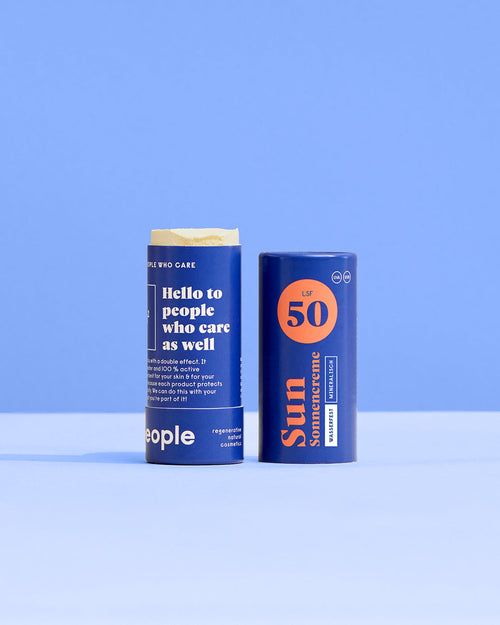
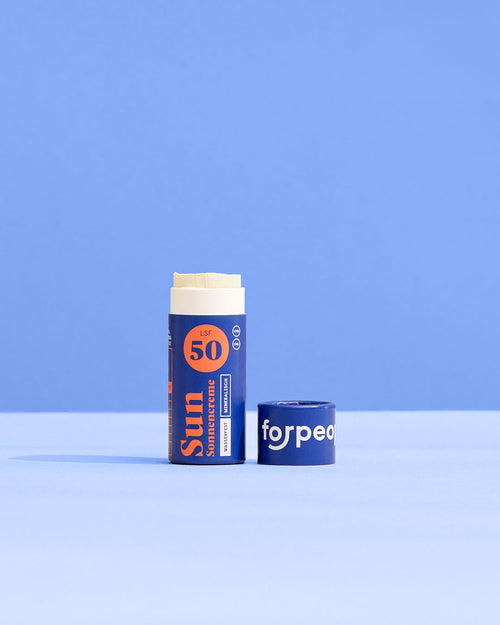
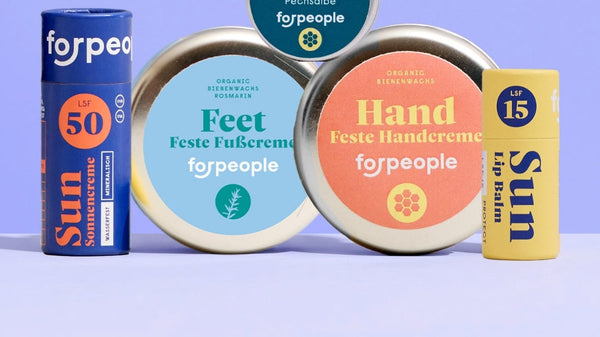
- Solid Sunscreen SPF50, 40 g, €17.90: mineral filters zinc oxide and titanium dioxide, non-nano according to the product information, with shea butter, a plant-based fatty acid blend, beeswax and silica, without water and without fragrance; for face and body, according to the product page suitable for children from 10 months. The BfS recommends SPF 50+ on snow, that is the "very high protection" level (BfS: Tipps zum UV-Schutz); SPF 50 is one level below. So apply it generously, reapply often and also protect your face with clothing. For your jacket pocket there is the Solid Sunscreen SPF50 Mini (20 g, €9.90).
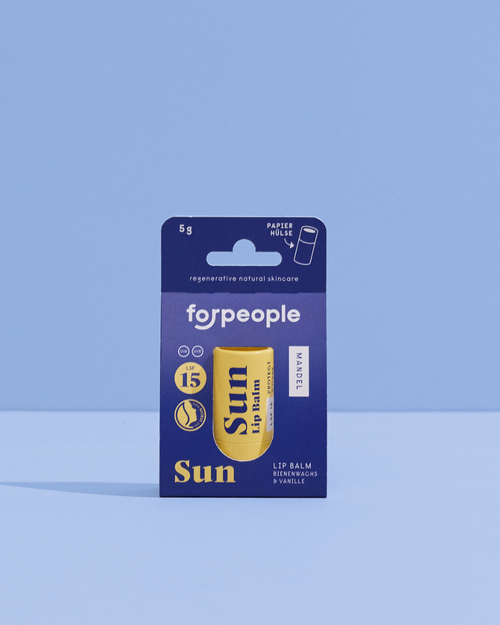
- Lip Balm - SPF15 Almond & Vanilla, 5 g, €7.90: lip balm stick with SPF 15 from zinc oxide and titanium dioxide; contains almond oil, so check the ingredient list first if you have a nut allergy.
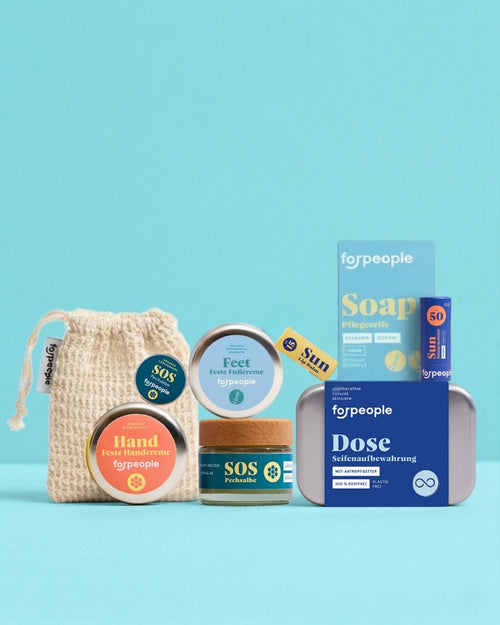
- Outdoor Set – Sun Protection & SOS Care for Stressed Skin, €79.90: with a 20 g sunscreen for exposed skin before you go out, plus larch resin salve, hand and foot cream, lemongrass lip balm and soap for care after long days outdoors. The salve, foot cream and lip balm contain resin or essential oils and do not belong on red facial skin; the lip balm in the set has no SPF.
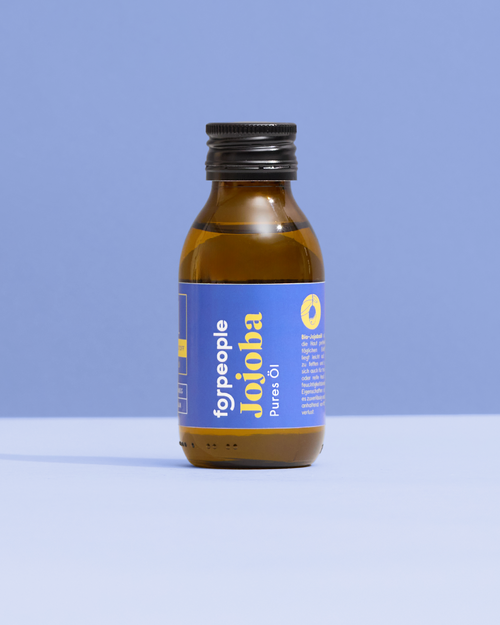
- Jojoba Oil - pure, 100 ml, €16.90: pure jojoba oil, according to the product page also for the face; a few drops on still slightly damp skin once it no longer burns.
From the blog: Skincare for days in the snow: hands, lips, face
Sources
- Engebretsen KA, Johansen JD, Kezic S, Linneberg A, Thyssen JP (2016): The effect of environmental humidity and temperature on skin barrier function and dermatitis. Journal of the European Academy of Dermatology and Venereology 30(2): 223–249. https://doi.org/10.1111/jdv.13301
- Owens DW, Knox JM (1978): Influence of heat, wind, and humidity on ultraviolet radiation injury. National Cancer Institute Monographs (50): 161–167. PubMed: https://pubmed.ncbi.nlm.nih.gov/753972/
- Lehmuskallio E, Lindholm H, Koskenvuo K, Sarna S, Friberg O, Viljanen A (1995): Frostbite of the face and ears: epidemiological study of risk factors in Finnish conscripts. BMJ 311(7021): 1661–1663. https://doi.org/10.1136/bmj.311.7021.1661
- Bundesamt für Strahlenschutz (BfS): Tipps zum UV-Schutz [Tips on UV protection]. As of 04.08.2026, accessed 29.10.2026. https://www.bfs.de/DE/themen/opt/uv/schutz/tipps/tipps_node.html
- NHS: Sunburn. Last reviewed 24.11.2025, accessed 29.10.2026. https://www.nhs.uk/conditions/sunburn/
- DermNet: Frostbite. Ngan V (2005), accessed 29.10.2026. https://dermnetnz.org/topics/frostbite
- DermNet: Cold urticaria. Ngan V (2006), minor amendment by Coulson I, July 2024, accessed 29.10.2026. https://dermnetnz.org/topics/cold-urticaria